
A cold draft under the front door can ruin a winter evening. You may feel it across the floor while you watch the evening news. The heat runs longer. The bill climbs higher. The fix is small and cheap. The best door sweep for exterior doors USA homeowners use costs only a few dollars and takes less than an hour to fit.
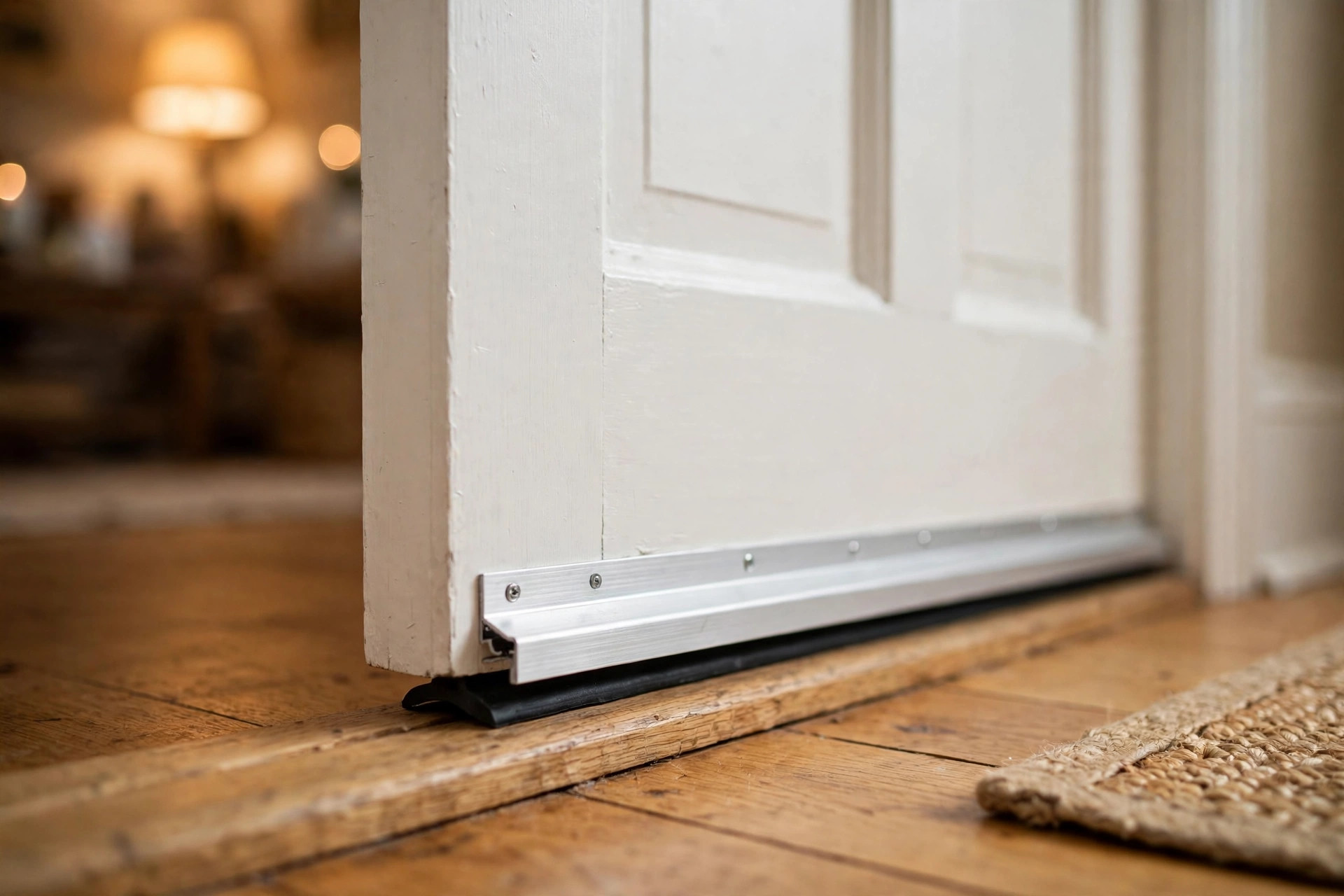
A door sweep is a flat strip that screws or sticks to the bottom edge of a door. A fin or brush hangs down from it and seals the gap between the door and the threshold. When the door shuts, the seal blocks cold air, dust, rain splash, and insects. It is one of the simplest upgrades in any American home.
Why It Matters
Most exterior doors leave a small gap at the bottom. The gap lets the door swing freely over the floor. It also lets air pass straight through. In winter, warm air escapes. In summer, cool air escapes. The heating and cooling system must work harder to make up the loss.
Energy Star reports that sealing air leaks is among the most cost-effective ways to cut home energy use. A single door gap can waste as much energy as a small hole in the wall. Multiply that by every exterior door in the house and the loss grows large.
Drafts also bring dust and bugs. Spiders, ants, and mice find a half-inch gap wide enough to enter. A sweep blocks the path. It also keeps out rain that blows under the door during a storm. For homes in the North, a sweep helps stop ice from forming near the door on cold nights.
The U.S. Department of Energy offers free guidance on air sealing and weatherization for American households. A door sweep pairs well with full weatherstripping for doors around the sides and top of the frame. Together they seal the whole opening.
What to Look For: Best Door Sweep for Exterior Doors Usa
The Material of the Seal
The sealing fin comes in several materials. Rubber is the most common. It stays flexible in cold weather and presses tight against the threshold. Vinyl is cheaper but can turn stiff in deep cold. A brush made of nylon bristles suits uneven thresholds, since the bristles bend around small bumps. Silicone fins last long and resist sun damage on south-facing doors.
The strip that holds the fin is usually aluminum or stainless steel. Aluminum is light and will not rust. Stainless steel costs more but stands up to salt air in coastal towns. Some sweeps use a plastic strip that snaps on without screws. These are fine for rentals where you cannot drill.
Size and Fit
Measure the width of the door before you shop. Most exterior doors in the United States are 36 inches wide. Some are 30 or 32 inches. Buy a sweep that matches or is slightly longer, then trim it to fit with a hacksaw or strong shears.
Check the gap height too. Slide a ruler under the door. Most sweeps handle gaps from one quarter inch to about one inch. If the gap is taller, look for an extra-tall sweep or adjust the threshold plate first.
Mounting Style
Screw-on sweeps attach to the face of the door with small screws. They hold firm and last for years. Adhesive sweeps stick to the door with strong tape. They install fast and leave no holes, which suits renters. Slide-on sweeps fit over the bottom edge of the door like a sleeve. They work only on doors with a flat, thin bottom edge.
An under-door sweep sits beneath the door and is held by the threshold. It moves with nothing at all. These suit doors where you do not want to alter the door face.
Types of Door Sweeps
Flat aluminum sweeps. A straight aluminum bar with a rubber fin. This is the standard choice for most American homes. It is cheap, sturdy, and easy to find at any hardware store.
Brush sweeps. A row of dense nylon bristles hangs from a metal holder. The brush conforms to rough or sloped thresholds. Barn doors, old farmhouses, and doors over stone thresholds do well with this type.
Automatic door bottoms. A spring-loaded bar sits inside the bottom of the door. When the door closes, a plunger pushes the seal down. When the door opens, the seal lifts so it never drags on the floor. These cost more but give a tight seal and a clean look.
Adhesive vinyl sweeps. A flexible vinyl flap with a peel-and-stick back. No tools are needed. They suit smooth doors in mild climates. The adhesive may fail after a few hot summers, so check it once a year.
Double-sided sweeps. Two foam tubes in a fabric sleeve slide under the door. One side faces in, the other faces out. These are sold as draft stoppers. They work, but they shift when the door opens and may trip small feet.
How to Install a Door Sweep
You will need a screwdriver or drill, a tape measure, a pencil, and a hacksaw. Most jobs take twenty to forty minutes. Close the door and measure its width. Mark the sweep at that length and cut it. Place the sweep on the inside face of the door so the fin just touches the threshold. Mark the screw holes. Drill small pilot holes so the wood does not split. Drive the screws snug but not so tight that the door drags. Open and close the door to test. The fin should press lightly on the threshold all the way across.
This Old House provides step-by-step tutorials for small home repairs like this one. If the door binds after fitting, raise the sweep a fraction of an inch and try again. Family Handyman also shows how to adjust thresholds that sit too low.
Cost and Price
Door sweeps are among the cheapest fixes in home repair. Basic vinyl sweeps sell for five to ten dollars. Aluminum and rubber models run ten to twenty dollars. Brush sweeps and double-sided draft stoppers fall in the same range. Automatic door bottoms cost twenty-five to sixty dollars each.
A single sweep can pay for itself in one heating season. The U.S. Department of Energy notes that air sealing typically cuts heating and cooling costs by about fifteen percent when done thoroughly. A door sweep is a small part of that work, but it is the part most homeowners can do in a single afternoon.
Buy sweeps at local hardware stores or from home improvement retailers. Look for models rated for exterior use if the door faces rain or sun. Replace the seal when it cracks, flattens, or pulls away from the strip. A five-year life is normal for a good rubber sweep.
Care and Upkeep
A door sweep needs little care. Check it twice a year, in spring and in fall. Look for cracked rubber, bent fins, and loose screws. Clean dirt from the fin with a damp cloth. Dirt wears the rubber faster and keeps it from sealing tight.
Tighten screws that have worked loose. In homes near the coast, rinse salt from aluminum strips once a year to slow corrosion. If the fin has flattened from years of dragging, bend it back gently or replace the seal. Many brands sell the rubber fin alone as a replacement part.
Trim door sweeps before they drag on new carpet or tile. A fin that drags wears out fast and makes the door hard to open. Leave a hair of clearance so the seal touches without grinding.
Watch the threshold plate as well. A worn threshold with deep grooves lets air pass even when the sweep is new. Some thresholds can be raised with their adjustment screws. If the plate is rotted or cracked, replace it before fitting a new sweep. A flat, sound threshold gives the fin a smooth surface to seal against.
For garage doors, different hardware applies. See our garage door insulation R value guide and the review of the best garage insulation kit for metal doors if your garage shares a wall with the house.
Safety
A door sweep is a safe product, but a few points deserve care. Cut metal strips with gloves on. Fresh-cut aluminum edges are sharp. Keep small screws away from young children during installation.
Do not seal a door so tight that it becomes hard to open. In an emergency, every exterior door must open fast. Make sure children and older adults can push the door open without force.
Some homes have gas appliances near doors. Do not block needed air supply vents with a sweep. Combustion equipment needs fresh air to burn safely. If you are unsure, ask a licensed heating contractor before sealing gaps near a furnace room.
Manufacturers like Carrier, Trane, Lennox, Rheem, and Goodman all advise homeowners to keep combustion appliances properly vented while sealing the rest of the house. Draft sealing should lower bills, not create new hazards.
Frequently Asked Questions
What is the best door sweep for exterior doors? The best choice for most homes is an aluminum screw-on sweep with a rubber fin. It fits standard 36-inch doors, lasts for years, and seals gaps up to three quarters of an inch. For uneven thresholds, a brush sweep works better.
How do I measure for a door sweep? Measure the width of the door, not the frame. Measure the gap under the door with a ruler. Buy a sweep at least as wide as the door and rated for your gap height. Trim it to fit with a hacksaw.
Do door sweeps really save energy? Yes. A door sweep blocks one of the largest air leaks in a home. Combined with weatherstripping, it can cut drafts enough to lower heating and cooling costs. The savings usually exceed the cost of the sweep in the first season.
Can I install a door sweep on a metal door? Yes. Use self-tapping sheet metal screws and drill pilot holes first. Adhesive sweeps also work on smooth metal doors. Avoid sweeps that rely on wood screws driven into thin steel skins.
How long does a door sweep last? A good rubber or silicone sweep lasts three to seven years. Sun, salt air, and heavy foot traffic shorten its life. Check it each fall before heating season and replace it when the fin cracks or flattens.
Should the sweep go on the inside or outside of the door? Most sweeps mount on the inside face of the door. This keeps the fasteners out of the weather and the sweep away from rain. Some models are made for the outside face. Follow the instructions that come with your sweep.
A Final Word
The best door sweep for exterior doors USA shoppers can find is the one that fits the door and gets installed. A ten-dollar sweep on the door beats a perfect sweep still in its package. Measure the door. Pick aluminum with a rubber fin. Fit it in an afternoon. The house will feel warmer, the furnace will rest more, and the dust and bugs will stay outside where they belong.
References
Carrier. (n.d.). Heating and cooling systems. https://www.carrier.com ENERGY STAR. (n.d.). Energy efficient products. https://www.energystar.gov Family Handyman. (n.d.). DIY home repair and maintenance. https://www.familyhandyman.com Goodman. (n.d.). Heating and cooling equipment. https://www.goodmanmfg.com Lennox. (n.d.). Heating and cooling systems. https://www.lennox.com Rheem. (n.d.). Heating, cooling, and water heating. https://www.rheem.com This Old House. (n.d.). Home renovation guidance. https://www.thisoldhouse.com Trane. (n.d.). Heating and air conditioning. https://www.trane.com U.S. Department of Energy. (n.d.). Energy efficiency and renewable energy. https://www.energy.gov
Was this guide helpful?

About Jennifer Lee
The My Garden US editorial team writes practical, in-depth home and garden guides for American homeowners — tested advice, no fluff.
You May Also Like
Variable Speed AC Pros and Cons Reviews USA: An Honest Guide for Homeowners
April 6, 2026 0 views
Under Cabinet Range Hood Reviews 2026 USA: A Practical Buying Guide
July 26, 2026 0 views
Solar Pool Heater Reviews for USA Homes: A Simple Guide
September 6, 2026 0 views