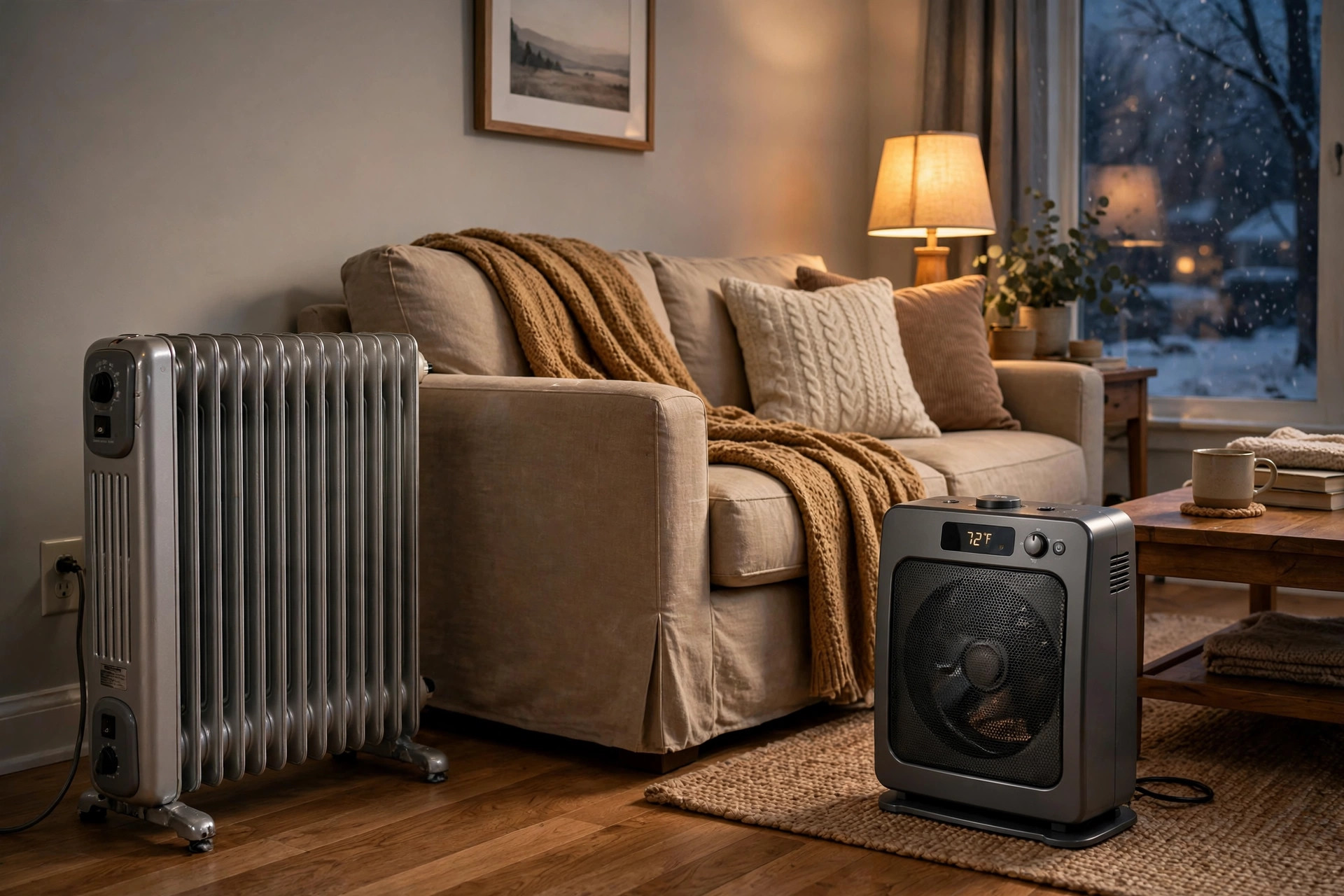

When the cold months arrive, many American homes need a little extra heat. A central furnace may not reach every room. An extra bedroom, a home office, or a garage may stay too cold. In the oil filled radiator vs ceramic heater usa debate, both devices run on electricity and can warm a small space. But they work in different ways. This guide will help you pick the right one.
Why the Choice Matters
A space heater can lower your heating bill if used well. You can turn down the main thermostat and warm only the room you use. But the wrong heater may run too long, cost too much, or leave you cold. The oil filled radiator vs ceramic heater usa question comes up often in stores and online forums. Each type has clear strengths. Each has clear limits. Knowing them saves money and keeps you safe.
Space heaters are among the most common small appliances in American homes. The U.S. Department of Energy reports that heating uses more energy than any other use in a typical home. A smart choice of a room heater can cut waste. It can also add comfort where the main system falls short.
How Each Heater Works: Oil Filled Radiator vs Ceramic Heater Usa
Oil-Filled Radiators
An oil-filled radiator looks like an old steam radiator on wheels. Inside its metal fins is a special oil. An electric heating element warms the oil. The warm oil heats the fins. The fins then warm the air by slow, steady convection. The oil never burns up. It stays sealed inside the unit for its whole life.
The heat comes out slow and even. It fills the room from floor to ceiling in time. There is no fan. There is no noise. Most models have a thermostat that turns the unit off and on to hold a set temperature.
Ceramic Heaters
A ceramic heater has plates made of a special ceramic material. When electricity passes through them, they heat up fast. A fan blows room air across the hot plates and pushes warm air into the room. This is forced-air heat. It is direct and quick.
Ceramic heaters are small and light. Many are the size of a shoebox. Some are towers. Some sit on a desk. They reach full heat in a few minutes. Most have several heat settings and a thermostat.
Heat Output and Room Size
Both types often put out the same power: 1,500 watts at the high setting. This is the most a standard American wall outlet can give safely. At the same wattage, both use the same amount of power. The difference is how they give the heat to the room.
The ceramic heater wins on speed. It blows warm air right at you. You feel warm in minutes. This makes it good for a room you use for a short time, such as a bathroom in the morning or a home office you enter at nine and leave at five.
The oil-filled radiator wins on steady, even heat. It takes 20 to 30 minutes to warm a room. But once the room is warm, it holds the warmth well. The large metal fins keep giving off heat even after the power cycles off. This makes it good for a bedroom you sleep in all night or a living room you use for hours.
A small ceramic heater can warm 100 to 150 square feet. A large oil-filled radiator can warm 150 to 250 square feet. Check the box for the rating. Do not buy a small desk model for a big room. It will run all day and still leave you cold.
Energy Use and Cost
Many people ask which type costs less to run. The honest answer is that at the same wattage, both cost the same per hour. A 1,500-watt heater uses 1.5 kilowatt-hours of power each hour it runs. At an average U.S. price of about 16 cents per kilowatt-hour, that is about 24 cents per hour.
The real difference is in how often each runs. An oil-filled radiator holds heat in its oil and metal. Its thermostat can rest more often once the room is warm. In long, steady use, this may mean slightly lower bills. A ceramic heater heats fast but the room cools fast too, so it may cycle on and off more often in a drafty room.
No electric heater is more than 100 percent efficient at turning power into heat. All of them are near 100 percent. Claims that one brand “beats” another on pure efficiency are marketing talk. Pick based on comfort and use pattern, not magic claims.
If you want a deeper look at heating bills, our guide on blown-in vs batt insulation cost comparison explains how insulation cuts the load on any heater. Good insulation does more for your bill than any space heater choice.
Noise and Comfort
The oil-filled radiator is silent. There is no fan. This makes it a favorite for bedrooms and nurseries. Light sleepers are not kept awake by a humming fan.
The ceramic heater has a fan, and fans make noise. Some are quiet. Some hum loudly. In a bedroom, the hum may bother some people. Others like the steady white noise. For a living room or office, the noise is rarely a problem.
The oil-filled radiator also does not blow dust around. A fan heater stirs up dust in the room. For people with allergies, the radiator may be the better pick. The ceramic heater can dry the air a bit more, since it blows warm dry air at you. Neither type is a humidifier.
Safety Considerations
Both types have safety risks. Space heaters cause many house fires each year in the United States. The Consumer Product Safety Commission advises keeping heaters at least three feet from anything that can burn. This includes curtains, beds, papers, and rugs.
The oil-filled radiator has a cooler surface than many heaters. You can still burn yourself on it, but the heat is spread over a large area. The metal fins are rarely hot enough to start a fire by touch alone. Still, never lay clothes on it to dry. Never leave it on when no one is home.
The ceramic heater has hot spots inside. Its grill can get hot. The fan intake can pull in dust or lint. Never block the air vents. Never set it on a soft surface like a bed. Most modern ceramic heaters have a tip-over switch. This turns the unit off if it falls over. Many also have overheat protection. Look for both when you shop.
Never plug a space heater into a power strip or an extension cord. Plug it straight into the wall outlet. Check that the outlet is in good shape. Old, loose outlets can overheat. Keep children and pets away from any heater.
Moving and Storage
The oil-filled radiator is heavy. A large model can weigh 20 pounds or more. It has wheels, so it rolls across hard floors. But carrying it up stairs is hard work. In summer, it needs a closet corner for storage. It is tall and takes up space.
The ceramic heater is light. Most weigh under ten pounds. Many have a carry handle. You can move one from room to room with ease. Storage is simple. It fits on a shelf or in a small box.
Lifespan and Care
An oil-filled radiator has no moving parts. No fan to wear out. No motor to fail. With care, it can last ten years or more. The sealed oil does not need to be refilled. Wipe the fins with a damp cloth now and then to keep dust off.
A ceramic heater has a fan motor. The motor may wear out in three to five years of heavy use. The ceramic plates can crack if the unit is dropped. Keep the air intake clean. A vacuum with a brush tool can clear dust from the grill.
Both types should be checked each fall before use. Look for frayed cords, cracked plugs, and loose parts. If the cord is damaged, replace the unit. Do not try to repair a heater yourself.
Cost to Buy
Oil-filled radiators cost more up front. A good model runs 60 to 120 dollars in U.S. stores. Larger models with digital thermostats and timers cost more. You can compare current prices and features at large home stores such as Home Depot.
Ceramic heaters are cheaper to buy. Basic models start under 30 dollars. Tower models with remote controls and digital displays run 50 to 100 dollars. The lower price is one reason they sell in such high numbers.
Over five years, the total cost picture may even out. The radiator costs more to buy but may last twice as long. The ceramic heater costs less to buy but may need replacing sooner.
Which One Should You Buy?
Choose an oil-filled radiator if:
– You need steady heat for hours, such as in a bedroom at night. – You want silent operation. – You want to warm a medium to large room. – You have allergies and want to avoid blowing dust. – You do not plan to move the heater often.
Choose a ceramic heater if:
– You need heat fast, such as in a cold office in the morning. – You move the heater from room to room. – You have a small space or want to heat one person at a desk. – You want a lower price up front. – You do not mind a little fan noise.
Many homes end up with one of each. A radiator for the bedroom. A ceramic heater for the home office. That is a sensible answer to the oil filled radiator vs ceramic heater usa question. There is no single winner. There is only the right tool for the job.
For whole-home heating upgrades, readers also compare mini split systems, which can heat and cool at far lower running cost than any plug-in heater.
FAQ
Is an oil-filled radiator safer than a ceramic heater? Both can be safe if used right. The oil-filled radiator has a larger, cooler surface and no fan, so it has fewer hot spots. The ceramic heater often comes with a tip-over switch and overheat protection. The main safety rules are the same for both: keep three feet of clear space, never use an extension cord, and never leave it on unattended.
Which heater uses less electricity? At the same watt setting, both use the same power. A 1,500-watt heater draws 1,500 watts no matter what type it is. The oil-filled radiator may cycle off more in steady use, which can lower the bill a bit. But no type is far cheaper to run than the other.
Can I leave an oil-filled radiator on all night? It is made for long use, and many people run one in the bedroom. Use a model with a thermostat and a timer. Keep it three feet from the bed and curtains. Do not drape clothes over it. The safest rule is still to turn off any space heater when you leave the house.
Do oil-filled radiators leak oil? Leaks are rare. The oil is sealed inside at the factory. If you see oil on the floor or smell a strange odor, unplug the unit at once and stop using it. Do not try to refill or repair it.
How long does a ceramic heater take to warm a room? Most ceramic heaters put out full heat in three to five minutes. You will feel warm air right away. Warming a whole room takes longer, often 15 to 20 minutes for a small room. They work best when pointed at the person or area in use.
Which is better for a large room? The oil-filled radiator is usually the better pick for a larger room. Its slow, steady convection heat fills the space more evenly. A ceramic heater blows heat in one direction, which leaves far corners cold. For rooms over 200 square feet, consider two smaller units or a different heating method. A solar attic fan can also help with overall home comfort in mild months.
A Final Word
The oil filled radiator vs ceramic heater usa debate has no one right answer. Both turn electricity into heat with near-perfect efficiency. The radiator gives slow, silent, steady warmth and lasts for years. The ceramic heater gives fast, direct warmth in a light, cheap package. Match the heater to the room and to your daily habits. Use it with care. Keep it clean, keep it clear of flammable items, and plug it straight into the wall. Done right, a simple space heater can make winter far more pleasant.
For more background, see Rheem, ENERGY STAR, and This Old House. For more background, see Family Handyman, Carrier, and Trane.
References
Carrier. (n.d.). Heating and cooling systems. https://www.carrier.com ENERGY STAR. (n.d.). Energy efficient products. https://www.energystar.gov Family Handyman. (n.d.). DIY home repair and maintenance. https://www.familyhandyman.com Rheem. (n.d.). Heating, cooling, and water heating. https://www.rheem.com The Home Depot. (n.d.). Home improvement products. https://www.homedepot.com This Old House. (n.d.). Home renovation guidance. https://www.thisoldhouse.com Trane. (n.d.). Heating and air conditioning. https://www.trane.com U.S. Department of Energy. (n.d.). Energy efficiency and renewable energy. https://www.energy.gov
Was this guide helpful?

About David Wilson
The My Garden US editorial team writes practical, in-depth home and garden guides for American homeowners — tested advice, no fluff.
You May Also Like

Mini Split Line Set Cover Kit Reviews: What American Buyers Need to Know
February 16, 2026 0 views
Gas Boiler Installation Cost for Old House: A Plain 2026 Guide
September 21, 2026 0 views
Two Stage Furnace vs Single Stage Comparison: A Full Guide for Homeowners
March 8, 2026 0 views