This propane vs electric patio heater comparison is for any home owner who wants more evenings outside. A patio can sit unused for half the year when the air turns cold. A good outdoor heater changes that. It adds warmth, and it adds hours to every evening on the deck.
Two fuel types rule the market today. Propane heaters burn bottled gas. Electric heaters run on house current. Both warm a patio. They do it in very different ways. This article walks through the facts: how each one heats, what it costs to buy and to run, how safe each one is, and what care each one needs. By the end you should know which one fits your yard.
Why This Comparison Matters
Outdoor living keeps growing in American homes. Decks, patios, and porches get used for dinner, for guests, and for quiet nights. Cold weather cuts those hours short. A heater takes the chill out of the air and gives the space back.
The choice between propane and electric shapes more than the price tag. It shapes where you can place the heater, how often you must buy fuel, and what rules your town may set. Some towns limit open flame on decks. Some condos ban propane tanks on balconies. A wrong guess costs money and time. A careful propane vs electric patio heater comparison saves both.
How Each Type Heats: Propane vs Electric Patio Heater Comparison
Propane patio heaters burn liquid propane from a tank. Most tower models use a standard 20-pound tank, the same size that feeds a gas grill. The burner sits under a metal shade. Heat moves in a wide ring around the unit. A full-size tower can throw warmth out to a circle of about 15 to 20 feet across. That is a large seating area. Many owners of large patios and winter decks pick propane for this reach.
Electric patio heaters use a heating element. Some models use quartz or halogen tubes. Others use flat carbon panels. Power flows from a cord to the element, and the element gives off infrared warmth. This warmth hits skin and chairs directly. It does not warm the air as much. On a calm night the effect is strong. In wind the effect drops, because there is no warm air cloud to hold the heat.
Run time is a clear split. A 20-pound propane tank feeds a 40,000-BTU tower for about 8 to 10 hours on high, longer on low. When the tank runs out, the party ends. You must swap in a full tank. An electric heater runs as long as the switch is on and the power bill is paid. For long, steady evenings, electric wins on convenience.
What to Look For Before You Buy
Heat output comes first. Propane towers are rated in BTUs. Common models sit between 38,000 and 48,000 BTU. Tabletop models are smaller, often 10,000 to 12,000 BTU. Electric models are rated in watts. Common units run from 1,500 to 6,000 watts. A small balcony needs less. A big open deck needs more. Match the rating to the space, not to the wish.
Size and shape matter too. Tower heaters stand about 7 feet tall. They need floor space. They also need head room under roofs and umbrellas. Wall-mounted electric units save floor space. They hang on a fence, a wall, or a post. Ceiling-mounted models work well over dining tables. Measure your space before you order.
Controls are worth a look. Propane units use a knob and a pilot light. Many now add a tilt safety switch and a flame sensor. Electric units range from a simple switch to a remote control with heat levels and a timer. A timer is a nice touch. It lets you set warmth for two hours and forget it.
Fuel access is the last big check. Propane means tank trips. You must buy, haul, store, and swap tanks. Electric means cord and outlet. You must have the right outlet, and in some cases a new circuit. An electrician may be needed for hardwired models. Each side has its own errand. Pick the errand you mind less.
Types and Options
Propane Patio Heaters
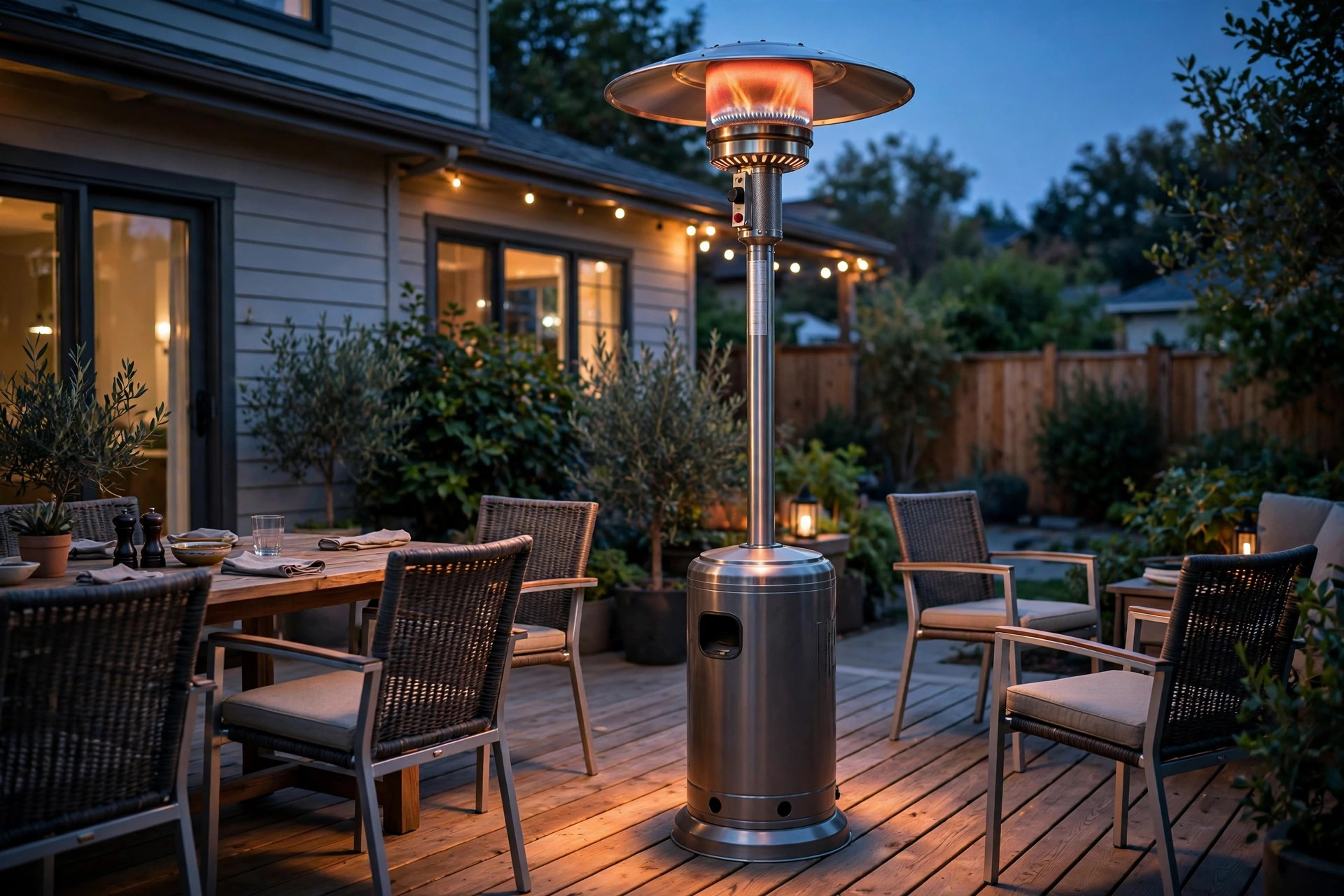
Tower heaters are the classic kind. They look like a tall lamp with a wide top. The tank hides in the base. They suit large open decks and pool areas. Many are on wheels, so you can roll the heat where people sit.
Pyramid flame heaters burn propane too, but the flame is visible through a glass tube. They sell for looks as much as heat. The warm glow is a draw for evening guests. Heat output is lower than a tower.
Tabletop propane heaters sit on a patio table. They use small one-pound tanks or a hose to a larger tank. They warm a small circle of people. They are easy to store in winter.
Wall-mounted propane heaters exist, but they are rare in homes. They need a fixed gas line. That means a plumber and a permit in most towns. Most home owners skip this type.
Electric Patio Heaters
Freestanding electric heaters stand on a tripod or a weighted base. They plug into a standard 120-volt outlet. They suit small patios and porches. They are light, easy to move, and simple to store.
Wall-mounted infrared units bolt to a wall or fence. They cost more up front. They free up floor space. Many restaurant patios use this style. Home owners like them over outdoor dining tables.
Ceiling and pendant models hang from a pergola or porch roof. They drop heat straight down on a seating zone. They need a solid mount and, in many cases, a 240-volt circuit. An electrician should set these up.
Infrared panel heaters are flat and slim. They mount high on a wall. They give off no light, only heat. They fit well where bright light would annoy neighbors. For a look at how infrared heat performs in reviews, see infrared patio heater reviews for 2026.
Cost and Price
What You Pay at the Store
Propane tower heaters run from about $100 for basic models to $300 or more for pyramid styles with glass tubes. Tabletop models cost less, often $50 to $120. Well-known heating brands publish current model lines and prices on their own sites, such as Carrier, Lennox, Trane, Rheem, and Goodman.
Electric patio heaters range from about $60 for a small freestanding unit to $400 or more for wall-mounted commercial-grade models. Pendant and ceiling models with hardwired 240-volt circuits sit at the high end. Simple plug-in units sit at the low end.
What It Costs to Run
Propane cost varies by region and season. A 20-pound tank refill often runs $15 to $25. At high heat, a tower burns through it in a long evening. Heavy users can spend $50 to $100 a month on tank refills in cool months. The U.S. Department of Energy notes that fuel choice drives long-term heating cost, a point it covers in its heating guides at energy.gov.
Electric cost depends on your local rate per kilowatt-hour. A 1,500-watt unit costs about 20 to 30 cents per hour to run at average U.S. rates. A 5,000-watt wall unit costs three times that. The EPA’s efficiency program at energystar.gov offers background on how heating devices use power and how to read ratings.
The quick math favors propane for short, hot blasts of heat over a big area. Electric wins for smaller zones and steady use. Your local fuel price and electric rate decide the winner. Write both down and compare before you buy.
Care and Upkeep
Propane heaters need steady care. Check the gas hose each season for cracks and wear. Clean the burner and the pilot area. Spider webs and dust can clog the jets. Keep the tank valve and the regulator clean. Store the heater under a cover when not in use. Tanks should stand upright in a cool, ventilated spot, never in a closed shed on a hot day. Guides from This Old House and Family Handyman cover seasonal upkeep routines for gas-fired equipment in plain terms.
Electric heaters need less care. Wipe the element and the housing with a dry cloth each season. Check the cord for nicks and the plug for heat marks. Keep vents and grilles free of leaves. Mounts and brackets should be checked each year for rust or looseness. No fuel lines, no tanks, no flame sensors. The to-do list is short.
Both types last longer with a cover. Rain, sun, and salt air wear metal fast. A fitted cover costs little and adds years. Bring tabletop and freestanding models under a roof for winter in snow country.
Safety
Propane heaters carry real risk because they burn fuel. Keep the unit at least 3 feet from walls, railings, furniture, and plants. Never place one under a low roof or umbrella unless the model is rated for it. Tilt the unit over and the safety switch should cut the flame. Do not trust your memory on this. Test it when you buy it.
Carbon monoxide is the hidden danger of any gas burner. Never use a propane heater in a closed garage, tent, or room. The air must move. Watch for a yellow, lazy flame. That can mean a clogged burner. Shut the unit off and clean it before you use it again.
Electric heaters have their own rules. Water and current do not mix. Buy only units rated for outdoor or wet use. Mount them high enough that children cannot touch hot panels. Do not run cords across walkways where feet can snag them. A dedicated circuit cuts the chance of a tripped breaker or an overloaded line.
Keep both types away from fire pits and open grills. It is easy to crowd too many hot things onto one deck. For homes that use open flame for looks, our piece on fire pit reviews for backyards covers clearances and safe placement.
Frequently Asked Questions
Which is cheaper to run, propane or electric? It depends on your local prices. In most parts of the United States, propane costs more per hour of heat than electric for a small zone. Propane beats electric when you need to heat a large open area fast. Check your local propane refill price and your electric rate per kilowatt-hour, then do the math for your own case.
Can I use a propane patio heater under a covered porch? Only if the heater is rated for it and the space has open airflow on at least two sides. Most tower heaters are rated for open outdoor use only. Low roofs trap heat and carbon monoxide. Read the manual and the rating label before you place it.
Do electric patio heaters work in wind? They work better than many people expect, because infrared heat warms skin and objects, not the air. Wind still cuts the effect. A screen, a fence, or a wind break helps a lot. Place the unit close to the seating area for the best result.
How long does a propane tank last in a patio heater? A standard 20-pound tank lasts about 8 to 10 hours on high in a 40,000-BTU tower. On a low setting it can stretch to 12 hours or more. Cold weather and wind push fuel use up.
Can I leave an electric patio heater on all night? Most models are safe to run for long hours if they are mounted well and on a sound circuit. Many owners still prefer a timer for peace of mind. Check the manual for the longest run time the maker allows.
Which one is better for the environment? Electric heaters make no exhaust at the point of use. Their true footprint depends on how your power is made. Propane burns fairly clean for a fuel, but it is still a fossil fuel. If clean air on your own patio matters most, electric is the cleaner pick at home.
A Short Final Word
This propane vs electric patio heater comparison comes down to your patio and your habits. Propane gives big, fast heat over a wide area. It asks for tank trips and careful placement in return. Electric gives quiet, clean, steady heat in a smaller zone. It asks for the right outlet and honest math on the power bill.
Measure your space. Count the evenings you will use it. Price your fuel and your power. Then pick the heater that fits the life you want outside. Warm evenings are worth the thought you put into them.
References
Carrier. (n.d.). Heating and cooling systems. https://www.carrier.com ENERGY STAR. (n.d.). Energy efficient products. https://www.energystar.gov Family Handyman. (n.d.). DIY home repair and maintenance. https://www.familyhandyman.com Goodman. (n.d.). Heating and cooling equipment. https://www.goodmanmfg.com Lennox. (n.d.). Heating and cooling systems. https://www.lennox.com Rheem. (n.d.). Heating, cooling, and water heating. https://www.rheem.com This Old House. (n.d.). Home renovation guidance. https://www.thisoldhouse.com Trane. (n.d.). Heating and air conditioning. https://www.trane.com U.S. Department of Energy. (n.d.). Energy efficiency and renewable energy. https://www.energy.gov
Was this guide helpful?

About Jennifer Lee
The My Garden US editorial team writes practical, in-depth home and garden guides for American homeowners — tested advice, no fluff.