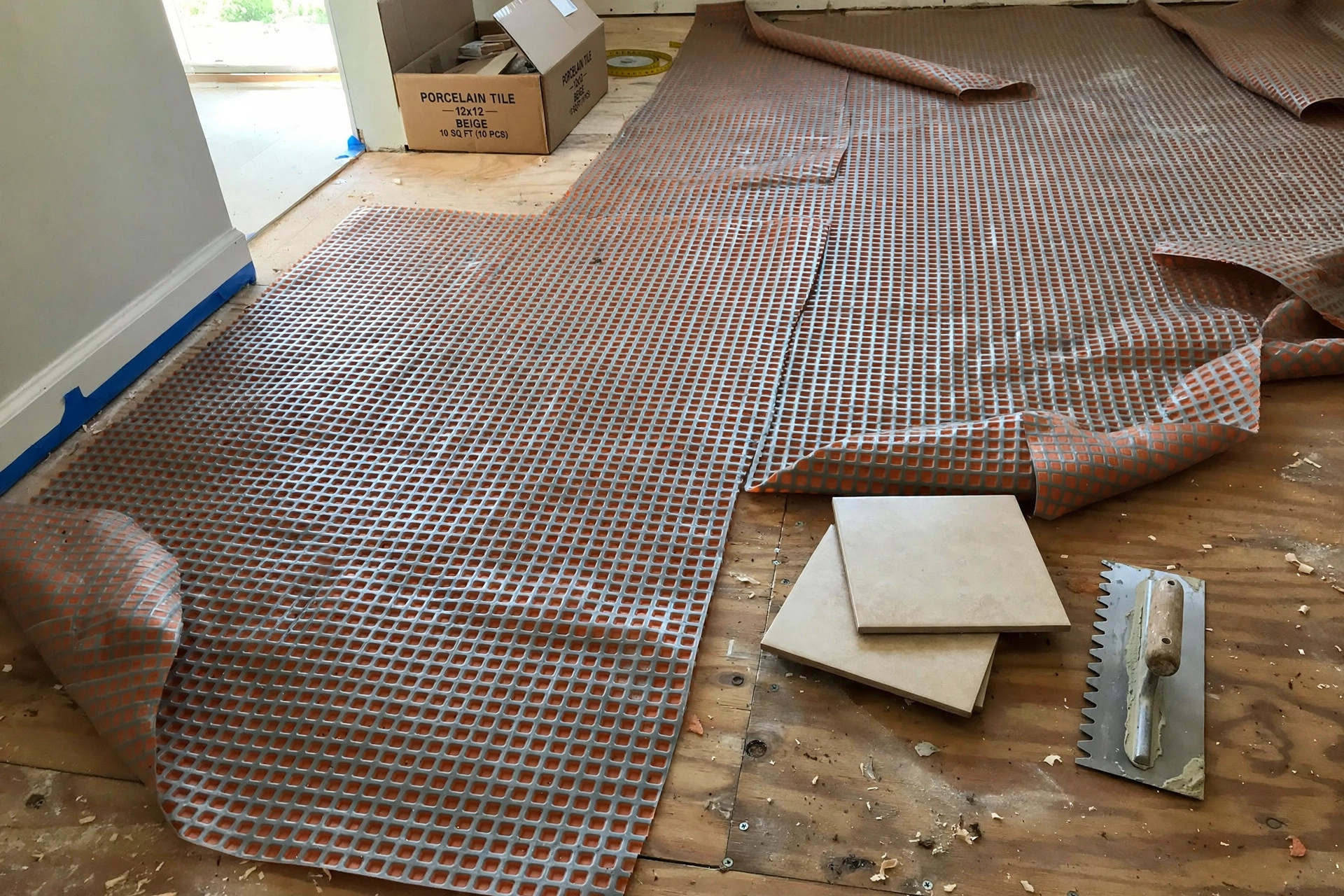

Most people who shop for tile look at color, size, and price. They give little thought to the layer under the tile. That hidden layer decides whether the floor cracks in two years or lasts for twenty. This review of uncoupling membranes for tile floors looks at how these products work, which ones hold up best in real homes, and when the extra step is worth the cost.
Why an Uncoupling Membrane Matters
Tile is hard and brittle. It cannot bend. The floor under it can. Wood subfloors swell and shrink as the seasons change. Concrete slabs move a little as buildings settle. Even small movement can break the bond between tile and floor. When that happens, grout lines crack first. Then the tiles crack. Then one loose tile turns into many.
An uncoupling membrane is a thin sheet that sits between the subfloor and the tile. It does not glue the tile down hard to the floor below. Instead, it lets the two layers move a little on their own. The membrane holds the tile firm from above while the subfloor shifts below. Think of it as a cushion that keeps peace between two rigid neighbors.
Tile setters call this “decoupling.” It is standard practice in much of Europe. In the United States, it has grown more common as open floor plans and large-format tiles put more stress on floors. Reviews from contractors point to the same result: floors with a membrane crack far less often than floors laid straight on the slab.
How to Choose the Right Membrane: Uncoupling Membrane for Tile Floors Reviews
Not all membranes are the same. Reviews of uncoupling membrane for tile floors show clear differences in thickness, material, and ease of use. Keep these points in mind before you buy.
Material
Most membranes are made from polyethylene plastic. The well-known brands use a dimpled or waffle pattern that holds mortar in place. Some newer products add a fleece backing on one or both sides. The fleece side glues to the subfloor with thinset mortar. The dimpled side locks the tile mortar in.
A few membranes mix in cork or foam for sound control. These suit apartments and condos where noise travels between units. They cost more and install the same way.
Thickness
Typical membranes run from 1/8 inch to about 5/16 inch thick. Thinner sheets add almost no height. That helps when tile must meet carpet or wood at the same level. Thicker sheets give more protection over rough or uneven floors. Check the height of your thresholds and doors before you choose.
For large-format tiles, thickness takes on extra weight. Big tiles span small dips in the floor, which puts stress on their middles. A membrane that is too thin may not fill those low spots well. Pair large tiles with a mid-weight sheet and a full bed of mortar. Small mosaic tiles are more forgiving. They sit on almost any sheet without trouble.
Sheet Size and Seams
Membranes come in rolls about three feet wide and up to 100 feet long. Wider rolls cover big rooms with fewer seams. Fewer seams mean less work and fewer weak points. Plan your layout so seams do not land under heavy loads, such as the legs of a stove. Overlap or butt seams as the maker directs. Some brands want a two-inch overlap. Others want seams butted tight and taped. Follow the printed steps exactly. A skipped seam detail is the most common install mistake in do-it-yourself reviews.
Ease of Cutting and Handling
Reviews praise membranes that cut clean with a sharp utility knife. Stiff, springy rolls fight back and slow the job. Lighter sheets lie flat faster. If you plan to lay the membrane yourself, weight and stiffness matter more than you might think.
Waterproofing
Some membranes double as waterproof layers. These are marked for use in showers and wet rooms. Others stop vapor but not standing water. For a bathroom floor, a waterproof membrane earns its keep. For a dry hallway, plain uncoupling is enough.
You can compare options at major flooring retailers and brand sites. The Home Depot and Lowes both carry uncoupling membranes in stock, and their project guides show how each type installs. For brand-level detail, Daltile and LL Flooring offer installation guides written for both pros and do-it-yourself homeowners.
Types of Uncoupling Membranes
Four main types show up in reviews and on store shelves.
Dimpled Polyethylene Membranes
This is the classic type. A sheet of polyethylene with a pattern of square dimples. Mortar fills the dimples and grips the tile. Brands in this group include the well-known names that invented the category. Reviews are strong. Installers trust them because they have seen them work for decades. They suit concrete slabs and wood subfloors alike.
Fleece-Backed Membranes
These add a fleece layer that bonds to the subfloor. The fleece gives a strong, forgiving bond over plywood that is not perfectly smooth. They are a good pick over older plank floors or patchy subfloors. Cost runs a little higher than basic dimpled sheets.
Sound-Control Membranes
These layers cut footstep noise as well as uncoupling the tile. They are common in condos, where building rules set noise limits. Reviews note a real drop in sound. The trade-off is price and added thickness.
Waterproofing Membranes
Some membranes carry a rating for waterproof use. They seal the floor against spills and shower water. Tile setters often use them in full bathrooms and laundry rooms. Make sure seams and corners are sealed per the maker’s steps, or the waterproof claim means little.
What the Reviews Say About Leading Brands
No review can crown one winner for every floor. But patterns emerge across contractor forums, retailer ratings, and trade publications.
The original dimpled membranes draw the most praise for reliability. Installers report few callbacks on jobs that used them. The brand that started the category remains the one many pros reach for on concrete slabs, especially in new construction.
Fleece-backed products win points with do-it-yourself homeowners. They forgive small lumps in the subfloor and bond well to plywood. Reviews mention easier cutting and handling than the older stiff rolls.
Newer lightweight membranes get good marks for speed. Lighter rolls cover a room faster and cause less arm strain. A few reviews warn that very thin sheets can dent under heavy point loads, such as a fridge leg, so check the maker’s load rating.
Budget membranes earn mixed reviews. Some perform fine in dry, stable rooms. Others peel at the edges or arrive with thin spots. Contractors say the savings rarely cover the cost of a call-back to fix cracked grout.
For brand and product research beyond the box label, Shaw Floors and Mohawk Flooring publish guides on floor preparation, and This Old House and The Spruce both carry long-running how-to articles on tile underlayment with reader comments worth reading.
Cost and Price
Price is quoted per square foot. As a rule, uncoupling membrane costs between $1 and $2 per square foot for the material alone. Premium sound-control or waterproofing sheets can reach $2.50 or more.
Add the cost of the extra mortar. The membrane needs a bed of thinset below and another layer above. Budget about one bag of thinset per 100 square feet per layer, at roughly $15 to $25 a bag, depending on type.
Professional installation runs about $2 to $4 per square foot for the membrane layer on top of the tile labor. A 200-square-foot kitchen might add $400 to $800 in labor for the membrane step. Compare that to the cost of ripping out cracked tile. One full replacement of the same kitchen can run $2,000 to $4,000. The membrane pays for itself the first time it stops a crack.
Get quotes from at least two tile setters. Ask each one whether the price includes the membrane, the extra thinset, and the seam work. Some quotes leave the membrane out and add it as a change order later. A clear written quote avoids that surprise. If you plan to do the work yourself, rent a tile saw and a large mixing drill. Both make the job go much faster, and rental fees are small next to material costs.
Care and Upkeep
Once tile is down, the membrane needs no care at all. It lives sealed under the floor. Upkeep is the same as for any tile floor.
– Sweep or vacuum often. Grit grinds grout down over time. – Mop with warm water and a mild cleaner. Skip wax-based products. – Clean grout when it stains. Our guide to the best grout cleaner for mold reviews usa shows products that keep grout lines bright without harsh chemicals. – Re-seal cement grout once a year in wet rooms.
If a tile ever cracks, fix it fast. A cracked tile lets water reach the membrane and the subfloor. Most membranes tolerate some moisture, but no underlayment likes standing water for weeks.
Safety
Tile work is dusty and involves sharp tools. Wear a dust mask when mixing thinset powder. Wear safety glasses when cutting membrane or scoring tile. Keep the room aired out while mortar cures.
Ladders and heavy buckets of mortar are the usual injury risks on tile jobs. Lift with your legs. Keep buckets off stairs and out of walkways.
If your home was built before 1978, test for lead paint before you disturb old floors or trim. The federal rules on lead-safe work apply to hired contractors. For asbestos in old vinyl or mastic, do not scrape it yourself. Call a licensed abatement service.
Frequently Asked Questions
Do I need an uncoupling membrane over a concrete slab?
Often yes. Concrete moves and cracks as it cures and settles. A membrane keeps slab cracks from telegraphing up into the tile. On a new slab or one with hairline cracks, reviews call the membrane cheap insurance.
Can I lay tile straight on plywood without a membrane?
You can, but reviews and trade standards lean against it. Plywood moves with humidity. Tile laid straight on wood cracks more often. A membrane, or at minimum a cement backer board, is the safer route. For more on how flooring types compare, see our lifeproof vs coretec flooring comparison usa and our bamboo flooring reviews for usa homes.
How long does an uncoupling membrane last?
As long as the tile above it. The plastic sheet does not rot or wear out under a sealed floor. Most makers back their products with limited warranties of ten years or more when installed to spec.
Does a membrane add much height to the floor?
Very little. Most sheets are 1/8 to 1/4 inch thick, plus mortar. Plan for about 3/8 inch of added height over the bare subfloor. Check transitions to rooms with wood or carpet.
Can I install a membrane myself?
Many homeowners do. The job takes a flat subfloor, a trowel, thinset, and patience. Reviews from do-it-yourself users say the cutting is the hardest part. Renting a kneeling pad saves your knees. If the floor is far from level, hire a pro to flatten it first.
Is an uncoupling membrane the same as a crack isolation membrane?
They are close cousins. Both sit between subfloor and tile to absorb movement. Uncoupling membranes let the layers shift independently. Crack isolation membranes mainly bridge small existing cracks. Many products do both jobs well enough for home use.
A Short Final Word
Uncoupling membrane for tile floors reviews point to a simple truth. The membrane is the part of the job you never see, and it is the part that keeps the parts you do see from cracking. It adds cost and one more day of work. It repays that cost in floors that stay flat and whole for decades. For concrete slabs, old wood floors, and large tiles, it belongs in the plan. For small, stable rooms on solid ground, you can sometimes skip it. When in doubt, spend the extra dollar per square foot. Future you will thank present you.
References
Daltile. (n.d.). Ceramic and porcelain tile. https://www.daltile.com LL Flooring. (n.d.). Hardwood, vinyl, and tile flooring. https://www.llflooring.com Lowe’s. (n.d.). Home improvement products. https://www.lowes.com Mohawk Flooring. (n.d.). Flooring products. https://www.mohawkflooring.com Shaw Floors. (n.d.). Flooring products. https://www.shawfloors.com The Home Depot. (n.d.). Home improvement products. https://www.homedepot.com The Spruce. (n.d.). Home and garden advice. https://www.thespruce.com This Old House. (n.d.). Home renovation guidance. https://www.thisoldhouse.com
Was this guide helpful?

About Michael Thompson
The My Garden US editorial team writes practical, in-depth home and garden guides for American homeowners — tested advice, no fluff.
You May Also Like

Stamped Concrete vs Pavers Cost Comparison
May 11, 2026 0 views
Flagstone Patio Installation Cost Near Me: A Homeowner’s Guide
July 25, 2026 0 views
The Best Backsplash for Dark Cabinets USA: A Plain Guide for American Kitchens
March 10, 2026 0 views