
Why a Good Heater Changes the Winter
Every autumn, patios across America fall quiet. The chairs go into the garage. The grill gets its cover. Families move indoors and wait for spring. It does not have to be this way. A solid patio heater can give you back the months you lost to cold weather.
Shoppers who search for the best patio heater for winter reviews usa want one thing. They want the truth about what works when the temperature drops. Marketing claims are easy to make. Honest reviews are harder to find. This guide pulls together what owners, testers, and heating experts report about patio heaters in real winter use.
A patio heater is not a room heater moved outside. It must fight wind, open air, and falling temperatures. The best units throw real warmth over a wide circle. They light fast. They run for hours. And they shut down safely when something goes wrong.
Before you spend a dollar, it helps to know how these machines work, what they cost, and which types suit your yard. What follows is a plain account of each point, drawn from the reviews American buyers write after a full winter of use.
What to Look For in a Winter Patio Heater: Best Patio Heater for Winter Reviews Usa
Reviews agree on a short list of traits that separate good heaters from bad ones. Heat output comes first. Build quality comes second. Safety features come third. Everything else is detail.
Heat Output and BTU Ratings
The strength of a gas heater is measured in British thermal units, or BTUs. Most full-size standing heaters deliver 40,000 to 48,000 BTUs. That sounds like a lot. In open air, much of the heat drifts away. A 48,000 BTU unit warms a circle about 15 to 20 feet wide in still air. Add wind, and the warm zone shrinks fast.
Reviewers say the same thing again and again. Buy more heat than you think you need. A heater that is just strong enough on a calm night will feel weak on a windy one. If your patio is large, two medium heaters often beat one large one. The warmth spreads more evenly. Nobody sits in a cold pocket.
Electric heaters do not use BTUs. They are rated in watts. A 1,500-watt electric heater is the common top size for a standard outlet. It warms a smaller area than a gas unit. But it costs less to run per hour in many states, and it works well in covered spots where wind is blocked.
Fuel Type: Propane, Natural Gas, or Electric
Propane is the most common choice in American reviews. A standard 20-pound tank sits inside the base of the heater. One tank lasts about 8 to 10 hours on high. Propane heaters move anywhere. There is no cord and no gas line to run.
Natural gas heaters hook to the home gas line. They never run out of fuel in the middle of a dinner party. The trade-off is clear. You need a plumber to run the line. The heater cannot move once it is fixed in place. For a built-in patio with a permanent gas stub, natural gas is hard to beat.
Electric heaters plug into a wall outlet. They give off no fumes. They need almost no upkeep. The heat is softer and more local. They suit small decks, balconies, and covered porches. In many patio heater reviews, owners of small spaces say electric was the right call.
The U.S. Department of Energy publishes plain facts about home heating fuels and costs at energy.gov. The ENERGY STAR site adds guidance on efficient electric heating choices. Both are worth a read before you decide.
Size, Weight, and Build
A winter heater lives a hard life. Rain hits it. Snow piles on it. Wind tries to knock it over. Reviews punish thin metal and wobbly bases. Stainless steel holds up best. Powder-coated steel is fine if the coating is thick. Cheap paint peels in one season.
Weight matters for safety. A tall heater is top-heavy by design. The best models weigh 50 to 60 pounds with the tank in place. That mass keeps them upright in a gust. Some models add a base you can fill with sand or water. Reviewers in windy states call this feature a must.
Look for wheels. You will want to roll the unit into the garage during storms. Handles help too. Small comforts matter when the heater is heavy and the night is cold.
The Main Types of Patio Heaters
Walk through any review site and you will find four basic shapes. Each suits a different yard and a different budget.
Standing Mushroom Heaters
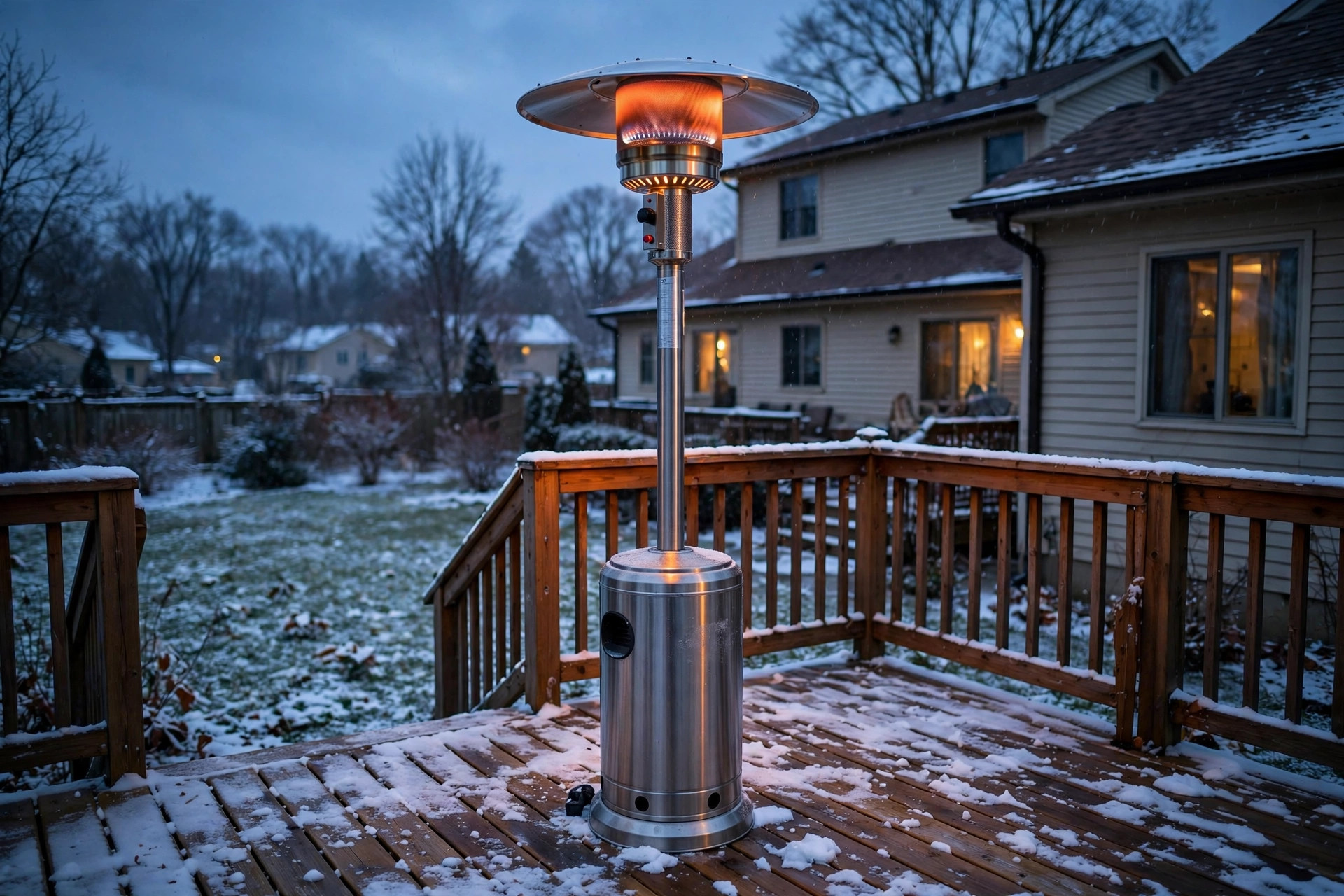
This is the classic shape. A tall pole holds a wide metal dome, the “mushroom cap.” Heat rises from a burner and the dome pushes it down and out. These are the workhorses of winter patios. They stand about seven feet tall and warm the largest area of any portable type.
Owners praise them for parties. One unit can warm a ring of six to eight chairs. The flaws are known. They are bulky. They drink propane fast on high. And the tall shape catches wind, so they need a firm base. Family Handyman has tested several models and notes that a weighted base makes a real difference on exposed decks.
Tabletop Heaters
Small heaters that sit on a patio table or a sturdy stand. They use small propane canisters and give off about 10,000 to 12,000 BTUs. The warm zone is tiny, maybe a few feet across. They suit two people sharing coffee on a small balcony.
Reviews are mixed. Owners love the low price and the easy storage. They complain that the canisters run out fast and cost more per hour than a full-size tank. Think of these as a warm candle, not a furnace.
Wall-Mounted and Hanging Heaters
Electric infrared heaters bolt to a wall or hang from a patio roof. They glow softly and warm people, not air. Because the heat is radiant, wind bothers them less than it bothers gas heaters. They are quiet and clean. Many owners mount two or three across a covered porch.
The catch is the wiring. Most need a dedicated circuit. A licensed electrician should handle the install. Once up, they are nearly free of upkeep. Reviewers who want heat without tanks or flames tend to land here. Carrier, Lennox, and Rheem all publish useful background on electric and radiant heating principles that apply to these units.
Fire Pit Tables and Pyramid Flames
Fire pit tables burn propane under a glass guard in the center of a table. Pyramid heaters hold a tall glass tube with a visible flame. Both look beautiful. A dancing flame makes a winter night feel special in a way a plain metal dome cannot.
Reviews are honest about the limits. Much of the heat goes straight up. The warm circle is smaller than a mushroom heater of the same BTU rating. You pay for the look. If mood matters as much as warmth, owners say the trade is worth it. Napoleon builds many of the best-known fire tables, and Weber covers the outdoor living side of these products.
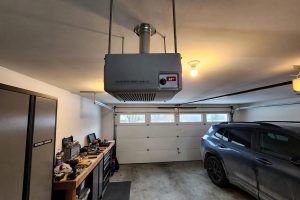
For indoor winter comfort, by contrast, many households look at different machines entirely, such as a linear electric fireplace for the living room or a garage unit heater for the workshop.
Cost and Price: What Reviews Say
Prices run in clear tiers. Tabletop models cost 60 to 120 dollars. Good standing propane heaters cost 150 to 350 dollars. Premium stainless models and fire tables run 400 to 900 dollars. Wall-mounted infrared units cost 100 to 300 dollars each, plus the electrician.
Running costs matter more than many buyers expect. Propane is the big one. A 20-pound tank refill costs 15 to 25 dollars in most of the country. On high, that buys you one long evening. Owners who run a heater most nights say the fuel bill adds up fast. Natural gas costs less per hour but needs the upfront line work.
Electric heaters cost about 18 to 25 cents per hour to run at 1,500 watts, based on average U.S. rates. That makes them the cheapest to operate. But they warm less space, so the saving only counts if the space is small.
Reviewers give the same advice every winter. Set a budget for fuel, not just for the heater. A cheap heater that eats propane all winter can cost more by March than a dear one that sips fuel. Goodman and The Spruce both carry cost comparisons that help buyers do this math before they buy.
Care and Upkeep Through Winter
A patio heater asks little, but it asks every year. Cover it when it is not in use. A fitted cover costs 20 to 30 dollars and adds years to the life of the unit. Water is the enemy. Rust starts at any scratch in the finish.
Check the burner before the first cold snap. Spiders love to nest in gas tubes over the summer. A blocked tube gives a weak yellow flame instead of a strong blue one. A quick pass with a pipe cleaner or a blast of compressed air clears it.
Propane fittings need a look each season. Brush soapy water on the joints and open the valve. Bubbles mean a leak. Close the valve at once and replace the hose or fitting. This simple test takes five minutes. Reviewers who skip it are the ones who write the scary stories.
Store tanks upright and outdoors, never in a closed garage or basement. When spring comes, roll the heater inside if you can. A dry summer in storage beats a wet one on the patio.
Safety Comes First
Heat and open flame demand respect. Every major brand now ships tip-over switches. If the unit falls, the gas cuts off. Make sure yours has one. Older used models may not.
Keep clear space. Most makers call for three feet of clearance on the sides and six to eight feet above. Do not use a propane heater under a low roof or inside a closed garage. Carbon monoxide is odorless and deadly. This is the most serious warning in every manual.
Let the unit cool before you touch it or cover it. The dome and the emitter screen stay hot long after the flame is out. Keep children and pets at a distance while it runs. A low fence of patio chairs works as a simple barrier.
If you want professional help with anything tied to gas lines or home heating, reading reviews of local firms helps. Our guide to the best HVAC companies near you explains what to ask before you hire.
Frequently Asked Questions
How long does a 20-pound propane tank last in a patio heater?
About 8 to 10 hours on the high setting. On low or medium, most owners report 12 to 15 hours. Cold air and wind make the heater work harder, so winter use lands at the low end of that range. Keep a spare tank if you host often.
Can I use a patio heater on a covered porch?
Only certain types. Electric infrared heaters are made for covered spaces. Propane and natural gas heaters need open air above them. Most manuals forbid use under any roof lower than eight feet. Read the manual for your exact model. When in doubt, choose electric for a covered porch.
Do patio heaters work in very cold weather?
They work, but the effect shrinks. Below freezing, the warm circle gets smaller and wind steals more heat. Reviewers in northern states say heaters shine down to about 35 degrees. Below that, they take the edge off rather than making the space toasty. Wind screens and patio curtains help a lot.
Are electric patio heaters cheaper to run than propane?
Yes, per hour, in most states. A 1,500-watt heater costs under a quarter per hour at average rates. A propane heater on high costs two to three dollars per hour in fuel. But propane warms a much larger area. For a big open patio, the cost per warm seat can end up close.
What is the safest type of patio heater?
Electric infrared heaters are the safest. They make no flame and no fumes. Among gas heaters, look for a tip-over switch, a flame-failure shutoff, and a sturdy weighted base. No heater is safe in a closed space. Open air and clear space are the real safety rules.
Should I buy a cheap patio heater?
Reviews say no, with one exception. A cheap tabletop unit for rare use is fine. For a main winter heater, cheap models rust fast, wobble in wind, and lose parts. Owners who bought the cheapest standing heater often buy a second, better one within two years. Spend once on solid build.
A Final Word
The best patio heater for winter reviews usa all point to the same lesson. Match the heater to your space. A big open deck wants a tall propane unit with high BTUs. A small covered porch wants electric infrared. A party patio wants the look of flame.
Read the reviews, but read them with care. Look for owners who used the heater through a whole winter, not just one weekend. Check the complaints about rust, wind, and fuel use. Those are the truths that matter when January comes.
Buy for build quality first and looks second. Keep up the small yearly care. Give the heater clear space and respect the flame. Do that, and your patio can stay open long after the neighbors have moved inside.
References
Carrier. (n.d.). Heating and cooling systems. https://www.carrier.com ENERGY STAR. (n.d.). Energy efficient products. https://www.energystar.gov Family Handyman. (n.d.). DIY home repair and maintenance. https://www.familyhandyman.com Goodman. (n.d.). Heating and cooling equipment. https://www.goodmanmfg.com Lennox. (n.d.). Heating and cooling systems. https://www.lennox.com Napoleon. (n.d.). Fireplaces, grills, and heating products. https://www.napoleon.com Rheem. (n.d.). Heating, cooling, and water heating. https://www.rheem.com The Spruce. (n.d.). Home and garden advice. https://www.thespruce.com U.S. Department of Energy. (n.d.). Energy efficiency and renewable energy. https://www.energy.gov Weber. (n.d.). Grills and outdoor cooking. https://www.weber.com
Was this guide helpful?

About Michael Thompson
The My Garden US editorial team writes practical, in-depth home and garden guides for American homeowners — tested advice, no fluff.
You May Also Like
Ceiling Fan Installation Cost Near Me: What You Should Expect to Pay
July 25, 2026 0 views
Radiant Barrier for Attic: A Plain Look at the Pros and Cons
August 23, 2026 0 views
Mini Split vs Central AC Cost Comparison USA: What Each System Really Costs
July 9, 2026 0 views