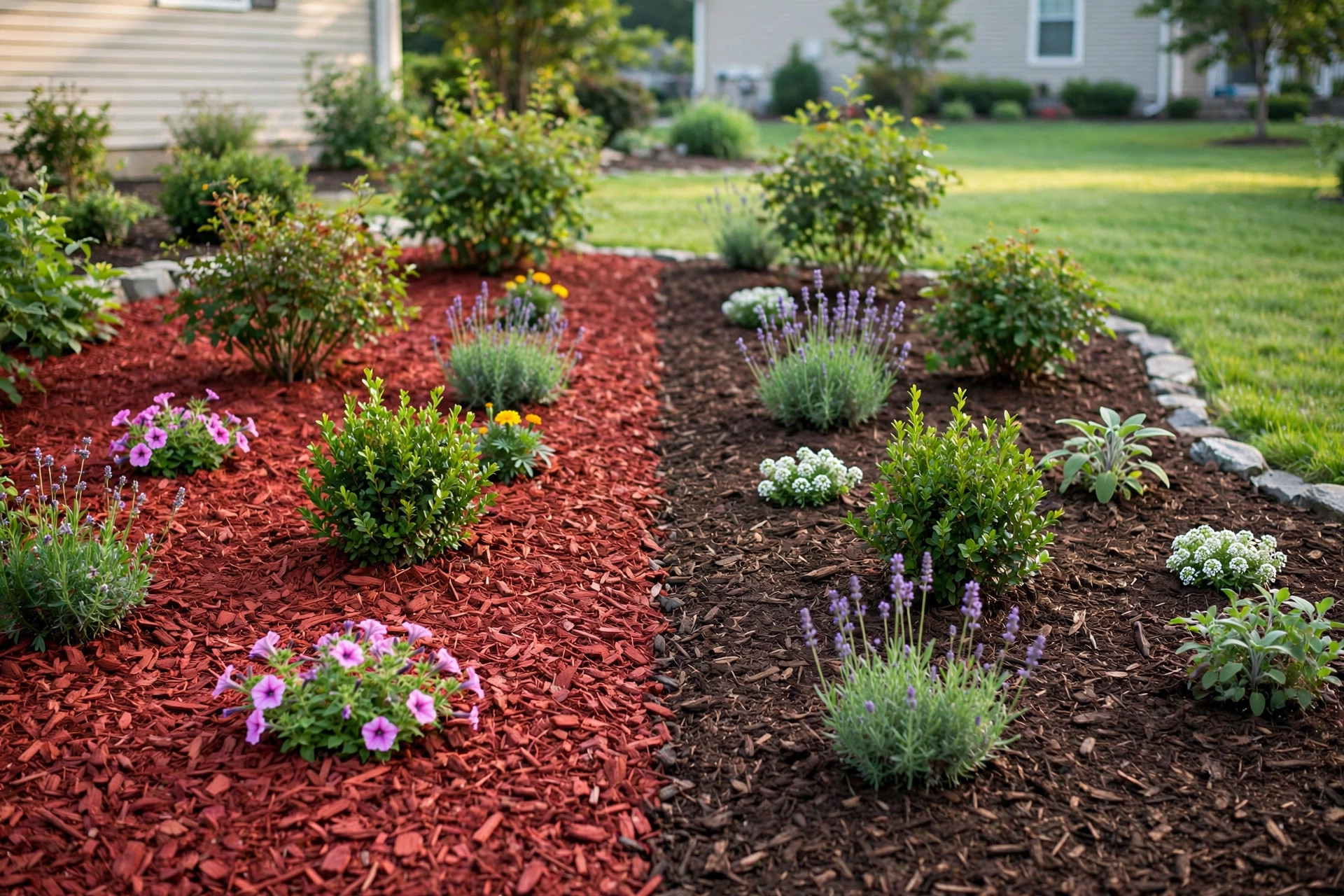

Every spring, home owners across the country face the same small puzzle. The beds need fresh mulch. The bags at the garden center come in bright red and plain brown. The question of red mulch vs brown mulch which better is simple to ask and harder to answer. Both products cover the soil. Both hold moisture. Both keep weeds down. Yet they differ in price, in looks, and in how long the color lasts. This guide walks through those differences in plain terms so you can choose with care and spend your money well.
Why the Mulch Color Question Matters
Mulch is more than a cover. It changes how soil behaves through the year. A thick layer of mulch holds water in the soil after rain and after the sprinkler runs. It keeps roots cool in July and warmer in the cold months. It blocks sunlight from weed seeds, and that means fewer hours spent on your knees with a hand tool.
Color enters the picture because dyed mulches are now common. Twenty years ago, most yards wore plain bark or shredded wood. Today, red mulch fills the shelves of every garden center in April. Brown mulch sits beside it in bags that promise a natural look. The question of which color to buy touches three things that matter to home owners: how the yard looks, how much it costs, and how much work it takes to keep it looking right. It pays to study the question before you buy.
How Each Mulch Is Made: Red Mulch vs Brown Mulch Which Better
Red mulch and brown mulch start from the same raw material. Both come from ground and shredded wood, often from pallets, shipping crates, and recycled lumber. The difference lies in what happens next.
Red mulch is wood fiber colored with a dye based on iron oxide, the same family of colorants used in bricks and in many food-safe pigments. The fiber is tumbled with the dye in large drums until every strand takes on a brick-red or rust tone. The color is strong from the start. It is meant to catch the eye.
Brown mulch comes in two forms. One is dyed with a dark brown or black colorant, often based on carbon. The other is simply aged wood, left to weather until the fibers darken on their own. The dyed brown version is the one most often sold beside red mulch. It is made to look like fresh forest floor. The color is softer and closer to what soil looks like on its own.
Because both products use recycled wood, quality can vary from bag to bag. The best way to judge is to look inside an open bag before you buy. The fibers should be clean, free of large splinters, and free of trash or plastic bits. A strong chemical smell is a warning sign. Fresh dye can smell sharp for a day or two, but the smell should fade quickly in the open air.
Side-by-Side Comparison
Looks and Curb Appeal
Red mulch makes a bold statement. It stands out against green grass and green shrubs. Some home owners love the contrast and say it makes the beds look neat. Others find the color harsh, especially in large beds.
Brown mulch is quiet. It fades into the background and lets the plants do the talking. Many landscape designers prefer it for that reason. A brown bed looks like the floor of a wood, and it suits almost every style of house. If you are unsure which you prefer, drive through your neighborhood. Note which color the yards you admire use. In most areas, brown outnumbers red by a wide margin.
How Long the Color Lasts
Here the two colors differ most. Red dye fades faster than brown dye. Strong sun breaks down the red colorant within weeks. By late summer, a spring bed of red mulch often looks pale, pink, or orange. Brown mulch also fades, but the change is gentle. It drifts toward a gray-brown that still looks natural. Home owners who want a steady look through the whole season tend to favor brown.
Rain and watering also wash color out over time. Heavy summer storms can carry loose dye onto concrete walks and driveways. Red mulch stains concrete more visibly than brown. If your beds sit close to a light-colored patio, brown mulch gives you fewer stains to scrub.
Weed Control and Moisture
On the job that matters most, the two are equal. Both are shredded wood, and both block light the same way when spread three inches deep. Both hold soil moisture the same way. Neither one feeds plants better than the other. The choice of color does not change how well the mulch does its basic work.
Safety for Pets, Plants, and Water
The dyes used in both red and brown mulch are generally judged safe for home use by the makers. Iron oxide colorants are the same kind used to color bricks, and they do not add harm to soil in normal amounts. Carbon-based brown dyes are also common and long used.
Still, a few words of care are in order. Do not use dyed mulch in a vegetable garden. The colorants are not food crops grade, and the wood may come from sources you cannot trace. Use plain bark or straw around tomatoes, peppers, and herbs instead. For flower beds and shrub borders, dyed mulch is the standard choice and gives no trouble.
Dogs and mulch are a common pairing in American yards. Shredded mulch of any color can irritate a dog that chews it, and the dyes can stain a light-colored coat. Keep a thick border between mulch beds and the dog run. If your dog is a determined chewer, consider pine straw mulch delivered in bulk as a softer option for the areas near the fence.
One more note on water. Mulch beds near streams, ponds, and storm drains should use undyed wood. Loose dye can wash into water during heavy rain. Keep a strip of grass or stone between the bed and any open water.
Cost and Price
Red and brown mulch sell at nearly the same price in most stores. A standard two-cubic-foot bag runs between three and five dollars in spring, when demand is high and sales are common. Brown mulch is sometimes a few cents cheaper per bag, but the gap is small. Where the real cost difference shows up is in how often you must buy again.
Because red mulch fades by midsummer, many home owners top off their red beds a second time each year. That doubles the yearly cost and doubles the labor. Brown mulch, faded gently, often needs only a single spring layer.
Buying in bulk changes the math for both colors. Landscape supply yards sell mulch by the cubic yard, often at a lower price per yard than bags. If you need ten yards or more for a large property, bulk delivery of mulch for flower beds beats bag prices in almost every case. Bulk loads also let you see the true color before you buy, which helps you avoid a yard of red that is brighter than you hoped.
Labor is the other cost. Spreading mulch is hard work. A full yard takes a strong afternoon with a wheelbarrow and a rake. Hiring a crew is common in many towns. Get quotes in early spring, before the busy season, and ask for a price per cubic yard spread.
Choosing for Your Home Style
Brick homes and red mulch are a known clash. The tones fight each other, and the yard can look busy. Brown mulch sits calmly against brick, stone, and most siding colors. White and light gray houses can carry red mulch with less trouble, since the strong color has a light backdrop to rest against.
Think about the plants too. A bed of red flowers against red mulch can blur together. Green shrubs, white blossoms, and yellow daylilies pop against either color. If you are weighing gravel vs mulch for landscaping beds, brown mulch suits a natural look best. Native-style plantings aim for a woodland feel, and red dye works against that aim.
Walk your own property with a fresh eye before you decide. Stand at the street and look at the house the way a visitor would. Note the roof color, the trim, the walk. Then pick the mulch that rests easiest against those tones. When in doubt, brown is the safer pick. It offends no eye and suits every style.
Care and Upkeep
Both colors need the same basic care. Spread the mulch three inches deep, no more. Deeper layers can hold too much water and rot the stems of shrubs. Keep the mulch two or three inches away from tree trunks and from the base of shrubs. Mulch piled against bark holds moisture there and invites rot and insects.
Rake the bed lightly once a month through the growing season. This keeps the surface even and breaks up any matted spots. Water passes through matted mulch more slowly, and weed seeds find footing in flat bare patches. A quick pass with a rake takes minutes and adds weeks to the neat look.
Top off red beds in midsummer if the fade bothers you. A thin one-inch layer is enough to bring the color back. Brown beds can often go the full season on the spring layer. In fall, leave the old mulch in place. It will break down over winter and feed the soil, and you can lay the new spring layer right over it.
Weeds still grow through any mulch. A few will root in the mulch itself each year. Pull them when small. A hoe or a hand weeder does the job. Do not spray weed killer over the beds. The spray can drift onto the plants you want to keep.
Tools That Make the Job Easier
Spreading mulch is simpler with the right gear. A deep wheelbarrow carries more per trip. A stiff garden rake spreads the layer fast. For the yard itself, makers like Toro and John Deere build the mowers and yard tools that keep the lawn around the beds in trim shape, and Briggs & Stratton engines power much of the equipment found in American sheds. Sound tools, kept sharp and clean, cut the work in half.
The Environmental Angle
Both mulches recycle wood that might otherwise go to a landfill. That is a point in their favor. The dyes add a step of processing, and the wood source matters. Some bags carry wood from clean lumber. Others carry wood from old pallets that may hold paint or nails. Check the bag for a note that the wood is from clean, untreated sources.
Local mulch from tree services is another path. Many tree companies give away or sell cheap loads of fresh wood chips. The color is plain and natural. The chips are rough, not dyed, and they break down well. If the natural look suits you, this is the cheapest and greenest choice of all. Check that the chips have aged for a few weeks before you spread them, since fresh chips can pull nitrogen from the soil surface as they break down.
FAQ
Is red mulch dyed, or is that its natural color?
Red mulch is dyed. The raw wood is plain. Iron oxide colorants give it the brick-red tone. No tree produces red wood fiber on its own.
Which mulch lasts longer, red or brown?
Brown mulch holds its color longer. Red mulch fades to pink or orange by late summer in strong sun. Brown drifts to a soft gray-brown that still looks natural. Both break down at the same rate as wood fiber.
Does red mulch harm plants or pets?
In normal use, no. The iron oxide dyes are the same family of colorants used in bricks. Still, keep dyed mulch out of vegetable gardens, and keep it away from dogs that chew. For soft areas near pets, plain pine straw from a bulk delivery is a gentler choice.
Can I mix red and brown mulch in the same bed?
You can, but the result often looks messy. The strong red draws the eye to every spot where the two meet. It is better to pick one color per bed and stay with it.
How many bags do I need for my beds?
Measure the bed in feet. Length times width times depth in feet gives cubic feet. Divide by 27 for cubic yards. One two-cubic-foot bag covers about twelve square feet at a three-inch depth. Round up a little. It is better to have one bag extra than to run short on a Saturday afternoon.
Will mulch stain my driveway?
Red mulch can stain light concrete. Loose dye washes out of the bed in heavy rain and leaves rust-colored marks on walks and drives. Brown mulch stains far less.
The Final Word
The question of red mulch vs brown mulch which better has no single answer, but it has a clear lean. Brown mulch is the safer, steadier, and often cheaper choice across a full season. It suits more house styles, fades more gently, and stains less. Red mulch has its place. It gives a bold, tidy look that some home owners love, and it can lift a plain yard with strong color.
Match the mulch to your house, your plants, and your patience for upkeep. If you love the red look and do not mind a midsummer top-off, buy red and enjoy it. If you want one spring job that carries you to fall, buy brown. Either way, spread it three inches deep, keep it off the trunks, and pull the few weeds that rise. Your beds will thank you with a neat face all season long.
References
Toro. (n.d.). Lawn mowers and yard care equipment. https://www.toro.com John Deere. (n.d.). Lawn and garden equipment. https://www.deere.com Briggs & Stratton. (n.d.). Small engines for outdoor power equipment. https://www.briggsandstratton.com
Was this guide helpful?

About Lisa Anderson
The My Garden US editorial team writes practical, in-depth home and garden guides for American homeowners — tested advice, no fluff.
You May Also Like
Best Soil for Topdressing Lawn Reviews: A Plain Guide to What Really Works
March 8, 2026 0 views
Best Weed Control for Flower Beds: A Complete Guide
July 9, 2026 0 views
Stump Killer for Tree Stumps Reviews: What Buyers Should Know
July 22, 2026 0 views