
Introduction
Every pool owner asks how to clean pool ladder steps at some point. The steps of a pool ladder stay under water for months. Water flows around them. Swimmers touch them every day. Dirt, body oils, sunscreen, and algae settle on the rungs and the small rails. Over time the steps turn green, slimy, or brown. They feel slick under bare feet. They also look bad.
The good news is that cleaning pool ladder steps is simple work. You need only common supplies and about half an hour. You do not need special skills. You do not need to drain the pool. This guide walks through the whole process in plain steps. It covers the tools, the cleaners that are safe for pool water, how to remove algae and stains, and how to keep the steps clean for the rest of the season.
Why Clean Pool Ladder Steps Matter: How to Clean Pool Ladder Steps
Pool ladder steps do more work than they seem to do. They carry every swimmer in and out of the pool. They sit at the exact point where feet grip and hands pull. When the steps are dirty, two problems follow.
The first problem is safety. Algae and biofilm grow fast on wet plastic and stainless steel. A thin green film feels like soap under a bare foot. Falls on ladders are common and painful. A clean ladder gives firm grip. A slick ladder does not.
The second problem is water quality. Dirty steps feed the pool with algae spores and bacteria every day. The filter must work harder. The owner uses more chemicals. Clean steps mean clearer water and fewer chemical costs.
Dirty steps also shorten the life of the ladder. Minerals, chlorine residue, and grime eat into the finish. Stainless steel rails develop dull spots. Plastic treads grow brittle faster. A quick monthly cleaning keeps the ladder strong for many years.
What You Need Before You Start
Gather these supplies before you begin. Most pool owners already have them.
– A soft brush with medium bristles, or an old toothbrush for tight corners – A pool brush or nylon scrub brush for the larger surfaces – White distilled vinegar or a mild pool surface cleaner – Baking soda for gentle scrubbing – A bucket of fresh water – A garden hose with a spray nozzle – Rubber gloves – Old towels or rags – A plastic putty knife for thick scale or mineral crust – Pool test strips or a test kit
Avoid stiff wire brushes on plastic steps. They scratch the surface. Scratches give algae more places to hide. Avoid household bleach in the pool unless you measure it carefully. High doses of bleach damage liners and irritate skin. Avoid acid cleaners unless you know how to use them safely.
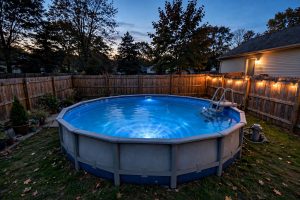
If you own an above-ground pool, the ladder may be removable. Many owners pull the ladder out of the water and clean it on the deck. That is the easiest method of all. If you want to compare styles, see our guide to the best pool ladder for above ground pools before you shop for a replacement.
How to Clean Pool Ladder Steps: Step-by-Step
Step 1: Test and Balance the Pool Water
Start by testing the water. Use test strips or a test kit. Check pH and chlorine first. Good numbers help every cleaning step work better. If the pH is very high or very low, adjust it first. Balanced water stops algae from returning right after you clean.
Swim University publishes simple guides on water balance that many owners trust for this first check. (https://www.swimuniversity.com)
Step 2: Brush the Steps Loosely
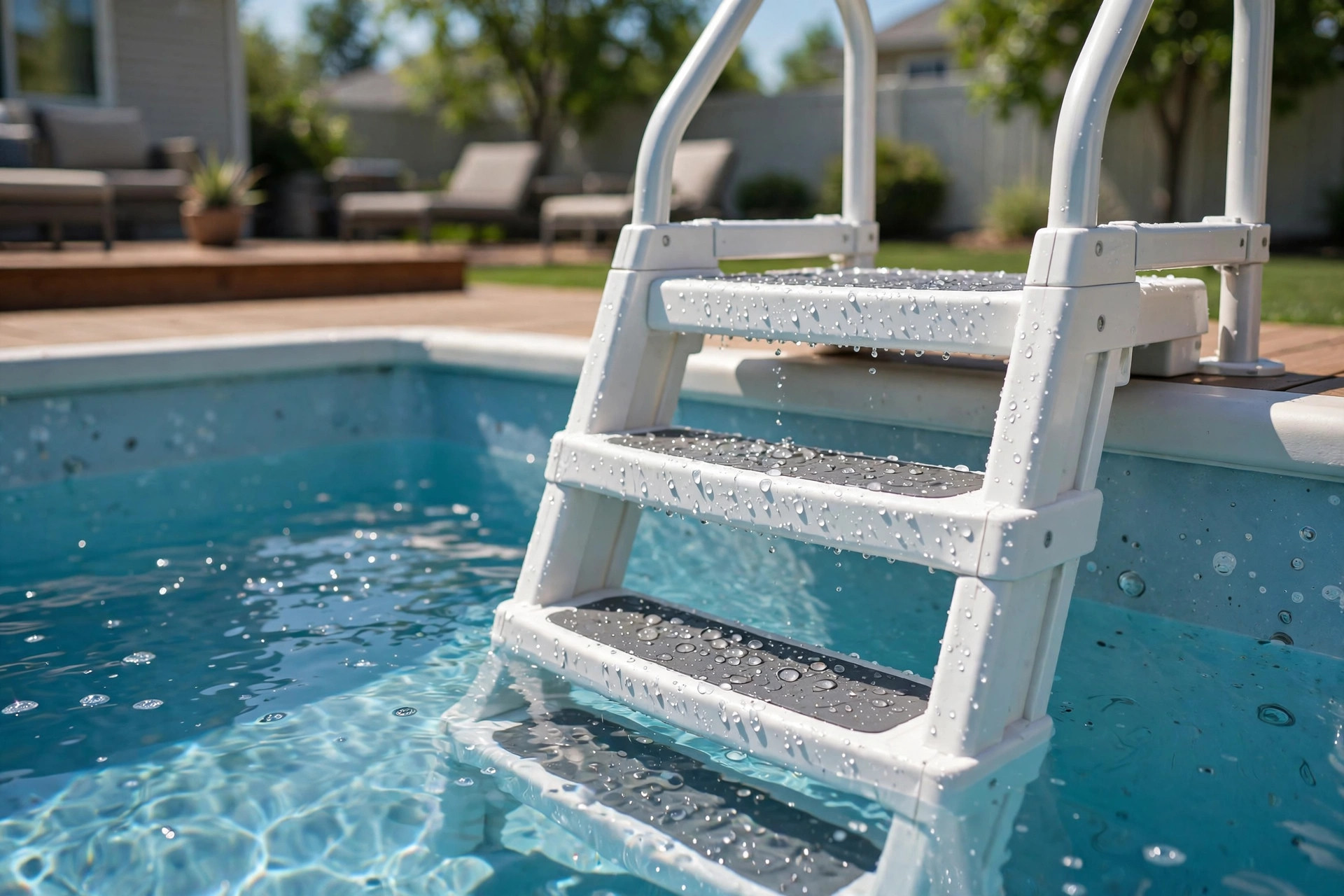
Use your soft brush and scrub the steps while they are still in the water. Work from top to bottom. Brush the treads, the sides, and the rails. This first pass removes loose dirt and light algae. It also shows you where the stubborn spots are.
Take care around joints and bolt holes. Algae loves these small gaps. Push the brush into each corner. If you own pool steps rather than a simple ladder, the same idea applies. Larger plastic steps have wide treads that trap sand. Our review of the best pool steps for above ground pools explains which designs are easiest to keep clean.
Step 3: Remove the Ladder if Possible
Many ladders slide up and out of their deck sockets. If yours does, lift it out. Place it on a towel or a soft patch of grass. Cleaning on dry land is faster and cleaner. You can see every spot. You also keep the loosened dirt out of the pool.
If the ladder is bolted down, leave it in place. You can still clean it well. Just work slowly and rinse as you go.
Step 4: Apply a Gentle Cleaner
Mix a simple cleaner. One good mix is one part white vinegar to one part water in a spray bottle. Spray it over all the steps and rails. Let it sit for five minutes. The mild acid loosens mineral film and light algae.
For tougher spots, make a paste of baking soda and water. Spread it on the stains. Let it sit for ten minutes. Baking soda is gentle. It lifts grime without scratching plastic or dull steel.
For heavy algae, use a pool-rated surface cleaner from a pool supply store. Leslie’s Pool Supplies carries cleaners made for ladders and steps that rinse safe into pool water. (https://www.lesliespool.com) Follow the label exactly. More cleaner is not better. It can cloud the water.
Step 5: Scrub Every Surface
Now scrub with your brush. Use firm, even strokes. Clean the top of each tread first, then the front edge, then the underside. Clean the rails from top to bottom. Scrub the joints and the mounting plates.
For tight gaps, use an old toothbrush. Dip it in the baking soda paste. Work it around each bolt and into each seam. This is where hidden algae lives. Pool Warehouse offers many brush styles sized for these tight spots if your old tools are worn. (https://www.poolwarehouse.com)
If you see thick white crust, that is calcium scale. Scrape it gently with a plastic putty knife. Never use a metal tool on plastic steps. It will gouge the surface.
Step 6: Rinse Fully
Rinse everything with the garden hose. Wash away all cleaner and loose dirt. Do not leave vinegar or paste on the steps. Leftover acid can lower the pH of the pool water near the ladder.
If the ladder is out of the pool, rinse it well on both sides. Look it over in daylight. Re-scrub any spot you missed.
Step 7: Replace and Final Check
Slide the ladder back into its sockets or tighten the bolts. Brush the steps once more under water to knock off any dust from the deck. Check that each tread feels firm and not slick.
How to Remove Algae and Stains from Ladder Steps
Algae on ladder steps usually shows as green or black slime. It grows where sunlight hits and water moves slowly. The ladder steps are perfect for it.
To kill algae on the steps, follow the steps above, then add one more treatment. Shock the pool according to your normal routine. Then raise the chlorine slightly around the ladder area by brushing the pool walls near the steps. The filter will clear the dead algae in a day or two.
Black spots that will not scrub off may be black algae. It digs into plastic. Use a pool-rated black algae treatment and a stiff nylon brush. Repeat the treatment over several days. It takes patience.
Brown or rust-colored stains come from metals in the water, often iron. A vitamin C test tells you if it is metal. Rub a vitamin C tablet on the stain. If the stain fades, it is a metal stain. Use a metal stain remover made for pools. Follow the label.
For general algae advice that covers walls, floors, and steps together, read our guide on how to remove algae from pool walls. The same chemistry applies.
The Spruce has helpful notes on pool surface stains that many owners use as a second opinion when a stain will not move. (https://www.thespruce.com)
Preventing Slime and Buildup Through the Season
Cleaning once is not enough. A small routine keeps the steps clean all summer.
– Brush the steps once a week during regular pool cleaning. It takes two minutes. – Keep chlorine at the right level. Low chlorine is the main cause of slimy steps. – Keep the water moving. Poor circulation lets algae settle on the steps. – Hose down the steps when you clean the pool deck. Sunscreen washes off feet and collects on treads. – Remove the ladder in the off season. Store it dry and out of the sun.
Check the steps each time you test the water. If a tread feels slippery, brush it that day. Do not wait. A small job today avoids a big scrubbing job later.
Some owners keep a cheap brush hanging by the pool just for the ladder. That small habit works better than any product.
What It Costs
Cleaning pool ladder steps costs very little. Most supplies are things you already own.
A good pool brush costs between five and fifteen dollars. A bottle of pool surface cleaner costs between eight and twenty dollars. Baking soda and vinegar cost under five dollars. Pool test strips cost about ten to twenty dollars for a bottle of fifty.
If the ladder itself is worn out, a new one costs more. Basic above-ground ladders run from sixty to two hundred dollars. Stainless steel ladders for in-ground pools run from two hundred to six hundred dollars. Replacing a ladder that is cracked or rusted is safer than nursing it along.
Home Depot stocks brushes, cleaners, and ladders at prices that most budgets can handle. (https://www.homedepot.com) Lowe’s carries a similar range of pool care supplies for owners who prefer to shop there. (https://www.lowes.com)
Safety First
Pool ladders sit at the edge of deep water. Follow these safety rules during cleaning.
– Never let children use the ladder while you work on it. Keep them out of the pool. – Wear rubber gloves when you use any chemical cleaner. – Read the label on every product. Use only cleaners marked safe for pools. – Do not mix cleaners. Mixed chemicals can release harmful gas. – If you climb into the pool to clean, enter slowly. Wet ladders are slippery. – Check that the ladder is firmly seated before anyone uses it again.
The U.S. Consumer Product Safety Commission publishes pool safety guidance that every pool owner should read at least once. (https://www.cpsc.gov)
If your ladder has sharp edges, loose bolts, or cracked plastic, fix it before the next swim. No cleaning routine replaces a sound ladder.
FAQ
How often should I clean pool ladder steps?
Brush them lightly every week during swim season. Give them a deep clean once a month. If your pool gets heavy use or sits under trees, clean more often. Weekly brushing takes only a few minutes and stops algae from taking hold.
Can I use bleach to clean pool ladder steps?
You can, but be careful. Household bleach is strong chlorine. A small amount mixed with water works as a cleaner. Rinse it fully before it goes back in the pool. Too much bleach can damage liners and irritate skin. Pool-rated cleaners are safer and easier to measure.
How do I clean pool ladder steps without removing the ladder?
Brush them under water first. Then spray vinegar or cleaner on each step and scrub with a nylon brush. Rinse by brushing again under water. The pool filter will catch the loosened dirt. Run the filter for a few hours after a deep in-water cleaning.
Why do my pool ladder steps turn green so fast?
Green steps mean algae. The most common cause is low chlorine or poor circulation near the ladder. Test the water and fix the chemistry. Then clean the steps and brush them weekly. Green growth returns quickly in warm, still water with low sanitizer.
Are hot tub steps cleaned the same way?
The method is similar. Hot tub steps also collect body oils and film. Use cleaners marked safe for spas, since hot water and jets change the chemistry. Hot Spring Spas and Bullfrog Spas both publish care tips for their spa steps and shells that work for most brands. (https://www.hotspring.com) (https://www.bullfrogspas.com)
Should I replace or clean an old rusty ladder?
Light surface rust on stainless steel can be cleaned with a nylon pad and polish. Deep rust, cracked plastic, or loose bolts mean the ladder should be replaced. A failing ladder is a safety risk. Do not trust a ladder that moves when you climb it.
A Final Word
Clean pool ladder steps are a small job with a large payoff. They keep swimmers safe. They keep water clear. They make the whole pool look cared for. The method is simple: test the water, brush, clean with gentle products, scrub the corners, and rinse well. A weekly brushing habit does most of the work for you.
Set a reminder to check the steps each time you test the water. In a few minutes per week, you will never face a ladder covered in green slime again. Your feet will thank you. Your pool will look better. And the ladder will last for many more seasons.
References
Bullfrog Spas. (n.d.). Hot tubs and spas. https://www.bullfrogspas.com Hot Spring Spas. (n.d.). Hot tubs and spas. https://www.hotspring.com Leslie’s Pool Supplies. (n.d.). Pool supplies and equipment. https://www.lesliespool.com Pool Warehouse. (n.d.). Pool equipment and supplies. https://www.poolwarehouse.com Swim University. (n.d.). Pool and hot tub care guides. https://www.swimuniversity.com The Home Depot. (n.d.). Home improvement products. https://www.homedepot.com The Spruce. (n.d.). Home and garden advice. https://www.thespruce.com U.S. Consumer Product Safety Commission. (n.d.). Product safety information. https://www.cpsc.gov
Was this guide helpful?

About Emily Rodriguez
The My Garden US editorial team writes practical, in-depth home and garden guides for American homeowners — tested advice, no fluff.
You May Also Like
Inground Pool Steps Replacement Cost: What Homeowners Should Expect to Pay
February 28, 2026 0 views
Fiberglass Pool Installation Cost in the USA: What to Expect
March 19, 2026 0 views
Best Hot Tub Steps With Storage: A Practical Buyer’s Guide
August 11, 2026 0 views