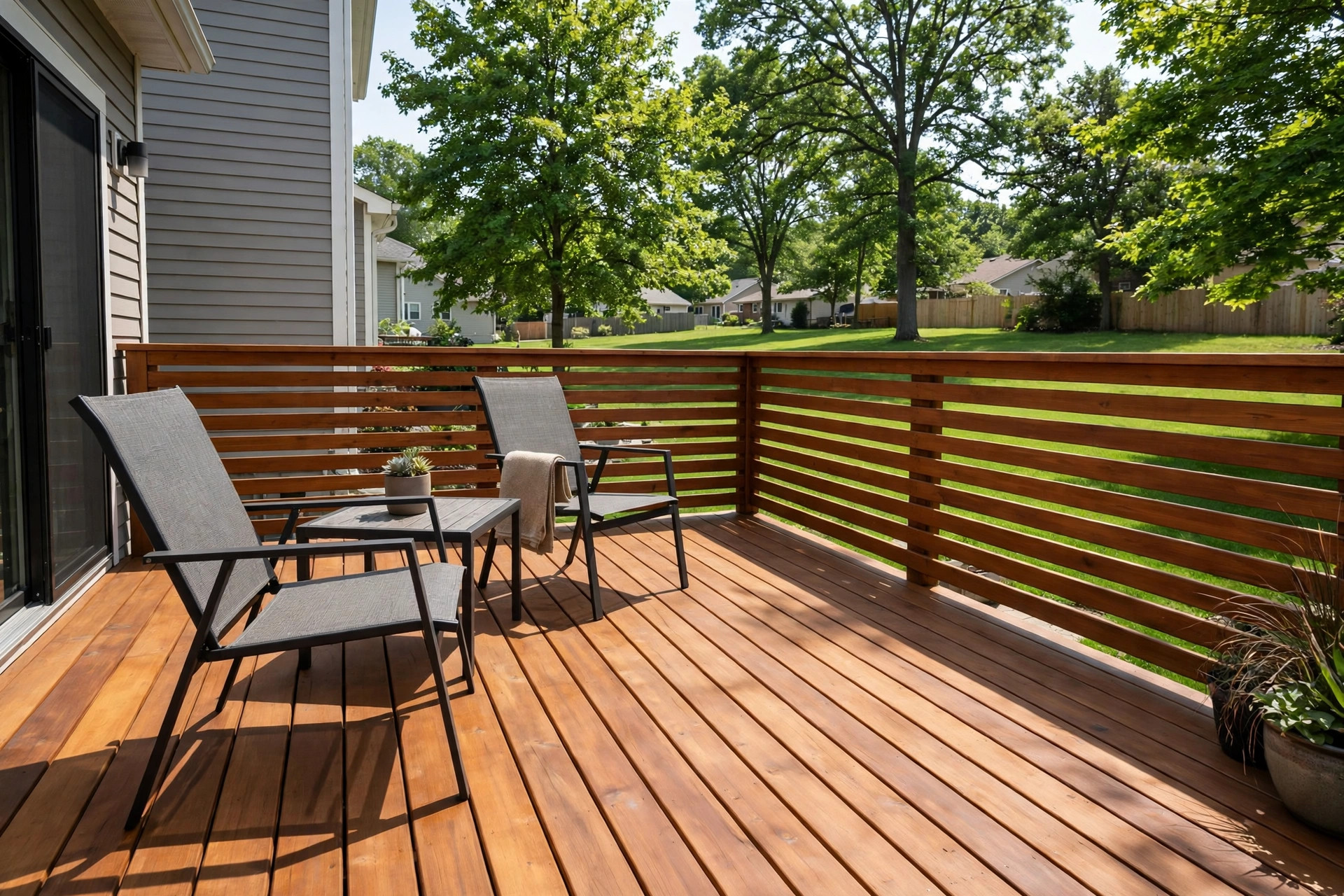

Every wooden deck grows old. Rain, sun, and snow wear the boards down year after year. The stain fades. The wood turns gray. Small cracks grow into rough splinters. When a deck reaches this stage, the owner faces a choice. Tear the whole thing down and start over, or give the surface new life. For many homes, the second choice is the wise one. That is why so many people want to know the deck resurfacing cost per square foot USA before they call a contractor or buy the first can of stain.
Resurfacing means you keep the deck frame and replace or repair only the worn surface. In most cases, the crew pulls up the old deck boards, checks the joists and posts below, and lays down new boards on the same frame. Sometimes it also means heavy sanding, new stain, and new railings. The work costs far less than a full rebuild. It also takes far less time. This guide walks you through the prices, the choices, and the steps, so you can plan with a clear head.
Why Resurfacing Matters
A deck is one of the hardest working parts of a house. It holds cookouts, birthdays, and quiet mornings with coffee. It also takes the full force of the weather. In the United States, most decks are built from pressure treated pine, cedar, or redwood. These woods last about ten to fifteen years on the surface before they look tired. The frame below often lasts twice as long.
When the surface fails first, a full tear down wastes good lumber. The posts, beams, and joists may still be strong for years. Resurfacing keeps the good parts and swaps the bad ones. This saves money. It also saves the hassle of digging new footings and pulling new permits in many towns.
Safety is another reason. Worn boards get slick. They cup and twist. They leave nails sticking up. A resurface fixes these dangers in one pass. The result looks better too. A new deck surface can raise the value of a home. Buyers notice a clean deck the moment they step into the yard.
Finally, there is timing. Spring and early summer are the busy season for deck contractors. If you wait until the deck is falling apart, you may pay a rush price. If you plan early and learn the deck resurfacing cost per square foot USA numbers now, you can book the work when prices are calm.
What to Look for When You Choose: Deck Resurfacing Cost Per Square Foot Usa
Not every deck is a good candidate for resurfacing. Before you spend money, check the bones of the deck. This check will tell you if a resurface is enough or if you need a full rebuild.
Check the Frame First
Crawl under the deck with a flashlight. Look at the posts, beams, and joists. Push a screwdriver into the wood in several spots. If the tool sinks in easy, the wood is rotting. A little soft wood on one joist can be fixed. Widespread rot means the frame is done. Also check the ledger board where the deck meets the house. If it is loose or rotted, the deck is not safe. Fix that first.
Check the Footings
Footings are the concrete bases that hold the posts. If the posts lean, or the deck feels springy when you walk on it, the footings may be failing. A contractor can lift and reset a post. But if several footings are bad, a rebuild may cost less in the long run.
Check the Boards
Look at the deck boards. Gray color and surface cracks are normal signs of age. They resurface well. Deep splits, wide cupping, and boards that bend under your weight do not. Those boards must be replaced. Replacing the boards on a good frame is the heart of a resurfacing job.
Types of Deck Resurfacing
There is no single way to resurface a deck. The right method depends on how worn the deck is and how much you want to spend.
Board Replacement
This is the most common method. The crew pulls up all the old deck boards and lays new ones on the old frame. You can switch materials at this point. Many owners move from wood to composite boards because they last longer and need less care. The frame must be in good shape for this to work. This method gives you a like new deck at about half the price of a rebuild.
Sanding and Refinishing
If the boards are still solid but look rough, sanding and a fresh finish can save them. The crew sands the boards smooth, fills small cracks, and applies stain or sealer. This works best on decks under ten years old with light wear. It costs the least of all the options. But it will not fix warped or split boards.
Composite Overlay
Some companies offer systems that lay new composite boards right over the old deck boards. This is faster than a full board replacement. The old boards act as a base. This only works if the old boards are flat and sound. Ask the maker about warranty terms before you agree.
Full Surface Makeover
The biggest jobs include new boards, new railings, new stairs, and new lighting. The frame stays, but everything you see and touch is new. This costs more, but the deck looks brand new. If the railings are loose or the stairs are worn, add them to the job now. Doing it all at once is cheaper than two separate visits.
Cost and Price
Now for the numbers. The deck resurfacing cost per square foot USA falls in a wide range because labor, material, and region all matter. Here is what most owners pay in 2026.
National Averages
For a basic resurface with pressure treated pine boards, most contractors charge between 8 and 15 dollars per square foot. That includes labor and materials. A mid range job with cedar or a stain grade board runs 12 to 22 dollars per square foot. A premium job with composite boards runs 20 to 35 dollars per square foot.
Sanding and refinishing alone is much cheaper. Most pros charge 3 to 8 dollars per square foot for a full sand, stain, and seal. That is a small share of the price of new boards.
A full surface makeover with new railings and stairs can reach 30 to 45 dollars per square foot. At that point, you are close to the cost of a full rebuild, which runs 35 to 60 dollars per square foot in most states. Compare the quotes side by side before you decide.
What Drives the Price
Size is the biggest factor. A 200 square foot deck costs more per square foot than a 600 square foot deck because the crew still needs a full day of labor either way. Material is next. Composite boards cost two to three times more than treated pine, but they need almost no care. Your region matters too. Labor costs are higher on the coasts and in big cities. They are lower in the Midwest and the South.
Access is often missed. If the deck is high off the ground, the crew needs more time and more safety gear. If the yard is hard to reach with trucks and tools, the price goes up. Permits can add 100 to 300 dollars in some towns. Old paint or stain that must be stripped off can add 1 to 3 dollars per square foot.
How to Keep Costs Down
Get three written quotes. Ask each contractor to break down labor and materials. Check that the frame will be inspected as part of the job. Some owners save money by doing the demolition themselves and hiring a pro for the new boards. If you have the skill, refinishing is a fair do it yourself job. Board replacement is harder and best left to a pro, since the frame must be checked and leveled.
Buy materials in the off season. Late fall and winter are slow times for deck suppliers. Stores like The Home Depot and Lowe’s often cut prices on deck boards in those months. You can also compare board brands at makers such as Mohawk Flooring, Shaw Floors, and LL Flooring to learn the price gaps between wood and composite lines.
Care and Upkeep
A resurfaced deck is an investment. A little care each year will protect it. Start with cleaning. Sweep the deck once a week in the season you use it. Wash it with a mild soap and a soft brush once or twice a year. A pressure washer works too, but keep the pressure low. High pressure tears wood fibers and voids some warranties.
Reseal wood decks every two to three years. Watch for gray color and water that soaks in instead of beading up. Those are the signs the finish is gone. Composite decks need less work, but they still need a wash. Dirt and pollen can stain the surface if they sit too long.
Move planters and grills now and then. Trapped water under a pot will stain and rot the boards below. Trim plants that rub against the railings. Check the fasteners once a year. Tighten any loose screws. Look for boards that have started to cup. Catching a bad board early keeps the rest of the deck safe.
If you are working on other floors in the home at the same time, the planning is much the same. Many owners compare this job with the tile installation cost per square foot usa when they budget a full home project. Outdoor surfaces have their own needs too, like the best tile for outdoor patio in texas or non slip outdoor tile for pool deck usa guides many homeowners read before they build.
Safety
A deck is only as safe as its weakest part. During the resurface, ask the contractor to check every joist hanger, bolt, and post connection. Old nails can be replaced with screws, which hold better over time. Railings should stand firm when you push on them. Building codes in most states call for railings that hold 200 pounds of force.
Keep the work area safe. Cover plants and keep kids and pets away from the site. Deck stain fumes can be strong, so do the finishing on a calm dry day. Wear a mask when sanding. The dust from old treated wood is not good to breathe.
After the job, add lighting to the stairs. Most deck falls happen on steps at night. Solar step lights are cheap and easy to install. For code and planning advice, This Old House and The Spruce both keep clear deck guides that are worth a read before you start.
FAQ
How long does a deck resurface take?
Most jobs take three to seven days. A simple sand and refinish can be done in two days. A full board replacement with new railings takes a week or more. Weather can add time.
Can I resurface a deck myself?
You can refinish a deck yourself if the boards are sound. Board replacement is harder. You must check the frame, level the joists, and space the boards right. Most owners hire a pro for the boards and do the staining themselves.
Is resurfacing cheaper than rebuilding?
Yes, in most cases. Resurfacing runs about half the cost of a full rebuild because you keep the frame, footings, and posts. If the frame is bad, though, a rebuild is the safer choice.
How long will a resurfaced deck last?
A wood resurface lasts 10 to 15 years with good care. A composite resurface can last 25 to 30 years. The frame below may last 20 to 25 years in total.
What is the cheapest way to resurface a deck?
Sanding and refinishing is the cheapest path, at 3 to 8 dollars per square foot. If new boards are needed, pressure treated pine is the lowest cost board material.
Do I need a permit to resurface my deck?
It depends on your town. Many places do not require a permit if you keep the same size and frame. New railings, stairs, or a larger deck often do need one. Call your local building office before work starts.
A Final Word
Knowing the deck resurfacing cost per square foot USA is the first step, not the last one. Walk the deck. Check the frame. Get three quotes. Pick the material that fits your budget and your patience for upkeep. A well planned resurface gives you a deck that looks new, feels safe, and lasts for years. For more material ideas, browse the outdoor and tile resources at Daltile and compare real product lines before you buy.
References
Daltile. (n.d.). Ceramic and porcelain tile. https://www.daltile.com LL Flooring. (n.d.). Hardwood, vinyl, and tile flooring. https://www.llflooring.com Lowe’s. (n.d.). Home improvement products. https://www.lowes.com Mohawk Flooring. (n.d.). Flooring products. https://www.mohawkflooring.com Shaw Floors. (n.d.). Flooring products. https://www.shawfloors.com The Home Depot. (n.d.). Home improvement products. https://www.homedepot.com The Spruce. (n.d.). Home and garden advice. https://www.thespruce.com This Old House. (n.d.). Home renovation guidance. https://www.thisoldhouse.com
Was this guide helpful?

About Emily Rodriguez
The My Garden US editorial team writes practical, in-depth home and garden guides for American homeowners — tested advice, no fluff.
You May Also Like

Wool Carpet Pros and Cons for Bedrooms: An Honest Guide
July 3, 2026 0 views
Waterproof Flooring for Basements: Reviews for American Homes
January 17, 2026 0 views
Best Carpet Cleaner for Pet Stains USA: A Complete 2026 Guide
June 22, 2026 0 views