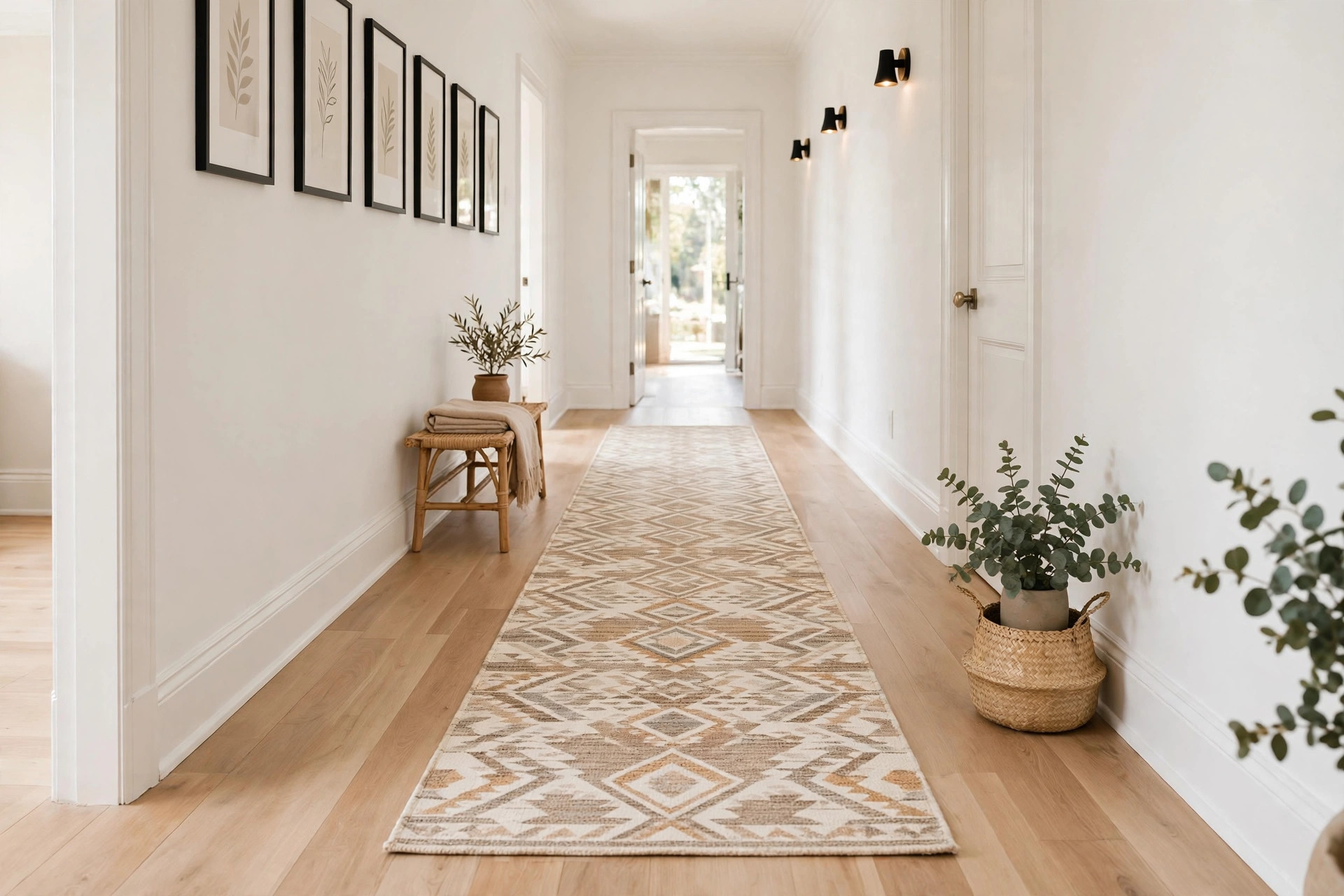

A machine washable runner for hallway spaces in USA homes solves a plain problem. Hallways take heavy foot traffic. Shoes bring in dirt, mud, and salt. A runner protects the floor beneath. When it gets dirty, you put it in the washing machine. This simple idea saves money and time.
Old hallway rugs needed a trip to the dry cleaner or a long day of scrubbing by hand. A washable runner changes that. You can clean it the same way you clean your clothes. Many American families now pick washable rugs for this reason alone.
Why It Matters
The hallway is the hardest working floor in the house. Everyone walks through it. Children run through it. Pets do too. Muddy boots and wet paws leave marks. A machine washable runner for hallway floors takes this wear so the floor does not have to.
Hardwood floors scratch under grit. Tile floors get slippery when wet. Carpet wall to wall traps dirt. A runner sits on top and guards the surface. When it looks tired, you wash it. A fresh runner costs far less than refinishing wood or replacing tile.
There is also the matter of noise. Hard hallway floors make footsteps loud. A runner softens each step. This helps in homes with sleeping babies or thin walls between apartments. A runner also adds warmth and color to a plain passage.
What to Look for: Machine Washable Runner for Hallway Usa
Thin and Flat Backing
Choose a runner with a thin, flat back. Thick rugs jam in doors. Hallways often have doors that open inward. A low pile lets doors swing clear. Most machine washable runner for hallway usa models use a flat weave or a short pile for this reason.
Non-Slip Base
A runner that slides is a fall risk. Look for a built in non-slip pad or buy a rug pad made for washable rugs. The pad keeps the runner in place on tile, wood, or vinyl. Guides on The Spruce explain how the right pad stops bunching and slipping.
True Machine Washability
Read the label before you buy. Some rugs say “easy care” but cannot go in the washer. A true washable runner fits a standard home machine and keeps its shape after washing. Reviews on Consumer Reports note that some cheap rugs curl or fade after a few cycles, so check the care rating.
Size and Fit
Measure your hallway before you order. Leave a few inches of bare floor on each side of the runner. Standard runners are 2 to 3 feet wide and 6 to 12 feet long. For long halls, two matching runners can work side by side. Lay them so the seam sits under no main walk path.
Types and Options
Polyester Flat Weave
These are the most common. The pile is thin, the patterns are printed or woven in, and the rug is light enough to fold into a washer. They dry fast. Many brands sold through Wayfair and Home Depot use this build.
Cotton Washable Runners
Cotton rugs feel soft underfoot and wash well. They can shrink a little on the first wash if the water is hot. Wash cold and dry on low heat or air dry. Cotton works best in low moisture halls, not near a wet mudroom door.
Rugs with a Separate Pad System
Some designs split the runner into a decorative top and a washable pad. You wash the top and keep the pad. The pad has the grip layer. This system keeps the top light, so it spins well in the machine. Designers at IKEA have popularized this two part approach.
Indoor-Outdoor Style
Polypropylene runners meant for patios can double as hallway rugs in busy homes. They wash easily and resist stains. They feel stiffer than cotton but last longer. Guides on Lowe’s list these as a good pick for homes with large dogs.
When picking a fiber, also think about the floor under the runner. On wood floors, a breathable thin rug is best. Homeowners comparing floors for busy spaces often start with our guide to pet friendly flooring options for usa homes before choosing a runner to go on top.
Cost and Price
Prices run from about 30 dollars to over 200 dollars. Most good runners fall between 50 and 120 dollars.
– Small runners (2 by 6 feet): 30 to 60 dollars – Long runners (2.5 by 10 feet): 60 to 120 dollars – Designer two part systems: 100 to 220 dollars
Material sets the price more than size. A plain polyester runner costs less than a layered system with a separate grip pad. Pattern work adds cost too. Flooring makers like Shaw Floors and Mohawk Flooring also sell coordinated soft goods that match their hard floor lines, which can cost more but match colors better.
If your hallway floor itself is worn, a runner hides the damage while you save for new floors. In that case it helps to know the full cost of a new floor. For wood halls, see our notes on engineered hardwood costs per square foot in a related article on this site.
Care and Upkeep
Washing
Shake the runner outside first. This removes loose dirt and sand. Fold it in thirds, pile side out, and put it in the machine. Use cold or warm water, never hot. Hot water fades dyes and can shrink cotton.
Use a mild liquid detergent. Skip bleach and fabric softener. Bleach eats the color. Softener leaves a film that grabs new dirt. Run a gentle or permanent press cycle. For top loaders without an agitator, or front loaders, the rug spins more evenly.
Drying
Air drying is the safest. Lay the runner flat or hang it over a rail. A machine dry on low heat works for most polyester runners. High heat can melt fibers and warp the non-slip base. If the rug has a separate pad, dry the pad flat away from heat.
Regular Routine
Vacuum the runner once a week without the beater bar. The beater bar pulls at the edges of thin rugs. Spot clean spills right away with water and a little dish soap. Blot, do not rub. Rubbing pushes the stain deeper into the fibers.
With steady care, a good runner lasts three to five years in a busy hall. When it starts to look flat even after washing, it is time for a new one.
Safety
A loose runner on a hard floor is a trip hazard. The fix is simple. Use a proper non-slip pad or pick a runner with grip built in. Tape the ends down on tile floors if needed with double sided rug tape rated for hard floors.
Keep runner ends flat at door thresholds. A curled edge catches toes. If the end curls after washing, lay it flat with heavy books on the corners for a day. The editors at This Old House remind readers that most hallway falls are preventable with a pad and flat edges.
In homes with wheelchairs, walkers, or strollers, pick the thinnest runner you can find. A thick rug blocks wheels. A flat weave of a quarter inch or less rolls over easily.
Placing the Runner
Start the runner a few inches past the door swing so the door never catches it. Center it in the hall. Leave the same gap of floor showing on both sides. If the hall turns a corner, end the first runner before the turn and start a second one after it.
In entryways where the front door opens to a tile floor, a runner should sit a few feet inside, past the wet zone. For entry floors that take a beating, tile is a strong choice. Our guide to slate tile flooring for entryway usa covers a durable option. Mudrooms have the same needs, and our roundup of best tile for mudroom floor reviews usa can help there too.
Patterns and Style
Hallways are long and narrow. Stripes make them look longer. Small geometric prints hide dirt between washes. Dark borders frame the walkway and draw the eye. Light colors brighten a dark hall but show soil faster.
Match the runner to the rest of the house, not to the hallway alone. A runner that echoes the living room rug makes the home feel planned. Retailers such as Dal-Tile publish room photos that show how pattern scale works in long halls, which helps before you buy.
Common Mistakes to Avoid
Many buyers pick the wrong size. They guess the length of the hall and order a runner that ends halfway. Measure with a tape, not by eye. Write down both length and width before you shop.
Another mistake is skipping the pad. A runner laid bare on tile slides within a week. The pad costs little and fixes the problem. Thin runners made for washable systems often need their own brand pad, so buy them together.
Do not wash a new runner on hot just to shrink it into place. Hot water ruins the dyes and the grip layer. Cold water and air drying keep the shape true. Also avoid stuffing a long runner into a small machine. The drum should have room for the rug to turn. A cramped wash leaves soap in the fibers and a bad smell later.
FAQ
Will a machine washable runner fit in my home washer?
Most runners up to about 2.5 by 8 feet fit a standard top or front loader. Longer runners, 10 feet and up, may need a large capacity machine or a laundromat washer. Check the product weight and your machine drum size first.
How often should I wash it?
In a normal home, every one to two months. With dogs, children, or a busy front hall, every two to three weeks. Shake it out weekly to keep grit from grinding into the fibers.
Can I wash it with other laundry?
Wash the runner alone or with a couple of towels. Other clothes pick up lint from the rug. Heavy items like jeans can beat the rug out of shape.
Do washable runners work on stairs?
Most are not rated for stairs. Stairs need fitted carpet with tack strips or stair specific treads. A loose runner on steps can slip. Ask the maker before using one on stairs.
What if the rug pad cannot be washed?
Many systems sell a separate pad that wipes clean but does not go in the washer. Vacuum the pad and air it out. Replace the pad when the grip layer starts to flake.
Can a washable runner go over wall to wall carpet?
Yes, if it is thin. A low flat runner sits fine on short pile carpet. It adds pattern and protects the walk path. Use it on high traffic lanes in rental homes where you cannot change the flooring.
Do they really stay flat after many washes?
Good ones do. Cheap printed rugs sometimes ripple at the edges after ten or more washes. Drying flat and avoiding high heat keeps edges down. Two part systems stay flattest because the top layer carries no grip coating.
A Final Word
A machine washable runner for hallway floors in USA homes is a small buy with a big payoff. It guards the floor, quiets the hall, and cleans up with a normal wash cycle. Measure your space, pick a flat weave with grip, and follow the cold water rule. Do that, and the hallway stays fresh for years. It is one of the simplest upgrades a homeowner can make.
References
Consumer Reports. (n.d.). Product reviews and ratings. https://www.consumerreports.org Daltile. (n.d.). Ceramic and porcelain tile. https://www.daltile.com IKEA. (n.d.). Home furnishings. https://www.ikea.com Lowe’s. (n.d.). Home improvement products. https://www.lowes.com Mohawk Flooring. (n.d.). Flooring products. https://www.mohawkflooring.com Shaw Floors. (n.d.). Flooring products. https://www.shawfloors.com The Home Depot. (n.d.). Home improvement products. https://www.homedepot.com The Spruce. (n.d.). Home and garden advice. https://www.thespruce.com This Old House. (n.d.). Home renovation guidance. https://www.thisoldhouse.com Wayfair. (n.d.). Furniture and home goods. https://www.wayfair.com
Was this guide helpful?

About Lisa Anderson
The My Garden US editorial team writes practical, in-depth home and garden guides for American homeowners — tested advice, no fluff.
You May Also Like
Area Rug Pad for Hardwood Floors Reviews
August 2, 2026 0 views
Terrazzo Floor Restoration Cost Near Me: A Plain Guide
January 3, 2026 0 views
Best Outdoor Tile for Screened Porch USA: A Practical Guide to Flooring That Lasts
October 4, 2026 0 views