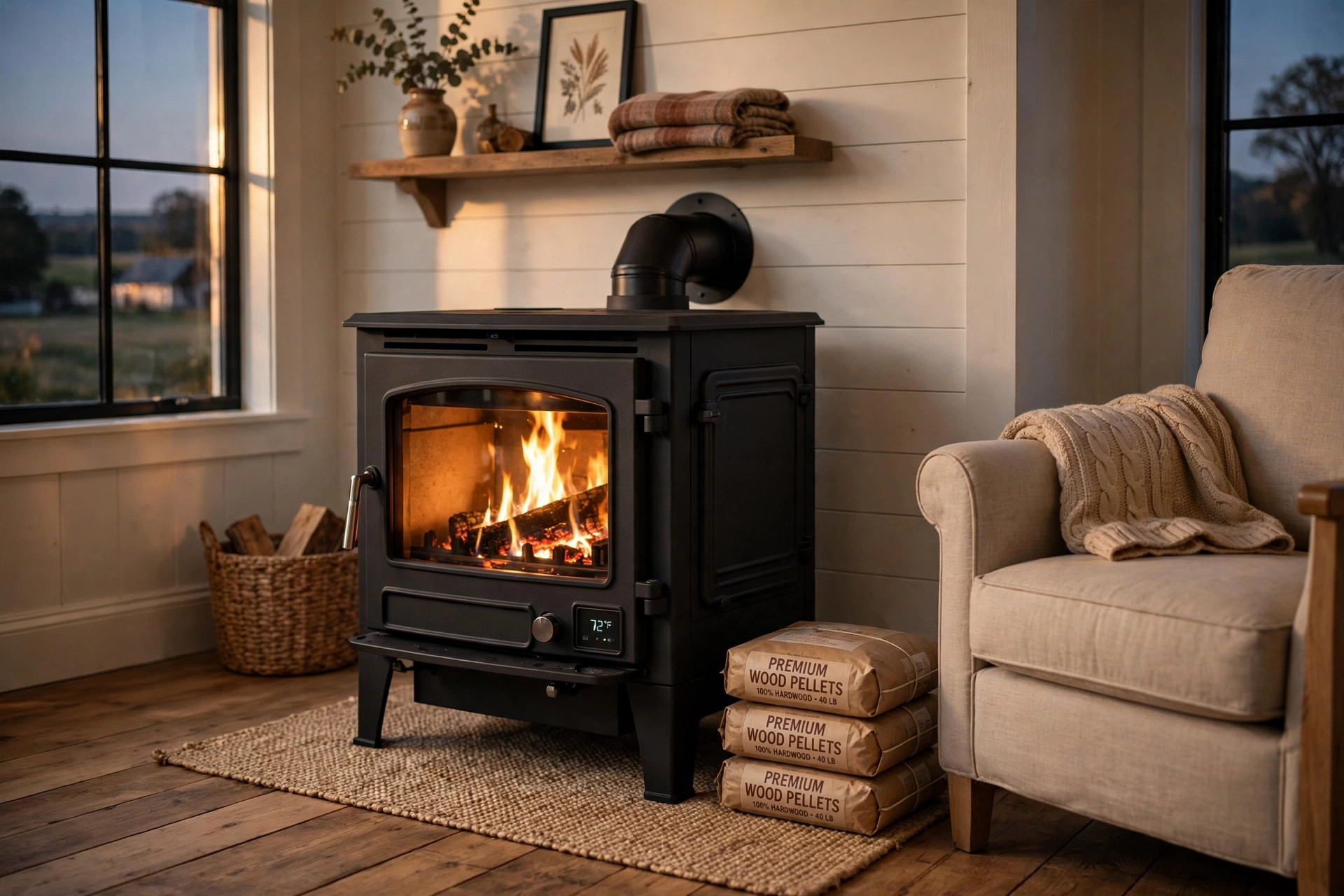

Winter brings high heating bills to many American homes. A pellet stove can cut those bills while keeping rooms warm and inviting. Shoppers today also want the best pellet stoves for heating with free shipping, because these stoves are heavy and freight costs can add hundreds of dollars to the price. This guide walks through the whole process in plain terms. You will learn why pellet stoves make sense, what to look for, how much they cost, and how free shipping offers work in practice.
Why a Pellet Stove Makes Sense
A pellet stove burns small compressed pellets made from wood waste. The pellets feed into the fire from a hopper, and a small electric fan moves warm air into the room. The result is a steady, even heat that many owners prefer over the hot-and-cold swings of older wood stoves.
Lower Heating Bills
Fuel oil and propane prices climb in cold months. Wood pellets often cost less per unit of heat. Many owners report saving thirty to fifty percent on heating costs after switching to a pellet stove as their main heat source. The savings depend on pellet prices in your area and how well your home holds heat, but the numbers are encouraging. Government resources on energy savings from efficient stoves note that modern pellet units burn with very little waste, which stretches each bag of fuel further.
A Cleaner Burn
Older wood stoves can smoke and leave soot. Modern pellet stoves burn so cleanly that their exhaust is nearly invisible. Ash output is small, often less than one percent of the fuel by weight. The EPA‘s wood heater guidance explains how certified stoves must meet strict emission limits, which protects indoor and outdoor air quality. Families with allergies often find pellet stoves easier to live with than open fireplaces.
Steady, Hands-Free Heat
Once you set the thermostat, a pellet stove runs itself. The auger feeds pellets at the right rate, and the fan adjusts to hold the room temperature. Many models can run a full day or more on one load of pellets. That is a real comfort on cold workdays when nobody is home to feed a fire.
What to Look for When You Choose: Best Pellet Stoves for Heating with Free Shipping
Not every stove fits every home. A careful look at a few key numbers will keep you from buying a unit that is too small or larger than you need.
Heating Capacity
Stoves carry a BTU rating that tells you how much heat they can put out. A small stove at 40,000 BTU can warm a 1,500 square foot home in a mild climate. Larger homes or colder regions may need 50,000 to 60,000 BTU. Ask the dealer how the rating was tested, and read reviews from pellet stove owners comparing heating capacity before you decide.
Hopper Size
The hopper holds the pellets. A forty-pound hopper may need a refill each day. An eighty-pound hopper can run two days or more. If you plan to be away from home for long stretches, a large hopper is worth the extra floor space. Some models sit flush in a corner and still hold fifty pounds or more.
Efficiency and Emissions
Look for an efficiency rating of seventy-five percent or higher. The best units reach into the eighties. Lower emissions mean less ash, less cleaning, and cleaner air. Certification labels from the EPA show that a stove passed national emission tests. Reputable maker pages from companies like Napoleon show how modern designs meet these standards while still looking like classic stoves.
Controls and Noise
Modern stoves offer digital thermostats, programmable timers, and even remote controls. Check the noise rating of the fan, since the stove may sit in your living room. A quiet blower makes evening conversation easy. This Old House heating advice often reminds buyers to test a stove in person or read owner reviews about fan noise before buying.
Types and Options
Pellet stoves come in a few main forms. Each suits a different kind of home.
Freestanding Stoves
These stand on the floor and vent through a wall or ceiling. They are the most common choice and the easiest to install in a new spot. Freestanding models come in cast iron, steel, and soapstone finishes to match your decor. If you are also shopping for wood heat, our guide to buy wood burning stoves online in Florida covers the wood-burning side of the market.
Pellet Inserts
An insert slides into an existing fireplace opening and turns an old drafty fireplace into an efficient heater. This is a smart upgrade if you already have a masonry chimney. Inserts often cost more than freestanding stoves, but they save on venting because the chimney is already there.
Small and Large Formats
Apartment-sized units heat single rooms with modest output. Whole-house units tie into ductwork or use powerful blowers to push heat down hallways. Measure your rooms and note ceiling heights before you shop. A stove that is too large will short-cycle and waste fuel, while one that is too small will run at full blast without ever catching up on the coldest nights.
Cost and Price
A good pellet stove costs between one thousand and four thousand dollars. Basic models start under fifteen hundred. Mid-range units with larger hoppers and quieter fans run two to three thousand. Premium stoves with designer finishes can pass four thousand.
Installation adds to the total. Professional installation with new venting often runs five hundred to fifteen hundred dollars, depending on your home. Pellets cost four to eight dollars per forty-pound bag, and a typical home uses two to four tons per winter. That works out to roughly five hundred to twelve hundred dollars per season in fuel.
Free shipping matters here. A stove can weigh three hundred to five hundred pounds. Freight delivery normally costs one hundred fifty to four hundred dollars. A free-shipping offer can therefore cut your total cost by a meaningful amount. Compare the final delivered price, not just the sticker price, when you shop between sellers.
Free Shipping: What to Know
Free shipping on pellet stoves is common, but the details vary. Read the fine print before you order.
First, check what kind of delivery is included. Some sellers offer curbside delivery only, which means the driver drops the stove at the end of your driveway. Others include inside delivery or even liftgate service for heavy items. If your home sits far from the road, ask about that too.
Second, watch for minimum order rules and zone limits. A free-shipping deal may apply only within certain states or to orders over a set amount. Hawaii, Alaska, and rural addresses sometimes carry surcharges. Large retailers like The Home Depot and Lowe’s stove selection pages list delivery terms by zip code, so enter your zip code early in the shopping process.
Third, note the timing. Free freight shipping can take one to three weeks. If you need heat before a cold snap, confirm the delivery window before you buy. Some buyers order in late summer or early fall, when sellers run free-shipping promotions and prices are at their lowest.
Finally, understand the return policy. Heavy stoves are costly to send back, even when shipping was free on the way in. Some sellers charge restocking fees of ten to twenty percent. Measure carefully, check local codes, and talk to an installer before you click buy. Ask the seller for a tracking number when the stove leaves the warehouse. Freight carriers usually call a day ahead to set a delivery time, so keep your phone handy during the delivery window.
Care and Upkeep
Pellet stoves ask for regular but simple care. Daily, empty the ash pan when it fills and wipe the glass door with a damp cloth. Weekly, vacuum the burn pot and check the exhaust vent for buildup. Monthly during heating season, clean the hopper and check the auger for pellet dust clogs.
Once a year, have a professional service the stove. A technician will clean the heat exchanger, check seals and gaskets, and test the sensors. Annual service keeps efficiency high and catches worn parts before they fail. The Family Handyman maintenance tips cover the full yearly checklist in greater detail for do-it-yourself owners.
Use quality pellets. Premium-grade pellets burn cleaner and leave less ash than standard grades. Store bags in a dry place, since wet pellets crumble and jam the auger. A simple plastic bin with a tight lid works well in a garage or shed.
Safety
Pellet stoves are safe when installed and used as directed, but they still burn fuel and get hot. Place the stove on a non-combustible hearth pad and keep it at least three feet from furniture, curtains, and other flammable items.
Vent the stove exactly as the maker directs. Most pellet stoves use a double-wall pipe through a wall, which is simpler than a full chimney. Never vent into a garage or near windows that open.
Install carbon monoxide detectors on every floor of your home, and test them monthly. Keep a fire extinguisher nearby. Let the stove cool before cleaning, and never pour water on a hot fire. The Spruce buying guides and safety articles offer practical checklists for new stove owners.
Children and pets need clear rules. The glass door can reach several hundred degrees. A stove screen or a small safety gate keeps little hands away from the hot surface.
Frequently Asked Questions
How long does a bag of pellets last?
A forty-pound bag lasts about twelve to twenty-four hours, depending on the heat setting and the size of the home. On low, a good stove sips fuel. On high during a deep freeze, it can burn through a bag in half a day.
Can a pellet stove heat a whole house?
A well-sized stove can heat most of a modest home, especially an open floor plan. Very large or multi-level homes may need a second stove or a central furnace as backup. Moving warm air with small fans or ceiling fans helps spread the heat.
Do pellet stoves work during a power outage?
Most pellet stoves need electricity for the auger and fan. Without power, they shut down. Battery backup systems exist and can run a stove for several hours. Some owners keep a small generator for long outages.
Are pellets hard to find?
In most parts of the country, pellets are easy to buy at home stores, farm stores, and online. Buying by the ton in fall often brings the best price and guarantees supply through winter. Check stock early, since popular brands can sell out in January.
How does a pellet stove compare to an electric fireplace?
Pellet stoves give more heat per dollar and suit whole rooms or whole homes. Electric fireplaces are easier to install and need almost no upkeep, but they cost more to run for serious heating. If you want simple zone heating with style, our piece on luxury smart electric fireplaces with free shipping walks through the electric option.
A Short Final Word
A pellet stove is one of the smartest buys for steady, low-cost home heat. Pick a size that fits your home, check the efficiency rating, and budget for pellets and yearly service. When you shop, compare the delivered price with shipping included, and read the delivery terms before you order. The best pellet stoves for heating with free shipping combine solid build quality, clean burning, and honest shipping terms. With the right stove and the right care, you can look forward to warm rooms and lower bills for many winters to come.
See Heatilator for more detail.
References
Family Handyman. (n.d.). DIY home repair and maintenance. https://www.familyhandyman.com Heatilator. (n.d.). Fireplaces and fireplace products. https://www.heatilator.com Lowe’s. (n.d.). Home improvement products. https://www.lowes.com Napoleon. (n.d.). Fireplaces, grills, and heating products. https://www.napoleon.com The Home Depot. (n.d.). Home improvement products. https://www.homedepot.com The Spruce. (n.d.). Home and garden advice. https://www.thespruce.com This Old House. (n.d.). Home renovation guidance. https://www.thisoldhouse.com U.S. Environmental Protection Agency. (n.d.). Protecting human health and the environment. https://www.epa.gov
Was this guide helpful?

About David Wilson
The My Garden US editorial team writes practical, in-depth home and garden guides for American homeowners — tested advice, no fluff.
You May Also Like
Heat Powered Stove Fans Price Comparison USA: What to Pay and What to Know
September 10, 2026 0 views
Top Rated Propane Patio Heaters Buying Guide
February 20, 2026 0 views
Premium Fireplace Screens With Doors Buying Guide
June 6, 2026 0 views