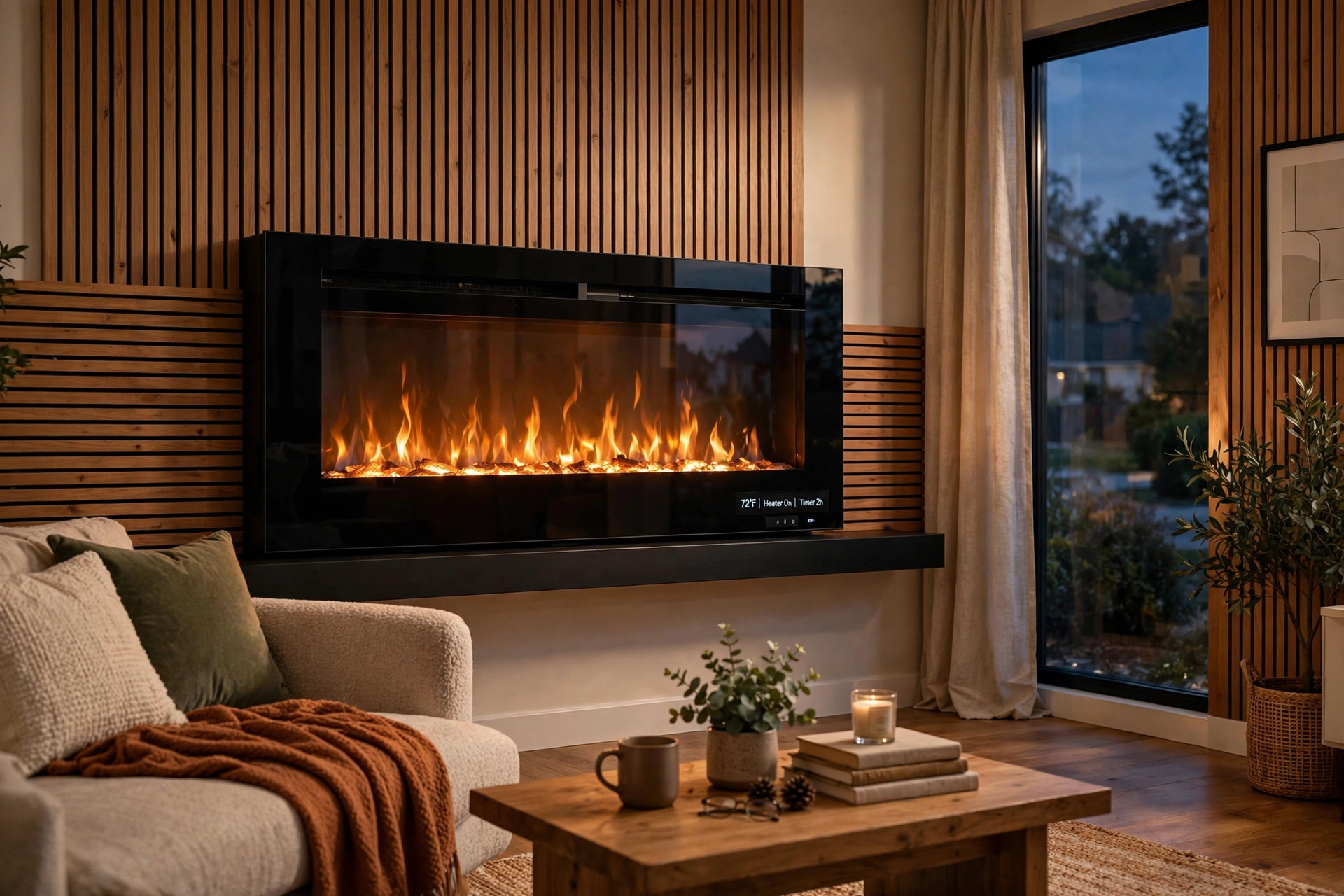

This smart electric fireplaces reviews and buying guide is written for the home owner who wants heat, comfort, and a pleasant flame without the work of wood or gas. A smart electric fireplace is a heater and a light display in one unit. It plugs into a standard outlet. It can warm a room, show a moving flame, and take orders from a phone app, a remote, or a voice assistant. No chimney is needed. No gas line is needed. No ashes are left behind.
These units have grown popular in the past few years. The flame effects look far better than the stiff, flat versions sold in older times. Many models now show colors that shift from amber to blue. Many offer heat on a timer. Some learn your schedule. This guide will walk through the parts that matter, the types on the market, the real costs, and the care these units need. It ends with answers to common questions so you can buy with a clear mind.
Why Smart Electric Fireplaces Matter
A fireplace has always been the heart of a home. It gathers people. It softens a cold evening. The trouble is that real fire demands labor. Wood must be cut, carried, and stored. Ash must be cleared. A chimney must be swept each year. Gas fireplaces cut some of that labor, yet they still need a line, a vent, and yearly service by a trained hand.
A smart electric fireplace removes almost all of this work. You plug it in. You mount it on a wall or set it into a cabinet. The flame appears at the touch of a button. When you are done, you switch it off. The room keeps the heat for a while. There is no smoke and no fumes.
The word smart is what sets the newer models apart. Older electric units had two switches and a dial. The new ones connect to your home wireless network. You can turn them on from the kitchen while dinner is in the oven. You can set the heat to start at six in the morning before you rise. A wifi electric fireplace with remote control lets you change the flame color from the couch without getting up.
These units also suit renters and apartment dwellers. Many leases forbid wood and gas fire. A plug-in unit breaks no rule. It leaves no mark on the walls when you take it down. For this reason, reviews and sales of smart models keep rising each winter.
What to Look For: How to Choose: Smart Electric Fireplaces Reviews and Buying Guide
Heating Capacity
Heat is measured in watts and in BTUs. Most smart electric fireplaces run between 1,000 and 1,500 watts. That equals about 3,400 to 5,200 BTUs. In plain terms, this warms a room of about 200 to 400 square feet. That is a bedroom, a den, or a modest living room.
Check the rated area on the box before you buy. A unit rated for 400 square feet will not heat a great room of 800 square feet in winter. It can still add comfort as a second heat source. For whole-house heat, pair it with your central furnace. The EPA energy guidance explains how space heaters fit into an efficient heating plan.
Flame Realism
The flame is the reason people buy these units. Early models showed a flat orange loop that fooled no one. Newer models use LED lights, mirrors, and mist to build depth. Some use a fine water vapor that looks like drifting smoke. Read customer reviews with attention to the word realistic. Photos from buyers often tell more than the sales photos.
Most units let you change flame color and brightness. A soft amber suits a quiet evening. A cool blue fits a modern room. The best models let the flame run with the heat turned off. That way you can enjoy the glow in spring without warming the room.
Smart Features
Smart features are the heart of this smart electric fireplaces reviews and buying guide. Look for these points.
– Wi-Fi connection and a free app for your phone. – Voice control through common assistants. – A timer and a weekly schedule. – A thermostat that holds a set temperature. – Child lock on the app and on the unit.
Test the app rating before you buy. A fine unit with a poor app will vex you daily. Look for recent reviews of the app itself. Some makers update their software often. Others leave old bugs in place.
Size and Fit
Measure the wall or opening twice. Wall-mounted units range from 30 to 72 inches wide. A unit too wide will crowd a small room. A unit too narrow will look lost on a large wall. Recessed models need a cavity about four inches deep. If you do not want to cut into a wall, choose a surface-mount model or a freestanding cabinet.
Check the weight as well. Large units can weigh over 100 pounds. A single wall stud may not hold it. Use the bracket that comes in the box. Fasten it into at least two studs.
Types and Options
Wall-Mounted Units
Wall-mounted units hang like a picture. They are slim and modern. Most are four to six inches deep. They suit rooms with no mantel and no hearth. Installation takes about an hour with a drill and a level. Many smart models live in this class because the thin body leaves room for the electronics.
Electric Fireplace Inserts
An insert slides into an old masonry opening. If your home has a dead wood fireplace, an insert gives it new life. The app controlled electric fireplace insert fills the firebox with moving flame. You keep the stone and the mantel you already love. Measure the height, width, and depth of the opening. Inserts come in standard sizes, but an odd opening may need a trim kit.
Mantel and Media Packages
These are full cabinets that look like real wood furniture. The fireplace sits in the middle. Shelves or a TV stand frame it. An electric fireplace mantel package can anchor a living room in classic style. They cost more than bare units, but you pay nothing for a carpenter. They ship flat and assemble in an afternoon.
Freestanding Stoves
Freestanding stoves copy the shape of old iron wood stoves. They stand on small legs. They suit cabins, porches, and rooms with a rustic feel. Our guide to freestanding electric stoves covers this style in depth. Most are compact and easy to move from room to room.
Outdoor-Rated Models
Some makers now sell units rated for covered patios. Do not use an indoor unit outside. Rain and damp air will harm the wiring and void the warranty. An outdoor-rated model seals the electronics against moisture. It still needs a covered roof above it.
Cost and Price
Prices run wide. A basic 36-inch wall unit with simple smart features may cost between 200 and 400 dollars. A mid-range model with strong flame effects and a solid app runs from 400 to 800 dollars. Large 60-inch units and fine mantel packages can reach 1,000 to 1,800 dollars.
Running cost is easy to figure. A 1,500-watt heater uses 1.5 kilowatt-hours per hour at full heat. If your power costs 15 cents per kilowatt-hour, an hour of full heat costs about 23 cents. The flame alone, with the heater off, costs only a few cents per hour because LEDs draw little power. A timer and a thermostat cut the cost further. They stop the heater when the room is warm.
Shop with care during the autumn sales. Prices often drop in September and October as stores stock up for winter. Home improvement retailers and maker sites both run seasonal deals. Compare the total price with shipping. A heavy mantel package can add 100 dollars or more in freight.
Care and Upkeep
Care is simple, which is part of the charm. Dust the unit each month with a soft dry cloth. Dust on the glass dims the flame. Clean the glass with a damp cloth and a mild cleaner. Do not spray liquid into the vents.
Vacuum the heater vents twice a year. Lint and pet hair gather there. Blocked vents make the heater run hot and trip the safety shutoff. Check the power cord each season for frays or heat marks. If the cord feels hot, stop using the unit and call the maker.
The LED lights last many years. Most are rated for 50,000 hours. At four hours a day, that is over 30 years. You will likely replace the unit before the lights fail. Keep the manual in a drawer. It lists the reset steps for the wireless connection, which you may need after a power outage.
For cleaning tips and yearly home care schedules, family handyman guides offer plain checklists that fit a busy household.
Safety
Electric fireplaces are among the safest hearths you can own. There is no real flame and no smoke. Still, they are heaters, and heaters demand respect.
Keep three feet of clear space in front of the unit. Curtains, papers, and furniture must stay back. Never drape clothes over the heater to dry them. Do not plug the unit into an extension cord or a power strip. Plug it straight into a wall outlet. A heater draws heavy current. A thin cord can overheat.
Choose a model with these safety marks and features. Look for a UL or ETL listing on the label. These marks show the unit passed independent safety tests. Look for overheat shutoff, which kills the power if the inside grows too hot. Look for a cool-touch glass front, which matters in homes with small children or pets. A tip-over switch matters for freestanding stoves.
Place smoke and carbon monoxide alarms in the home as usual. An electric unit makes no carbon monoxide, but the rest of the house still needs the alarms. General heater safety rules from product safety offices and makers like Napoleon and Heatilator echo the same points. Mount the unit away from water. Do not use it in a bathroom unless the maker rates it for damp rooms.
Frequently Asked Questions
Do smart electric fireplaces really heat a room?
Yes, within limits. A standard 1,500-watt model warms 200 to 400 square feet. That covers a bedroom or a small living room. It will not replace a furnace in a large home. Think of it as zone heat. It warms the room you use most and lets you turn the main thermostat down a few degrees.
Can I control it with my voice?
Most smart models work with common voice assistants. You can say a simple command to turn the flame on or set the heat. Setup runs through the maker app. If voice control matters to you, check the box for the assistant logos before you buy. An electric fireplace with voice control is now common in the mid price range.
Will it raise my electric bill a lot?
It depends on use. At full heat, a 1,500-watt unit costs roughly 20 to 30 cents per hour at average power rates. Four hours a night for a month adds about 25 to 35 dollars. The flame-only mode costs almost nothing. A thermostat and a timer keep the cost down by running the heater only when needed.
Can I install it myself?
Most owners can. Wall-mount and freestanding models need no special skill beyond a drill and a level. Recessed models need a hole cut in drywall, which suits a handy owner or a handyman. Inserts slide into an old firebox. No electrician is needed since the unit plugs into a standard 120-volt outlet. If you add a new outlet, hire a licensed electrician.
Do the flames look real?
The best ones look good from across the room. Up close, you can tell it is light and not fire. Makers keep improving the effect with layered LEDs, mirrors, and vapor. Read buyer photos in reviews. They show the truth better than studio shots. Flame-only mode lets you judge the look before you commit to a brand.
What is the difference between infrared and fan-forced heat?
Fan-forced models blow warm air with a small fan. They heat the air fast but can dry it. Infrared models warm objects and people in the path of the rays. They feel gentler and run quiet. Both use similar power. Pick infrared for quiet rooms like bedrooms. Pick fan-forced for quick heat in a living room. Our notes on fireplace glass doors explain how doors affect heat flow in traditional hearths, a useful contrast when you weigh your options.
A Short Final Word
A smart electric fireplace gives you the glow and the gathering place of a fire with none of the mess. Choose the right size for your room. Pick an app with good reviews. Keep the vents clean and the cord in good shape. Buy from a maker with a clear warranty, and check buying guides from trusted names like This Old House and The Spruce before you decide. For a full view of hearth choices, our broader piece on top rated electric fireplace mantels for American homes pairs well with this guide. With a little care in choosing, your new fireplace will warm many quiet evenings.
References
Family Handyman. (n.d.). DIY home repair and maintenance. https://www.familyhandyman.com Heatilator. (n.d.). Fireplaces and fireplace products. https://www.heatilator.com Lowe’s. (n.d.). Home improvement products. https://www.lowes.com Napoleon. (n.d.). Fireplaces, grills, and heating products. https://www.napoleon.com The Home Depot. (n.d.). Home improvement products. https://www.homedepot.com The Spruce. (n.d.). Home and garden advice. https://www.thespruce.com This Old House. (n.d.). Home renovation guidance. https://www.thisoldhouse.com U.S. Consumer Product Safety Commission. (n.d.). Product safety information. https://www.cpsc.gov U.S. Environmental Protection Agency. (n.d.). Protecting human health and the environment. https://www.epa.gov
Was this guide helpful?

About David Wilson
The My Garden US editorial team writes practical, in-depth home and garden guides for American homeowners — tested advice, no fluff.
You May Also Like
Top Rated Freestanding Electric Stoves for Midwest Homes
August 8, 2026 0 views
EPA Certified Fireplace Remote Controls for Florida Homes
January 30, 2026 0 views
Where to Buy Fireplace Mantel Shelves in California
May 18, 2026 0 views