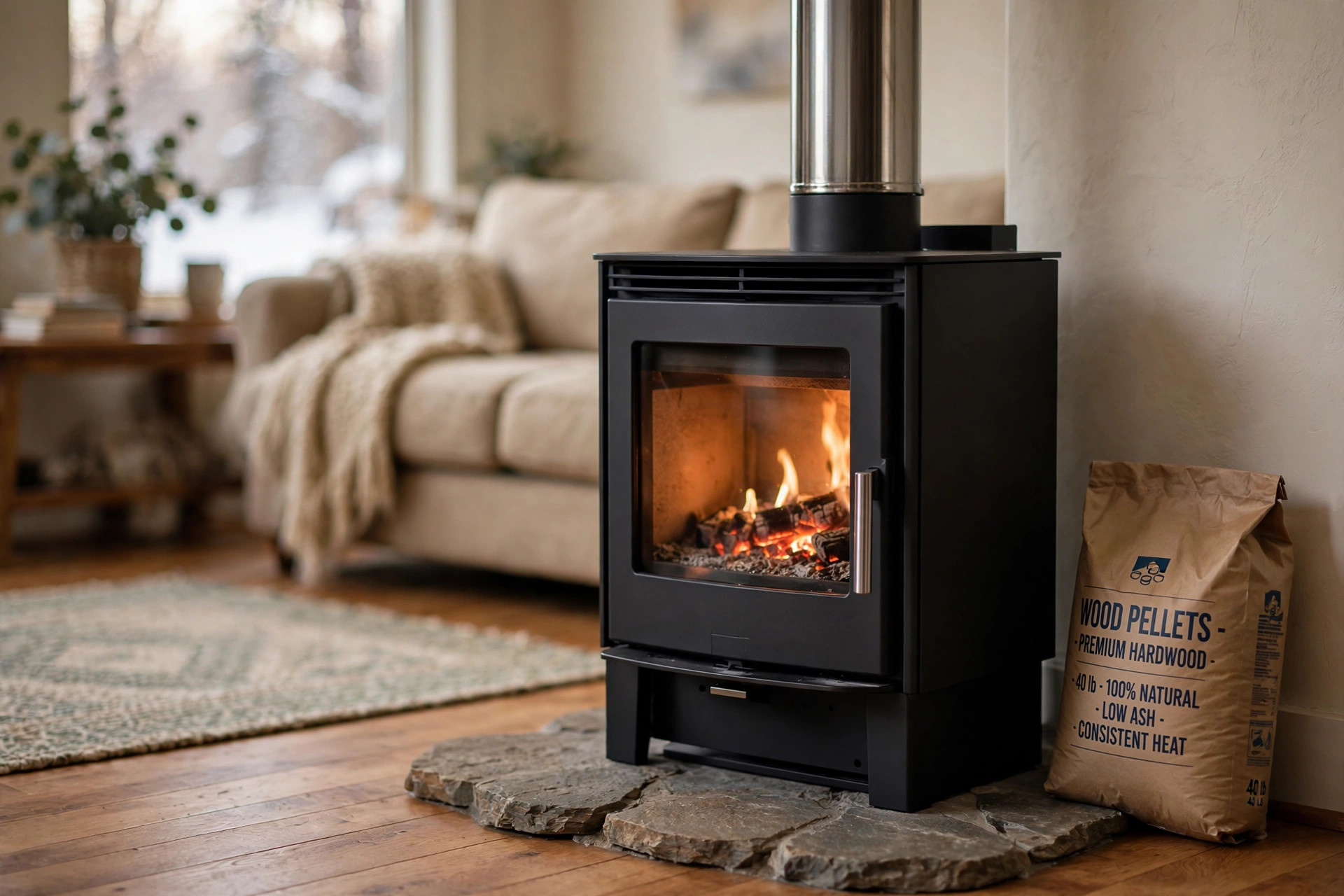
Homeowners who look for energy efficient pellet stoves for heating for sale want the same two things. They want low heat bills. And they want a home that stays warm on the coldest nights. A pellet stove can give both. It burns small wood pellets, not logs. The fire is steady, the heat is even, and the fuel is made from wood waste. Before you buy, it pays to learn how these stoves work, what makes one model more efficient than another, and what the stove will cost you over the years.
Why It Matters
Heat is often the largest bill in a cold-climate home. Oil and propane prices rise and fall. Electric heat can be costly in old houses. Wood heat is cheap, but a wood stove takes work. You must split, stack, and carry wood. A pellet stove sits in the middle. The fuel comes in bags. You pour the pellets into a hopper. The stove feeds them into the fire a few at a time. Many models run on their own for a day or more before they need refills.
Efficiency is the second reason these stoves matter. An energy efficient pellet stove turns more of its fuel into heat and less into ash and smoke. The best models today rate at 78 to 85 percent efficiency. That means for every dollar of pellets you burn, about eighty cents or more becomes heat in your room. An old fireplace, by contrast, may send most of its heat up the chimney.
There is also a green angle. Pellets are made from sawdust and wood scraps that mills once threw away. Burning them releases no more carbon than the wood held while it grew. The fuel is made in the United States, and it supports jobs in mill towns.
How a Pellet Stove Works: Energy Efficient Pellet Stoves for Heating for Sale
A pellet stove is not a simple box with a fire inside. It is a machine. An auger, which is a long screw, turns slowly and moves pellets from the hopper into the burn pot. A fan pushes air over the fire. A second fan blows warm air into the room. A small computer board runs the whole cycle. You set a thermostat, and the stove adds fuel when the room cools.
Because the fire burns at a controlled rate, there is little smoke. The burn pot holds only a small fire at a time. The stove feeds pellets at just the right pace. This steady burn is the secret of the high efficiency numbers.
The stove needs power. The auger, the fans, and the board all run on electricity. Most models plug into a normal wall outlet. They draw about as much power as a bright light bulb. This is a point to note. In a power cut, the stove will stop. Some owners keep a battery backup or a small generator for this reason.
What to Look For When You Buy
Heat Output and Size
Stoves are rated in BTUs, or British Thermal Units. A small unit puts out 25,000 BTUs and warms about 1,000 square feet. A large unit puts out 50,000 BTUs or more and can warm 2,500 square feet. Do not buy the largest stove on the shelf. A stove that is too large will heat the room, shut down, cool, and start again. This short cycling wastes fuel and wears parts.
Measure your space. Count the rooms the stove must warm. Note the ceiling height. A tall ceiling holds more air. A stove dealer can help you match the BTU rating to the floor plan. Guides on heating and home performance explain how house size, insulation, and climate zone set the right output.
Efficiency Rating
Look for the efficiency number on the label. Models above 75 percent are strong. Models above 80 percent are excellent. The EPA standards page lists rules for wood heaters, including pellet stoves, and sets limits on smoke output. An EPA listed stove has been tested and meets the standard. Buying a listed model is a sound step for safety and resale value.
Hopper Size
The hopper is the tank that holds the pellets. A small hopper holds 40 pounds, which is one bag. A large hopper holds 80 pounds or more. The larger the hopper, the fewer times you must refill it. In deep winter, a large hopper can mean one refill a day instead of two. Check whether the hopper is easy to reach and easy to clean.
Build and Materials
The burn pot, heat exchanger, and ash pan should be heavy steel or cast iron. Thin parts warp and wear out. Look at the door gasket, the seal that keeps smoke in. It should be thick and even. Ask how the glass stays clean. Many models blow a curtain of air across the glass to keep soot off.
Controls
Simple dial controls suit many owners. Digital boards with a thermostat give finer control. Some models add a remote. Choose what you will use. A complicated board is no help if you never set it.
Types and Options
Freestanding Stoves
The classic pellet stove stands on legs in the middle of a room. It needs floor space and a small vent through the wall or ceiling. Freestanding models are common and come in many sizes. They give the most heat for the price.
Fireplace Inserts
An insert fits inside an old fireplace opening. It turns a drafty fireplace into a true heater. Inserts cost more, but they save floor space. The buying guides at The Spruce compare insert and freestanding models side by side.
Corner and Bay Models
Some stoves are made for corners. The sides are angled, and the glass wraps around the front. The fire is easy to see from more than one seat. These cost a bit more, but they suit open living rooms.
Pellet Furnaces
A pellet furnace is not a room stove. It ties into the ductwork of the house, like an oil furnace. It can heat a whole home. It costs much more and needs a trained installer. It suits owners who want pellets as their main fuel, not just room heat.
Cost and Price
The Stove
A small efficient pellet stove costs about 1,500 dollars. A mid-size model with a digital board costs 2,000 to 2,800 dollars. A large unit or an insert costs 3,000 to 4,500 dollars. Retailers like Home Depot and Lowe’s carry many models, and local dealers sell others with installation included.
Installation
A simple vent through the wall costs 500 to 1,000 dollars with labor. A taller flue through the roof costs more. Floor protection, such as a hearth pad, adds 100 to 300 dollars. A licensed installer is worth the price. A bad vent can leak smoke into the house.
Fuel
A 40-pound bag of pellets costs 5 to 7 dollars in most regions. A typical home burns 2 to 3 tons each winter. At 250 to 300 dollars a ton, the fuel bill runs 500 to 900 dollars a season. That is often half the cost of oil or propane for the same heat. Prices move with the market, so check local stores each fall.
Long-Term Value
Add the stove, the install, and five years of fuel. Compare that sum with five years of oil or electric heat. In many homes the pellet stove pays for itself in three to five years. The cost and project guides at This Old House walk through the math for a typical install.
Care and Upkeep
A pellet stove asks for more care than a furnace but less than a wood stove. The ash pan needs emptying every week or two in winter. The burn pot should be scraped clean daily so the air holes stay open. The glass can be wiped with a damp cloth when the stove is cool.
Once a month, clean the heat exchanger tubes with the brush that comes with the stove. This keeps heat moving into the room. Once a year, give the stove a full cleaning. Vacuum the hopper, brush the vent pipe, and check the gaskets. Many owners hire a chimney sweep for this job. The maintenance guides at Family Handyman give a clear yearly checklist.
Use good pellets. Premium pellets have low ash, usually under one percent. Cheap pellets make more ash and more cleaning work. They can also jam the auger. Store bags in a dry place. Wet pellets swell and will not feed.
Safety
Treat a pellet stove with the same care as any fire. Keep the hearth pad under it. Keep furniture three feet away. Do not let children touch the glass, which gets hot. Put a carbon monoxide detector in the room and another near the bedrooms. Test them each month.
Clear the vent cap of snow and ice in winter. A blocked vent can push smoke back into the house. Never burn anything but wood pellets. Paper, cardboard, and treated wood can damage the stove and poison the air. The safety pages of the CPSC cover heater recalls and home heating safety.
Related Choices
Shoppers often compare pellet heat with classic wood heat. A look at a pellet stoves for heating reviews and buying guide can help you sort models by size and features. If you like the look of a log fire, the best wood burning stoves buying guide covers the classic choice. For warm climates, notes on wood burning stoves in Florida show how buyers in mild states shop.
Major stove makers publish their own model lines. Napoleon and Heatilator both make hearth products, including pellet stoves and inserts, and their sites show sizes and specs.
FAQ
How long does a pellet stove burn on one hopper of pellets? A 40-pound hopper runs 24 hours or more on a low setting. On high, the same load may last 12 hours. Larger hoppers stretch the time between refills.
Do pellet stoves work during a power outage? No. The auger, fans, and controls need electricity. A battery backup can run most stoves for several hours. A small generator can run one for days.
Are pellet stoves allowed in my area? Rules vary by town and state. Many areas allow EPA listed models. Some cities limit new wood heaters on bad air days. Check your local code before you buy.
How much does it cost to heat with pellets each winter? Most homes burn 2 to 3 tons of pellets, at 250 to 300 dollars a ton. That puts the season at 500 to 900 dollars, often well under the cost of oil or electric heat.
Can I install a pellet stove myself? A handy owner can place the stove, but the vent work should be done or checked by a pro. Bad venting is the main cause of smoke problems and fire risk.
Do pellet stoves smell? A working stove should smell of almost nothing indoors. A strong smoke smell means a leak in the vent or a bad door gasket. Shut the stove down and check the seals.
A Short Final Word
Energy efficient pellet stoves for heating for sale come in many shapes and prices. The right one is the one that fits your floor plan, meets the EPA standard, and burns premium pellets. Size it right, install it right, and clean it on schedule. Do that, and the stove will give you years of warm, low-cost heat.
References
Family Handyman. (n.d.). DIY home repair and maintenance. https://www.familyhandyman.com Heatilator. (n.d.). Fireplaces and fireplace products. https://www.heatilator.com Lowe’s. (n.d.). Home improvement products. https://www.lowes.com Napoleon. (n.d.). Fireplaces, grills, and heating products. https://www.napoleon.com The Home Depot. (n.d.). Home improvement products. https://www.homedepot.com The Spruce. (n.d.). Home and garden advice. https://www.thespruce.com This Old House. (n.d.). Home renovation guidance. https://www.thisoldhouse.com U.S. Consumer Product Safety Commission. (n.d.). Product safety information. https://www.cpsc.gov U.S. Department of Energy. (n.d.). Energy efficiency and renewable energy. https://www.energy.gov U.S. Environmental Protection Agency. (n.d.). Protecting human health and the environment. https://www.epa.gov
Was this guide helpful?

About Michael Thompson
The My Garden US editorial team writes practical, in-depth home and garden guides for American homeowners — tested advice, no fluff.