Introduction
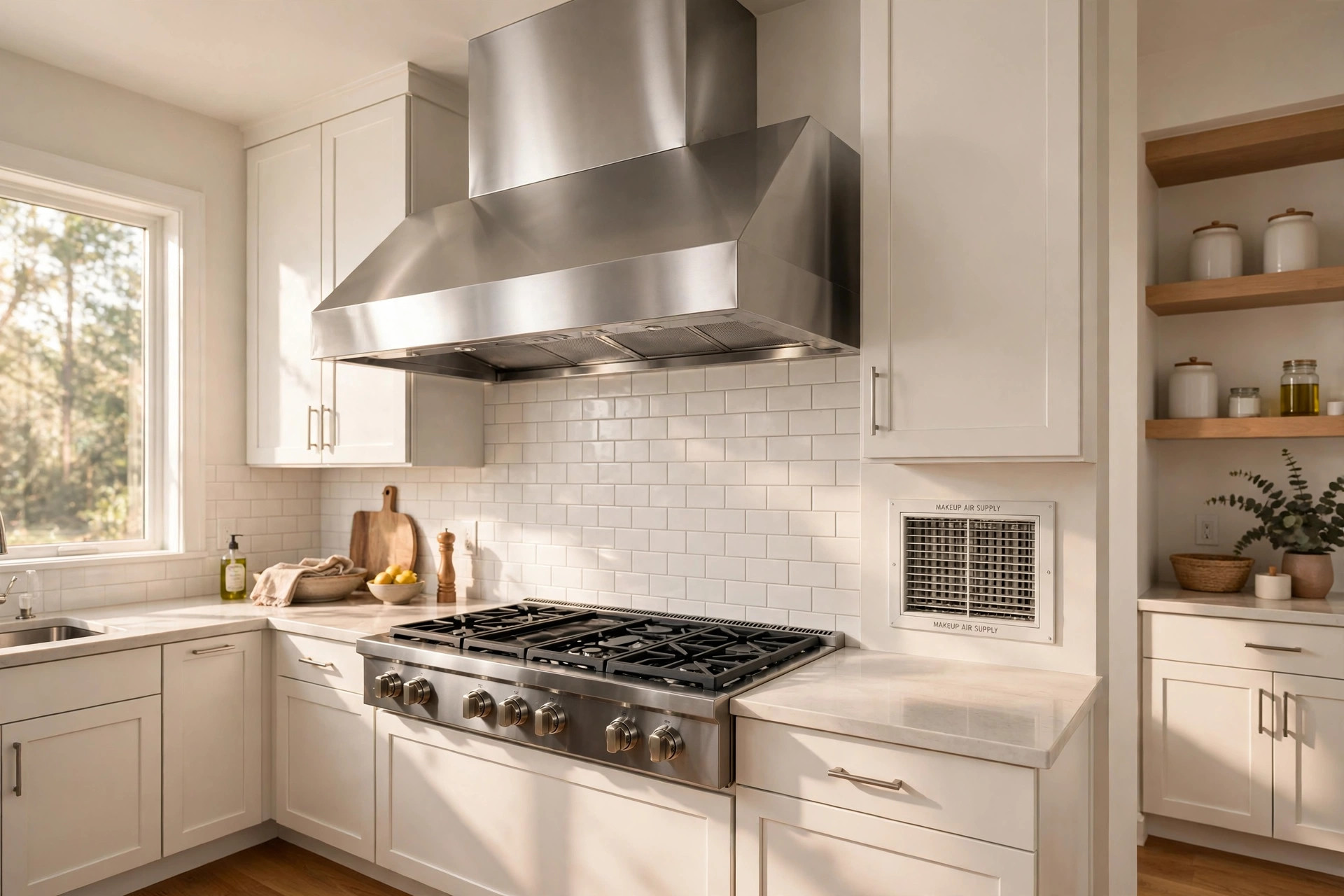
The makeup air unit for range hood cost usa homeowners pay is one of the least understood parts of a kitchen remodel. A strong range hood pulls air out of the house. That air must be replaced. If it is not replaced, the house can suffer from bad smells, poor draft, and even danger from backdrafting. A makeup air unit solves this problem by bringing fresh air back inside in a controlled way.
Many buyers focus only on the hood itself. They pick a hood that moves 900 or 1200 cubic feet of air per minute. Then the installer tells them that local code requires makeup air. The extra cost comes as a surprise. This guide explains the makeup air unit for range hood cost usa buyers should expect, what drives the price up or down, and how to choose the right system.
Why Makeup Air Matters: Makeup Air Unit for Range Hood Cost Usa
A range hood is an exhaust fan. It moves grease, smoke, and heat out of the kitchen. A large hood can move more air in a few minutes than many small bathrooms hold in a whole day. When that much air leaves the house, new air must enter from somewhere.
In an older home, air leaks in through cracks and gaps. New homes are built tight. They leak very little. When a strong hood runs in a tight home, it creates negative pressure. That pressure pulls air down chimneys and flues. This is called backdrafting. It can pull dangerous gases from a furnace, water heater, or fireplace into the living space.
Codes across the United States set a clear line. When a range hood moves more than 400 cubic feet per minute, known as CFM, the code calls for makeup air. The International Residential Code states this rule. Many towns follow it. Some towns ask for makeup air at lower levels. A homeowner should check the local code before buying.
Makeup air also helps the hood do its job. A hood that starves for air cannot capture smoke well. Grease builds up on cabinets. Odors linger. With enough replacement air, the hood draws smoothly and quietly. The kitchen stays cleaner.
What to Look For When You Choose a Makeup Air Unit
Not all systems are alike. A buyer should weigh a few key points before spending money.
Sizing the Unit
The unit must match the hood. A hood rated at 600 CFM needs about 600 CFM of makeup air. In some cases the code allows a little less. A common rule says the makeup air should equal the exhaust rate. An undersized unit will leave the house under negative pressure. An oversized unit wastes energy.
A contractor can do a simple load check. The check looks at hood size, duct length, and house size. It also looks at climate. A home in a cold state needs more care than one in a mild state. Cold makeup air can chill a room fast if the unit does not heat the air.
Controls and Dampers
The simplest systems use a damper tied to the hood switch. When the hood turns on, the damper opens. Fresh air flows in through a duct. When the hood turns off, the damper closes. This design is simple and cheap. It works well in mild climates.
More complete systems add heat. They warm the incoming air before it enters the house. This keeps the kitchen warm in winter. These units need their own power supply. Some use electric heat. Some use hot water or gas. The choice depends on what fuels the home already uses.
Look for a unit with an adjustable control. Some units let the owner set the airflow to match the hood speed. This gives better comfort and lower energy use. A filter on the intake keeps dust and insects out of the home.
Types and Options
Three common types serve most homes. Each fits a different budget and climate.
Passive Damper Systems
A passive system is a motorized damper in a fresh air duct. It opens when the hood runs. No heat is added. The cost is low. The parts may run from 200 to 500 dollars. Labor adds more. This type suits homes in warm parts of the country. In cold regions it can let freezing air pour into the kitchen.
Tempered Makeup Air Units
A tempered unit heats or cools the incoming air. In winter it warms the air to a set point, often near room temperature. These units are larger. They need gas or electric hookups. They cost more but keep the home comfortable year round. They are the standard choice where winters are harsh.
Integrated Hood Systems
Some hood makers sell hoods with built in makeup air. The hood and the air supply work as one unit. This can save space. It can also simplify the permit process. These systems sit at the high end of the price range. They appeal to buyers who want a clean install with few extra parts.
Related long-tail topics help round out the picture. Homeowners often compare the makeup air system cost with the hood cost itself. Others search for range hood makeup air requirements in their state. A third common search covers makeup air damper installation steps. Reading these topics together gives a fuller view of the project.
Makeup Air Unit for Range Hood Cost USA: Price Breakdown
The makeup air unit for range hood cost usa buyers see has three parts. The parts are the equipment, the labor, and the extras. Each part can move the total a great deal.
A simple damper and duct kit costs 200 to 600 dollars for parts. A tempered electric unit often runs 1,500 to 3,000 dollars for the equipment alone. A gas fired tempered unit can run 2,500 to 4,500 dollars. Large units for big custom hoods can pass 5,000 dollars before labor.
Labor varies by region and by job difficulty. A straight run through an open basement may take a few hours. A run through finished walls and a tight attic takes longer. Typical labor falls between 500 and 2,000 dollars. Jobs that need new electrical circuits or gas lines cost more. Permit fees add 50 to 300 dollars in most towns.
All in, many homeowners pay 1,000 to 2,500 dollars for a basic damper system with installation. A full tempered system often totals 3,000 to 7,000 dollars installed. High end custom work can reach 8,000 dollars or more. These ranges reflect common jobs across the United States in recent years.
Several factors push the price up. Long duct runs need more material and time. Cold climates call for heated units. Tight deadlines raise labor rates. Older homes may need new wiring to feed the unit. A buyer can trim cost by placing the unit near the hood and keeping the duct path short.
The U.S. Department of Energy publishes plain guides on home ventilation and energy use. The ENERGY STAR program also offers advice on picking efficient ventilation equipment. Reading these free sources helps a buyer ask smart questions. Trusted HVAC makers such as Carrier, Trane, Lennox, Rheem, and Goodman publish product facts that show how tempered air units are built. Home improvement sites like This Old House and Family Handyman walk through real installs with photos.
A buyer should get at least three written bids. Each bid should list parts, labor, and permits on separate lines. This makes bids easy to compare. A bid that lumps all costs into one number hides where the money goes. Ask each bidder how the unit will be controlled and how the air will be filtered. Ask how the system meets the local code. Good answers mark a careful contractor.
Some buyers ask how the cost compares with other HVAC work. A ductless mini split installation cost per zone is a common point of comparison for kitchen comfort projects. Others look at the energy efficient mini split for 1500 sq ft as a way to offset the extra load a makeup air unit adds in winter. In cold states, the best mini split for cold climates reviews usa pages get heavy traffic for the same reason. These are separate systems, but they all shape the home energy bill.
Care and Upkeep
A makeup air unit needs little care. A few simple habits keep it working well for years.
Check the intake filter twice a year. A dirty filter chokes airflow. Wash or replace it as the maker directs. Keep the outside intake hood clear of leaves, snow, and nests. A blocked intake can burn out a fan motor.
Test the damper each fall. Turn the hood on and feel for airflow at the supply register. The damper should open with the hood and close when the hood stops. If it sticks, call for service. Stuck dampers let cold air leak in all winter.
For heated units, have the heater checked yearly. An electric coil should be free of dust. A gas burner needs a look by a licensed tech. Keep the area around the unit clear. Do not store boxes or paint cans against it.
Write the install date on the unit with a marker. Keep the manual in a folder with other home papers. When you sell the home, the next owner will thank you for the records.
Safety
Safety is the main reason codes require makeup air. Take it in earnest.
Never run a large range hood without working makeup air if your code calls for it. Backdrafting can pull carbon monoxide from fuel burning appliances. Carbon monoxide has no color and no smell. It can kill. A working makeup air system keeps the house pressure balanced and cuts this risk.
Keep a working carbon monoxide detector on each floor. Test it monthly. Change the batteries on schedule. A detector is cheap. It is no substitute for proper makeup air, but it is a vital second guard.
Do not block the supply register with furniture or rugs. The air must reach the kitchen. Do not seal the intake to stop drafts. If the incoming air feels too cold, the answer is a tempered unit, not a blocked duct. Blocking the duct returns the home to the danger the system was built to prevent.
Hire licensed workers for gas and electrical hookups. Permits may feel like a bother. They bring an inspector who checks the work. That check protects the home and the family. It also protects resale value. Unpermitted work can stall a sale.
Frequently Asked Questions
Do I need makeup air for a 400 CFM hood?
In most places the code calls for makeup air when the hood moves more than 400 CFM. A 400 CFM hood sits right at the line. Some towns require makeup air at 400. Others start above 400. Check with the local building office before you buy. A quick call can save a costly rework.
How much does a makeup air unit for range hood cost in the USA installed?
A basic damper system often costs 1,000 to 2,500 dollars installed. A tempered unit that heats the incoming air often costs 3,000 to 7,000 dollars installed. The final number depends on unit size, duct length, climate, and local labor rates. Get three written bids to find the fair price in your area.
Can I install a makeup air unit myself?
A handy owner can mount a simple damper kit in some cases. Gas and electrical work should go to licensed pros. Tempered units need proper wiring and sometimes gas piping. Most towns also require a permit and an inspection. A bad install can void the warranty and break the code. For most homes, a pro install is the wise choice.
Will makeup air raise my energy bills?
It can, a little. Bringing in outside air means the heating or cooling system works harder. A tempered unit uses energy to warm winter air. A simple damper lets cold air in, and the furnace must warm it. Good controls cut waste. They open the damper only when the hood runs. In practice the added cost is small next to the safety gain.
Where should the makeup air enter the house?
Common spots include a register near the kitchen, a toe kick vent, or a duct tied to the return of the heating system. The exact spot depends on the home layout and the code. The air should reach the kitchen without blowing straight onto the cook. A contractor can pick the best point during the bid visit.
How do I know my system is working?
Turn the range hood to high. Hold a tissue near the supply register. The tissue should flutter toward the room as fresh air flows in. You should also notice that doors close with ease while the hood runs. If doors slam hard or the tissue pulls toward a fireplace flue, call a tech. The system may be undersized or blocked.
A Final Word
The makeup air unit for range hood cost usa buyers face is real money, but it buys real safety. A strong hood without makeup air can backdraft a furnace or water heater. It can also leave a kitchen full of lingering smoke. A well sized unit keeps pressure balanced, helps the hood work, and keeps the family safe. Size it right, buy from a known maker, hire a licensed installer, and keep up with simple filter care. The system will then do its quiet job for many years.
References
Carrier. (n.d.). Heating and cooling systems. https://www.carrier.com ENERGY STAR. (n.d.). Energy efficient products. https://www.energystar.gov Family Handyman. (n.d.). DIY home repair and maintenance. https://www.familyhandyman.com Goodman. (n.d.). Heating and cooling equipment. https://www.goodmanmfg.com Lennox. (n.d.). Heating and cooling systems. https://www.lennox.com Rheem. (n.d.). Heating, cooling, and water heating. https://www.rheem.com This Old House. (n.d.). Home renovation guidance. https://www.thisoldhouse.com Trane. (n.d.). Heating and air conditioning. https://www.trane.com U.S. Department of Energy. (n.d.). Energy efficiency and renewable energy. https://www.energy.gov
Was this guide helpful?

About Emily Rodriguez
The My Garden US editorial team writes practical, in-depth home and garden guides for American homeowners — tested advice, no fluff.