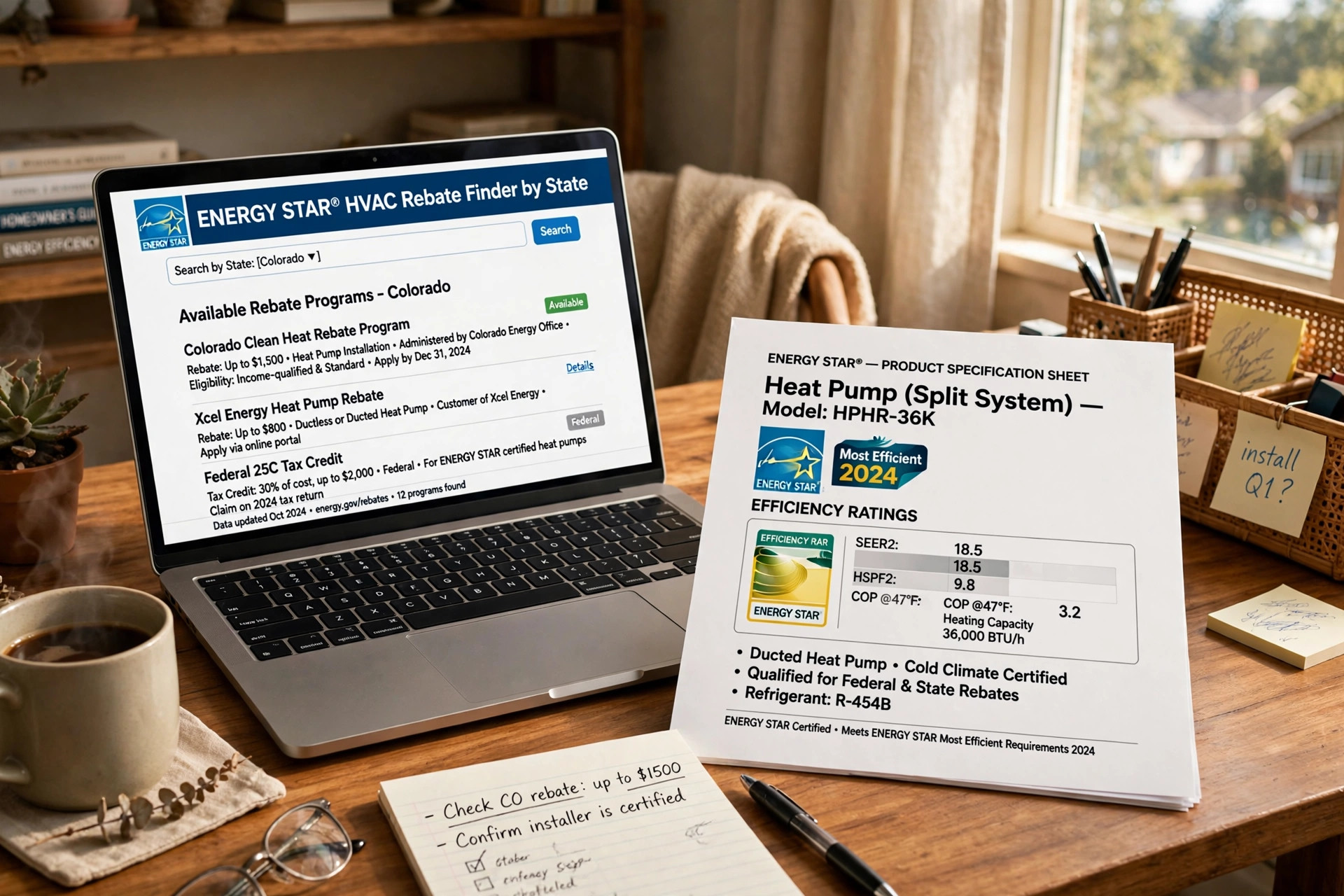

What an Energy Star HVAC Rebate Finder by State Does
An energy star hvac rebate finder by state is a simple tool that shows the rebates and tax credits you can claim for heating and cooling equipment in your state. New furnaces, air conditioners, and heat pumps cost a great deal of money. Rebates can cut that cost by hundreds or thousands of dollars. The problem is that no single rebate exists for the whole country. The federal government offers tax credits. Each state runs its own programs. Many utility companies add their own rebates on top. An energy star hvac rebate finder by state gathers all of these programs in one place and lets you search by your state.
The name comes from the ENERGY STAR program, which is run by the federal government. Equipment that meets its efficiency standards earns the ENERGY STAR label. Most rebate programs require that label. So a good finder starts with ENERGY STAR rated equipment and then matches it to the programs where you live.
This guide explains how these finders work, what kinds of rebates they can uncover, and how to use them step by step. It also covers costs, upkeep, safety, and common questions. If you plan to replace a furnace or air conditioner in 2026, reading this first can save you real money.
Why Rebates Matter for HVAC Equipment: Energy Star Hvac Rebate Finder By State
Heating and cooling is the largest energy cost in most American homes. It often takes up nearly half of a home’s utility bill. Old equipment wastes much of that energy. A furnace from the 1990s may turn only two thirds of its fuel into heat. The rest goes up the chimney. A modern ENERGY STAR rated heat pump or furnace wastes far less.
Rebates matter because efficient equipment costs more at the start. A high efficiency heat pump may cost several thousand dollars more than a basic unit. Without help, many families choose the cheaper unit and then pay more for years in energy bills. Rebates close that gap. They make the efficient choice the easy choice.
The savings stack up in three layers. First, the federal government offers tax credits under laws passed in recent years. These credits can cover up to 30 percent of the cost of a heat pump, within set limits. Second, many states run their own rebate programs, often paid for by funds meant to cut energy use. Third, local utilities offer rebates to their own customers to reduce demand on the power grid. A single project may qualify for all three layers at once. An energy star hvac rebate finder by state shows you the full stack, not just one layer.
What to Look for in a Rebate Finder
Not every finder is built the same. A useful one should let you type in your state or zip code and then show programs that match. It should separate federal credits from state rebates and utility rebates. It should show the dollar amounts, the dates, and the rules. And it should link to the official application pages so you can act.
Be careful with sites that ask for personal details before showing results. A good finder does not need your phone number or your income to show a basic list of programs. Some programs are income based, so the finder may ask about your income range to check which tier you fit. That is normal. But it should never sell your details or require a purchase first.
The most trusted starting point is the official rebate search on the ENERGY STAR website. It lists rebates by state and by product type. From there, the Department of Energy site at Energy.gov explains the federal tax credits in plain language. Together, these two sources form the backbone of any good search. Many homeowners also check their state energy office website or the U.S. Department of Energy for local details, but for HVAC equipment the ENERGY STAR finder is the natural first stop.
Types of HVAC Rebates by State
Rebates come in several forms. Knowing the types helps you read the results of an energy star hvac rebate finder by state with more confidence.
Federal Tax Credits
The federal government gives a tax credit, not a cash rebate, for efficient HVAC work. A tax credit lowers the tax you owe. For heat pumps and heat pump water heaters, the credit can reach 30 percent of the project cost, up to 2,000 dollars per year. For furnaces, boilers, and central air conditioners, there is a separate credit with lower limits. These credits apply in every state. You claim them on your tax return. Keep all receipts and the manufacturer’s certificate that states the equipment meets the standards.
State Rebate Programs
States run the widest variety of programs. Some give direct rebates of 500 to 1,500 dollars for a qualifying heat pump. Some offer extra rebates for low and middle income households. A few states run point of sale rebates, which lower the price at the time of purchase instead of sending money later. Because each state sets its own rules, an energy star hvac rebate finder by state is the fastest way to see what your state offers. Programs change each year, and money sometimes runs out before the year ends, so check early.
Utility Company Rebates
Your electric or gas company may be the easiest source of money. Utilities in many states give rebates of 100 to 600 dollars for high efficiency air conditioners, furnaces, or smart thermostats. Some pay for a free home energy check first and then add rebates for the work the check suggests. You usually apply through the utility’s website and submit the paid invoice. The Rheem and Trane dealer networks often help customers file these forms, since the manufacturer also benefits when more units sell.
Manufacturer and Dealer Incentives
On top of public programs, makers such as Carrier, Lennox, and Goodman run seasonal promotions. These often take the form of a mail in rebate of 200 to 1,000 dollars or special financing. They stack with government rebates in most cases. Ask your contractor which promotions are active before you sign.
How to Use an Energy Star HVAC Rebate Finder by State
Follow these steps to get the most from the tool.
First, gather basic facts about your home and your project. Know your zip code, your utility company, and the type of equipment you plan to install. If you already have a quote, keep it near. The finder will ask for some of these details.
Second, enter your state or zip code in the finder. Start with the official ENERGY STAR rebate search. Write down each program that fits your project, with the amount and the deadline.
Third, check the federal tax credit rules on the energy department site. Make sure the equipment in your quote meets the efficiency level the credit requires. A contractor can confirm this, and the equipment nameplate or spec sheet will list the ratings.
Fourth, look at your utility company’s website. Search for words like “HVAC rebate” or “heating rebate.” Apply before the work is done if the program requires pre approval. Some programs will not pay if you apply after installation.
Fifth, talk to your contractor about the full stack. A good contractor files rebate paperwork every week and knows which programs are paying on time. Ask for the heat pump installation cost near me 2026 to be broken down so you can see the price before and after rebates.
Sixth, keep a folder with every document. Save the quote, the paid invoice, the equipment model numbers, the rebate forms, and the tax credit certificate. You will need these if a program asks for proof.
Cost and Price: What Rebates Really Save
It helps to see the numbers. A typical central air conditioner replacement in 2026 costs between 5,000 and 12,000 dollars, depending on size and region. A furnace replacement runs 4,500 to 10,000 dollars. A full heat pump system often costs 8,000 to 20,000 dollars installed.
Now add the rebates. A homeowner might claim a 2,000 dollar federal tax credit, a 1,000 dollar state rebate, a 400 dollar utility rebate, and a 500 dollar manufacturer promotion on the same heat pump. That is 3,900 dollars back on one project. For a smaller project like a high efficiency furnace, the stack might total 1,000 to 2,000 dollars. Even a smart thermostat can earn a 50 to 150 dollar utility rebate.
Rebates do not cover the whole cost, and you should not buy equipment you cannot afford just because a rebate exists. But they change the math. Many families find that a heat pump costs about the same as a basic furnace and air conditioner pair once rebates are counted. Reading a heat pump vs furnace cost comparison usa guide can help you weigh the two paths for your climate.
One warning about timing. Tax credits are claimed when you file taxes, so the money comes months later. Rebates may take six to twelve weeks to arrive. Plan your budget for the full price first, and treat the rebates as money coming back.
Care and Upkeep of Efficient Equipment
Rebates reward you for buying efficient equipment, but the savings only last if the equipment stays in good shape. Clean or replace the air filter every one to three months. A dirty filter forces the system to work harder and wipes out the efficiency gains you paid for.
Have the system serviced once a year. A technician will check refrigerant levels, clean the coils, test the controls, and make sure the airflow is right. Many utility rebates for tune ups exist as well, and a finder will list them. This Old House and the Family Handyman publish seasonal checklists that walk through the basic tasks a homeowner can do safely.
Keep the outdoor unit clear of leaves, grass clippings, and snow. Do not stack boxes or storage against indoor equipment. If you installed a ductless mini split, read about the ductless mini split installation cost per zone to understand how zone upkeep differs from central systems. Small habits like these protect both your comfort and your energy bills.
Safety Notes
HVAC work involves electricity, gas, and refrigerant. Leave installation and major repair to licensed contractors. A bad gas connection can leak. A bad electrical connection can start a fire. Refrigerant requires special handling by law.
When you apply for rebates, you will deal with forms that ask for model and serial numbers. Take photos of the equipment nameplates before the installer leaves. This is safe and simple, and it gives you a record if a number is hard to read later.
Be wary of door to door salespeople who promise huge rebates. Check every claim against the official finder. Real programs have clear rules, real deadlines, and real phone numbers at government offices or utilities. If a salesperson pressures you to sign today to “lock in” a rebate, walk away and verify first.
Frequently Asked Questions
Do I need to buy ENERGY STAR equipment to get a rebate?
In most cases, yes. The great majority of state and utility programs require the ENERGY STAR label or a stated efficiency level such as a minimum SEER2 rating for air conditioners. The finder filters by this, so enter your equipment model to confirm.
Can I combine a federal tax credit with state and utility rebates?
Usually yes. The federal credit and most state and utility rebates are separate programs and can be claimed together. Read each program’s rules, because a few state programs reduce their payment by the amount of other aid you receive.
How long does it take to receive a rebate?
Utility and state rebates often take six to twelve weeks after you submit a complete application. Manufacturer mail in rebates take a similar time. Federal tax credits arrive when your tax refund arrives. Apply as early as the rules allow and keep copies of everything.
Do rebates cover the full cost of a heat pump?
No. Rebates lower the cost but do not erase it. A typical stack returns 2,000 to 4,000 dollars on a heat pump project. The rest is your share, though lower energy bills repay part of it over the years.
What if my state’s program runs out of money?
Some state programs have fixed budgets and close early when the money is gone. This is another reason to check the finder before you schedule the work. Ask the program office or your contractor whether funds are still available.
Do renters qualify for HVAC rebates?
Most equipment rebates go to the property owner, since the owner buys the equipment. Renters may qualify for smaller programs such as smart thermostat rebates. If you rent, talk to your landlord about larger upgrades.
A Final Word
An energy star hvac rebate finder by state turns a confusing mix of programs into a clear list. Start with the official ENERGY STAR search, add the federal tax credit rules, check your utility, and ask your contractor about manufacturer promotions. Keep your paperwork in one folder. With a little care at the start, you can cut thousands of dollars from the cost of efficient heating and cooling and enjoy lower bills for years to come.
References
Carrier. (n.d.). Heating and cooling systems. https://www.carrier.com ENERGY STAR. (n.d.). Energy efficient products. https://www.energystar.gov Family Handyman. (n.d.). DIY home repair and maintenance. https://www.familyhandyman.com Goodman. (n.d.). Heating and cooling equipment. https://www.goodmanmfg.com Lennox. (n.d.). Heating and cooling systems. https://www.lennox.com Rheem. (n.d.). Heating, cooling, and water heating. https://www.rheem.com This Old House. (n.d.). Home renovation guidance. https://www.thisoldhouse.com Trane. (n.d.). Heating and air conditioning. https://www.trane.com U.S. Department of Energy. (n.d.). Energy efficiency and renewable energy. https://www.energy.gov
Was this guide helpful?

About James Carter
The My Garden US editorial team writes practical, in-depth home and garden guides for American homeowners — tested advice, no fluff.
You May Also Like
HVAC Financing Options for New System USA
July 20, 2026 0 views
Solo Stove vs Breeo Comparison Reviews USA
June 15, 2026 0 views
Garage Insulation Kit for Metal Doors USA: A Plain Guide for Homeowners
January 3, 2026 0 views