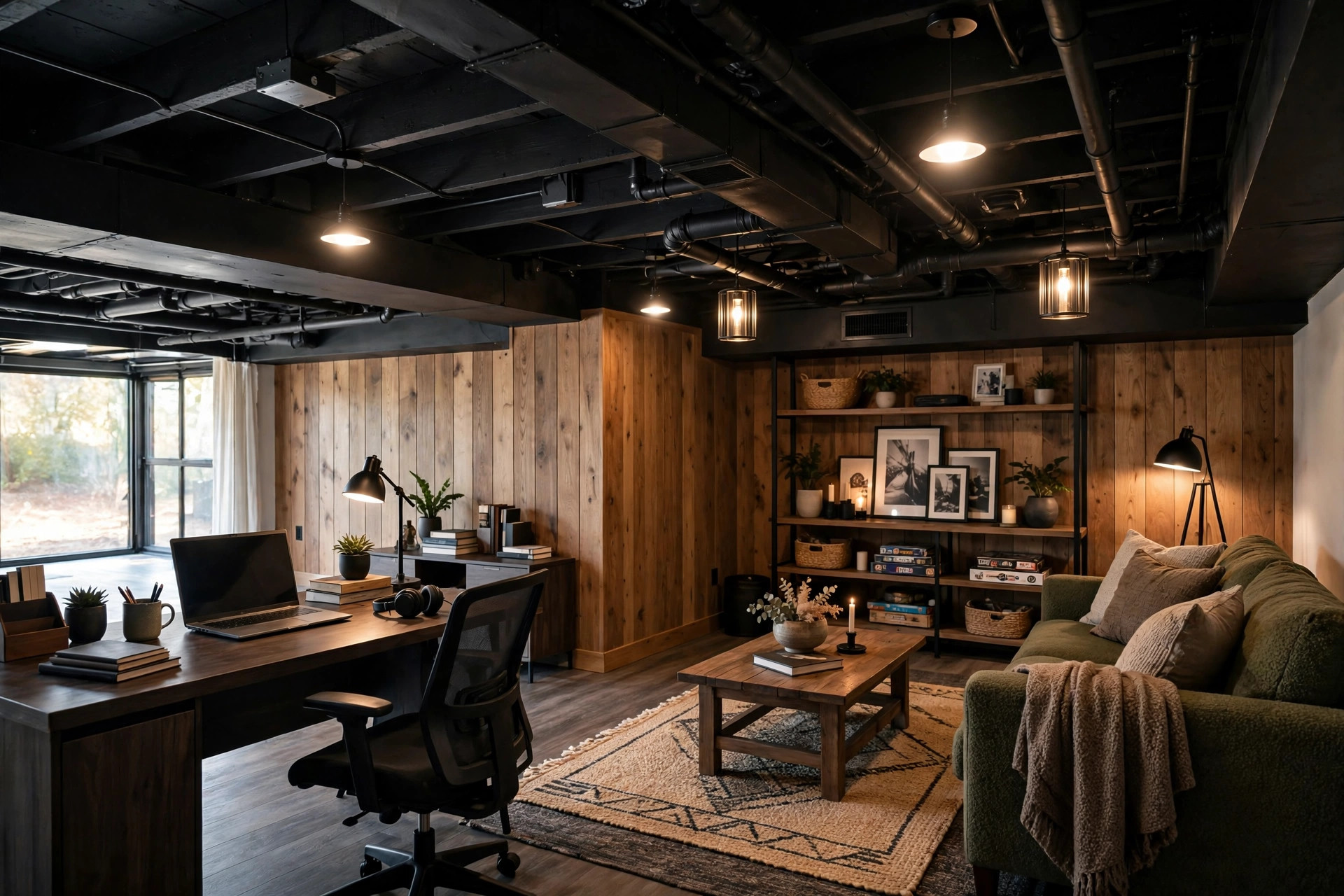

An exposed basement ceiling can be a problem. It can also be a gift. Open joists, pipes, wires, and ducts look rough and unfinished. Yet with the right paint, they become a clean, modern design feature. This guide covers the best paint for basement ceiling exposed surfaces in the USA. You will learn which paint types work best, which colors hide the clutter, what the project costs, and how to apply the paint the right way.
Many homeowners in the USA now leave their basement ceilings open on purpose. The industrial look is popular in basements turned into game rooms, home theaters, offices, and gyms. A dark coat of paint makes the pipes and wires blend into the shadows. A light coat makes a low basement feel taller and brighter. Either way, painting costs far less than hanging drywall. It also keeps easy access to pipes and wires for future repairs.
Why Paint an Exposed Basement Ceiling
An open ceiling in a basement collects dust. Bare wood joists and gray concrete turn yellow or dark with age. Paint seals the surfaces. It keeps dust from falling down. It makes the space easier to clean. It also makes the basement feel like a real room instead of a cellar.
Painted ceilings look finished. A single color over joists, subfloor, pipes, and ducts ties everything together. The eye stops noticing each pipe and wire. Instead, the room looks calm and planned. This is why so many basement remodels in the USA end with a sprayed ceiling rather than a drywall ceiling.
There are practical gains too. Painted surfaces resist moisture better than bare wood. A good coat of paint slows mold growth on damp joists. It also brightens the room when you choose a light color, or it hides the mechanical parts when you choose a dark color. Both choices work. The best choice depends on your goals.
What to Look for When You Choose the Paint: Best Paint for Basement Ceiling Exposed Usa
Not every paint suits an exposed ceiling. Basement ceilings have rough lumber, metal ducts, copper pipes, PVC pipes, wires, and nails. The paint must stick to many surfaces at once. It must also hold up in damp air.
Pick a Flat or Matte Finish
Flat paint hides flaws. Rough wood and old ductwork have dents, gaps, and stains. A flat finish does not reflect light, so these flaws stay hidden. Glossy paint would highlight every bump. For exposed ceilings, flat or matte is the standard choice. It also gives the modern industrial look most homeowners want.
Check Adhesion and Coverage
Look for paint with strong adhesion. A product that says “sticks to most surfaces” is a good start. You will paint wood, metal, plastic pipe, and old painted surfaces in one pass. A bonding primer under the top coat helps the paint grip bare metal and glossy PVC. Coverage matters too. Rough lumber drinks paint. Buy more paint than the label suggests.
Consider Dry-Fall Paint
Dry-fall paint is made for ceilings and open spaces. It turns to dry dust before it hits the floor. This means you can spray it over everything without heavy masking below. Dry-fall paint is sold at many home improvement stores across the USA. It is a favorite of pros who spray warehouse and basement ceilings.
Mind Moisture and Mold
Basements are damp. Choose a paint that resists mildew. Many interior paints now carry mildew-resistant formulas. For basements with past water trouble, a primer made to block stains and seal odors is worth the cost. Fix any water leaks before you paint. Paint cannot stop an active leak.
The Best Paint Types for an Exposed Basement Ceiling
Several paint types work well. Each has strengths. The list below ranks the most common choices used by painters and remodelers in the USA.
1. Flat Black Latex Paint
Flat black latex is the top pick for most basements. It makes ducts, pipes, and wires vanish into shadow. It creates the trendy industrial look. Flat black interior latex is cheap and easy to find. It sprays on fast with an airless sprayer. For a basement home theater or game room, this is the best paint for basement ceiling exposed areas.
2. Dry-Fall Flat Paint
Dry-fall paint comes in black and white. It is made for spraying open ceilings. The overspray dries to dust before it lands, so cleanup is simple. Sherwin-Williams and other pro paint brands sell dry-fall coatings for large open ceilings. It is the choice of many contractors who paint commercial and basement ceilings every week.
3. Flat White or Ceiling White Paint
White is the best choice when you want light. A low basement with small windows feels dark. Flat white paint on the joists bounces light around the room. The basement feels taller and cleaner. Behr ceiling paints in flat white are popular for this purpose. The downside is that white shows every pipe and wire. You must decide: hide the parts with black, or brighten the room with white.
4. Flat or Matte Gray Paint
Gray sits between black and white. It hides pipes better than white but keeps the room lighter than black. Charcoal gray is a popular middle ground. Many interior design guides suggest gray for basements that serve as living rooms or offices.
5. Bonding Primer Plus Top Coat
If your ceiling has bare metal ducts, glossy PVC, or rust spots, start with a bonding primer. Shellac-based primers block stains from water marks and wood knots. Oil-based primers stick to metal better than latex. After the primer, any good flat latex top coat will work. Sites like Family Handyman and This Old House offer step-by-step guides on priming mixed-surface ceilings.
6. Enamel for Metal Ducts
For metal ducts alone, some painters use an enamel or metal paint for extra durability. Benjamin Moore and other quality brands make durable finishes for metal. But spraying one single flat paint over the whole ceiling is usually simpler and looks more unified.
The Best Colors for an Exposed Basement Ceiling
Color changes how the basement feels. Here are the most common choices and when to use them.
Matte black. The most popular choice. It hides everything above it. Pipes, wires, and ducts fade away. It suits home theaters, game rooms, and bars. It makes a basement feel cozy and modern.
Flat white. The best choice for brightness. It suits basement offices, craft rooms, and gyms. It makes small windows seem bigger. But it shows dust and every pipe outline.
Charcoal or dark gray. A softer version of black. It hides parts well but feels less harsh. It suits family rooms and offices.
Light gray. A middle path. It brightens a little and hides a little. It suits rental units and multi-use basements.
If you want accent color ideas for the walls below the painted ceiling, see these accent wall painting ideas for living rooms. A bold wall color under a black ceiling can look striking.
How to Paint an Exposed Basement Ceiling
Spraying is the only sane way to do this job. A roller cannot reach between joists and around pipes. Rent an airless sprayer for one day. Here is the basic process.
1. Clear the room. Move everything out. Cover the floor with plastic sheeting. Cover windows, doors, and light fixtures with plastic and tape. 2. Clean the ceiling. Vacuum dust and cobwebs. Wipe greasy ducts with a degreaser. Let everything dry. 3. Fix leaks first. Repair any pipe leaks. Seal any foundation water entry. Paint will not fix water problems. 4. Mask what must stay clean. Cover sprinkler heads, smoke detectors, and vents. Wrap wire bundles you do not want painted if local code requires it. 5. Prime bare metal and stains. Spot-prime rust, water stains, and bare galvanized metal with a bonding or shellac primer. 6. Spray the top coat. Start at the far corner. Spray in smooth passes. Two light coats beat one heavy coat. Keep the sprayer moving to avoid drips. 7. Dry and inspect. Let the paint dry fully. Look for missed spots with a bright work light. Touch up as needed.
An airless sprayer puts out a lot of paint fast. Wear a respirator mask, goggles, and a spray suit. Open a window and run a fan for airflow. Spraying a basement ceiling is dusty work, so protect your lungs.
Most basements need two coats. Rough lumber soaks up the first coat. The second coat gives the even color you want. Budget extra paint for this.
Cost and Price
Painting an exposed basement ceiling is cheap compared to other ceiling work. Here are typical USA costs.
– DIY paint and supplies: $150 to $400 for a 1,000-square-foot basement. This covers 10 to 15 gallons of flat paint, primer, plastic sheeting, tape, and a sprayer rental. – Sprayer rental: $75 to $150 per day from most equipment rental shops. – Professional painting: $1,500 to $4,000 for a 1,000-square-foot basement, depending on prep work and your area. Spraying open ceilings is fast, so labor costs stay lower than drywall work.
Compare this to hanging drywall on a basement ceiling, which can cost $3,000 to $8,000 or more. Painting is the budget choice. It also keeps pipes and wires reachable. When a plumber needs access later, no drywall has to come down. This is a real savings over time.
If you are also updating other painted surfaces in the home, you may want to compare with kitchen cabinet refinishing service costs to plan a full painting budget.
Care and Upkeep
A painted exposed ceiling is easy to keep. Dust it once or twice a year. Use a vacuum with a brush head or a long duster. Flat black paint shows dust more than white paint, but a quick pass keeps it clean.
Touch up scuffs with leftover paint. Keep a labeled can of your ceiling paint in storage. If a plumber or electrician cuts into the ceiling, a quick spray or brush touch-up blends the repair.
Check for moisture once a year. Look for bubbling paint or stains on the joists. These signs mean water is getting in. Fix the water source, then repaint the affected area with a stain-blocking primer first.
Flat paint cannot be scrubbed hard, so avoid wet washing large areas. A damp cloth works for small marks. If a section gets very dirty, repaint that section rather than scrubbing it.
Safety
Spraying paint in a closed basement needs care. Paint fumes build up fast in low, closed spaces. Follow these safety steps.
– Wear a respirator. A dust mask is not enough. Use a respirator rated for paint spray and vapors. – Ventilate the space. Open windows and doors. Run fans to move air out of the basement. – Keep kids and pets away. Keep them out of the basement during spraying and until the paint is fully dry. – Mind electrical parts. Do not spray directly into open electrical boxes. Follow local code about painting wires and junction boxes. When in doubt, ask a licensed electrician. – Handle ladders with care. Basements have concrete floors. Use a stable ladder or scaffold. Have someone nearby when you work overhead.
The U.S. Consumer Product Safety Commission and home safety guides offer useful advice on safe painting practices in enclosed spaces.
Frequently Asked Questions
What is the best paint for basement ceiling exposed joists?
Flat black interior latex paint is the most popular and best choice for most basements. It hides joists, pipes, and ducts. It creates a clean industrial look. For brightness instead of hiding, flat white ceiling paint is the best pick.
Should I use primer on an exposed basement ceiling?
Spot priming is smart. Use a bonding or shellac primer on bare metal ducts, rust spots, water stains, and glossy PVC pipes. You do not need to prime the whole ceiling if the wood is clean and dry. A full coat of primer helps when the surfaces are mixed and stained.
Is dry-fall paint good for basement ceilings?
Yes. Dry-fall paint is made for spraying open ceilings. The overspray dries to dust before it reaches the floor. It saves masking time. It is sold at Lowe’s and pro paint stores in black and white. It is a top pick for DIY sprayers and pros alike.
How much does it cost to paint an exposed basement ceiling?
A DIY job costs $150 to $400 for a 1,000-square-foot basement, including paint, primer, masking, and a sprayer rental. A professional job costs $1,500 to $4,000. Two coats of paint are normal because rough lumber soaks up the first coat.
What color makes a basement ceiling look taller?
White or light gray makes a low ceiling feel taller. Light colors reflect light and open up the space. Black makes the ceiling disappear into shadow, which also makes the room feel bigger in a different way. Pick white for brightness and black for a cozy, hidden look.
Can I paint the pipes and ducts the same color as the joists?
Yes. Painting everything one color is the standard method. It ties the ceiling together and hides the clutter. Use one flat paint over joists, subfloor, pipes, ducts, and wires. This single-color approach is what gives the clean, finished look.
A Short Final Word
The best paint for basement ceiling exposed surfaces is flat, tough, and simple. Flat black latex leads the list for most American homes. Dry-fall paint is the pro shortcut for spraying. White brightens low, dark basements. Gray splits the difference. Whichever you pick, prep the space, spray two coats, and keep the air moving while you work. The result is a basement that looks finished for a fraction of the cost of drywall.
For other basement upgrade ideas, from floors to walls, browse design inspiration at HGTV. And if your project includes concrete floors too, these garage floor epoxy coating kit reviews may help you pick a matching floor finish.
References
Behr. (n.d.). Paints, primers, and stains. https://www.behr.com Benjamin Moore. (n.d.). Paints and stains. https://www.benjaminmoore.com Bob Vila. (n.d.). Home improvement advice. https://www.bobvila.com Family Handyman. (n.d.). DIY home repair and maintenance. https://www.familyhandyman.com HGTV. (n.d.). Home and garden ideas. https://www.hgtv.com Lowe’s. (n.d.). Home improvement products. https://www.lowes.com Sherwin-Williams. (n.d.). Paints and coatings. https://www.sherwin-williams.com The Home Depot. (n.d.). Home improvement products. https://www.homedepot.com The Spruce. (n.d.). Home and garden advice. https://www.thespruce.com This Old House. (n.d.). Home renovation guidance. https://www.thisoldhouse.com U.S. Consumer Product Safety Commission. (n.d.). Product safety information. https://www.cpsc.gov
Was this guide helpful?

About Emily Rodriguez
The My Garden US editorial team writes practical, in-depth home and garden guides for American homeowners — tested advice, no fluff.
You May Also Like

Kitchen Cabinet Refinishing Service Cost USA
September 6, 2026 0 views
Best Paint for Shutters Reviews USA: How to Choose a Lasting Finish
March 14, 2026 0 views
Gallery Wall Frame Sets for Sale USA: A Simple Buying Guide
July 17, 2026 0 views