
Introduction
A swimming pool in a cold climate is a short joy if the water stays cold. Many owners close the pool in early September. They miss weeks of fine weather. The best pool heater for cold climates usa buyers can stretch the season from May to October, and in some southern states even longer. A good heater warms the water on cool nights and keeps it steady through cold snaps. It lets a family swim on a mild day in late October when the air feels crisp but the water feels kind.
This guide explains what makes a heater fit for cold weather. It covers the main types of heaters, how to size a unit for your pool, what each choice costs to buy and to run, and how to care for the equipment. It also covers safety rules that every pool owner should know. By the end, you will know how to pick a heater that suits your climate, your pool, and your budget.
Why a Cold Climate Pool Heater Matters: Best Pool Heater for Cold Climates Usa
Pools lose heat fast. Wind pulls heat off the surface. Cold night air cools the water while you sleep. A small splash pool may drop five to eight degrees in a single cold night. Without heat, the season lasts only as long as the summer sun.
A heater changes that math. It adds back the heat that night air and wind take away. In cold climates such as Minnesota, Maine, or upstate New York, the right heater can add two to three months of swim time. In milder cold states such as North Carolina or Tennessee, it can make the pool usable from April to November.
Comfort is not the only reason. Warm water keeps the pool chemistry steady. Chemical levels drift less when the temperature holds. Swimmers also use the pool more often, which keeps the water moving through the filter. A pool that sits cold and still all fall can turn cloudy and green. Regular use, with heat, helps the system work as designed.
What to Look for in a Cold Climate Pool Heater
Heat Output and Sizing
Heat output is measured in British Thermal Units, or BTUs. A heater with more BTUs warms water faster. Most home pools need between 150,000 and 400,000 BTUs. A 20-by-40-foot inground pool in a cold state usually needs at least 250,000 BTUs. Above-ground pools are smaller and can often use less.
Size the heater to your pool volume and your climate. A unit that is too small will run all day and still leave the water cool. A unit that is too large costs more up front and may cycle on and off, which wastes fuel. Ask a local installer to run a heat-load check before you buy.
Minimum Operating Temperature
This is the key rating for cold climates. Many heat pump pool heaters stop working well when the air drops below 50 degrees. For a cold state, look for models rated down to 40 degrees or lower. Gas heaters do not lose power in cold air, so they often suit the far north. Check the maker specs for the lowest air temperature at which the unit still heats well.
Energy Efficiency
Gas heaters carry an efficiency rating of about 80 to 95 percent. Heat pumps carry a coefficient of performance, or COP. A COP of 5 or 6 means the unit moves five or six times more heat than the power it uses. High efficiency matters most in cold weather, because the heater will run long hours. Models listed by Energy Star programs and discussed in guides from the Department of Energy tend to give the best long-term value.
Heat Exchanger Material
The heat exchanger is the heart of the unit. Titanium exchangers last longest, and they resist salt water and harsh chemistry. Cupronickel is a good middle choice. Standard copper works fine in normal chlorine pools but wears faster. If you own a saltwater pool, a titanium exchanger is worth the price.
Controls and Cold Weather Features
Look for digital controls with a freeze guard. Freeze guard turns the unit on by itself when the water or air nears freezing, which protects the pipes. Timers, remote apps, and weather sensors add ease of use. A heater that can tie into your pool automation system saves time and avoids waste.
Types of Pool Heaters
Gas Heaters
Gas heaters burn natural gas or propane. They heat water fast and they work in any air temperature. A gas unit can raise a cold pool to swim temperature in a day or two. That speed makes gas popular in the north, where the swim season is short and owners want heat on demand.
The drawback is fuel cost. Gas heaters use a lot of fuel, and propane costs even more than natural gas. They also need venting and a gas line, which adds to the install price. If you swim only on weekends, a gas heater still makes sense, because you heat only when you plan to swim. For more on fuel choices, read our gas vs electric pool heater cost comparison.
Heat Pump Pool Heaters
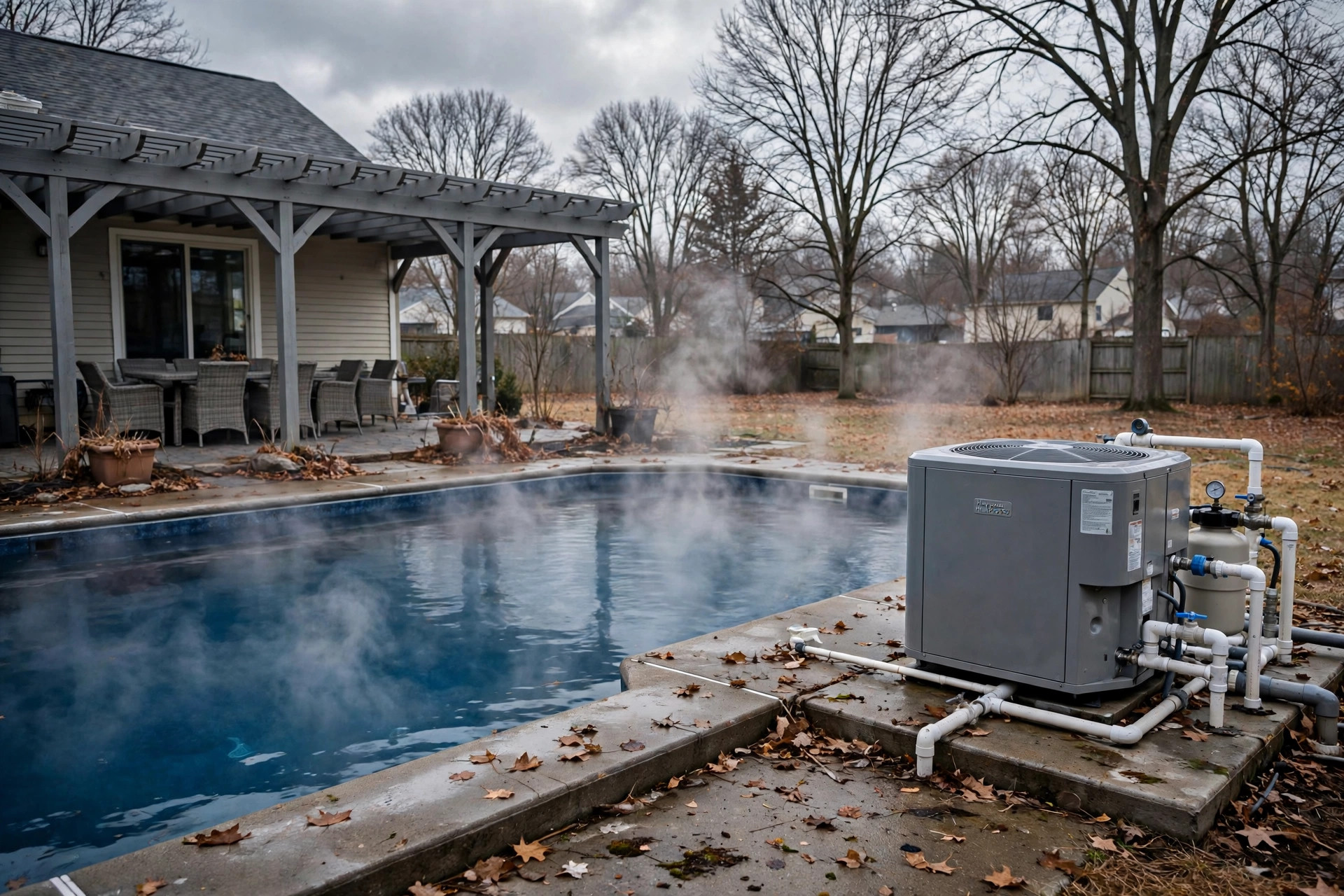
Heat pumps pull warmth from the air and pass it into the water. They use far less power than electric resistance heat. In mild weather they are the cheapest way to keep a pool warm. Brands such as Rheem and Lennox build heat pumps designed for pool duty.
The catch is cold air. Below about 50 degrees, most heat pumps slow down or stop. Cold climate models run down to 40 degrees or lower. They heat slowly, so they suit owners who keep the pool at temperature all season rather than heating on demand. Our pool heat pump reviews for inground pools look at top models in detail.
Solar Pool Heaters
Solar heaters move pool water through dark panels on a roof or rack. The sun does the work, so running costs are near zero. Panels last many years with little care. For cold climates, solar works best as a helper, not the sole heat source. It adds free heat on sunny days and cuts the load on a gas or heat pump unit.
Solar needs space for panels and enough sun. In the far north, short fall days limit what solar can do alone. Still, as a second system, it pays for itself over time. See our solar pool heater reviews for usa homes for panel options.
Electric Resistance Heaters
Electric resistance heaters are small and simple. They suit spas and small above-ground pools. For a full-size inground pool in a cold state, they are not a good pick. They heat slowly and use a great deal of power. A heat pump does the same job for far less money.
Cost and Price
Equipment Prices
Expect these rough ranges for a mid-size inground pool:
– Gas heaters: 2,000 to 4,500 dollars for the unit. – Heat pump heaters: 3,000 to 6,000 dollars. – Solar panel systems: 2,500 to 6,000 dollars, based on panel area. – Electric resistance: 500 to 1,500 dollars, for small pools only.
Brand names carry a premium. Makers like Carrier, Trane, and Goodman charge more, but their dealer networks and warranties add real value. A cheaper unit with poor support can cost more in the end.
Running Costs
Running cost depends on fuel price and climate. A gas heater can cost 200 to 600 dollars per month in a cold state if used daily. A heat pump in the same climate often costs 50 to 150 dollars per month in power. Solar costs almost nothing to run. These are rough figures. Your pool size, cover use, and local rates move the numbers.
A pool cover cuts heat loss by up to 70 percent. It is the cheapest way to lower any heater’s running cost. Solar covers cost little and pay for themselves in weeks.
Installation Costs
Professional install adds 500 to 2,000 dollars. Gas units cost more to install because they need a gas line and venting. Heat pumps need a proper pad, wiring, and sometimes a panel upgrade. Solar systems need roof work and plumbing runs. Never install a gas heater yourself. Local codes often require a licensed tech. Articles at This Old House and Family Handyman show how pros plan these jobs.
Total Cost of Ownership
Look past the sticker price. Add ten years of fuel and care. A cheap gas unit may cost less today but more over time. A pricier cold climate heat pump can pay back the gap in three to five years in states with mild power rates. Run the numbers with your own fuel prices before you buy.
Care and Upkeep
Monthly Checks
Test the water each week. Keep pH between 7.2 and 7.8 and chlorine at safe levels. Bad chemistry eats heat exchangers and shortens heater life. Clean the skimmer and pump baskets so water flows well. Low flow can trip the heater’s safety switches.
Seasonal Care
At the start of the season, check the heater for rust, nests, and debris. Clear leaves from around heat pump coils. Look at gas vents for blockage. Turn the unit on before the first swim day and watch for odd sounds or smells. A short check each spring prevents most breakdowns.
Winterizing
In freezing states, winterize the heater when you close the pool. Drain all water from the unit. Blow out the lines. Cover the heater with a breathable cover, not plastic, which traps damp air. If your unit has freeze guard, know how it works before the first freeze. Units that stay outside all winter without draining can crack, and the repair is costly.
When to Call a Pro
Call a tech if the heater will not light, if you smell gas, if the pilot keeps going out, or if error codes repeat after a reset. Do not open a gas unit yourself. Annual service by a pro keeps the warranty valid on most brands.
Safety
Pool heaters are safe when set up right and cared for well. Still, they hold heat, gas, and power, so respect them.
Water temperature should stay at or below 104 degrees. For pools, most owners keep water between 78 and 84 degrees. Hotter water strains the heart, and children overheat faster than adults. Set the thermostat once and lock it if children use the pool.
Gas heaters need clear venting. Carbon monoxide has no smell. Keep vents free of snow, nests, and shrubs. Put a carbon monoxide alarm in the pool house or nearby shed. If you smell gas, leave the area and call the gas company or fire service.
Electrical work must meet local code. Heat pumps pull heavy current at startup. Ground fault protection is a must near water. Let a licensed electrician handle the wiring.
Use a pool cover when the pool is not in use. It saves heat and it adds a barrier. Never let children or pets play near the heater unit itself. Fences and locked gates around the pool area remain the best guard against accidents.
Frequently Asked Questions
What size pool heater do I need for a cold climate?
For an inground pool of about 20 by 40 feet, plan on 250,000 to 400,000 BTUs in a cold state. Above-ground pools often need 100,000 to 150,000 BTUs. Local installers can size the unit from your pool volume and the lowest air temperatures you face.
Can a heat pump work in cold weather?
Yes, if it is built for it. Cold climate heat pumps work down to about 40 degrees. Standard models lose strength below 50 degrees. In far northern states, many owners pair a heat pump with a gas unit or rely on gas alone for early spring and late fall.
How much does it cost to heat a pool in a cold state?
A gas heater run daily can cost 200 to 600 dollars per month in fuel. A heat pump often costs 50 to 150 dollars per month in power. A cover cuts these figures sharply. Your pool size, setpoint, and local rates set the final bill.
Is gas or electric better for cold climates?
Gas heats fast and works in any weather, which suits short seasons and weekend use. Electric heat pumps cost less to run but heat slowly and fade in very cold air. Many owners in cold states pick gas as the main heater or as backup to a heat pump.
How long should a pool heater last?
With good water chemistry and yearly service, gas heaters last 7 to 12 years. Heat pumps often last 10 to 15 years. Solar panels can last 15 to 20 years. Titanium heat exchangers add years in saltwater pools.
Should I run the heater all season or only when I swim?
Heat pumps work best left on all season at a steady setpoint. Gas heaters suit on-demand use, since they heat fast but cost more per hour. In both cases, a cover makes either plan far cheaper.
Final Word
The best pool heater for cold climates usa owners is the one that fits your weather, your pool, and your habits. Gas gives speed and cold air strength. Heat pumps give low running costs through the mild months. Solar gives free heat when the sun shines. A cover ties every choice together and saves real money.
Take your time. Check the minimum operating temperature, size the BTUs to your pool, and get a local quote before you buy. A heater picked with care will give your family weeks of extra swim time each year, and it will do so safely and at a cost you can live with.
References
Carrier. (n.d.). Heating and cooling systems. https://www.carrier.com ENERGY STAR. (n.d.). Energy efficient products. https://www.energystar.gov Family Handyman. (n.d.). DIY home repair and maintenance. https://www.familyhandyman.com Goodman. (n.d.). Heating and cooling equipment. https://www.goodmanmfg.com Lennox. (n.d.). Heating and cooling systems. https://www.lennox.com Rheem. (n.d.). Heating, cooling, and water heating. https://www.rheem.com This Old House. (n.d.). Home renovation guidance. https://www.thisoldhouse.com Trane. (n.d.). Heating and air conditioning. https://www.trane.com U.S. Department of Energy. (n.d.). Energy efficiency and renewable energy. https://www.energy.gov
Was this guide helpful?

About Lisa Anderson
The My Garden US editorial team writes practical, in-depth home and garden guides for American homeowners — tested advice, no fluff.
You May Also Like
QuietCool Whole House Fan Reviews USA: Honest Look at Top Models
July 9, 2026 0 views
Cool Mist vs Warm Mist Humidifier Comparison
January 10, 2026 0 views
Cold Climate Heat Pump Reviews 2026 USA: A Practical Guide for Cold-Region Homes
June 28, 2026 0 views