
Introduction
A cold evening does not have to end a good night on the patio. Ventless propane patio heaters with free shipping give you steady outdoor heat and arrive at your door without an extra shipping bill. These heaters run on propane and need no vent, flue, or chimney. You set them up on the deck, connect the gas, and light the burner. Warmth spreads across the seating area in minutes.
Many home owners now shop for patio heaters online because store prices are high and delivery fees add up fast. When the shipping is free, the total cost is the price you see. That simple fact has made free-shipping offers one of the most sought after features in outdoor heating. This guide will walk you through every part of the purchase. You will learn how ventless propane patio heaters work, what to look for, what they cost, and how to keep them safe. By the end, you will know how to order with confidence and enjoy your patio in every season.
Why Ventless Propane Patio Heaters Matter: Ventless Propane Patio Heaters with Free Shipping
Longer Use of Outdoor Space
A patio is an investment. Many families spend good money on furniture, pavers, and lighting, then use the space for only half the year. A ventless propane patio heater changes that math. It raises the comfort of the area by ten to twenty degrees. With heat in place, spring evenings feel mild and fall nights feel fine. Even some winter days in the South and West become usable.
Restaurants and hotels learned this lesson years ago. Now home owners use the same idea. One or two heaters can turn a deck into a second living room for most of the year. The extra use often justifies the purchase price in a single season.
Simple Fuel With No Venting
The word ventless means the heater needs no exhaust pipe. All the heat from the burner stays in the space around you. This design keeps the unit simple and cuts the install cost to zero. There is no gas line to run. There is no hole to cut in a wall. The propane tank sits inside the base of the heater or beside the unit, and the whole thing moves on wheels.
Propane also burns clean and hot. A standard twenty-pound tank can run a full-size heater for eight to ten hours. That is enough for many evenings of use before a refill. Compared with electric models, propane units give stronger heat and work far from an outlet.
The Real Value of Free Shipping
Patio heaters are large. A tall standing unit can weigh fifty to eighty pounds and ships in a big box. Freight charges on such a box often run from thirty to one hundred dollars. An offer of ventless propane patio heaters with free shipping wipes out that cost. For the buyer, this is pure savings.
Free shipping also makes returns less painful. If the unit arrives damaged, a seller that ships free usually covers the return as well. Always check the policy before you order, but as a rule, free-shipping sellers are easier to deal with when problems arise.
How to Choose the Right Heater
Measure Your Space
Heat output is measured in British thermal units, or BTU. A tall mushroom-style heater puts out about forty thousand BTU and warms a circle roughly fifteen feet across. A smaller tabletop unit gives ten to twelve thousand BTU and suits a table for four.
Walk your patio before you shop. Count the chairs. Note the shape of the seating area. One large heater covers a small deck. A long or L-shaped patio may need two smaller units placed apart. It is better to place two medium heaters than to blast one oversized unit at the wrong spot.
Pick the Style That Fits
Standing heaters are the most common type. They look like a tall lamp with a wide metal head. They give the most heat and suit open decks. Tower or pyramid heaters enclose the flame in a glass tube. They run a bit cooler but look modern and draw the eye. Tabletop heaters sit on a patio table and use small one-pound propane canisters. They are fine for a dinner table but not for a whole deck.
Look at Safety Features
Every heater should have an anti-tilt switch. This device cuts the gas if the unit falls over. A flame failure device is also standard on good models. It stops the gas flow if the pilot goes out. A sturdy base with ballast or sand weight keeps the unit from tipping in wind. Stores such as Home Depot and Lowe’s list these features in the product specs, so compare before you buy.
Check the Build Quality
Stainless steel holds up best in rain and salt air. Powder-coated steel is a fine second choice if you keep a cover on the unit. Plastic parts should be limited to knobs and wheels. Read reviews from other buyers about how the heater holds up after a year outside. Guides from The Spruce often test heaters through a full season and note which ones rust.
Compare Shipping Terms
Free shipping sounds simple, but terms vary. Some sellers offer it only on orders over a set amount. Others exclude remote zip codes. A few add a handling fee that is really a shipping charge in disguise. Read the fine print. True ventless propane patio heaters with free shipping carry no added cost at checkout.
Types and Options on the Market
Standing Mushroom Heaters
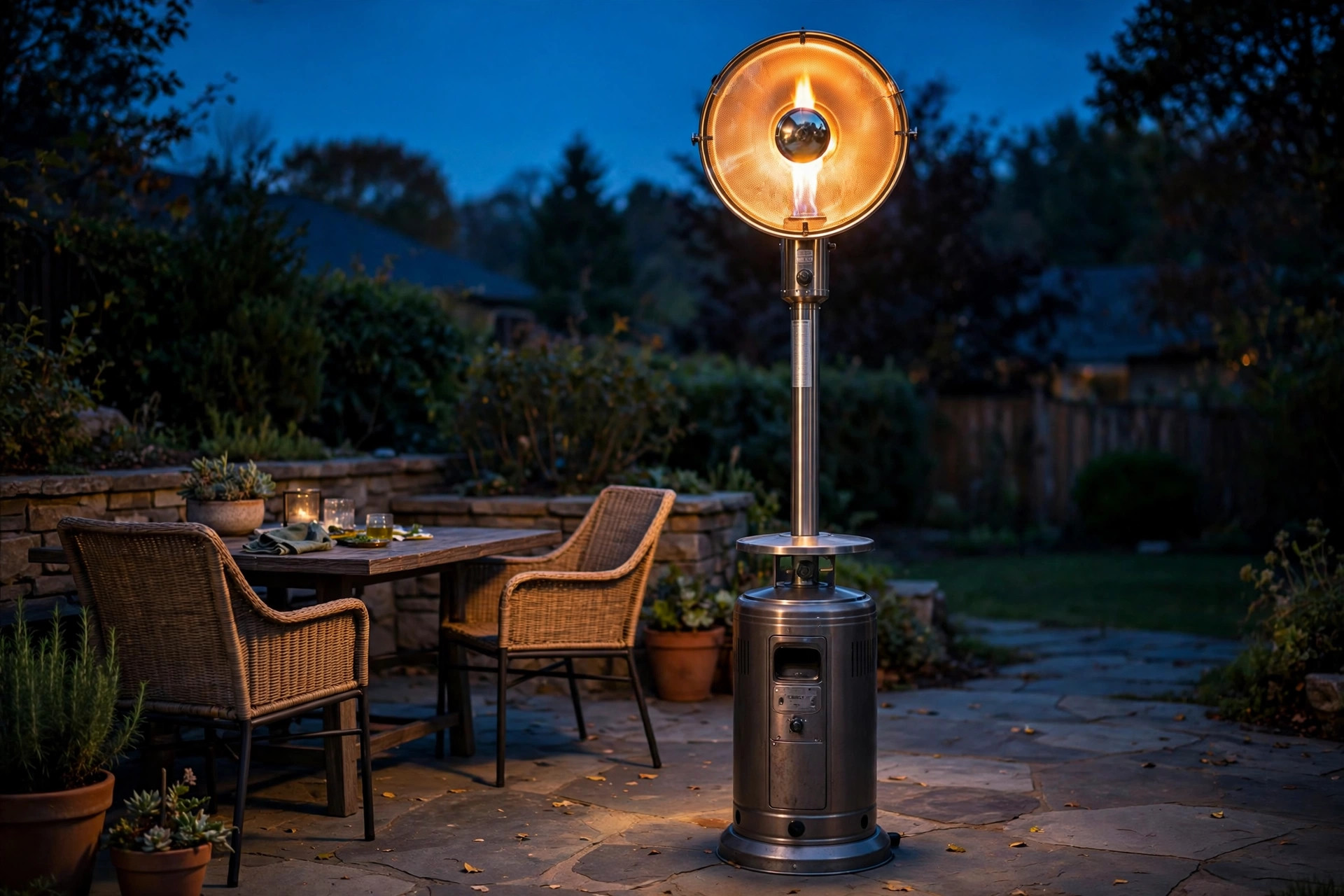
The classic standing heater has a tall pole, a round reflector head, and a burner at the top. Heat radiates downward and outward from the head. These units are the workhorses of the patio world. They suit open decks, pool areas, and large backyards. Most run on a twenty-pound propane tank hidden in the base.
Pyramid and Tower Heaters
Pyramid heaters show the flame inside a tall glass tube. They produce less raw heat than mushroom types but add a strong visual effect. They fit modern patios and upscale outdoor rooms. The glass tube needs care, since it can crack if it gets wet while hot. Keep the included cover on when the unit is not in use.
Tabletop Heaters
A tabletop heater is a small version of the standing type. It uses a one-pound propane canister and stands about three feet tall. It warms the people around a table and little else. Buy it as a second source of heat, not as the main one.
Wall-Mounted and Hanging Models
Some ventless propane heaters mount on a wall or hang from a ceiling hook. These save floor space and stay out of foot traffic. They are common on covered porches. Mounting needs care, since the unit must sit clear of wood and fabric. Follow the clearance numbers in the manual exactly.
Cost and Price Ranges
What You Will Pay
Tabletop models run from fifty to one hundred twenty dollars. Standing mushroom heaters range from one hundred fifty to four hundred dollars. Pyramid and tower models cost two hundred fifty to six hundred dollars. Premium brands with stainless steel builds sit at the top of each range. The price you pay online often beats the store price by ten to twenty percent.
Running Cost
A twenty-pound propane tank refill costs about twenty to twenty five dollars at most exchange points. At full heat, a large unit burns about one pound of propane per hour. That works out to roughly two to three dollars per hour of full-blast heat. In practice, most users run the heater at half power, which doubles the hours per tank. One-pound canisters for tabletop models cost about five dollars each and last two to three hours.
Where to Shop
Major retailers list wide selections online. You can compare models at Home Depot and Lowe’s, both of which run free-shipping promotions on patio heating during the fall. Specialty makers like Napoleon and Heatilator show their full lines on their own sites and link to dealers. Review sites such as The Spruce publish yearly roundups that rank units by heat output and value.
For buyers who want a step up in quality, see our roundup of premium outdoor patio heaters for sale. And if you heat your home indoors as well, our premium fireplace screens with doors buying guide covers the indoor side of safe hearth heating.
Care and Upkeep
Cleaning the Burner
Dust and spider webs gather in the burner over the summer. Before the first use each fall, check the burner holes and pilot area. A soft brush clears loose debris. Compressed air from a can works for tight spots. A dirty burner lights poorly and can burn yellow instead of blue. If the flame stays yellow after cleaning, have a service tech look at the unit.
Protecting the Finish
Sun and rain dull the finish over time. A fitted cover is the best defense. Use it whenever the heater sits idle for more than a day. In coastal areas, wipe the steel with a damp cloth once a month to remove salt film. Touch up small chips with high-heat paint to stop rust before it spreads.
Storing the Propane Tank
Store tanks upright in a cool, shaded spot. Never keep a spare tank indoors or in a closed garage. The U.S. Environmental Protection Agency offers general guidance on safe fuel handling around the home. Check the tank valve for leaks once a season with soapy water. Bubbles mean gas is escaping, and the tank should go back to the exchange point.
Seasonal Checklist
Each spring, inspect the hose for cracks. Each fall, clean the burner and test the igniter. Replace the thermocouple every few years, or sooner if the pilot keeps going out. These small steps keep the heater running for ten years or more. The repair experts at Family Handyman post step-by-step seasonal checklists that match most brands.
Safety Rules You Must Follow
Outdoor Use Only
Ventless propane patio heaters are made for outdoor air. Never bring one into a house, tent, camper, or closed garage. Propane burners produce carbon monoxide, a gas you cannot see or smell. Open air dilutes it. A closed room does not. This is the single most important rule in this guide.
Keep Clear Space
The manual will list clearance distances. A common rule is three feet of clear space around the heater and eight feet of open space above it. Keep the unit away from umbrellas, awnings, low branches, and dry leaves. Do not place it under a wooden deck or near a vinyl fence.
Watch Children and Pets
The metal head gets very hot during use. Small children and pets should stay several feet back. A safety gate or simple rope barrier works for parties. For homes with young kids, top rated fireplace safety gates for florida homes shows how barriers are sized for indoor hearths, and the same sizing logic helps outdoors.
Wind and Weather
Turn the heater off in strong wind. Gusts can blow the flame out or tip the unit. Light rain will not harm most models, but a downpour can crack a hot glass tube on a pyramid heater. If a storm is coming, move the heater under cover or shut it down. The project guides at This Old House include good advice on securing outdoor gear before storms.
Frequently Asked Questions
How long does a propane tank last in a patio heater?
A twenty-pound tank lasts eight to ten hours at full heat and up to eighteen hours at low heat. Most owners refill or exchange the tank every few weeks of regular use.
Are ventless propane patio heaters safe on a wooden deck?
Yes, if you follow the rules. Keep the listed clearances, use a heat-resistant mat under the base if the manual calls for one, and never leave the unit running unattended. An anti-tilt shutoff adds a layer of protection on decks.
Can I use a ventless propane patio heater in winter?
You can, as long as the unit is rated for the cold and you keep it outdoors or in fully open air. Propane flows slower in very cold weather, so heat output may drop when the tank sits below freezing. Some owners keep a spare warm tank ready for the coldest nights.
What does free shipping usually cover?
It covers standard ground delivery to most U.S. addresses. Alaska, Hawaii, and rural routes may cost extra. Oversize fees can apply on the tallest models. Read the seller’s shipping page before checkout so the price at the cart is the final price.
Do I need tools to assemble the heater?
Most units ship flat in one box and need thirty to sixty minutes of assembly with a wrench and a screwdriver. The tank does not come filled. Buy or exchange one at a gas station, hardware store, or home center before first use.
How do I know the heater is working right?
The flame should burn mostly blue with small yellow tips. The head should feel hot but not warped. If you smell gas, turn the tank off at once and check the connections with soapy water. If the pilot will not stay lit, the thermocouple may need replacing.
A Final Word
Ventless propane patio heaters with free shipping are one of the best values in outdoor living. You get real heat, simple setup, and a delivery cost of zero. Measure your space, pick a style you like, check the safety features, and read the shipping terms. Then order, assemble, and enjoy. The patio season is as long as you want it to be.
References
Family Handyman. (n.d.). DIY home repair and maintenance. https://www.familyhandyman.com Heatilator. (n.d.). Fireplaces and fireplace products. https://www.heatilator.com Lowe’s. (n.d.). Home improvement products. https://www.lowes.com Napoleon. (n.d.). Fireplaces, grills, and heating products. https://www.napoleon.com The Home Depot. (n.d.). Home improvement products. https://www.homedepot.com The Spruce. (n.d.). Home and garden advice. https://www.thespruce.com This Old House. (n.d.). Home renovation guidance. https://www.thisoldhouse.com U.S. Environmental Protection Agency. (n.d.). Protecting human health and the environment. https://www.epa.gov
Was this guide helpful?

About Michael Thompson
The My Garden US editorial team writes practical, in-depth home and garden guides for American homeowners — tested advice, no fluff.
You May Also Like

The Best Marble Fireplace Surrounds for New England Homes
February 15, 2026 0 views
EPA Certified Marble Fireplace Surrounds for Florida Homes: A Simple Buying Guide
March 5, 2026 0 views
Energy Efficient Tile Fireplace Surrounds for Sale: A Buyer’s Guide
September 5, 2026 0 views