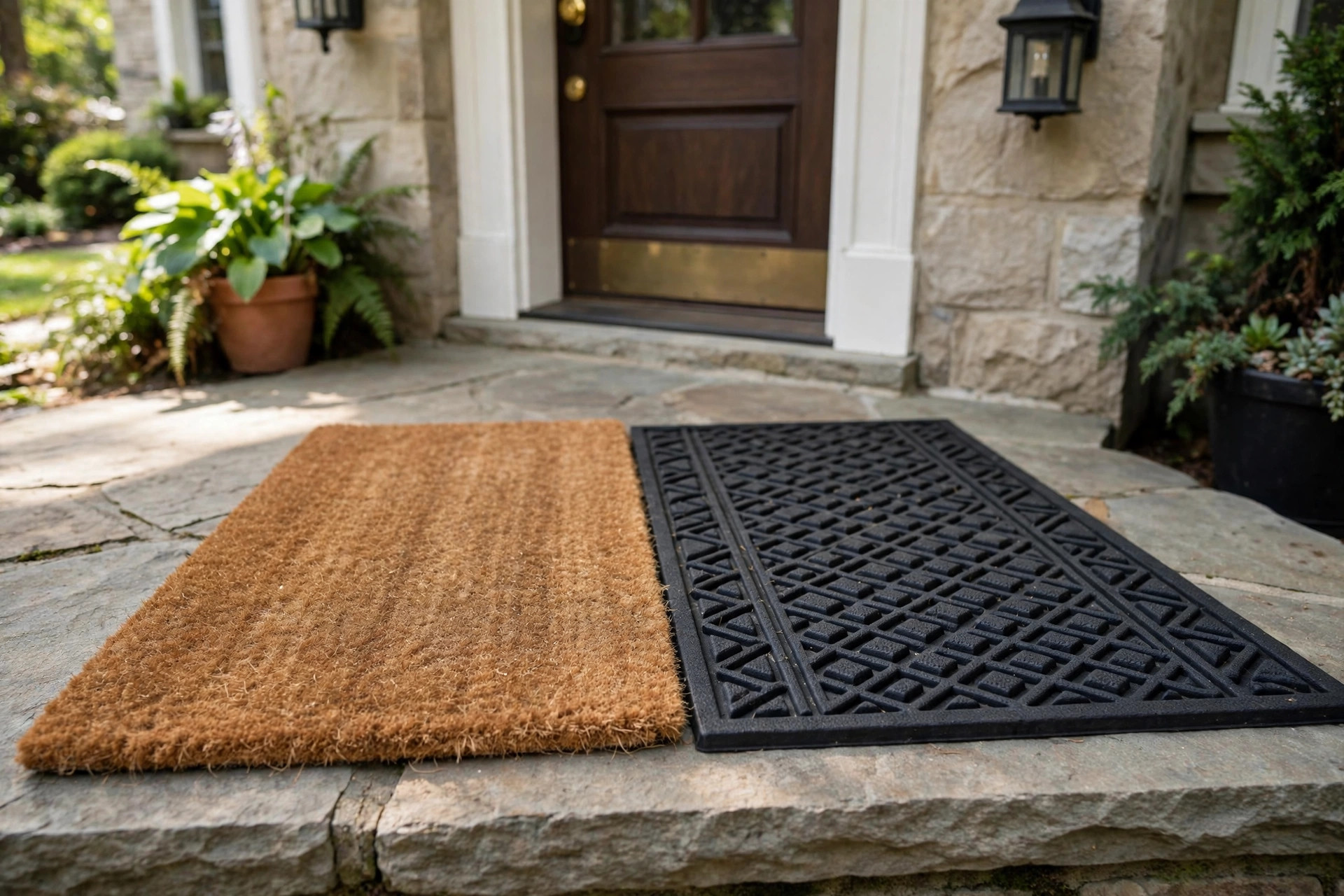

The coir doormat vs rubber doormat usa debate begins at the front step of almost every American home. Both mats promise the same simple job: stop dirt, mud, and water at the door before it reaches the floors inside. Yet they work in very different ways. Coir is a rough natural fiber cut from coconut husks. Rubber is a firm material built for grip and weather. Which suits your home depends on your weather and what you want the mat to do. This guide compares the two side by side.
Why the Doormat Choice Matters
A doormat is the first defense for your floors. Shoes carry in dirt, sand, leaves, snow melt, and road salt. Without a mat, all of that travels across entry tile, hardwood, or carpet, and over time it scratches floors and stains rugs. Homeowners who give care to their entryway tile or who read about the best tile for mudroom floors know that a good mat saves real money on cleaning and repairs. A mat also keeps the home safer. A doormat that traps water lowers the slip risk of wet shoes on smooth tile.
The front door sets the tone for the house. A worn or curling mat makes even a fine porch look tired. The right choice balances cleaning power, weather resistance, price, and care.
What Coir Doormats Are and How They Work: Coir Doormat vs Rubber Doormat Usa
Coir doormats are made from the fibrous husk of the coconut. The fibers are stiff, coarse, and springy. Woven or tufted into a mat, they form a rough surface that scrapes dirt from shoe soles with each step. This scraping action is the main strength of coir. It pulls off dry dirt, sand, and small bits of gravel better than almost any other material. Many coir mats carry a printed design or a short welcome message on a natural brown background. That plain, rustic look fits porches, farmhouses, and craftsman homes well.
Coir shines on dry dirt. The stiff bristles reach into tread grooves and knock soil loose. A quick shake outside clears most trapped dust. Being a plant fiber, it also breaks down at the end of its life.
But coir has limits. The fiber soaks up water. A mat left in driving rain stays damp for hours. Wet coir can stain the step and shed fibers. In snow and ice, coir freezes stiff and loses its scraping action. Under daily foot traffic, most coir mats last one to three years before they look flat and thin. They do best under a covered porch roof.
What Rubber Doormats Are and How They Work
Rubber doormats are made from natural rubber, recycled rubber, or man-made blends. The surface usually carries a raised pattern of rings, ridges, or holes. These ridges wipe soles and let water drain through. The back of the mat lies flat and heavy, so the mat stays put and does not slide on stone, tile, or concrete. That grip is a real safety point. A mat that creeps across the step is a hazard.
Rubber shines in wet weather. Rain runs off instead of soaking in. Snow and slush wipe away with a shake or a hose. Rubber does not rot, mold, or mildew. Good mats keep their shape through hot summers and cold winters. Many last five to ten years, far longer than coir.
Rubber’s main weakness is dry dirt. The surface does not scrape the way stiff coir bristles do. Fine dust and sand sit on top rather than working in, so the mat needs wiping often. Rubber also looks plain and workmanlike, mostly in black or dark gray. It suits garages, workshops, and back doors. For more ideas on tough work-area surfaces, read our guide to the best garage floor mats for winter.
Coir Doormat Pros
– Strong scraping action on dry dirt, sand, and gravel – Natural look that suits most porches – Low price, often under twenty dollars – Breaks down at end of life, unlike plastics – Light and easy to shake out
Coir Doormat Cons
– Soaks up water and dries slowly – Wears flat in one to three years of daily use – Sheds fibers, which can stain light steps – Freezes stiff in snow country – Needs a covered spot to last
Rubber Doormat Pros
– Excellent grip, stays flat and does not slide – Handles rain, snow, and slush with ease – Lasts five to ten years with little care – Easy to clean with a hose – Resists rot, mold, and sun damage
Rubber Doormat Cons
– Weak scraping on fine dry dirt – Plain look, mostly dark colors – Heavier to lift and move – Can smell when new, though the smell fades – Pricier than basic coir mats
Head to Head: The Key Points
The coir doormat vs rubber doormat usa question has no single winner. It depends on the job at hand.
Cleaning power. For dry dirt and sand, coir wins. The stiff fibers scrub soles clean. For wet mud, slush, and rain, rubber wins. It sheds water and stays grippy.
Weather. Rubber handles all four seasons. It stands up to sun, rain, snow, and ice with little trouble. Coir prefers a dry, covered porch. Direct rain shortens its life fast.
Lifespan. A coir mat gives one to three years of good service. A quality rubber mat gives five to ten. Per year of use, rubber often costs less even though the first price is higher.
Grip and safety. Rubber wins clearly. Its heavy, flat back holds the step. Coir mats can slide on smooth stone and may curl at the corners with age.
Look. Coir wins for charm. Its natural brown weave and printed designs welcome guests warmly. Rubber looks plain and workmanlike.
Care. Rubber is the easier mat. A hose and a shake keep it clean. Coir needs regular shaking, a dry spot, and occasional brushing to keep the fibers open.
Many American homes solve the debate by using both. A rubber scraper mat sits outside in the weather. A coir mat sits just inside the door or under the porch roof. The rubber takes the water. The coir takes the dry dirt. Together they cover the full year.
How to Choose: What to Look For
Start with your door’s exposure. Under a roof, coir works well and lasts longer. Out in open rain and snow, rubber is the safer pick. Dry states favor coir. Rainy or snowy states favor rubber. Homes with pets or work boots need rubber’s water handling.
Size matters. A mat should be at least as wide as the door, so both feet land on it. For a standard 36-inch door, 36 by 24 inches is a good minimum. A larger 48 by 30 inch mat gives guests two full steps and traps far more dirt.
Check the backing and thickness. Cheap mats with thin vinyl backs curl and slide. Look for a thick, flat back that lies flush on the step. Deep, dense coir fiber scrapes better and lasts longer. Deep rubber grooves move water better than flat prints.
Price is a small part of the choice. Basic coir costs ten to twenty dollars; better ones twenty to forty. Rubber runs fifteen to fifty, with heavy commercial grades at the top. Per year of use, rubber often costs less.
Types and Options on the Market
Not every mat fits neatly into coir or rubber. The market offers several blends.
Pure coir mats are the classic. They come plain, printed with designs, or stenciled with words like “Welcome.” Quality varies widely. The best use dense, long fibers and a strong vinyl or rubber backing.
Pure rubber mats range from thin black door mats to heavy scraper mats with deep grooves. The commercial-grade kind used at store entries lasts the longest.
Coir and rubber blends set a coir surface into a rubber frame. The frame keeps the mat flat and grips the step; the coir center does the scraping. These hybrids suit open porches well.
Other natural fibers like sisal and jute appear in lighter indoor mats. They are softer than coir and better for indoor use only.
Decorative layered looks pair a rubber tray mat with a thinner coir insert on top. The tray handles wet shoes and holds its shape; the coir layer can be swapped when it wears out.
Big home stores help with comparison. Home Depot and Lowe’s list doormats by size, material, and rating.
Cost and Price in the USA
Doormat prices stay modest, but the range is wide. A plain coir mat costs about ten to fifteen dollars; a thick, well-backed one twenty to forty. Replaced every one to three years, coir costs roughly one hundred to three hundred dollars over ten years.
A basic rubber mat costs fifteen to twenty-five dollars; a heavy commercial one thirty to fifty. Lasting five to ten years, rubber costs roughly thirty to one hundred dollars over ten years. The math favors rubber for long-term value.
Blended mats sit in the middle, often twenty to forty-five dollars. Replacement coir inserts for layered trays cost ten to twenty dollars, so the running cost stays low once you own the tray.
Spring and fall bring doormat sales at home stores, when new stock arrives. Buying two at once means you always have a fresh mat ready.
Care and Upkeep
Shake both mats out weekly. For coir, turn it face down and beat it with a broom handle to knock out trapped dirt. Do not hose coir often; slow drying invites mildew. If soaked, stand it on edge in the sun until fully dry.
Rubber is easy. Shake it out, then hose it down a few times a year. A stiff brush clears mud from the grooves. In winter, brush off road salt before it builds up.
Replace a mat when the surface wears flat. A coir mat that no longer scrapes dirt is done. A rubber mat with worn-down ridges has lost its water channels. Curling corners are a trip hazard, so replace the mat at once.
Store spare mats flat, never rolled or folded, or they will keep the bend. A garage shelf or a flat spot under a workbench works well.
Safety Points
The mat must lie flat. Curling edges and sliding mats cause falls. Rubber mats with heavy flat backs are the safest choice for smooth stone steps. If a coir mat slides, add a thin non-slip pad under it.
A soaked coir mat on smooth tile can slide. In icy weather, brush snow off the mat so it stays grippy. Rubber keeps traction better in the cold, though thick ice defeats any mat. Keep de-icing salt near the door in winter states.
A thick mat can catch the bottom of an inward-swinging door. Measure the gap under the door before buying. If the door drags, choose a thinner mat.
Entry safety goes hand in hand with entry flooring. A slip-resistant surface under the mat makes the whole entry safer. Readers planning a bigger update may want to compare slate tile for the entryway, which grips well even when wet.
Frequently Asked Questions
Which is better for rain, coir or rubber? Rubber is better for rain. It sheds water through its raised pattern and dries fast. Coir soaks up water, dries slowly, and can mildew if it stays damp. In rainy states, rubber is the clear pick.
Do coir doormats damage hardwood floors? Coir itself is safe for most floors, but grit trapped in the mat can scratch wood. Shake the mat out often. Never place a damp coir mat on hardwood. The moisture can stain the finish.
How long does a coir doormat last outdoors? About one to three years. Sun, rain, and foot traffic wear the fibers down. A coir mat under a covered porch lasts closer to three years. One in open weather may last a single season.
Are rubber doormats slippery when wet? Good rubber mats are not slippery. The raised pattern and the grip of rubber on stone give solid footing. Cheap, smooth rubber mats can be slick, so choose one with deep grooves.
Can I use both a coir and a rubber mat together? Yes, and many homes do. Put the rubber mat outside where the weather hits. Put the coir mat inside the door or under the porch roof. Each mat does what it does best.
Do rubber doormats smell? New rubber mats, especially recycled ones, can smell for a few days. The smell fades with air and use. Air the mat outside for a day or two first.
A Short Final Word
The coir doormat vs rubber doormat usa choice comes down to weather and wear. Coir cleans dry dirt better and looks warmer at the door. Rubber handles rain, snow, and years of use with less care. For a covered porch in a dry state, coir is a fine pick. For open steps, rainy states, snow country, or a busy entry, rubber wins. Many homes pick both and let each mat do its best job.
For more on entry materials, flooring brands publish helpful guides. Shaw Floors and Mohawk cover floor care for busy entries, while LL Flooring and Daltile show hard-surface options that pair well with a good mat. Home project sites like This Old House and The Spruce also walk through entry upgrades step by step.
References
Daltile. (n.d.). Ceramic and porcelain tile. https://www.daltile.com LL Flooring. (n.d.). Hardwood, vinyl, and tile flooring. https://www.llflooring.com Lowe’s. (n.d.). Home improvement products. https://www.lowes.com Mohawk Flooring. (n.d.). Flooring products. https://www.mohawkflooring.com Shaw Floors. (n.d.). Flooring products. https://www.shawfloors.com The Home Depot. (n.d.). Home improvement products. https://www.homedepot.com The Spruce. (n.d.). Home and garden advice. https://www.thespruce.com This Old House. (n.d.). Home renovation guidance. https://www.thisoldhouse.com
Was this guide helpful?

About Lisa Anderson
The My Garden US editorial team writes practical, in-depth home and garden guides for American homeowners — tested advice, no fluff.
You May Also Like
Best Thinset Mortar for Floor Tile USA: A Complete Buyer’s Guide
May 15, 2026 0 views
Best Carpet Pad for Concrete Slab USA: A Complete Buying Guide
March 19, 2026 0 views
How to Choose the Best Edge Trim for Tile Backsplash USA Homes
September 25, 2026 0 views