
Ants can turn a fine lawn into a problem in one season. Mounds rise in the grass. Bites spoil a barefoot afternoon. Reviews of outdoor ant killer for lawns help sort the products that truly work from the ones that only promise. This guide looks at the main types of lawn ant killers, what the reviews say, and how to pick the right one for your yard.
Why Ant Control Matters for Your Lawn
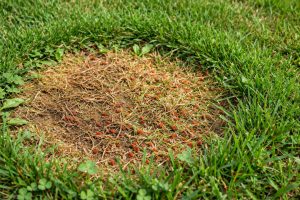
A single ant mound may seem small. Under the grass, it can hold thousands of ants. The workers build tunnels. The tunnels disturb the roots of your grass. Patches of lawn can thin and die where mounds sit.
Fire ants bring a harder problem. They sting. A yard with fire ants is not safe for children or pets. Many southern states fight these pests each year. A good outdoor ant killer for lawns removes the colony, not just the ants you see on top.
Ants also farm other pests. Some ant species protect aphids. Aphids suck sap from grass and garden plants. When you remove the ants, the aphids lose their guards. Your lawn gets a double gain.
Reviews matter because ant products vary a great deal. Some kill on contact and stop the mound for a week. Others poison the whole colony in a month. The reviews tell you which result to expect.
What to Look for in an Outdoor Ant Killer: Outdoor Ant Killer for Lawns Reviews
Read the label first. A solid outdoor ant killer for lawns lists the active ingredient in plain terms. Common ones include bifenthrin, carbaryl, acephate, and hydramethylnon. Each works in a different way.
Speed is not everything. Fast kill looks good in a review. Yet a product that kills only the workers leaves the queen alive. The colony returns in weeks. Slow-acting baits can do more harm to the colony. Workers carry the bait deep into the nest. The whole colony dies, including the queen.
Check the coverage area. A bag of granules may treat 5,000 square feet. A small bottle of liquid may cover only 1,000. Measure your lawn before you buy. Reviews often note whether the stated coverage is honest.
Look for residual action. Some products keep killing for three months. That helps in regions where ants invade all summer. Short-acting sprays need repeat use. Repeat use costs more in the end.
Safety ratings matter too. Products made for lawns should state if they are safe for pets and kids after drying. Reviews from pet owners often mention pet safe lawn weed killer reviews as a related concern, since many people treat weeds and ants in the same yard care routine.
Types of Outdoor Ant Killers for Lawns
Granules
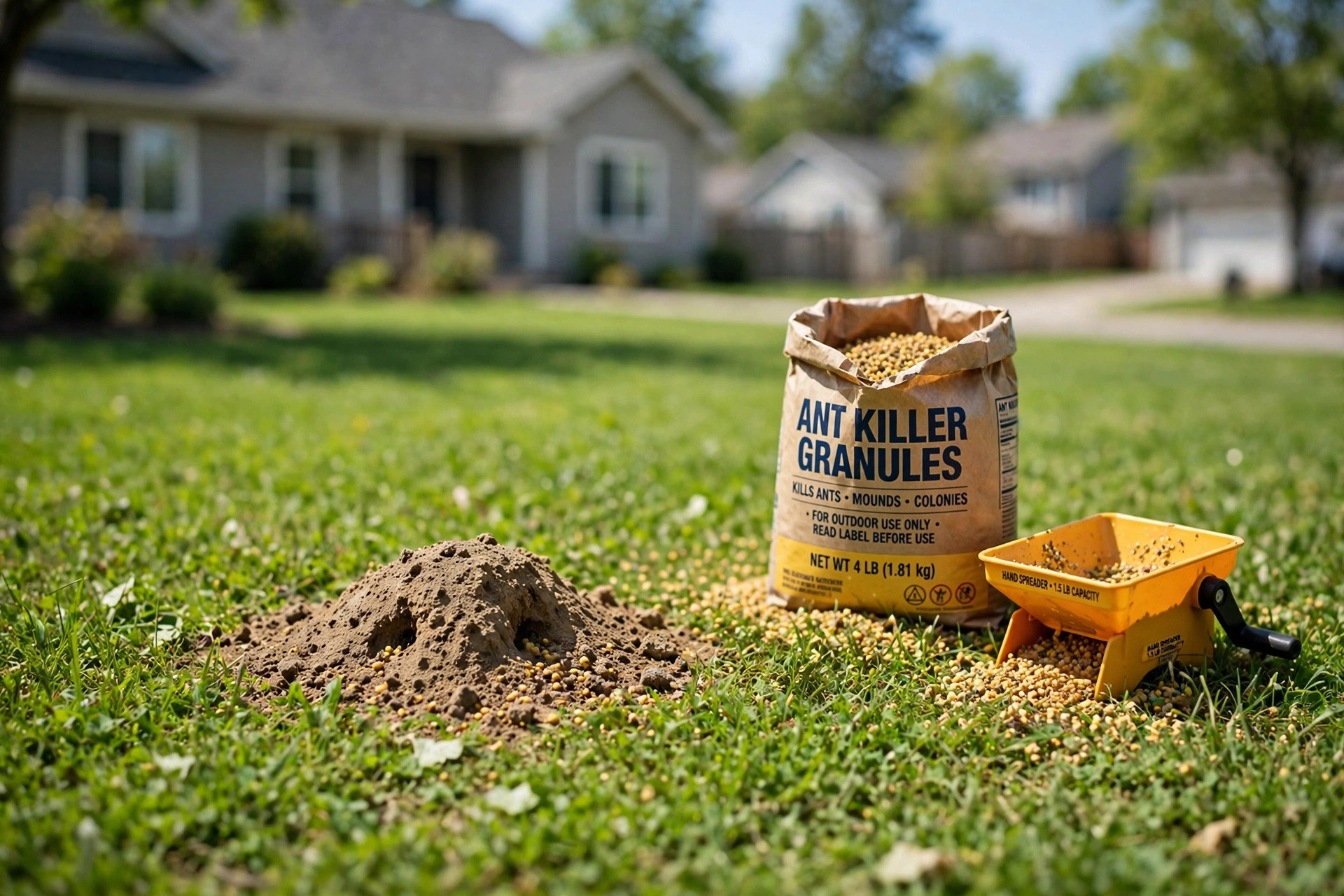
Granules are the most common choice in lawn ant killer reviews. You spread them with a hand spreader or a broadcast spreader. Then you water the lawn lightly. The water moves the active ingredient into the soil.
The best lawn ant killer granules earn high marks for ease of use. You do not need to find each mound. You treat the whole yard. Granules with bifenthrin kill many insect types, not just ants. That is a plus for yards with grubs and fleas too. Homeowners fighting both problems sometimes read grub killer for lawns safe for dogs alongside ant killer reviews.
Drawbacks exist. Granules need water to work. In a dry spell, you must water them in by hand. Some granules smell strong. The smell fades in a day or two.
Baits
Baits use a food lure mixed with a slow poison. Ants eat it and carry it home. The colony dies over days or weeks. Baits work well on sugar-loving ants such as Argentine ants and odorous house ants.
Reviews praise baits for low effort. You place bait stations near trails and mounds. There is no need to water or spread. Baits are also kind to helpful insects. They target only the ants that eat them.
The weak point is patience. A colony may take two to four weeks to die. If you want a yard ready for a weekend party, baits alone are too slow. Many reviewers pair a bait with a contact killer for quick relief.
Liquid Sprays
Sprays kill on contact. They suit mound drenching. You mix the concentrate with water and pour it on the mound. The liquid flows into the tunnels. It kills workers fast.
Reviewers like sprays for spot treatment. If you have three mounds, you treat three mounds. You do not treat the whole yard. That saves money.
Sprays have limits. They rarely kill the queen if she sits deep in the nest. Rain can wash the product away. Some sprays harm grass if mixed too strong. Follow the label rate with care.
Dusts
Dusts are fine powders you puff into mound openings. They work well in dry weather. They reach cracks and crevices that liquids miss. Many old hands in lawn care swear by dusts for single large mounds.
Dusts are not good for large areas. You treat mound by mound. Wind can blow the dust away. Always wear a mask when you apply a dust.
What the Reviews Say: Top-Rated Products
Review sites and buyer comments point to a few patterns. Products that combine speed with colony kill get the best scores. Granules with broad insect control rank high because one bag solves several problems.
Buyers warn against cheap sprays with no residual action. They kill what you see. The mound returns in ten days. Reviewers call these “spray and pray” products. They waste money.
Independent product tests often back the same point: slow baits win for long-term control, while fast granules win for quick results. You can find such testing methods described at Consumer Reports.
Fire ant specific products earn strong reviews in the South. They often pair a bait with a mound treatment. The two-step method gives both speed and a full kill. If fire ants are your main pest, look for products labeled for fire ants by name.
Reviews also stress the weather. Apply on a dry, calm day when no rain is coming for 24 hours. Wind spreads dust and granules into beds where you do not want them. Late spring and early summer give the best results, when ants forage hard.
Cost and Price: What to Expect
A bag of ant killer granules that covers 5,000 square feet costs between $15 and $30. Store brands run cheaper. Name brands cost more but often have stronger reviews.
Bait stations come in packs. A pack of six costs $10 to $18. You may need two packs for a large yard.
Liquid concentrates offer the best value per square foot. A $20 bottle can make enough drench for dozens of mounds. But you need a sprayer or watering can, and you must mix with care.
Compare the cost per treatment, not just the price on the shelf. A $12 spray that needs four uses costs more than a $25 bag of granules that works once. Reviews often include this math. It is worth reading.
For those timing their treatments, a pre emergent weed killer application timing guide shows how ant control fits into a yearly lawn calendar. One trip across the yard can serve two goals.
How to Apply Ant Killer to Your Lawn
Read the label before you open the bag. Each product has its own rate. More is not better. Extra product can burn grass and harm helpful soil life.
For granules, use a spreader for even cover. Walk at a steady pace. Overlap each pass slightly. After spreading, water the lawn with about half an inch of water. This moves the product to the ant tunnels.
For mound drenches, mix the liquid in a watering can. Pour slowly on the mound and around its base. Treat in the evening when ants are home in the nest. Morning treats can miss the foragers.
For baits, place stations along ant trails. Do not place them on top of mounds. Ants find the stations faster on their paths. Keep baits away from bird feeders and pet bowls.
Clean your tools after use. Rinse spreaders and watering cans. Store products in a locked shed, away from children and pets. Keep the label. If a pet eats a product, the label tells the vet what to do.
A thick healthy lawn fights ants on its own. Mow at the right height for your grass type. Water deeply and less often. You can find more seasonal lawn maintenance advice at John Deere and practical lawn care tips at Toro.
Safety: Pets, Kids, and the Environment
Safety leads many outdoor ant killer for lawns reviews. Most lawn products are safe for pets and children once dry. “Once dry” usually means two to four hours. Keep pets off the lawn until then.
Some active ingredients are more toxic than others. Carbaryl and acephate need extra care around pets. Bifenthrin is a common choice for pet households when used at label rates. If safety is your top concern, look for products that state pet safety plainly on the front label.
Protect pollinators. Do not apply dusts or sprays to flowering plants. Apply in the evening when bees are less active. Baits are the gentlest option for bees, since bees do not eat ant bait.
Guard waterways. Do not spread granules before heavy rain. Runoff can carry the product into ponds and streams. Keep a buffer of several feet from ditches and wells.
Wear gloves when you handle any concentrate. Wear a mask with dusts. Wash your hands when you finish. These small steps keep a routine chore safe.
Care and Upkeep After Treatment
Check treated mounds after one week. A dead mound flattens. Live ants stop coming to the surface. If activity continues, treat again after the label’s waiting period.
Rake dead mounds flat. The bare spots can be seeded. Grass seed fills the holes in a few weeks. Topdress with a thin layer of compost to help the seed.
Keep treating at the right season. One treatment in late spring can guard the whole summer. In warm climates, a second treatment in early fall helps. Ants stay active longer where winters are mild.
Watch for new mounds along walks and patios. Ants like edges. A quick spot treatment stops a new colony early. Early action uses less product.
Feed your lawn well. A dense lawn shades the soil and makes it hard for new queens to start colonies. Fertilize on schedule. Overseed thin areas in the fall. Healthy grass is the cheapest ant control of all.
FAQ
How fast do outdoor ant killers work?
Contact sprays kill ants in minutes. Granules start working in a day or two. Baits take one to four weeks to kill a full colony. Pick based on your need. For a party this weekend, use granules or a spray. For lasting control, add a bait.
Are ant killers safe for dogs and cats?
Most lawn products are safe for pets once the treated area is fully dry. Keep pets off the lawn during application and for two to four hours after. Read the label for exact times. Some products are safer than others. When in doubt, choose a bait in a tamper-proof station.
Will ant killer hurt my grass?
Most lawn-labeled products are safe for grass at the label rate. Problems come from overuse. Too much concentrate can burn blades. Dusts can harm grass in heavy piles. Always measure. Do not guess.
How often should I treat my lawn for ants?
Once per season is enough for many yards. Treat in late spring when ants wake up. In warm regions, treat again in early fall. If new mounds appear, spot-treat them. Yearly full-yard treatments are not always needed.
Do natural ant killers work?
Some do, for mild problems. Boiling water kills a mound but can kill the grass too. Diatomaceous earth works in dry weather but fails after rain. Borax sugar baits work well on many ant species and cost little. For heavy or fire ant problems, most reviewers say a labeled product works better.
Can I use ant killer and weed killer on the same day?
Yes, in most cases. They target different pests. Apply them at different times of day to be safe. Let one dry before you apply the other. Always check both labels for warnings about mixing.
Final Word
The best outdoor ant killer for lawns is the one that fits your pest, your yard, and your household. Granules suit whole-yard treatment. Baits suit patient colony kill. Sprays suit quick spot fixes. Reviews point to the same lesson again and again: kill the colony, not just the workers. Follow the label, mind the weather, and keep pets off until dry. Your lawn will reward you with a clean, ant-free summer.
References
Consumer Reports. (n.d.). Product ratings and reviews. https://www.consumerreports.org John Deere. (n.d.). Lawn care and grounds maintenance. https://www.deere.com Toro. (n.d.). Lawn care products and tips. https://www.toro.com
Was this guide helpful?

About Robert Taylor
The My Garden US editorial team writes practical, in-depth home and garden guides for American homeowners — tested advice, no fluff.
You May Also Like
Best Fertilizer for St Augustine Grass Texas: A Complete Guide
February 17, 2026 0 views
Best Soil for Topdressing Lawn Reviews: A Plain Guide to What Really Works
March 8, 2026 0 views
Sprinkler System Design Layout Guide for Homeowners
May 31, 2026 0 views