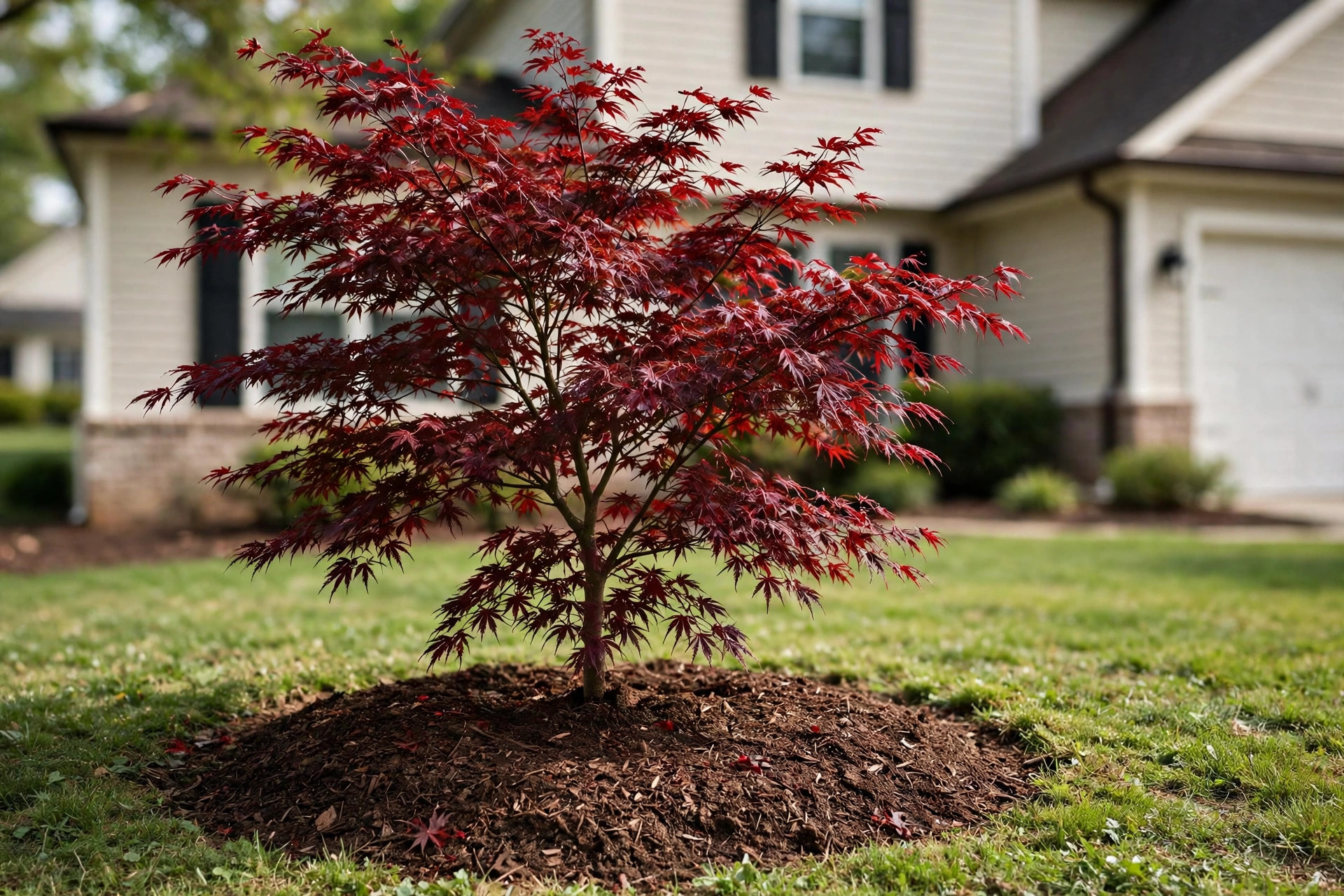

A japanese maple tree for front yard planting is one of the finest choices an American homeowner can make. The tree brings beauty in every season. Its leaves glow in spring. Its form stands out in winter. Its color turns bright in the fall. Few trees offer so much in so small a space.
Many front yards in the United States are modest in size. A large shade tree would crowd the lot. A Japanese maple fits well. Most types grow slowly and stay compact. They bring grace without taking over the lawn.
This guide walks through everything a homeowner needs to know. It covers why the tree suits a front yard. It shows how to pick the right type. It gives price ranges. It explains planting, watering, and care. It answers the questions people ask most often.
Why a Japanese Maple Fits the Front Yard
The front yard is the face of a home. It greets neighbors and visitors. A Japanese maple tree for front yard use turns that space into something special. The tree has a fine, layered shape. Its leaves are delicate. Its bark has a quiet beauty of its own.
Unlike big shade trees, a Japanese maple does not shade the whole house. It does not drop large limbs. It does not push up sidewalks with thick roots. Its root system is shallow and polite. That makes it safe near driveways and walkways.
The tree also adds value to the property. Real estate agents often note that a well-planted front yard draws buyers. A healthy Japanese maple can lift curb appeal in a way that flowers alone cannot. It is a living feature that grows more handsome each year.
For those who plan a full landscape design, a Japanese maple pairs well with many themes. Some homeowners combine it with ideas from native plant landscaping ideas for front yards to build a yard that is both striking and easy to keep.
Choosing the Right Type for Your Yard: Japanese Maple Tree for Front Yard
Upright Types
Upright Japanese maples grow like small trees. They reach 15 to 25 feet at full size. The leaves may be red or green. Bloodgood is the most famous red variety. It holds its red color well through summer heat. Emperor I is another fine choice. It leafs out later, so spring frost does less harm.
These upright types work as a centerpiece in a front yard bed. They stand tall enough to be seen from the street. They cast light shade that does not kill the grass below.
Weeping and Laceleaf Types
Weeping maples grow low and wide. Their branches arch down to the ground. The leaves are fine and lacy. Crimson Queen and Inaba Shidare are popular red laceleafs. They reach only 8 to 10 feet in height. They spread wider than they grow tall.
A weeping type suits a corner of the front yard. It also works near the front porch. Its shape softens the hard lines of a house. It draws the eye without blocking windows.
Dwarf Types for Small Lots
Some front yards are very small. Dwarf maples grow only 3 to 6 feet tall. They fit into a bed by the door. They even grow well in large pots. Shaina and Beni Hime are good dwarf choices. They keep their shape with little pruning.
What to Look for When You Buy
Buy from a nursery that keeps trees in shade. Look at the trunk. It should be straight and free of wounds. Look at the branches. They should spread evenly around the tree. Avoid trees with broken limbs or loose bark.
Check the root ball. In a pot, roots should fill the soil but not circle tightly. If the tree sits in the ground ball, the ball should be firm. The wrap should be burlap or wire, not torn plastic.
Ask about the variety name. A labeled variety tells you how the tree will grow. Seed-grown trees can be fine, but they vary. A named variety is more sure.
Size matters for price and planting ease. A five-gallon tree is easy to carry and plant by hand. A fifteen-gallon tree gives faster impact but costs more. Most homeowners find the five-gallon size the best value.
Cost and Price Range
A japanese maple tree for front yard use costs more than a common shade tree. Small trees in three-gallon pots often sell for 40 to 80 dollars. Trees in five-gallon pots run 80 to 150 dollars. Larger trees in fifteen-gallon pots can cost 200 to 400 dollars.
Rare varieties cost more. A named red laceleaf in a large pot may sell for 300 to 500 dollars at a garden center. Mail-order trees often cost less, but shipping adds to the price.
Hiring a landscaper to plant the tree adds labor cost. Many charge 100 to 250 dollars for planting a single small tree. Homeowners who plant it themselves save that fee. The tools needed are simple. Makers of yard equipment such as Toro and John Deere sell the shovels, carts, and watering gear that make the job easy.
Delivery fees apply when the tree is large. A tree in a twenty-gallon pot is heavy. It may need two people to lift. Some nurseries deliver free within a set distance. Ask before you buy.
Planting Step by Step
Pick the Right Spot
Japanese maples like morning sun and afternoon shade. Hot afternoon sun can scorch the leaves. This is true even for red varieties. A spot on the east side of the house often works well. Dappled shade under a taller tree also works.
Keep the tree at least six feet from the house foundation. Keep it away from walkways by four feet. The branches spread over time. Give them room to grow.
Dig the Hole
Dig a hole twice as wide as the root ball. Dig it only as deep as the root ball. The top of the ball should sit level with the ground or slightly above. A tree planted too deep will suffer.
Loosen the sides of the hole with a shovel. Roots grow better into rough soil than into smooth, packed walls.
Set and Backfill
Place the tree in the hole. Turn it so its best side faces the street. Check that it stands straight. Remove any wire cage or cut it away from the top of the ball. Pull back burlap from the trunk.
Fill the hole with the same soil you dug out. Press it down gently as you fill. Water deeply when the hole is half full. Then fill it the rest of the way and water again.
Mulch and Water
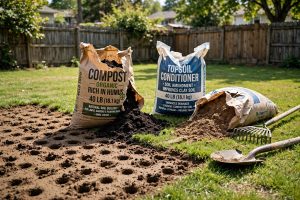
Spread mulch two to three inches deep around the tree. Keep the mulch three inches away from the trunk. Mulch holds moisture and keeps weeds down. Many gardeners order bulk mulch for flower beds to cover the whole front yard planting at a better price.
Water the new tree deeply twice a week for the first month. After that, water once a week through the first growing season. A slow soak is better than a light spray.
Care Through the Seasons
Spring
Watch for late frost. Young leaves can burn if a freeze follows warm weather. A light cloth cover can protect a small tree on cold nights.
Fertilize lightly in early spring. Use a slow-release fertilizer made for trees and shrubs. Do not overfeed. Too much fertilizer burns roots and brings weak growth.
Summer
Keep the soil moist but not wet. Japanese maples dislike soggy roots. In hot climates, add an extra inch of mulch to hold water. Young trees need water most of all.
If leaves scorch at the edges, give more water and more shade. A temporary shade cloth can help during a heat wave.
Fall
Enjoy the color. Red varieties turn bright scarlet. Green varieties turn gold and orange. The show lasts two to three weeks in most years.
Let fallen leaves stay on the mulch. They break down and feed the soil. Do not pile leaves against the trunk.
Winter
The tree drops its leaves and sleeps. The bare branches have their own beauty. The bark of some types glows red or coral in winter sun.
Wrap young trees in windy, cold areas if rabbits chew bark. A simple wire guard around the base stops the damage.
Pruning Made Simple
Japanese maples need little pruning. Let the tree find its natural shape. Prune only in late fall or winter, when the tree sleeps. The tree bleeds sap if cut in spring.
Cut out dead branches first. Remove branches that cross and rub. Thin a crowded spot so air can move through the leaves. Use sharp hand pruners. Make clean cuts just outside the branch collar.
Never top a Japanese maple. Never cut the main leader unless it is damaged. A bad cut ruins the form for years.
Watering Your Tree the Smart Way
A new tree needs steady water. An old, settled tree needs less. After the first year, water only during dry spells. Deep watering once every ten days beats daily light sprinkling.
Homeowners with lawn sprinklers should know where the spray falls. Some pop-up heads soak the tree trunk every day. That much water rots bark. Homeowners who plan their own system can learn how to install pop up sprinklers yourself and set the heads so beds get the right amount of water.
A drip hose around the tree is a fine choice. It puts water at the roots with no waste.
Common Pests and Problems
Japanese maples are fairly tough. Few pests bother them badly. Aphids may cluster on new spring growth. A strong spray of water knocks them off. Scale insects sometimes stick to branches. A coat of horticultural oil in winter treats them.
Verticillium wilt is the worst disease. It kills branches fast. There is no cure. Remove the tree and do not plant another maple in that spot.
Leaf scorch is common in hot, windy yards. Brown edges on leaves mean the tree wants more water or more shade. It is not a disease.
Safety Around the Home
Japanese maple trees are not poisonous to people. They are safe near children and pets. The seeds and leaves hold no known toxin.
Keep the tree away from power lines. Upright types can reach 20 feet. That is below most lines, but check your local rules. Call the utility company before you dig. They mark buried lines for free.
Small trees can fall in a hard storm if roots are shallow. Plant firmly and stake for the first year in windy spots. Remove the stake after one year so the trunk grows strong.
Frequently Asked Questions
How fast does a Japanese maple grow?
Most grow six to twelve inches per year. Dwarf types grow slower. The tree takes ten to fifteen years to reach near-full size. Slow growth is part of its charm. The wood stays strong.
Can a Japanese maple grow in full sun?
Some can, but most do best with afternoon shade. In the South, full sun scorches leaves. In the North, sun is less harsh. Red varieties handle sun better than green ones. Laceleaf types want more shade than upright types.
What USDA zones suit a Japanese maple?
Most varieties grow in zones 5 through 8. A few hardy types survive zone 4. In zone 9, plant only in deep shade with steady water. Check the label for your variety before you buy.
How close to the house can I plant it?
Plant at least six feet from the foundation. Eight to ten feet is better for upright types. The roots are not harsh, but branches need air space. Keep it clear of gutters and eaves.
Why are the leaves turning brown in summer?
Brown edges usually mean leaf scorch. The cause is heat, wind, or dry soil. Water deeply and add mulch. In bad cases, give the tree afternoon shade. The tree will leaf out fresh the next spring.
Is a Japanese maple a good tree for beginners?
Yes. It asks for little once settled. It needs no heavy pruning. It needs no spray program. Water it well the first year and mulch it. After that, it mostly takes care of itself.
A Short Final Word
A japanese maple tree for front yard planting rewards patience. It starts small. It grows slowly. Each year it becomes more graceful. In time it may be the most loved plant on the street.
Choose the spot with care. Plant it well. Water it through the first year. Then step back and let it grow. Few garden acts pay back as richly as planting the right tree in the right place.
References
Briggs & Stratton. (n.d.). Outdoor power equipment. https://www.briggsandstratton.com Deere & Company. (n.d.). Lawn care and landscaping equipment. https://www.deere.com Toro. (n.d.). Yard tools and watering products. https://www.toro.com
Was this guide helpful?

About Jennifer Lee
The My Garden US editorial team writes practical, in-depth home and garden guides for American homeowners — tested advice, no fluff.
You May Also Like
Robot Lawn Mower for Half Acre Yards: What to Know Before You Buy
September 10, 2026 0 views
Affordable Sod Delivery Near Me Prices
July 22, 2026 0 views
How to Install French Drain Around House: A Step-by-Step Guide
April 5, 2026 0 views