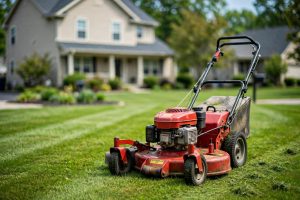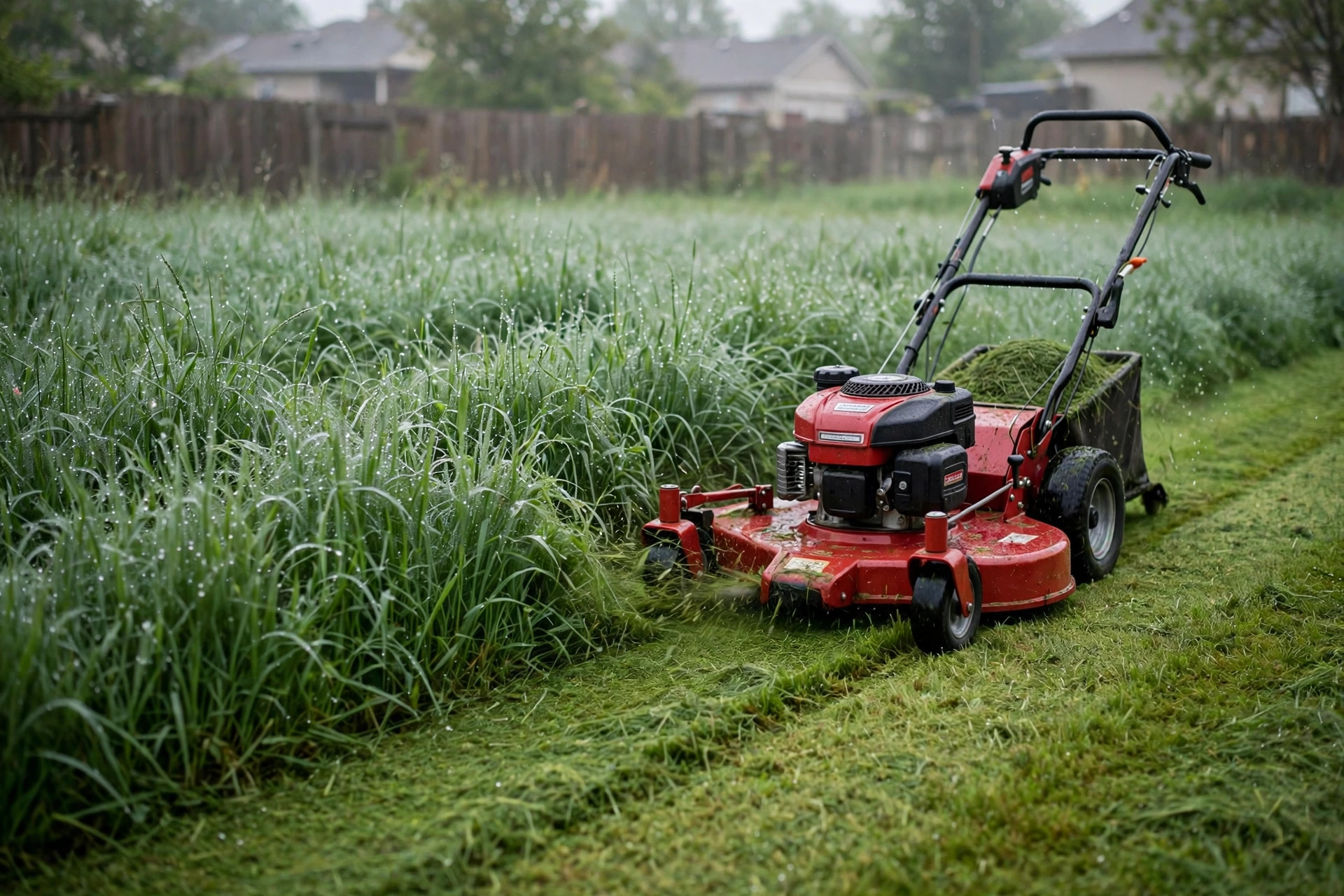

Morning dew sits heavy on the lawn. Rain fell the night before, and the grass is damp. The weekend is short. You want to mow, but you wonder if your mower can handle it. The best lawn mower for wet grass is built for days like this. It has the power, the airflow, and the blade design to cut damp blades cleanly without clumping, clogging, or tearing up your yard.
Most mower makers tell you to wait until the grass dries. That is good advice. But real life does not always give you a dry day. Some regions get rain every week. Some people only have Sunday free. A mower that works well on wet grass gives you options. This guide explains what makes a mower good in damp conditions, which types to consider, what to spend, and how to cut wet grass safely.
Why Wet Grass Is Hard to Mow
Dry grass is light and stiff. Wet grass is heavy and soft. Each blade sticks to its neighbors. Clippings stick to the deck and the chute. This is why mowers clog.
A mower that is fine on dry grass may choke on wet grass. The engine strains. The deck fills with a wet mat of clippings. The mower throws clumps onto the lawn. These clumps smother the grass under them. Brown spots appear a few days later.
Wet grass also tears more easily than it cuts. A dull blade rips the tops of wet blades. Torn tips turn brown. They let disease in. So the best lawn mower for wet grass must do three things well: cut sharply, move clippings out fast, and keep steady power under load.
What to Look for in a Mower for Wet Grass: Best Lawn Mower for Wet Grass
Power and torque
Wet grass asks more of an engine. A mower with strong low-end torque holds its speed when it hits thick damp patches. For gas mowers, look for engines around 170 cc and up. For battery mowers, look for brushless motors rated at 56 volts and up. Briggs & Stratton builds many of the engines found on residential walk-behind mowers, and their model pages show torque figures worth comparing. You can learn more about engine lines at Briggs & Stratton.
Torque matters more than top speed. A mower that keeps the blade spinning fast under load cuts cleaner. A mower that bogs down starts tearing instead of cutting.
Blade type
A high-lift blade is the single best upgrade for wet cutting. High-lift blades have taller fins at the back edge. The fins pull air up under the deck. This airflow stands the grass up and blows clippings out of the chute.
Standard blades have a low lift. They leave clippings to pile under the deck. Mulching blades chop clippings fine, but they hold material under the deck longer. For wet grass, a sharp high-lift blade that bags or side-discharges beats a mulching setup. Keep a spare set of blades on hand, and check where to buy lawn mower blades so you always have a sharp pair ready.
Deck size and airflow
Wider decks hold more wet clippings, so they clog more. For wet work, a 20 or 21 inch deck often clears better than a 30 inch deck. The deck shape matters too. A domed deck with rounded edges moves air well. Deep decks give clippings room to spin and exit.
Washed-out undersides of decks also stay cleaner. Some mowers have a deck wash port. You hook a hose to it and run the blade. Water spins around and rinses the underside. This saves scraping time after wet mowing.
Wheels and drive
Wet soil is soft. Narrow wheels dig ruts. Wide rear wheels spread the weight. If you use a walk behind mower with grass catcher, pick one with tall, wide rear wheels. Self-propelled drive helps most of all. You should never push hard on soft ground. Let the drive carry the mower. You just guide it.
The Main Types of Mowers, Compared for Wet Grass
Self-propelled gas mowers
Gas walk-behind mowers remain the top pick for wet conditions. They bring steady torque. They handle thick damp grass without fading. Many models offer a high-lift blade and a washout port. Toro makes several walk-behind models with personal pace drive, which adjusts speed to your steps. You can browse the lineup at Toro.
Look for rear-wheel drive. It grips better on slopes and damp turf. Front-wheel drive is cheaper, but the drive wheels lift on hills. Rear-wheel drive keeps power down where the weight sits.
Battery electric mowers
Battery mowers have improved fast. A 56 volt brushless model can now handle damp grass well. They run quiet and start with a button. They are lighter, which helps on soft ground.
The limit is run time. Wet grass drains batteries faster. Buy the largest battery the brand offers, or keep a second one charged. Also note that many battery mowers ship with mulching blades. Swap to a high-lift bagging blade for wet weeks.
Riding mowers
If your yard is over half an acre, a rider saves your legs. John Deere builds the most common line of residential riders and zero-turn mowers in the United States. You can compare deck sizes and blade options at John Deere.
Riders weigh more, so wet ground is a concern. Mow when the soil is firm enough not to rut. Use a high-lift blade set. Take half-width passes in the wettest spots. Clean the deck after every wet cut. A clogged rider deck cuts badly and stresses the belt.
Robot mowers
Robot mowers cut a little grass every day, so the lawn never gets tall. This helps on wet grass, because short grass clogs less. If your yard is around half an acre, a robot lawn mower can keep the lawn neat with no weekend work at all.
Most robots are mulching machines. In wet weather that can leave damp mats of clippings. Set the robot to run in dry hours. Many models let you set rain delays in the app. A robot is a maintenance tool, not a rescue tool. For tall wet grass after a rainy week, a walk-behind mower does the heavy first cut.
Cost and Price Ranges
Prices in the United States vary by type and features. The figures below are typical store prices.
– Push mowers: 150 to 350 dollars. Basic models lack drive and clog more on wet grass. – Self-propelled gas walk-behind: 350 to 700 dollars. This is the sweet spot for wet grass. You get torque, drive, and often a washout port. – Battery walk-behind: 350 to 650 dollars with battery and charger. Spare batteries cost 100 to 250 dollars. – Riding mowers: 1,800 to 3,500 dollars for basic rear-engine or lawn tractor models. – Zero-turn riders: 2,800 to 5,500 dollars. Fast on big lawns, heavy on soft soil. – Robot mowers: 1,000 to 3,000 dollars depending on yard size and features.
Extra blades cost 15 to 35 dollars a set. Sharpening at a shop costs 8 to 15 dollars a blade. A deck wash hose adapter is often built in on models above 400 dollars.
How to Cut Wet Grass Without Ruining the Lawn
Even the best lawn mower for wet grass works better with the right method. These steps cut down on clumps and damage.
1. Raise the deck one notch above your normal setting. Taller grass clogs less. You can take a second pass lower once it dries. 2. Mow in the late morning if you can. Dew burns off as the sun rises. The afternoon is even better. 3. Take narrower passes. Overlap by a third. The mower takes less grass per pass and clears faster. 4. Keep the blade sharp. A sharp blade is worth more in wet grass than any feature. Swap blades at the first sign of torn tips. 5. Empty the bag often. A full bag blocks airflow. Half-full is a good rule for damp cuts. 6. Mow at a steady walking pace. Rushing overloads the deck. Slowing down lets the blade do its work. 7. Hose the deck clean right after. Wet clippings harden like cement if left to dry.
If the lawn is soaked after heavy rain, wait. Mowing on muddy soil tears roots and makes ruts that last all season. Damp is workable. Soggy is not.
Care and Upkeep After Wet Mowing
Wet mowing is hard on machines. A short cleanup routine keeps yours running for years.
Clean the underside of the deck after every wet cut. Use the wash port or a hose. Then run the blade for a minute to fling off water. Scrape off any stuck mats with a plastic tool, never metal on a painted deck.
Dry the air filter. Foam filters can be washed, dried, and re-oiled. Paper filters should be replaced if damp and gray. Check the spark plug wire and boot for moisture.
For battery mowers, wipe the battery and contacts dry before storage. Store batteries indoors. For gas mowers, check the oil after a hard wet season. Water can slip past worn seals.
At the end of the season, sharpen or replace the blade. Wet mowing dulls edges faster because damp soil and grit sandblast the cutting edge. Sharp blades are the heart of mowing damp grass without clumps.
Safety Notes
Safety comes first with wet grass and power tools. Water and electricity are a poor mix. Do not use a corded electric mower on wet grass. The cord can cut and expose wires.
Keep hands and feet clear of the deck. Wet grass tempts you to clear a clog by hand. Never do that with the engine running or the battery in. Stop the mower, wait for the blade to stop, then clear it with a stick.
Watch your footing. Wet slopes are slick. Mow across slopes, not up and down, on walk-behind mowers. Wear shoes with grip. Skip the job if lightning is near.
Fuel safety stays the same in wet weather. Fill gas mowers outdoors on level ground. Wipe spills before starting. Store fuel in approved cans away from the house.
Frequently Asked Questions
Is it bad to mow wet grass?
It is harder on the lawn and the mower, but it is not always bad. Damp grass mows fine if you raise the deck, use a sharp high-lift blade, and avoid soggy soil. Mowing standing water or mud damages roots and should wait.
What is the best type of mower for wet grass?
A self-propelled gas walk-behind with a high-lift bagging blade is the most reliable choice. It has the torque to hold blade speed in damp patches and the airflow to move clippings out. Battery mowers with large batteries are a close second for smaller yards.
Should I mulch or bag wet grass?
Bag it or side-discharge it. Mulching wet grass leaves damp mats that smother the lawn. Bagging lifts the clippings away. Empty the bag often so airflow stays strong.
How high should I set the deck on wet grass?
Go one notch higher than your normal dry setting. If you usually cut at 3 inches, cut at 3.5 inches. Take a lower pass later in the week when the lawn dries.
Can I use a robot mower in the rain?
Most makers say no. Rain sensors pause the schedule. If your model has a rain delay, let it work. It will catch up when the grass dries. Forcing a robot through a downpour wears the blades and leaves clumps.
How often should I sharpen the blade for wet mowing?
Check it monthly in a wet season. Sharpen or swap at the first sign of torn grass tips. A sharp blade cuts cleanly; a dull one shreds. Keep a spare set so you never mow on a dull edge.
A Short Final Word
The best lawn mower for wet grass is not one magic model. It is a mower with steady torque, a sharp high-lift blade, good deck airflow, and wide wheels. Pair that machine with patient habits: a higher deck, slower pace, frequent bag emptying, and a quick cleanup after. Do that, and a damp lawn will look neat instead of ragged. The rain will come. With the right setup, it does not have to wreck your weekend.
References
Briggs & Stratton. (n.d.). Outdoor power equipment engines. https://www.briggsandstratton.com Deere & Company. (n.d.). Lawn care equipment. https://www.deere.com Toro. (n.d.). Lawn mowers and yard tools. https://www.toro.com
Was this guide helpful?

About Sarah Mitchell
The My Garden US editorial team writes practical, in-depth home and garden guides for American homeowners — tested advice, no fluff.
You May Also Like
Grub Killer for Lawns Safe for Dogs: A Practical Guide
July 1, 2026 2 views
Best Broadcast Spreader for Large Lawns: A Buyer’s Guide
February 22, 2026 0 views
Best Battery Chainsaw for Yard Work
June 30, 2026 0 views