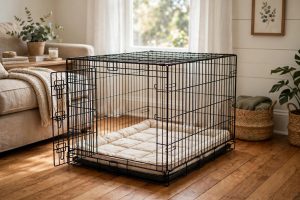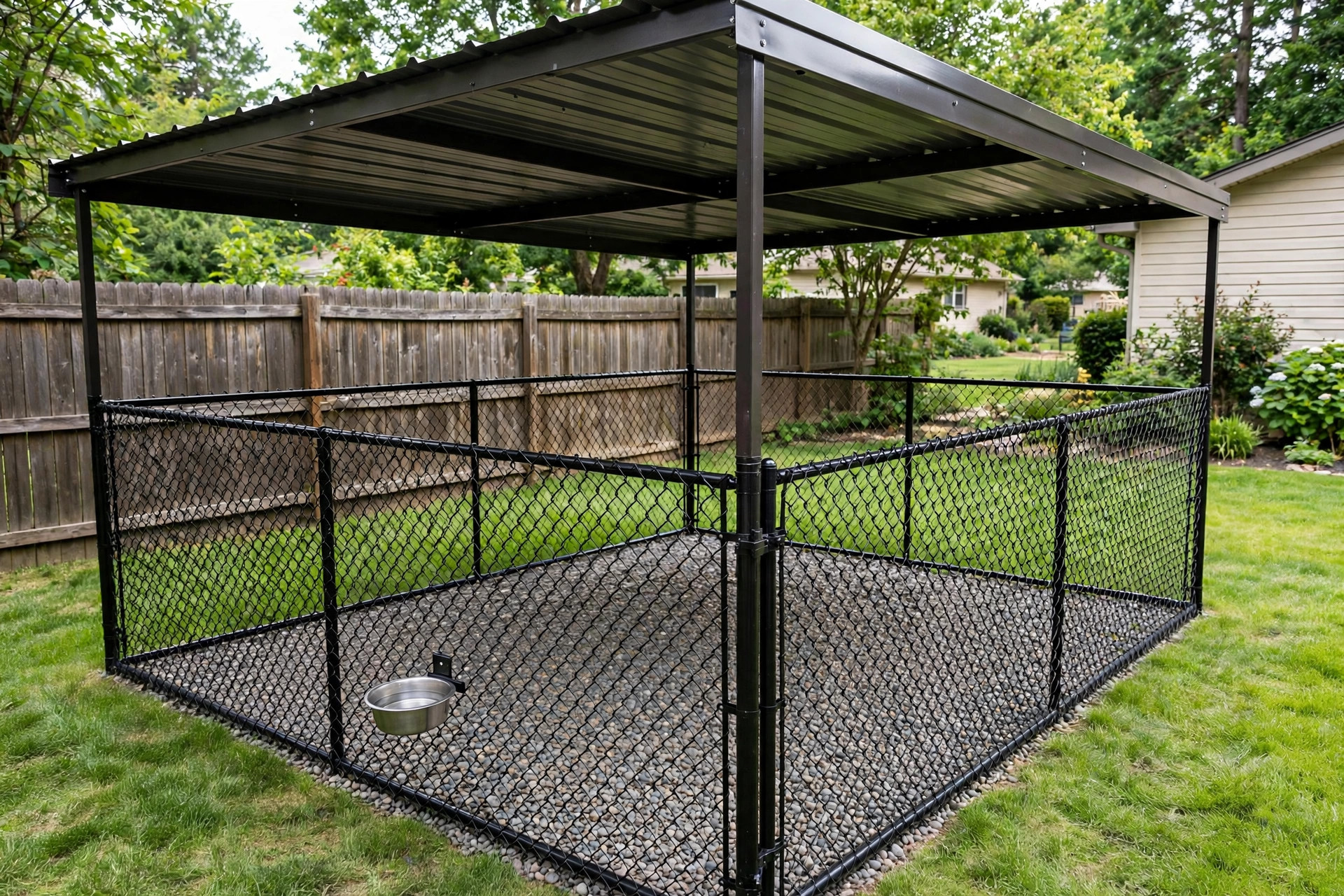

An outdoor dog run with roof for backyard use is a simple fenced pen with a solid cover on top. It gives your dog a safe place to spend time outside. The roof blocks the sun and the rain. The fence keeps your dog inside the pen and keeps stray animals out.
Many owners buy one because they cannot watch the dog every minute. The dog still gets fresh air and room to move. The yard stays safe and the flower beds stay whole. A covered run works for puppies, for active breeds, and for older dogs that like to nap in the open air.
This guide walks through the main points. You will learn why a roof matters, how to pick the right size and style, what such a run costs, and how to keep it clean and safe through the year.
Why It Matters
Dogs need daily time outside. The ASPCA notes that regular exercise keeps dogs healthy and calm. A covered run makes that time easier to fit into a busy day. You can leave the dog in the run while you work in the house or run errands.
The roof is the key part. Direct sun can heat a yard fast in summer. Shade from a solid roof keeps the air inside the pen cooler. Rain is no trouble either. The dog can stay dry during a shower instead of waiting at the back door.
A run also protects your yard. Dogs dig. They chew plants. A pen keeps that energy in one place. Your garden beds, your patio furniture, and your fence line stay in good shape.
There is a safety gain too. A strong pen keeps the dog away from the street. It keeps out raccoons, stray dogs, and other wildlife. For owners who worry about escape artists, a fully fenced pen with a roof is harder to climb out of than an open fence.
For large breeds, space matters more than most people think. A best outdoor dog kennel for large breeds usa guide can help you size the pen to the dog. The American Kennel Club offers breed size charts that are a good starting point.
What to Look for When You Choose: Outdoor Dog Run with Roof for Backyard
Size comes first. A small dog can be happy in a pen that is 4 feet wide and 8 feet long. A large dog needs more. Look for at least 6 by 10 feet for big breeds, and longer if the dog will spend hours there. The dog should be able to walk, turn, stretch out, and play with a toy.
Next, study the frame. Galvanized steel resists rust and holds up in rain. Thin wire bends under a strong dog. Thick welded wire or chain link is the safer pick. Check the spacing of the bars. Small gaps stop paws from getting caught.
The roof deserves close attention. A metal panel roof lasts for years and sheds rain well. A heavy tarp or canvas top costs less but wears out faster. Some tops are only sun shades. They block light but let rain through. Decide which kind you need before you buy.
Look at the door. It should latch in a way that a clever dog cannot open. A simple slide bolt is often not enough. A double latch or a padlock hasp is better.
Think about the ground. Grass is soft but turns to mud in wet months. Gravel drains well and is easy to clean. A concrete pad with a drain is the easiest surface to hose down. PetMD has notes on paw care that are worth a read if your dog will stand on hard ground all day.
Anchor the run to the ground. Wind can lift a light pen. Most kits include ground stakes. Use them. On concrete, use anchor bolts.
Water and food bowls that clip to the fence save space and stop spills. Place them in the shade of the roof so the water stays cool.
Types and Options
Chain link panel kits are the most common choice. They come in boxes with panels that bolt together. You can add panels later to make the run bigger. Most kits offer a roof panel as an add on.
Welded wire runs with metal roofs are stronger. The wire is welded at each joint, so it does not bend as easily. The metal roof is part of the frame. These runs cost more but last longer. They suit strong breeds and dogs that chew.
Wood and wire runs look nicer in a landscaped yard. The frame is wood, and the sides are wire mesh. You can build one to fit an odd corner of the yard. Wood needs stain or sealant every year or two to fight rot.
Portable runs with canopy tops are light and easy to move. They suit camping trips or renters who cannot build a fixed pen. They are not strong enough for a determined chewer or a large dog left alone.
Heavy duty runs use thicker steel and smaller mesh. They are made for working breeds and for dogs that have broken out of lighter pens. The roof on these is usually full metal.
If a fixed pen does not suit your yard, a fence line may work instead. A best dog fence for large yard no digging guide covers no dig options. Retailers such as Chewy, Tractor Supply, and Home Depot stock many pen styles, and Wayfair lists options with buyer reviews.
Cost and Price
Prices run wide. A small chain link kit with a tarp top can cost 150 to 300 dollars. A mid size welded wire run with a metal roof often runs 300 to 600 dollars. Large heavy duty runs can pass 1,000 dollars.
The roof adds to the bill. A tarp top may add 40 to 80 dollars. A fitted metal roof can add 150 to 300 dollars. It is money well spent in rainy or hot states.
Ground work costs extra. A gravel bed for a 6 by 10 foot run may cost 100 to 200 dollars in stone. A concrete pad can cost several hundred dollars if you hire the work.
Delivery and setup matter too. Kits ship in heavy boxes. Some stores offer assembly for a fee. Check the price before you order. Lowe’s and Home Depot both list delivery terms on their sites.
Buy once if you can. A cheap pen that rusts in two years costs more in the end than a good one that lasts ten. Read the warranty. Look for rust proof coating and strong welds.
Watch for sales in late fall. Stores often cut prices on outdoor gear when the season ends. A run bought in October can cost far less than the same run bought in April. Compare two or three sellers before you pay. Prices for the same kit can differ by a wide margin.
Care and Upkeep
Pick up waste every day. A small pen gets dirty fast. Daily pickup keeps smell down and keeps flies away.
Hose the run once a week. Wash the roof panels once a month. Dirt and leaves build up and can stain the coating. A mild soap and a soft brush are enough. Rinse well.
Check the frame each season. Look for rust spots, loose bolts, and bent wire. Tighten what is loose. Touch up rust with paint made for metal. A small spot left alone can spread.
Tarp roofs need more care. Take them down before heavy snow. A tarp that holds snow can sag and tear. Replace worn tarps each year or two.
Keep the grass trimmed around the pen. Tall grass holds moisture against the frame and hides waste. Trim a clear band about a foot wide.
Give the dog a dry place to lie. A raised bed keeps the dog off damp ground. A best outdoor dog bed waterproof for patio is easy to wash and dries fast. The Spruce Pets has cleaning checklists that work well for pet areas.
In winter, add a wind break on one side. A simple tarp panel cuts the cold wind. Make sure the dog still has air flow and light.
Safety
A roof does not make a pen safe in all weather. Never leave a dog in the run during extreme heat. Shade helps, but air can still grow hot and still. Always leave fresh water. On very hot days, keep the dog inside.
Storms are a risk. Take down light canopy tops before high wind. Check that the roof panels are locked to the frame. After a storm, walk the pen and look for damage before the dog goes back in.
Locks matter. Use a latch the dog cannot nose open. If children visit, teach them to latch the gate every time.
Watch for chew hazards. Some dogs chew wire coating or tarp edges. Check for sharp points where wire has broken. Replace damaged panels at once.
Do not tie the dog inside the run. A tie out plus a fence is a tangle risk. The pen itself is the barrier. That is enough.
Snow load can break a roof. Brush snow off metal roofs after a storm. If your area gets heavy snow, pick a roof rated for the load or take the top off for winter.
The ASPCA publishes heat safety guidance for pets each summer. PetMD also covers signs of heat stress. Learn the signs. Heavy panting, drool, and weakness mean the dog needs cool air and water fast.
Frequently Asked Questions
How big should an outdoor dog run with roof be?
Match the pen to the dog. Small dogs do well in a 4 by 8 foot pen. Medium dogs need about 6 by 8 feet. Large dogs need at least 6 by 10 feet, and more is better. The dog should walk, turn, lie flat, and play without touching the sides.
Can my dog stay in the run all day?
A few hours at a time is fine for most dogs. All day every day is not ideal. Dogs need walks, play, and time with people. Use the run as a safe base, not as a full time home.
Will the roof hold snow?
Light metal roofs hold a dusting of snow. Heavy snow can bend or break them. Brush snow off after storms. In snow country, pick a roof rated for snow load or remove the top in winter.
What ground cover works best under a covered run?
Gravel drains well and is easy to clean, which makes it a favorite. Concrete with a drain hoses down fast but can be hard on joints. Grass is soft but turns to mud. Many owners use gravel with a raised bed for rest.
Can I build a covered dog run myself?
Yes. Panel kits bolt together with basic tools. A wood frame run needs a saw, a drill, and wire mesh. Plans are simple. Building your own lets you fit an odd yard shape and pick your own roof.
A Final Word
An outdoor dog run with roof for backyard life is a small project with a large payoff. The dog gets safe air and shade. You get peace of mind. Pick a strong frame, a real roof, and a size that fits the dog. Keep it clean and check it each season. Do that, and the pen will serve your dog well for many years.
References
American Kennel Club. (n.d.). Dog care and training resources. https://www.akc.org ASPCA. (n.d.). Pet care and animal welfare resources. https://www.aspca.org Chewy. (n.d.). Pet supplies. https://www.chewy.com Lowe’s. (n.d.). Home improvement products. https://www.lowes.com PetMD. (n.d.). Pet health information. https://www.petmd.com The Home Depot. (n.d.). Home improvement products. https://www.homedepot.com The Spruce Pets. (n.d.). Pet care guides and product reviews. https://www.thesprucepets.com Tractor Supply Co. (n.d.). Farm and ranch supplies. https://www.tractorsupply.com Wayfair. (n.d.). Furniture and home goods. https://www.wayfair.com
Was this guide helpful?

About Michael Thompson
The My Garden US editorial team writes practical, in-depth home and garden guides for American homeowners — tested advice, no fluff.
You May Also Like
Dog Ramp for SUV and High Bed Access: A Simple Buying Guide
May 15, 2026 0 views
The Best Pet Water Fountain for Dogs: Large Capacity Models That Keep Water Fresh
April 27, 2026 0 views
Best Pet Hair Vacuum for Hardwood Floors: A Simple Buying Guide
June 15, 2026 0 views