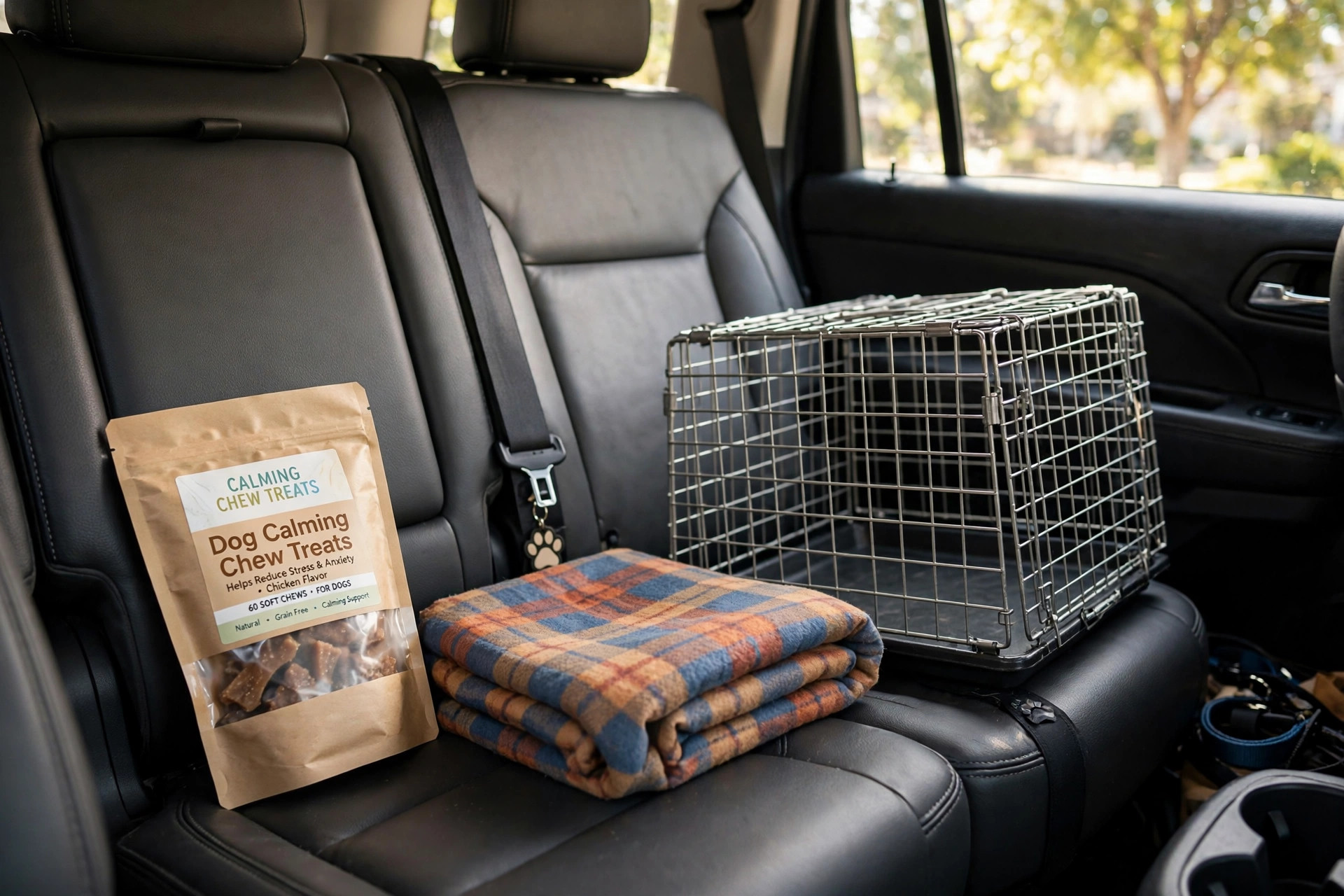

Many dog owners know the look. The car door opens. The tail drops. The dog stiffens, whines, or tries to back away. A trip to the vet or a long holiday drive can turn into a hard hour for both the dog and the driver. The search for the best dog calming chews for travel anxiety grows every year as more families take their dogs along on trips. Calming chews are small treats made with plant and mineral ingredients that may help a nervous dog relax. They are not magic. They are one tool in a larger plan to make travel easier for a fearful animal.
Why Travel Makes Dogs Anxious
Dogs are creatures of habit. A car is strange. It moves. It vibrates. It makes loud sounds. The world slides past the windows at a speed a dog never meets in a yard. For a puppy that has never ridden in a car, all of this is new. For a rescue dog, a car may hold bad memories. Some dogs feel sick in motion, just as people do. The mix of motion, noise, and strange smells can raise a dog’s stress in minutes.
Common signs of travel fear are easy to spot. The dog may pant with an open mouth. It may drool. It may pace from window to window. Some dogs bark or whine without pause. Others freeze and refuse to move. A few get sick and vomit. When these signs repeat on every trip, the dog learns to fear the car itself. It may hide when it sees keys or a leash.
Travel anxiety can also be unsafe. A scared dog may jump from seat to seat. It may try to climb into the driver’s lap. A calm dog is a safer passenger. For that reason, owners look for gentle ways to ease the fear. The American Society for the Prevention of Cruelty to Animals notes that stress reduction is a real part of pet care, and simple aids can help when they are used with training.
How Calming Chews Work: Best Dog Calming Chews for Travel Anxiety
Calming chews are soft treats or tablets that a dog eats before or during a trip. Most use natural ingredients that are known to support calm behavior. Common ingredients include chamomile, valerian root, L-theanine, passionflower, ginger, and hemp seed oil. Some include minerals such as magnesium. Each brand blends its own mix.
These ingredients work in mild ways. Chamomile and valerian root are plants long used for rest. L-theanine is an amino acid found in tea that may support a relaxed state. Ginger is known to settle the stomach, which helps dogs that feel ill in the car. None of these are sedatives. A good calming chew should not knock a dog out. It should take the edge off the fear so the dog can rest.
Most labels suggest giving the chew 30 to 60 minutes before travel. This gives the body time to absorb the ingredients. On a long trip, a second dose may be allowed after a set number of hours. Always read the label for dose by weight. A small terrier needs far less than a large shepherd.
It is worth saying plainly that results differ. Some dogs settle well with chews. Others show little change. Studies on pet calming products are few, and vets stress that no chew can replace training and comfort habits. The American Veterinary Medical Association advises owners to talk with their veterinarian before trying any new supplement, since each dog has its own health needs.
What to Look for When You Choose
Shopping for the best dog calming chews for travel anxiety can be confusing. Shelves and web stores are full of options. A few clear points can guide the choice.
Natural, Named Ingredients
Look for a label that names each ingredient and its amount. Clear labels are a mark of honest brands. Avoid products that hide behind vague words such as “proprietary blend” with no detail. Chamomile, valerian root, L-theanine, passionflower, and ginger are the ingredients most often used.
Made for Dogs
Some calming products are made for people or for other animals. Choose one made for dogs. Dog-safe doses and dog-safe flavors matter. A chicken or bacon flavor also helps, since a stressed dog may refuse a plain tablet.
Third-Party Testing
Trusted brands test their batches in outside labs. They check that the label is true and that the product is free of harmful extras. Look for seals or test notes on the maker or seller page. Retailers such as Chewy and Petco often carry brands that share testing details.
Vet Guidance
The U.S. Food and Drug Administration watches animal products for safety, and its site explains how pet products are checked. Still, rules for supplements are lighter than rules for drugs. For that reason, a vet’s advice is worth more than a flashy ad. Ask your vet which brands they trust. The vet can also warn you if an ingredient may clash with a drug your dog takes.
Size and Dose by Weight
Chews come in sizes for small, medium, and large dogs. A chew made for a large dog may be too strong for a small one. Check the weight chart on the package. If you own two dogs of different sizes, you may need two products.
Types of Calming Chews
Calming chews come in a few forms. Each has its own use.
Soft chews. These are the most common. They look like small treats. They are easy to give. Most dogs eat them like any other snack. They suit short trips and daily use.
Hard biscuits. These take longer to eat. The act of chewing can itself calm a dog. They suit dogs that like to gnaw. They are less common than soft chews.
Powders and drops. Some brands sell powder to mix into food or drops to add to water. These suit dogs that refuse chews. They can be harder to dose on the road.
Chew sticks and long-lasting chews. These keep a dog busy for a long time. Busy jaws can mean a quieter mind. They suit long flights or long drives where boredom adds to fear.
Pairing chews with comfort gear often works better than chews alone. A snug crate, such as a best dog crate for anxious dogs escape proof, can give a nervous dog a safe den. A familiar blanket and a pet stroller for small dogs and cats travel for station stops can keep the routine calm. Sites like The Spruce Pets and PetMD carry travel guides that explain how to set up a car space for a dog.
Cost and Price
Prices vary by brand, count, and strength. A small bag of 30 soft chews often costs between 10 and 20 dollars. Larger bags of 60 to 90 chews can run 20 to 40 dollars. Premium brands with lab testing and hemp-based ingredients may cost more. Store brands from PetSmart or big-box retailers can cost less.
Think in terms of cost per trip. A bag of 60 chews used one chew per trip lasts 60 trips. A bag used at two chews per long trip lasts 30 trips. Buying in bulk often lowers the price per chew. Watch for sales, since pet stores run them often.
Do not judge by price alone. A cheap chew with no named ingredients is a poor buy. A mid-priced chew with a clear label and vet backing is usually the better value. Read reviews from other dog owners, but take them with care. What calms one dog may do little for another.
Care and Upkeep
Calming chews are food products. They need proper care to stay fresh and safe.
Store them in a cool, dry place. Heat and sun can break down the active ingredients. A car glove box in summer is too hot. Keep the bag sealed so the chews stay soft and tasty.
Check the expiry date before each trip. Old chews may lose strength. Throw out bags that smell off or feel hard and dry when they should be soft.
Keep chews out of reach of children and other pets. A curious toddler or a second dog could eat the whole bag. Too many chews at once can upset a stomach. If an overdose happens, call your vet or an animal poison line at once.
Rotate your travel kit. Before a big trip, check the chew supply, the water bowl, the leash, and the dog car seat cover for back seat protection. A clean, ready kit lowers stress for the owner too.
Safety Notes
Safety comes first with any product a dog eats.
Talk to your vet before the first use, most of all if your dog is pregnant, nursing, very young, very old, or on other drugs. Some calming plants can clash with seizure drugs, blood pressure drugs, or sedatives.
Start with a test at home. Give one chew on a calm day when no trip is planned. Watch for a full day. Look for an upset stomach, itching, or odd behavior. If all is well, use the chew for travel.
Never use human calming pills for a dog. Human products may hold xylitol, a sweetener that is deadly to dogs. They may also hold doses far too high for an animal.
Note that calming chews are not a fix for deep fear or past trauma. A dog that panics, tries to escape, or hurts itself needs a vet’s full plan. That plan may include behavior training or prescription drugs. Chews can support such a plan, but they cannot stand alone for severe cases.
The U.S. Food and Drug Administration reminds owners that supplement labels are not checked as strictly as drug labels. Buy from makers with a record of care, and report bad reactions to your vet.
Frequently Asked Questions
How long before a trip should I give my dog a calming chew?
Most labels say 30 to 60 minutes before travel. This window lets the body take in the ingredients. For a morning flight, give the chew while you load the car. For a long drive, check if a second dose is allowed after a set number of hours.
Can puppies take calming chews?
Many brands are made for adult dogs only. Some offer puppy formulas with milder doses. Check the label for the youngest allowed age. When in doubt, ask your vet. Puppies under eight weeks should not take supplements without vet advice.
Will calming chews make my dog sleepy all day?
A good product should relax, not sedate. Most dogs stay awake but calm. If your dog seems very drowsy or wobbly, the dose may be too high. Call your vet. Some drowsiness can be normal in very sensitive dogs, but heavy sleep is a warning sign.
Can I use calming chews every day?
Many brands allow daily use. Others are made for trips and vet visits only. Read the label. If your dog needs daily help, ask your vet whether a daily chew or another plan is best. Long-term daily use should have vet oversight.
Do calming chews help with motion sickness?
Some do. Chews with ginger may settle the stomach. But true motion sickness often needs a vet’s drug made for that purpose. If your dog vomits on every ride, tell your vet. A chew alone may not be enough.
Are hemp-based chews legal and safe?
Hemp-based pet products are widely sold in the United States. They should hold little to no THC, the part of the plant that causes a high. Choose brands that show lab results. Ask your vet, since rules and product quality differ by state.
A Final Word
Travel should be a joy for the whole family, dogs included. The best dog calming chews for travel anxiety can help turn a tense ride into a quiet one. Choose a clear label, dose by weight, and test at home first. Pair the chew with a calm routine: a safe crate, a familiar blanket, steady stops, and a patient voice. Talk with your vet when fear runs deep. With the right mix of care, training, and a good chew, the car can become just another room your dog trusts.
References
American Kennel Club. (n.d.). Dog care and training resources. https://www.akc.org American Veterinary Medical Association. (n.d.). Pet care resources. https://www.avma.org ASPCA. (n.d.). Pet care and animal welfare resources. https://www.aspca.org Chewy. (n.d.). Pet supplies. https://www.chewy.com Petco. (n.d.). Pet supplies and services. https://www.petco.com PetMD. (n.d.). Pet health information. https://www.petmd.com PetSmart. (n.d.). Pet supplies and services. https://www.petsmart.com The Spruce Pets. (n.d.). Pet care guides and product reviews. https://www.thesprucepets.com U.S. Food and Drug Administration. (n.d.). Antibacterial product information. https://www.fda.gov
Was this guide helpful?

About Emily Rodriguez
The My Garden US editorial team writes practical, in-depth home and garden guides for American homeowners — tested advice, no fluff.
You May Also Like

Best Pet Camera With Treat Dispenser WiFi: A Buyer’s Guide
March 29, 2026 0 views
Best Pet Vacuum Attachment for Upholstery Cleaning
April 30, 2026 0 views
Best Orthopedic Cat Bed for Senior Cats: A Guide to Comfort for Older Felines
January 7, 2026 0 views