A large yard is a gift for a dog owner. The dog can run. The dog can sniff. The dog can burn off its morning energy without a leash walk. But a large yard is also a risk. Dogs wander. Dogs chase squirrels. Dogs find weak spots and slip through them. The search for the best dog fence for large yard no digging starts with a simple wish. The owner wants a safe yard, and does not want to dig up the whole lawn to get it.
No-dig fences answer that wish. They stand on the ground instead of going into the ground. No trenches. No torn grass. No backache. This guide walks through why these fences matter, what to look for, what types exist, what they cost, how to care for them, and how to keep your dog safe.
Why a No-Dig Fence Matters for a Large Yard
A large yard changes the fence math. A small patio needs forty feet of fence. A half-acre yard can need five hundred feet or more. Traditional fence work means digging post holes across all of that. It means renting an auger. It means hauling concrete. It means days of hard work. A no-dig fence cuts most of that away.
The panels of a no-dig fence link together. They stand on pointed spikes or heavy feet that press into the soil surface. One person can lay out a long run in a single weekend. There is no need to call a crew.
Dogs do not care how a fence was installed. They care whether it holds. A good no-dig fence holds a large dog that leans on it and a small dog that squeezes through gaps. It gives the dog room to run while keeping it off the street. Peace of mind is the real product. The owner drinks coffee while the dog plays, and no one worries about the gate being open. For puppies, indoor training aids help too: a dog doorbell for potty training puppies usa teaches a young pup to ask to go out, and the fence keeps it safe once outside.
What to Look for When You Choose: Best Dog Fence for Large Yard No Digging
Start with your dog. Measure its height at the shoulder. Note its weight. A calm older dog and a young strong dog need different fences. Jumpers need height. Diggers need a tight bottom edge. Dogs that chew need thick bars. Be honest about your dog’s habits before you shop.
Next, measure the yard. Walk the fence line with a long tape. Write down the total feet. Add ten percent for cuts, corners, and mistakes. A large yard punishes guesswork, so the measure step is not optional. Mark where the fence will turn. Corners need strong joints. A long straight run needs bracing in the middle or the wind will push it.
Look at the ground itself. Soft soil after rain takes spikes well. Hard dry clay fights them. Rocky ground may reject spikes at all. Walk the line and press a heel in. You will learn quickly which sections will be easy and which will be hard. Also note the slope. A yard that drops off needs panels that can step down the hill. Wide gaps under a panel on a slope are escape routes.
Check local rules. Many towns limit fence height. Many homeowner groups limit fence style and color. Some places demand a permit even for a temporary fence. A quick call to the city office saves a fine later. Also ask about property lines.
Types of No-Dig Dog Fences
No-dig fences come in a few main styles. Each suits a different yard and a different dog. Retailers such as Chewy and PetSmart carry wide ranges of both styles, and home centers like The Home Depot and Lowe’s stock them for same-day pickup.
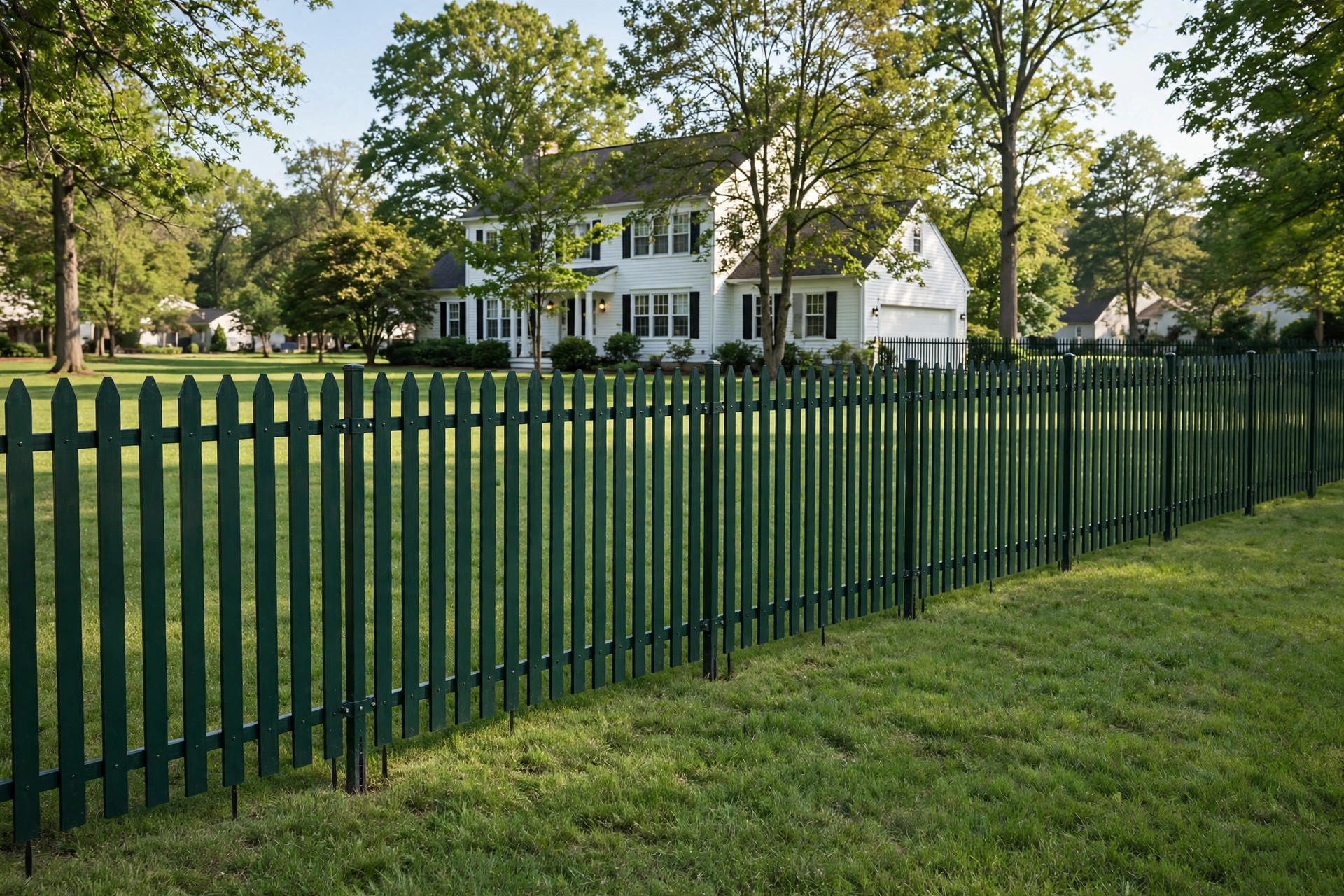
No-dig picket panels. These look like a classic white or black picket fence. Each panel has two long spikes that drive into the ground by foot or by mallet. They link panel to panel with simple brackets. They suit flat yards and calm dogs. Heights run from two feet for small dogs up to four or five feet for large ones.
No-dig welded wire runs. These are rolls or panels of stiff wire mesh on spike posts. They are less pretty but very strong. They suit long runs across big yards because wire panels are cheap per foot. The mesh can be green or black so it fades into the grass from a distance.
Freestanding kennel panels. These are the heavy chain-link or bar panels sold as dog kennels. Each panel stands on its own frame. They link with clamps. They need no spikes at all. They are the best choice for strong dogs and rocky ground.
Portable exercise pens. These are light folding panels for small dogs. They suit a corner of the yard, not the whole yard. They fold flat for storage. They are fine for puppies under close watch, but they will not hold a large dog that wants out.
Wireless and in-ground boundary systems. These use no fence at all. A radio signal marks the line, and a collar warns the dog. They cover huge yards. But they need weeks of training, and they do not stop other animals from coming in. Use them only with a calm, well-trained dog.
For most families with a large yard, no-dig picket panels or welded wire runs are the sweet spot. They balance cost, looks, and strength.
Cost and Price of a Large Yard Fence
Price is where the large yard bites. Fence materials are priced by the foot. A fence that costs two dollars a foot is cheap on a small yard and dear on a large one.
No-dig picket panels run about three to six dollars per foot of material. Welded wire runs cost less, about one to three dollars per foot. Freestanding kennel panels cost more, about six to twelve dollars per foot, but they need no ground work. These are rough ranges. Prices shift with steel costs and with the season.
Do the full math before you buy. Multiply the per-foot price by your total feet. Add gates, because a fence with no gate is a trap for the mower. Add corner kits and bracing.
Compare against a dug fence. A dug wood or vinyl fence for a half-acre yard can run several thousand dollars with labor. A no-dig system for the same yard often costs half as much, sometimes less. The owner supplies the labor, but the labor is simple.
Budget stores matter at this scale. Walmart often carries starter kits at low prices, and farm stores such as Tractor Supply, Rural King, and Menards sell heavy panels that suit rural yards. Buy ten percent extra. A spare panel is cheap insurance against a bent post or a missed measure.
Setting Up Your Fence Right
Good setup is what separates a fence that lasts from a fence that leans by fall. Start by marking the line. Drive small stakes and run string. Walk it. Look at it from the house. Move stakes until it looks right.
Clear the line. Cut the grass short. Remove rocks and branches. A spike that hits a rock will bend. A panel that sits on a branch will rock. An hour of clearing saves a day of fixing.
Install on a dry day with soft ground if you can. After a light rain is ideal. Push each spike in straight. A tilted spike makes a tilted panel. Link panels loosely first, then straighten the whole run, then tighten. Work corner to corner, not end to end.
Add the gate early. Set its posts first and build away from it. A gate that swings wrong will annoy you every day for years. Make sure it swings inward and latches with one hand. A latch a child can open is a latch a smart dog can learn.
Walk the fence with your dog on a leash when done. Watch where it sniffs. Watch where it tests. Dogs test the corners, the gate, and any dip under a panel. Push soil or a flat stone into any gap you find. The first week tells you everything. Fix weak spots fast before the dog learns them as doors.
Care and Upkeep Through the Seasons
A no-dig fence needs little care, but it needs some. Spring is inspection season. Winter frost pushes spikes up. Walk the line after the ground thaws. Push loose spikes back down. Tighten every bracket and clamp. Rust spots should be sanded and painted before they spread.
Summer is mowing season. Trim the grass along both sides of the fence. Tall grass holds damp against steel and feeds rust. A string trimmer does the job in minutes. Keep sprinklers from soaking the fence line all day.
Fall is leaf season. Leaves pile against wire mesh and hold wet leaves against the metal. Rake the fence line clear. Check that summer storms did not loosen panels. Tighten what the wind moved.
Winter is rest season for many yards. In snow country, mark the fence line with tall stakes so the plow or the shovel does not hit it. Brush heavy snow off low panels so the weight does not bend them.
Once a year, wash the fence. A bucket of soapy water and a brush take off the grime. A clean fence shows problems early. A dirty fence hides them. Fifteen minutes of washing per season is enough.
Safety for Your Dog
A fence is safety equipment. Treat it that way. Choose bar spacing that suits your dog’s head. A puppy that fits its head through a gap may later trap its jaw there as it grows. If in doubt, choose tighter mesh. Collar tags can catch on wire mesh, so use a breakaway collar or remove the collar during free yard time.
Height matters more than owners think. Many large dogs can clear a three-foot fence when excited. Four feet is the common minimum for large breeds. Five feet is safer for athletic dogs. A dog that eyes the top is telling you the fence is too short.
Heat and shade belong in the safety plan too. A large yard in full sun gets hot. Dogs need water and shade on warm days. A simple shade sail and a spill-proof water bowl turn a yard into a real home.
Think about what comes in as well as what goes out. A fence with wide gaps lets in stray dogs and wild animals. In areas with coyotes or snakes, tighter mesh and a taller fence protect the dog inside. The ASPCA offers guidance on outdoor safety for pets, and health sites like PetMD explain common yard hazards worth removing.
Chemicals deserve care. Many lawn treatments are unsafe for dogs until they dry or wash in. Keep the dog off treated ground per the product label. Organic lawn care keeps this simple.
Indoor Comfort That Matches the Yard
A good yard fence is part of a bigger home plan for the pet. Indoor life matters too. A cat scratching pad for couch arm protection saves the furniture while the dog claims the yard. Apartment dwellers with cats plan upward instead of outward, as a cat enclosure for balcony apartment living usa shows. The house and the yard work as one system.
FAQ
How tall should a no-dig fence be for a large dog? Four feet is the usual minimum for large breeds. Five feet is better for strong jumpers. Measure your dog’s reach on its hind legs and add a foot. A fence that is too short teaches the dog to jump.
Will a no-dig fence hold in a storm? A well-set no-dig fence holds in normal wind and rain. Long runs need bracing at corners and at intervals. After a big storm, walk the line and reset any shifted panels.
Can I move a no-dig fence to a new spot? Yes. Pull the spikes, unhook the panels, and rebuild the new line. Picket panels move in an afternoon. This makes no-dig fences ideal for renters and for yards that change shape with new gardens or sheds.
Do no-dig fences work on slopes? They work if you step the panels down the hill. Set each panel level and let it drop at each joint, like stairs. Never tilt a panel to follow the slope, because tilting opens a gap under the low corner. Fill small gaps with soil or flat stones.
How long do no-dig fences last? Steel panels with a good coating last ten to fifteen years with basic care. Cheap thin panels last less. Rust is the main killer. Touch up chips and keep grass trimmed.
Is a no-dig fence enough for a dog that digs? It can be, with one addition. Lay a flat apron of wire mesh on the ground along the inside of the fence and pin it down. Grass grows through it, and the dog cannot dig past it. Watch the dog’s first digging spot and reinforce it first.
A Short Final Word
The best dog fence for large yard no digging is the one that fits your dog, your ground, and your budget, and that you actually install well. No-dig systems win on speed and on respect for the lawn. They cost less than dug fences on large yards. They move when life changes.
Measure twice. Mark the line. Set the spikes straight. Add the gate. Walk the fence with your dog and fix what you find. A weekend of careful work buys years of safe play. The dog gets its kingdom. You get your peace of mind. That is a fair trade.
References
ASPCA. (n.d.). Pet care and animal welfare resources. https://www.aspca.org Chewy. (n.d.). Pet supplies. https://www.chewy.com Lowe’s. (n.d.). Home improvement products. https://www.lowes.com Menards. (n.d.). Home improvement supplies. https://www.menards.com PetMD. (n.d.). Pet health information. https://www.petmd.com PetSmart. (n.d.). Pet supplies and services. https://www.petsmart.com Rural King. (n.d.). Farm and home supplies. https://www.ruralking.com The Home Depot. (n.d.). Home improvement products. https://www.homedepot.com Tractor Supply Co. (n.d.). Farm and ranch supplies. https://www.tractorsupply.com Walmart. (n.d.). Everyday low prices. https://www.walmart.com
Was this guide helpful?

About Emily Rodriguez
The My Garden US editorial team writes practical, in-depth home and garden guides for American homeowners — tested advice, no fluff.