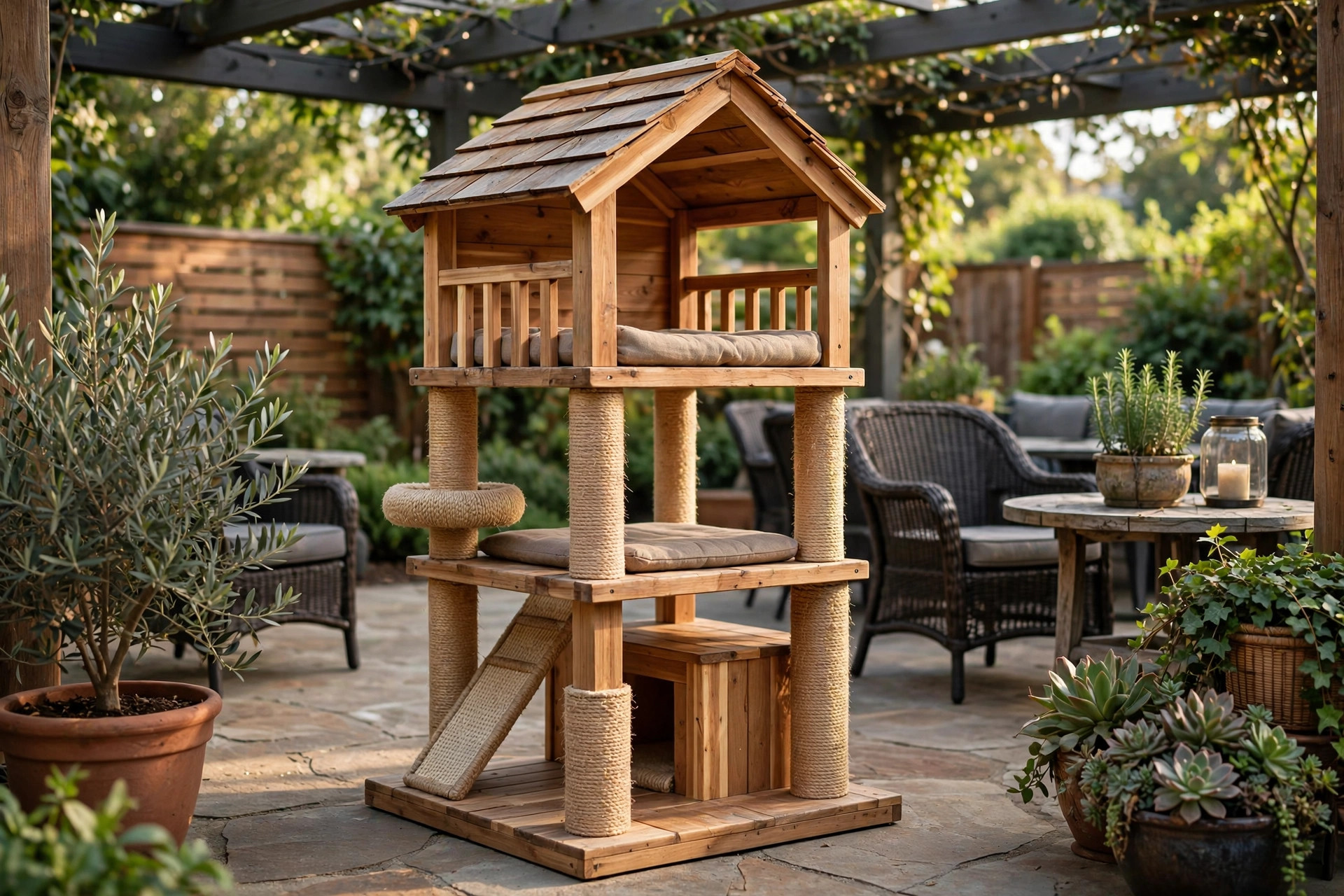

Many cats love fresh air. They sit at the door and watch the yard. A patio can give them that joy in a safe space. The best outdoor cat tree weatherproof for patio use lets your cat climb, scratch, and rest outside without harm to the cat or the furniture. A good tree stands up to rain, sun, and wind. A poor one falls apart in one season.
This guide explains what to look for in a weatherproof outdoor cat tree. It covers why it matters, the main types, what they cost, how to care for them, and how to keep your cat safe. The words are plain. The advice is practical. By the end you will know how to pick the right tree for your patio.
Why an Outdoor Cat Tree Matters
Cats are natural climbers. In the wild they climb trees to rest, to watch, and to feel safe. An indoor cat tree gives this outlet inside the home. An outdoor cat tree gives it on the patio, where the air is fresh and the sounds are real. Cats that climb and scratch are calmer and scratch less at rugs and drapes.
A patio cat tree also keeps your cat in one safe area. Cats that roam free face cars, dogs, and wild animals. A tree on the patio lets them enjoy the outdoors close to the house. Sites like The Spruce Pets list climbing structures among the most loved forms of cat enrichment.
Some owners add a heated cat house for outdoor feral cats near the tree for winter. Others set up an outdoor cat enclosure for safe garden roaming and place the tree inside it.
What to Look for in a Weatherproof Outdoor Cat Tree: Best Outdoor Cat Tree Weatherproof for Patio
Not every cat tree can live outside. Indoor trees use carpet and pressed wood. Rain turns them to mush. A true weatherproof tree uses outdoor materials.
Frame and Wood
The frame must stand up to water. Cedar is the top choice. It resists rot and insects on its own. It smells pleasant and lasts for years outside. Pressure-treated pine is also common and costs less. Avoid plain particle board or plywood. They swell and split when wet.
Posts should be thick and fixed with rust-proof hardware. Stainless steel or coated screws hold up best. If the maker lists the hardware, that is a good sign. Cheap bolts rust, loosen, and then the tree wobbles.
Platforms and Perches
Platforms should drain or shed water. Solid wood planks work well. Some trees use slatted decks so rain falls through. Avoid flat carpet pads that hold water and grow mold in damp shade. If a perch has a cushion, check that it is made of outdoor fabric and can be taken off to dry.
Perch size matters too. Large cats need wide platforms. A perch of 16 inches across suits most adult cats. Tall perches give the cat a view, which cats prize.
Cover and Shade
A roof or canopy turns a good tree into a great one. A small pitched roof keeps the top perch dry in light rain. It also gives shade on hot days. Some trees have awnings of outdoor canvas. Make sure the fabric is marked for outdoor use. The Home Depot stocks outdoor-rated fabrics and sealers that owners use to add or repair these covers.
Anchoring
Wind can tip a tall tree. A base wider than the top helps. Some trees include ground stakes or wall straps. On a patio you may not be able to stake into concrete. In that case, weigh the base down or strap the tree to a post or railing. A tree that rocks in the wind will scare your cat, and the cat will stop using it.
Ease of Cleaning
Look for smooth surfaces you can hose down. Removable fabric parts that can go in the wash are a plus. Avoid deep crevices where dirt and bugs collect. A tree you can clean in ten minutes will stay in use. A tree that is hard to clean will be ignored.
Types of Outdoor Cat Trees
Outdoor cat trees come in several forms. Each suits a different patio and a different cat.
Wooden Tower Trees
These are the classic form. They look like small wooden towers with several levels, ramps, and a hide box. Cedar tower trees are the most popular weatherproof choice. They blend with patio decor and last for years. They cost more than other types but give the most climbing space. A tower with three or four levels suits most homes.
Cat Tree Condos with Roof
Some trees add an enclosed condo or hut at the base or mid-level. The hut gives shelter from wind and rain. Cats like small dark spaces. A condo tree works well for shy cats and for patios that get driving rain. Make sure the hut has a small drain hole so water does not pool inside.
Compact Corner Trees
Small patios need small trees. Corner units fit where two walls meet. They rise two or three levels and take little floor space. They are good for apartments with a balcony or a narrow porch. They hold one cat at a time, so they suit single-cat homes best.
Scratching Post Combos
Some outdoor units center on a tall scratching post wrapped in sisal, with one or two perches on top. They take little room and meet the scratching need well. Sisal holds up outdoors better than carpet. Check that the sisal is wound tight and glued with outdoor-safe adhesive.
Multi-Unit Cat Playgrounds
Large patios and yards can hold connected units. These link towers, bridges, and tunnels into a playground. They are the priciest option but give the most play value. They suit homes with several cats. Plan the layout so each unit is anchored on its own.
Cost and Price Ranges
Prices vary with size and material. A small weatherproof tree of treated pine starts near 60 dollars. A mid-size cedar tower with a roof runs 120 to 200 dollars. Large multi-level cedar playgrounds can pass 300 dollars. Handmade trees from local woodshops often cost more than store models but may last longer.
Cedar costs more than pine up front. Over five years cedar often wins, because it needs less repair and no chemical treatment. Think of the price per year of use, not just the price tag.
Watch for sales at large retailers. Wayfair and other big home stores run spring sales on outdoor pet gear, and fall buying can save money. But do not buy a cheap indoor tree and hope it survives outside. It will not.
If your dog shares the patio, you may be shopping for pet gear in more than one line. Dog owners often look for the best outdoor dog bed waterproof for patio to match. The American Kennel Club offers plain advice on dogs and outdoor living that can help multi-pet homes plan a shared space.
Setting Up Your Cat Tree on the Patio
Place the tree with care. A good spot makes the difference between daily use and a dusty ornament.
Put the tree where the cat can see the yard but also reach the house door fast. Cats feel safe when escape is near. A spot against the house wall, under the eave, gives shelter from rain and a solid anchor point. Avoid the far corner of an open patio where wind hits hardest.
Keep the tree out of full afternoon sun. Cats overheat. A shaded spot, or the shade of the tree’s own roof, keeps perches cool. In hot regions, place the tree where morning sun warms it and afternoon shade cools it.
Set the base on a level surface. Patio pavers are ideal. Shim the base if the patio slopes, then anchor the tree. Strap tall trees to a post or heavy planter. A clear hop from the door to the first perch invites daily use.
Care and Upkeep Through the Seasons
A weatherproof tree still needs care. A little work each season keeps it sound for years.
Spring
Wash the whole tree with a hose and mild soap. Check every screw and bolt. Tighten what is loose. Look for soft spots in the wood that signal rot. Replace any board that feels spongy. Restring or replace worn sisal. Pet health sites like PetMD remind owners that clean outdoor gear cuts the risk of skin and paw problems.
Summer
Check shade cover. Sun breaks down fabric and fades wood. If the canopy looks thin, replace it. Make sure perches are not hot to the touch at midday. Move or re-angle the tree if the sun pattern has changed with the season.
Fall
Clear leaves from platforms and the condo. Wet leaves hold rot against wood. Check the roof for gaps before the rains come. This is a good time to apply a fresh coat of outdoor wood sealer to pine trees. Cedar needs sealer less often but still gains from it every few years.
Winter
In cold regions, brush snow off platforms so weight does not strain joints. If ice storms are common, move a small tree under full cover or into a shed. For cats that stay out in cold air, a tree alone is not enough. Pair it with real shelter, and read up on cold-weather pet care from groups like the ASPCA.
Cleaning Basics
Hose the tree monthly and scrub perches with a stiff brush. Wash removable cushions as the maker directs. Never use harsh chemicals. Cats lick their paws. Plain soap and water are enough.
Safety First
Safety is the heart of this topic. An unsafe tree is worse than no tree.
Check weight limits. Most trees list a max weight per perch. Large breeds need trees rated for their size. If you share your home with a big cat, look at guides for the best cat tree for large cats sturdy tall options before you buy, so the outdoor tree you pick can hold its climber.
Inspect for splinters. Run your hand over every surface. Sand any rough spot. Check that no nail or screw tip pokes through. Cats rub their faces on posts. A sharp point can cut an eye.
Keep the tree away from grill heat and from railings a cat could use to jump to a fence or a neighbor’s yard. The tree should be a safe perch, not a launch pad. Federal safety guidance from the U.S. Consumer Product Safety Commission covers outdoor product hazards in general, and the same care applies to pet structures.
Watch for pests. Wasps build nests under perches. Ants march up legs. Check monthly in warm months. Remove nests at dusk when wasps are calm, or call a pro.
Supervise new cats at first. Let the cat explore the tree while you watch. Make sure it can climb down as well as up. Kittens and old cats may need a tree with lower, wider steps.
Never leave a cat locked on a patio in extreme heat or cold. The tree is enrichment, not a cage. Fresh water must always be near. In winter, a heated bowl keeps water from freezing.
Around the Tree
Place a water bowl a few feet from the tree, in shade. If you use patio lights near the cat corner, choose efficient bulbs; ENERGY STAR explains which outdoor lights waste the least power. Keep cords out of reach. Home guides at The Spruce stress that simple upkeep plans are the ones people keep, so store a small broom and hose nozzle nearby. Simple outdoor pieces from IKEA pair well with a wooden cat tree without crowding the cat’s zone.
FAQ
Can any cat tree go on a patio?
No. Indoor trees use materials that fail in rain. Only trees made with weatherproof wood, outdoor fabric, and rust-proof hardware belong outside. Check the product listing for the words outdoor or weatherproof. If it does not say so, keep it inside.
How long does an outdoor cat tree last?
A cedar tree with basic care lasts five to eight years. Treated pine lasts three to five years. Cheap softwood may last two. Covers and sisal wear faster than frames. Plan to replace fabric parts every two to three years.
Will my cat actually use it?
Most cats take to a tree within days if it is placed well. Put it near the door, in view of the yard, with a clear path. Rub a little catnip on the first perch. Do not force the cat up. Let curiosity work.
Is a roof really needed?
It is not needed, but it helps a lot. A roof keeps the top perch dry and gives shade. Trees with roofs get more use in rainy and sunny regions. In dry mild climates a roofless tree does fine.
Can kittens use an outdoor tree?
Yes, with care. Pick a tree with low, wide steps. Watch the kitten at first. Make sure it can get down on its own. Very small kittens do better with a short tree until they grow.
How do I stop the tree from blowing over?
Use a wide base, strap the tree to a post or wall, and set it in a sheltered spot. In storm season, lay a tall light tree on its side or move it under cover. Anchoring is the single best safety step.
A Final Word
The best outdoor cat tree weatherproof for patio use is the one that fits your cat, your space, and your climate. Pick cedar if you can. Demand rust-proof hardware. Give it a roof and a safe anchor. Then keep it clean with simple seasonal care.
Your cat will thank you in the way cats do. It will climb to the top perch, settle in the sun, and watch the world go by. That quiet joy is the whole point. A sturdy tree, a safe patio, and a content cat are worth every penny and every minute of care.
References
American Kennel Club. (n.d.). Dog care and training resources. https://www.akc.org ASPCA. (n.d.). Pet care and animal welfare resources. https://www.aspca.org ENERGY STAR. (n.d.). Energy efficient products. https://www.energystar.gov IKEA. (n.d.). Home furnishings. https://www.ikea.com PetMD. (n.d.). Pet health information. https://www.petmd.com The Home Depot. (n.d.). Home improvement products. https://www.homedepot.com The Spruce. (n.d.). Home and garden advice. https://www.thespruce.com The Spruce Pets. (n.d.). Pet care guides and product reviews. https://www.thesprucepets.com U.S. Consumer Product Safety Commission. (n.d.). Product safety information. https://www.cpsc.gov Wayfair. (n.d.). Furniture and home goods. https://www.wayfair.com
Was this guide helpful?

About Robert Taylor
The My Garden US editorial team writes practical, in-depth home and garden guides for American homeowners — tested advice, no fluff.
You May Also Like

Dog Agility Set for Backyard Training Fun: A Complete Guide
June 29, 2026 0 views
The Best Outdoor Pet Bed for Porch Lounging: A Complete Guide
February 24, 2026 0 views
How to Choose an Automatic Pet Feeder for Dogs with Camera
May 22, 2026 1 views