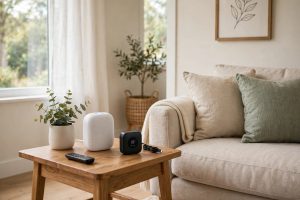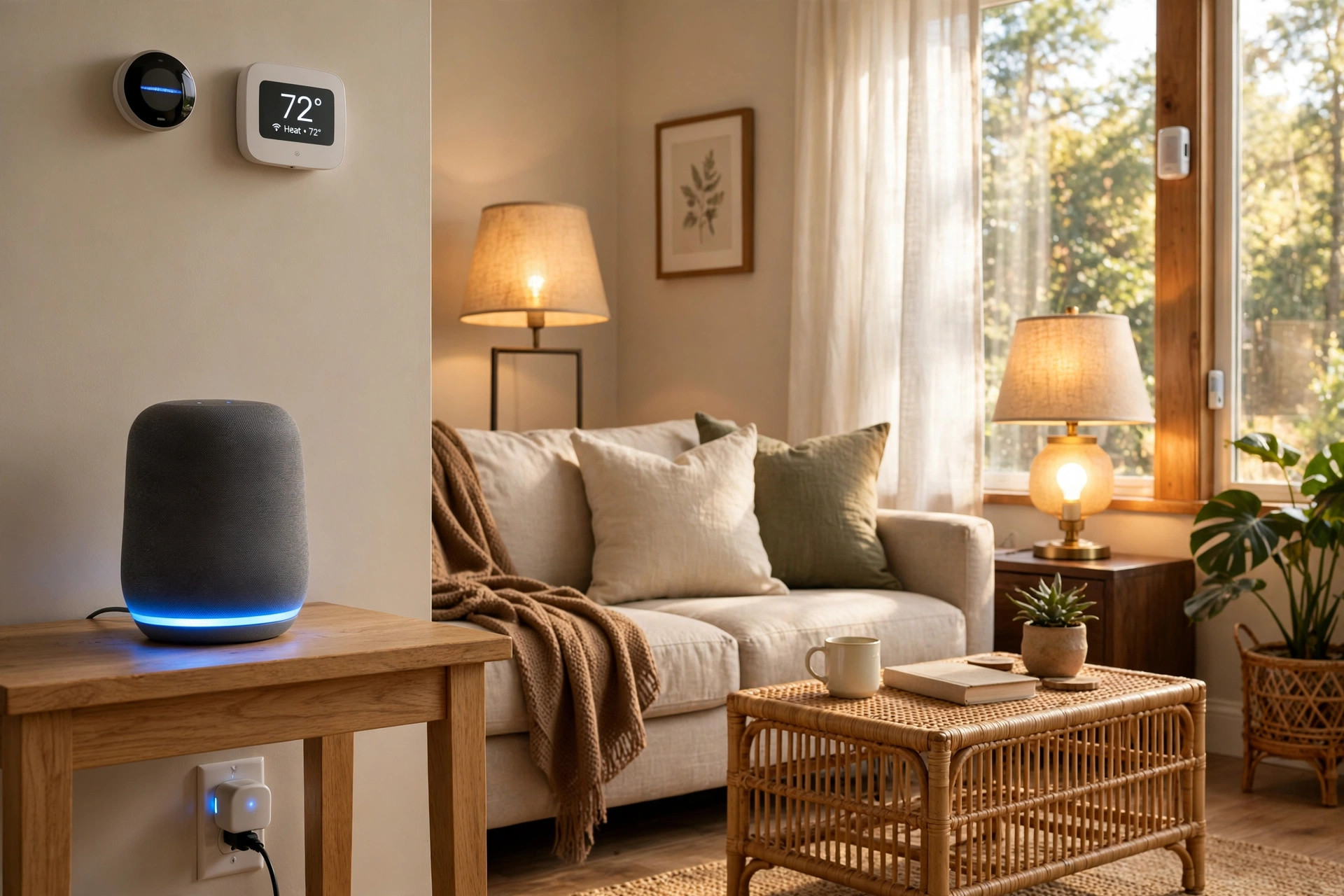

The modern American home is full of small wireless devices. Smart bulbs, door sensors, locks, and thermostats all talk to each other through the air. This thread vs zigbee smart home comparison usa homeowners often ask about answers a simple question: which wireless standard should you build your home around? Both Thread and Zigbee are mesh networks. Devices pass signals to each other, so coverage grows with every new device you add. The two standards are alike in many ways, yet they differ in speed, power use, and how they connect to the internet. This guide explains both in plain terms, so you can choose with confidence.
Why It Matters
Your smart home is only as strong as its wireless backbone. A weak network means slow responses. Lights may take seconds to turn on. Sensors may miss events. A strong network makes the whole home feel instant and reliable.
Thread and Zigbee both use the same radio band in the United States. They both form mesh networks, where mains-powered devices act as repeaters. This means each standard can cover a large home without a single central router. But the two standards are not the same under the surface. Thread speaks the language of the internet directly. Zigbee speaks its own language and needs a translator. That one difference shapes almost everything else.
The choice matters most at the start. Once you buy twenty sensors and ten bulbs on one standard, switching is costly. You would need to replace most of your gear. Independent reviews on CNET and PCMag often note that buyers should pick a standard first and buy devices second. A little study now saves real money later.
What to Look For When You Choose: Thread vs Zigbee Smart Home Comparison Usa
Range
Both Thread and Zigbee offer similar range per hop. In open air, a single hop can reach about 30 to 100 feet, depending on the device and the walls between them. In a mesh, each mains-powered device extends the network further. A home with many smart bulbs will have a dense mesh with short hops and strong links.
In practice, range is less about the standard and more about how many routing devices you own. Battery sensors do not route traffic. They only send their own messages. Bulbs, plugs, and switches do route. So a home full of routing devices will carry signals across a big house on either standard. The lesson is simple: buy routing devices where you can, and place them evenly through the home.
Speed
Thread is the faster of the two. It was built on the IPv6 internet protocol, the same foundation the web uses. Messages travel quickly and directly. Zigbee is slower in raw speed, but it was designed for small, simple messages. A door sensor only needs to send a few bits of data. For that kind of traffic, Zigbee is more than fast enough.
You will not notice the speed difference in daily use. Both standards turn on a light in well under a second on a healthy network. Where Thread wins is in larger networks with many devices talking at once. It handles congestion with less trouble. For a typical home with fifty devices or fewer, either standard performs well.
Power Use
Both standards were made for low power. Battery sensors on either one can last one to two years on a coin cell. Thread uses slightly more energy per message, because its protocol carries more overhead. Zigbee is leaner, and in some tests its sensors last a little longer on the same battery.
The gap is small. Battery life depends more on the device maker than on the standard. A well-built sensor from a trusted brand will outlast a cheap one no matter which radio it uses. Product testing from Consumer Reports shows that build quality matters more than the protocol name on the box. Still, if every extra month of battery life counts, Zigbee has a slight edge.
Device Support
Zigbee has the larger device family today. It has been on the market since the mid-2000s. Thousands of products use it: bulbs, sensors, locks, thermostats, blinds, and more. Major brands have shipped Zigbee gear for years, and prices have fallen.
Thread is younger. Its device list is growing fast, driven by the Matter standard, which runs on top of Thread. New smart home products from large makers increasingly support Thread. Devices sold through the Google Store, including Nest products, now act as Thread border routers. Apple and Amazon devices do the same. The momentum is with Thread, but Zigbee still offers more choice at the shelf today.
Types of Devices on Each Network
Most common smart home devices come in both flavors. Smart bulbs are the classic Zigbee product. Philips Hue made Zigbee famous in American homes. Today, Thread bulbs from Nanoleaf and others are easy to find too.
Door and window sensors, motion sensors, and leak detectors exist on both standards. Smart locks lean toward Zigbee and Z-Wave in the American market, though Thread locks are arriving. Thermostats from big brands support both. Smart plugs are widely available in each.
One difference is the hub. Zigbee needs a dedicated hub or a smart speaker with a Zigbee radio to join the internet. If you want the best Zigbee hub for a smart home, you must shop carefully, since not all hubs work with all brands. Thread needs a border router instead. Many devices you may already own, such as a recent smart speaker or streaming box, already serve as border routers. That makes Thread simpler to start if you own current gear.
The Matter smart home devices explained trend matters here. Matter is a shared language for smart home gear. It runs over Thread and Wi-Fi. Many new Matter devices use Thread as their radio. Buying Matter-certified Thread devices is one way to protect yourself against future change.
Cost and Price
Zigbee devices are usually cheaper. Years of mass production have pushed prices down. A basic Zigbee door sensor often costs less than a Thread one. Starter kits with a Zigbee hub are common in the twenty to forty dollar range.
Thread devices carry a small premium today. The parts are newer, and makers pass the cost along. Expect to pay a few dollars more per device. The hub cost, though, can favor Thread. If your smart speaker already acts as a border router, you need no extra box. A Zigbee setup may require a separate hub, which adds to the total.
Over a whole home, the difference is modest. Outfitting a home with thirty devices might cost fifty to one hundred dollars more on Thread. For many buyers, the promise of a simpler setup is worth the premium. Price guides at The Verge track how Thread device prices have been falling as volume grows.
Care and Upkeep
Neither standard needs much care. Once the mesh is built, it runs on its own. Keep firmware current. Makers release updates that fix bugs and close security gaps. Most hubs and border routers update by themselves overnight.
Placement matters. Do not hide your hub or border router in a metal cabinet or behind a television. Give it a central spot with clear air around it. If a corner of the house has weak coverage, add a routing device there, such as a smart plug. One plug can heal a dead zone.
Battery sensors need new batteries every year or two. Mark the date on a small sticker when you install them. When one sensor drops off the network, check its battery first. Nine times out of ten, that is the cause. For wider network health, a strong best mesh Wi-Fi for a smart home setup helps too, since your border routers and hubs rely on Wi-Fi to reach the cloud.
Safety
Wireless standards themselves pose little risk. The radios use low power, far below phone levels. The real safety questions are about the devices and how you use them.
Buy from known brands. Cheap no-name sensors can have poor batteries that leak or swell. The U.S. Consumer Product Safety Commission publishes recalls and safety alerts for home products, and it is wise to check before buying lesser-known gear.
Keep security devices on a reliable network. If your door sensors and motion detectors protect your family, test them monthly. Systems from SimpliSafe and ADT build their service on monitored sensors, and they stress regular testing for good reason. A sensor that cannot reach the network cannot raise an alarm.
Secure your accounts. Use a strong, unique password for your smart home app and turn on two-factor sign-in. Many Ring camera and doorbell owners learned this lesson after account break-ins made the news. The radio standard does not protect your account. Only good habits do.
Frequently Asked Questions
Can Thread and Zigbee devices work on the same network? No. They are separate standards with separate meshes. A Thread bulb cannot route a Zigbee message. You can run both networks in one home, but each needs its own coordinator: a border router for Thread and a hub for Zigbee. Many homes do run both without trouble.
Which standard is better for a large home? Both can cover a large home through mesh routing. The key is owning enough routing devices. Thread has a slight advantage in busy networks because it handles congestion better. Zigbee has the advantage of cheaper routing devices, so you can afford to add more of them.
Do I need a hub for Thread? You need a Thread border router, not a traditional hub. The good news is that many current smart speakers, displays, and streaming boxes already include one. Check the specs of devices you own before buying anything new.
Will Zigbee devices become obsolete? Not soon. Millions of Zigbee devices are in American homes, and makers keep releasing new ones. The Matter standard may shift attention toward Thread, but Zigbee gear will keep working for many years. There is no need to rip out a working Zigbee system.
Which is easier for a beginner? Thread is often easier today, because setup runs through the apps of big brands you may already use. Zigbee can need more care in matching hubs to brands. Beginners who want the simplest path often start with Thread and Matter devices.
Can I mix brands on one network? Yes, within one standard. Zigbee devices from different makers usually work together, though some features may need the maker’s own app. Thread devices that carry Matter certification mix even more smoothly. Always check the box for the right logos before you buy.
Final Word
There is no single winner in this thread vs zigbee smart home comparison usa shoppers keep debating. Zigbee offers lower prices and the widest device choice today. Thread offers a simpler path to the internet, strong backing from the biggest tech brands, and a bright future through Matter. Either standard can serve a home well for years. Pick the one that fits the devices you already own and the brands you trust. Then build your mesh one room at a time, and enjoy a home that responds the moment you ask.
References
ADT. (n.d.). Home security and automation. https://www.adt.com CNET. (n.d.). Technology news and reviews. https://www.cnet.com Consumer Reports. (n.d.). Product reviews and ratings. https://www.consumerreports.org Google Store. (n.d.). Smart home devices. https://store.google.com PCMag. (n.d.). Technology product reviews. https://www.pcmag.com Ring. (n.d.). Smart home security devices. https://www.ring.com SimpliSafe. (n.d.). Home security systems. https://www.simplisafe.com The Verge. (n.d.). Technology news and reviews. https://www.theverge.com U.S. Consumer Product Safety Commission. (n.d.). Product safety information. https://www.cpsc.gov
Was this guide helpful?

About Sarah Mitchell
The My Garden US editorial team writes practical, in-depth home and garden guides for American homeowners — tested advice, no fluff.
You May Also Like

Nanit vs Owlet Camera Comparison 2026 USA: Which Baby Monitor Wins?
February 12, 2026 0 views
Best Smart Home Hub for Beginners USA: A Plain Guide
March 25, 2026 0 views
Solar Panel Cleaning Service Cost Near Me: What to Pay
July 26, 2026 0 views