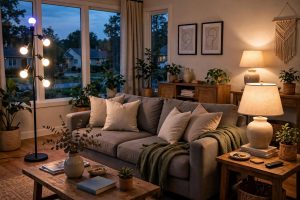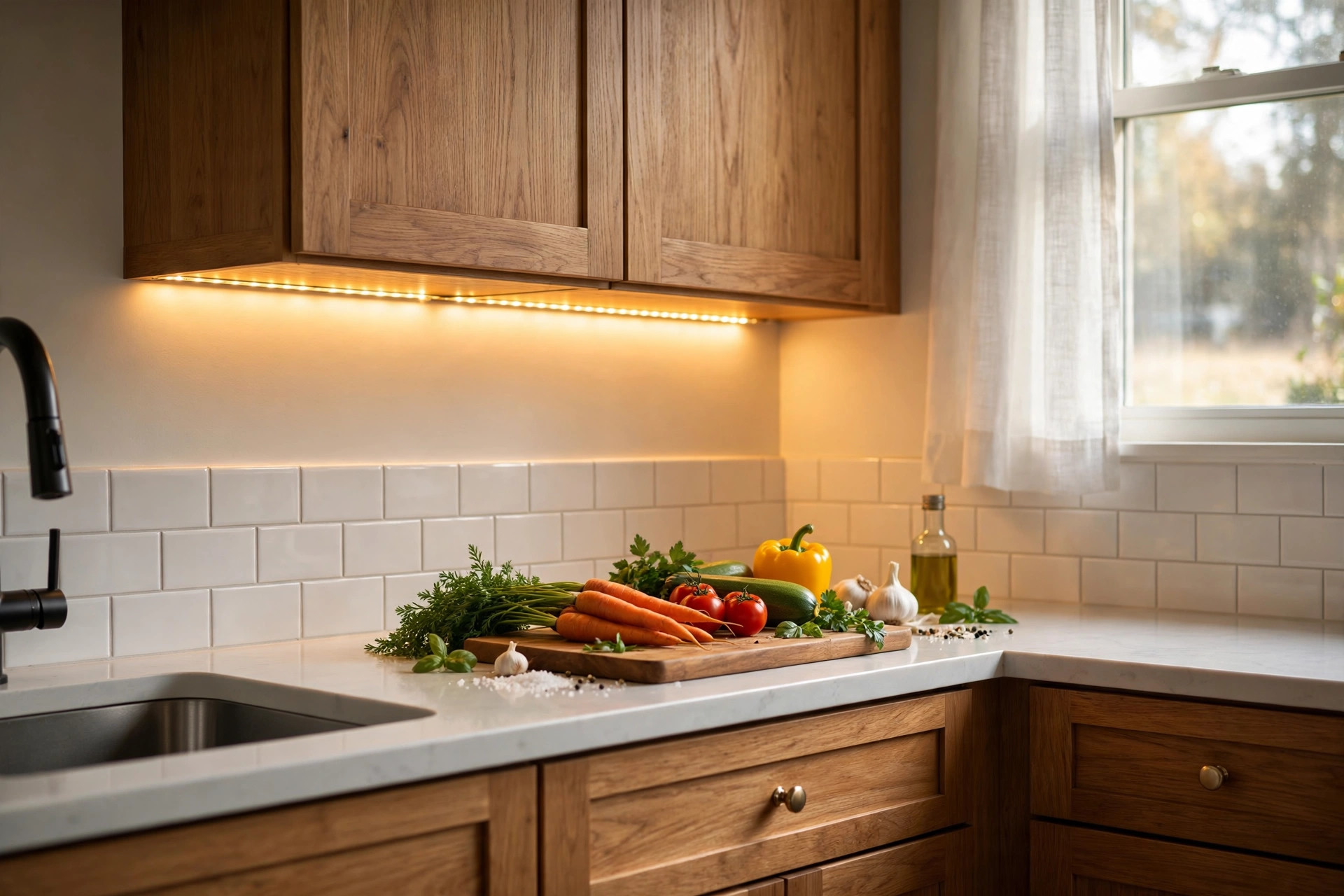

Many home owners ask about under cabinet strips where to buy USA shoppers recommend. These thin strips of light mount under the front edge of a wall cabinet. They throw light down on the counter below. They make food prep safer and the kitchen look warmer.
The market is full of choices. LED strip lights, LED bar lights, and puck lights all serve the same spot. This guide walks through each type. It lists where to buy them in the United States. It covers price, quality, and how to pick the right set.
Why Under Cabinet Lighting Matters
Task lighting is the heart of a good kitchen. Overhead lights leave shadows where you chop and stir. Your own body blocks the light. Under cabinet strips solve this problem at the source. The light comes from directly above the work surface.
Good under cabinet light also shows off your back wall. Tile, stone, or wood grain looks richer under warm light. A kitchen feels larger and more finished. Many home owners add these strips during a remodel. They also work well in rental kitchens because most sets need no wiring.
Energy use is low. A typical LED strip draws a few watts per foot. According to the U.S. Department of Energy, LED bulbs use far less energy than old incandescent bulbs and last much longer (energy.gov). The same holds for LED strips. They run cool, so they are safe near wood cabinets and food.
What to Look For Before You Buy: Under Cabinet Strips Where to Buy Usa
Brightness
Brightness is measured in lumens. A dim strip will not help you read a recipe. A harsh strip will glare off the counter. For kitchen task work, look for 200 to 400 lumens per foot. Check the box for this number. Cheap sets may not list it. That is a warning sign.
Color Temperature
Color temperature is measured in Kelvin. Warm white, around 2700K to 3000K, suits most kitchens. It matches the glow of older bulbs. Cool white, around 4000K to 5000K, looks cleaner and more modern. Pick one temperature for the whole run. Mixed tones look sloppy.
Power Source
Plug-in sets use a cord and a wall outlet. They are the easiest to install. Battery sets use AA or AAA cells. They cost less up front but batteries add up over time. Hardwired sets connect to a light switch. They look best but need an electrician.
Length and Linking
Measure your cabinet run before you shop. Strips come in fixed lengths. Many can link end to end with small cables. Check the max link count. Going past the limit can overheat the driver. Cut-to-length tape strips let you trim to fit. Cut only at the marked lines.
Types of Under Cabinet Strips
LED Tape Strips
Tape strips are thin, flat, and bendable. They stick on with adhesive backing. They hide well under shallow cabinet lips. Many have a remote or an app for dimming. They are the most common choice. Prices run low, but adhesive quality varies. A strip that peels off in six months is money wasted.
LED Bar Lights
Bar lights sit in a metal or plastic housing. They mount with small brackets or screws. They give a stiffer, more even beam. They suit renters who want a clean look without peeling tape. Brands like Philips make bars that link together. They cost more than tape but last longer.
Puck Lights
Puck lights are small round discs. They spot-light single areas, such as above a sink. They are easy to move around. They leave gaps between discs. They work best paired with a dimmer. Battery pucks are cheap and simple. Hardwired pucks are part of a full remodel plan.
Under Cabinet Strips: Where to Buy USA Stores Rank
Home Improvement Stores
The big box stores are the first stop for most buyers. The Home Depot carries tape strips, bar lights, and puck sets from many brands. You can see the color in person. Staff can help with parts. Returns are easy. Lowe’s is much the same. It often runs sale events on lighting. Both stores also sell online with free pickup at the store.
Lighting Specialists
Specialty lighting shops go deeper. Lumens stocks higher-end under cabinet systems. You get more finish choices and better drivers. Lamps Plus carries a wide range at fair prices. These shops are good when you want a set that lasts ten years. Their staff know the products well.
Online Marketplaces
Online shopping gives the widest pick and the lowest prices. Check the ratings before you buy. Look for sets with many reviews and real photos. ENERGY STAR certified products meet set standards for efficiency (energystar.gov). That label is a good sign on any LED product. Buying online also makes it easy to compare lengths and lumen ratings side by side.
What to Ask at Any Store
Ask about the return policy. Lighting looks different at home than in a bright store. Ask if the set can be cut, linked, or dimmed. Ask about the warranty. A one-year warranty is basic. Two or three years shows more confidence. Ask how the driver is rated. The driver is the part that fails first.
Cost and Price Ranges
Prices vary with type and quality.
– Battery puck sets: five to fifteen dollars for a pack of three. – Plug-in LED tape kits: twenty to sixty dollars for a full kitchen run. – LED bar light kits: forty to one hundred dollars depending on brand and length. – Hardwired low-voltage systems: one hundred to three hundred dollars plus labor.
Professional install adds cost. An electrician may charge one hundred to three hundred dollars to wire a hardwired set. For most kitchens, a good plug-in kit is enough. Spend the savings on a better dimmer. Dimming matters more than most buyers expect.
Buy a little extra length. A joint in the middle of a run is hard to hide. It is better to trim a long tape strip than to splice two short ones. Most quality tape strips list a max run length. Stay under it.
How to Install Them Yourself
Most plug-in and battery sets install in under an hour. Start with a clean surface. Wipe the cabinet bottom with a damp cloth and let it dry. Grease stops adhesive from sticking. Mount the strip toward the front edge of the cabinet. This sends light back toward the wall and cuts glare.
Hide the driver and cords. Many kits include clips for this. Plug into an outlet inside the cabinet if one exists. A switched outlet is ideal. If you have none, a simple remote or motion sensor works well.
For tape strips, peel the backing a little at a time. Press the strip flat as you go. Avoid sharp bends. Cut only at the marked cut points. Connectors snap on at the ends. Test the full run before you stick down the last section.
Renters should stick to plug-in or battery sets. They come off clean with a little heat from a hair dryer. Take photos before you start. You will thank yourself later.
Care and Upkeep
LED strips need little care. Dust the tops once a month. Kitchen grease builds up and dulls the light. Wipe with a dry or lightly damp cloth. Never soak a strip. Check that the power supply has air around it. Heat shortens its life.
If one section dims or dies, check the link cables first. Loose cables cause most failures. Keep the receipt and the box. Warranties on cheap sets are short. A quality set from a known maker should run for years with no trouble.
Plan ahead for replacement. Tape adhesive may need refreshing after a few years. A roll of mounting tape costs little. Bar lights can move to a new home. Puck lights swap out in seconds.
Safety Notes
Low-voltage LED strips are safe for most home use. Still, take care. Do not run power cords behind hot appliances. Do not pinch cords under heavy items. Keep battery packs dry. As a rule, follow the maker’s wiring steps and do not modify drivers or power supplies.
Match the driver to the strip. A driver rated for 12 volts should never feed a 5-volt strip. Read the labels. If a set smells hot or flickers badly, unplug it. Contact the maker. A flicker can mean a bad driver, not a bad strip.
Matching Strips to Your Cabinets
Cabinet style changes which strip looks best. Shallow cabinets with a thin front lip hide tape strips well. The tape sits back from the edge and the light washes the counter. Deeper cabinets can take bar lights. The housing looks neat and the beam stays even.
Dark wood cabinets drink up light. Go brighter there, near 400 lumens per foot. White or light cabinets bounce light around. A softer strip will do. Glass-front cabinets need a different plan. A strip inside the cabinet can light the shelves, but use a warm tone so dishes look good. Test one section at night before you buy for the whole kitchen. Evening light shows glare that daylight hides.
Related Lighting Projects
Under cabinet strips often lead to bigger lighting plans. If you are opening up the ceiling too, read our led recessed lights installation guide usa before you cut any holes. A new dining room chandeliers buying guide usa can help you match fixtures across open floor plans. Over an island, pendants pair well with strip light; see our kitchen island pendants buying guide usa for spacing and height rules.
For general advice on kitchen and home fixtures, The Spruce keeps clear buying guides with real product tests. Their editors cover tape strips and bar lights each season.
Frequently Asked Questions
Do I need an electrician to install under cabinet strips?
Not for plug-in or battery sets. These need no wiring. They are true do-it-yourself products. Hardwired sets are different. They tie into a wall switch and the house wiring. Hire a licensed electrician for those. Local codes may require it.
How long do LED under cabinet strips last?
A good LED strip can last 25,000 to 50,000 hours. In a kitchen used two hours a day, that is decades. The weak point is the power supply, not the LEDs. Buy a set with a replaceable driver if you can. Keep the driver in a cool spot.
Can I cut LED tape strips to fit my cabinets?
Yes, most tape strips can be cut. Cut only at the marked lines, usually shown as a small scissors icon. Cutting elsewhere kills the circuit past the cut. Measure twice. Plan the cut points before you peel the backing.
Are battery strips worth it?
They are fine for short runs and rentals. They cost little and install fast. The downside is battery changes. A strip that runs for hours a day will eat batteries. Rechargeable cells help. For a main kitchen, plug-in or hardwired sets are better.
What color temperature is best for a kitchen?
Warm white, 2700K to 3000K, suits most kitchens. It flatters food and wood cabinets. Cool white, 4000K and up, suits modern kitchens with white or gray finishes. Avoid mixing temperatures in one room. The clash is easy to see.
Will under cabinet strips raise my power bill?
Barely. A ten-foot LED run may draw 20 to 40 watts. That is less than one old 60-watt bulb. Running them a few hours a day costs pennies a month. They are among the cheapest upgrades a kitchen can get.
A Final Word
Under cabinet strips are a small buy with a big payoff. They make a kitchen safer, warmer, and easier to use. Pick the right brightness and color. Buy from a store with a fair return policy. Install with care. For most home owners, a mid-priced plug-in kit from a big box store or a lighting shop is the sweet spot. Take your time, compare two or three options, and enjoy the light.
References
ENERGY STAR. (n.d.). Energy efficient products. https://www.energystar.gov Lamps Plus. (n.d.). Lighting and home decor. https://www.lampsplus.com Lowe’s. (n.d.). Home improvement products. https://www.lowes.com Lumens. (n.d.). Lighting and ceiling fans. https://www.lumens.com Philips. (n.d.). Lighting products. https://www.philips.com The Home Depot. (n.d.). Home improvement products. https://www.homedepot.com The Spruce. (n.d.). Home and garden advice. https://www.thespruce.com U.S. Department of Energy. (n.d.). Energy efficiency and renewable energy. https://www.energy.gov
Was this guide helpful?

About Lisa Anderson
The My Garden US editorial team writes practical, in-depth home and garden guides for American homeowners — tested advice, no fluff.
You May Also Like

Patio String Lights for Florida Homes: A Practical Guide
April 23, 2026 0 views
Kitchen Island Pendants Reviews Buying Guide USA: How to Choose the Right Lights
January 2, 2026 0 views
Patio String Lights Texas Homes USA: A Practical Buying and Care Guide
July 6, 2026 0 views