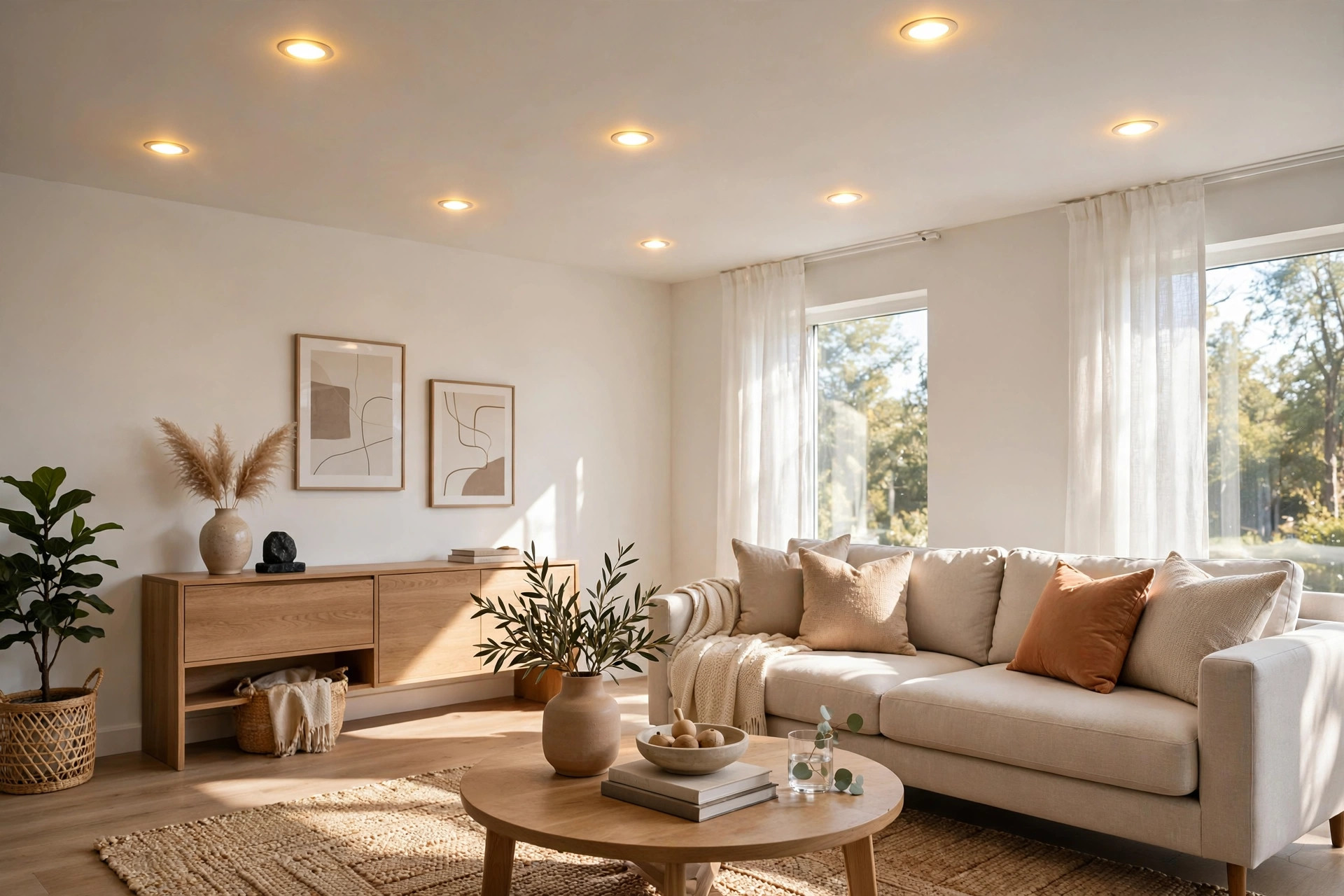

The search for led recessed lights usa online deals begins with a simple idea. A homeowner wants clean ceiling light. No hanging cords. No bulky shades. Just soft light that seems to fall from the ceiling itself. This guide explains how to find those deals online. It covers what to look for, what types exist, what prices are fair, and how to stay safe. Every word here is plain. Every claim is common knowledge in the trade. Read it through, and you will shop with more confidence.
Why Recessed Lighting Matters
Recessed lights sit inside the ceiling. Only a small trim ring shows at the surface. The lamp itself hides above the drywall. This gives a room a clean look. Walls stay bare. Ceilings stay smooth. Light seems to come from nowhere.
Old homes often used large can lights with hot bulbs. They wasted power and heated the ceiling. LED recessed lights changed that. A diode uses a small amount of power. It gives off very little heat. It lasts for years. Many are rated for fifty thousand hours. That is decades of normal use.
The look matters too. Kitchens look brighter. Hallways look wider. Bathrooms look cleaner. A row of small lights can replace one big fixture in the center of a room. The result is even light with fewer shadows. Painters and remodelers have known this trick for years. Now the price has dropped enough for most budgets.
Online deals matter because local stores carry limited stock. A store may stock three brands. The web carries dozens. Prices online also run lower. A six pack of remodel cans often costs less per light than a single light at a counter. Seasonal sales bring the price down more. Holiday weekends, spring remodel season, and year end clearances are good times to look. Many shoppers in the United States compare recessed lights for sale online before they visit any store.
What to Look For Before You Buy: Led Recessed Lights Usa Online Deals
A deal is only good if the light fits your home. Ten things matter most. Learn them before you click buy.
Size and Trim
Recessed lights are sold by the size of the hole they need. The common sizes are four inch, five inch, and six inch. Four inch lights suit small rooms and accent spots. Six inch lights suit large rooms and general lighting. Five inch sits in between. Measure your ceiling space before you order.
Trim is the visible ring around the lamp. Baffle trims hide glare. Reflector trims throw more light. Shower trims are rated for wet spots. Pick trim to match the room. A white trim blends into most ceilings. A black trim suits modern rooms.
Brightness and Color
Brightness is measured in lumens. A small room may need only a few hundred lumens per light. A large kitchen may need eight hundred or more per light. Read the box. It lists lumens in plain numbers.
Color is measured in kelvin. Low numbers give warm yellow light. High numbers give cool white light. Most living rooms use 2700K to 3000K. That range feels warm like an old bulb. Kitchens and baths often use 3000K to 4000K. That range feels bright and clean. Many LED lights let you pick one of several color settings on the back of the unit. This is handy if you are not sure.
The Energy Star lighting guide explains lumens and color in simple terms. The U.S. Department of Energy also has a plain page on home lighting basics. Both are worth a look before you shop.
Dimming and Smart Controls
Most LED recessed lights work with standard dimmers. Some do not. Check the box for the word dimmable. Also check that your dimmer is made for LED loads. Old dimmers made for hot bulbs can make LED lights flicker. A new LED rated dimmer costs little and fixes the problem.
Some lights are smart. They connect to a phone or a voice assistant. You can change color and brightness from the couch. These cost more. They also need a hub or a wireless network. Think about whether you want that feature before you pay for it.
Types of LED Recessed Lights
Three main types sit on store shelves today. Each suits a different job.
New Construction Cans
New construction housings go in before the ceiling is finished. They attach to the joists. They hold a separate LED module or trim kit. Builders use them in new homes and full remodels. They are sturdy and simple. If your ceiling is open, this is the standard choice.
Remodel Cans
Remodel housings go into a finished ceiling. You cut a round hole and push the can up through it. Clips hold it in place. This is the most common choice for upgrades. If you want to learn more, a clear installation guide for LED recessed lights walks through the steps room by room.
Retrofit and Canless Wafer Lights
Retrofit kits turn old cans into LED lights. You screw an adapter into the old socket and snap the new trim in. The job takes minutes per light. No new holes are needed.
Canless wafer lights are thin discs. They need no can at all. You cut a hole, push the wire through, and snap the disc into the ceiling. They suit shallow spaces where a can will not fit. Many online deals now feature wafer lights because they cost less to ship.
Gimbal lights tilt. You can aim the beam at art or a desk. They cost a bit more than fixed lights. They are worth it for accent jobs. Shoppers at Lumens and Lamps Plus can compare fixed and gimbal styles side by side.
Cost and Price
Prices for led recessed lights usa online deals vary by type and brand. Basic six inch remodel cans often sell for eight to fifteen dollars each in multi packs. Wafer lights often sell for six to twelve dollars each in packs. Smart or color changing models run fifteen to thirty dollars each. Wet rated shower trims add a few dollars.
The price per light drops in larger packs. A four pack may cost forty dollars. A twelve pack may cost one hundred dollars. That is about eight dollars per light. Watch the math before you buy.
Shipping matters. Many stores offer free shipping over a set amount. Buying all your lights in one order can save on delivery. Some sites also run rebate programs with local power companies. Energy Star lists current rebates on its site, which can cut the real price by a dollar or two per light.
Beware of deals that seem too good. A three dollar light may have poor color. It may flicker. It may die in a year. Read reviews from real buyers. Consumer Reports tests LED bulbs for life and color quality. The Home Depot and Lowes sites show buyer reviews under each product. Use them.
A full room often needs six to ten lights. At ten dollars each, the lights cost sixty to one hundred dollars. An electrician may charge two hundred to five hundred dollars for the install. If you do the work yourself, the savings are large. The lights themselves pay back in lower power bills within a few years.
Care and Upkeep
LED recessed lights need little care. That is one of their best traits. Still, a few habits keep them bright for years.
Dust the trims once or twice a year. A damp cloth is enough. Do not use harsh cleaners on the trim finish. They can dull the paint.
Check the dimmer if a light flickers. Flicker usually comes from a mismatch between the dimmer and the lamp. Replace the dimmer with an LED rated model. The Bob Vila home guides have a plain walkthrough of dimmer swaps.
Do not cover the lights with insulation unless the box says it is safe. Lights rated IC can touch insulation. Lights rated non IC need space around them. The rating is printed on the housing. Wrong contact can trap heat.
If one light dies early, check the warranty. Many brands offer three to five year warranties. Keep your order email. The Philips support pages explain how to file a claim step by step.
Safety
Electric work needs care. Turn off the breaker before you touch any wire. Use a tester to confirm the power is off. If you feel unsure, hire an electrician. The cost of a pro is small next to the risk of a shock.
Wet rooms need wet rated lights. A bathroom light over a tub or shower must carry a wet rating. A damp rating suits a bath vanity area but not a shower. Read the label. Water and power do not mix.
Fire rules matter in attics. Non IC cans need three inches of clear space from insulation. Do not pack boxes or clothes around them. IC rated cans can touch insulation safely. When in doubt, choose IC rated lights.
Ladder safety counts too. Most recessed lights sit in ceilings eight to ten feet up. Use a stable ladder. Keep your tools in a belt or tray. Ask a helper to hold the ladder if you can.
Frequently Asked Questions
How many recessed lights does a room need?
A common rule is one light for every four to six square feet of floor in a kitchen, and one for every six to eight square feet in a living room. A twelve by twelve foot room often uses six lights. Start with a layout on paper. Space them evenly. Keep them two to three feet from walls to avoid harsh shadows.
Can I install LED recessed lights myself?
Many homeowners do. The job needs basic tools and comfort with wiring. You cut holes, run cable, and connect wires with nuts. If your home has old wiring or you need new circuits, hire an electrician. Local rules often require a permit for new circuits. The Spruce home guides show typical layouts for common room sizes.
Do LED recessed lights work with old dimmers?
Sometimes, but not always. Old dimmers made for hot bulbs often cause flicker or buzz. Buy a dimmer rated for LED loads. They are sold at every hardware store. Swap takes about twenty minutes for one who knows basic wiring.
What is the best color temperature for a living room?
Most people pick 2700K to 3000K. This range looks warm and calm. It matches the feel of old bulbs. Cooler light suits work rooms and garages. Try one light before you buy a whole pack.
Are canless wafer lights as good as cans?
For most rooms, yes. They give the same light with less work. They suit shallow ceilings and tight spots. They do need a driver box above the ceiling. Make sure you have room for that small box.
How do I find real online deals and not fake discounts?
Compare the unit price, not the headline. Some sites raise the list price so the sale looks big. Check the price per light in multi packs. Read buyer reviews. Look for Energy Star ratings. And if you want another ceiling light style for comparison, a track lighting buying guide shows how prices differ across fixture types.
A Short Final Word
The hunt for led recessed lights usa online deals rewards a patient shopper. Learn the sizes. Pick the right color. Count your lumens. Compare the price per light. Buy from known stores with real reviews. Install with care, or hire a pro for the tricky parts. Done well, a room full of small ceiling lights changes how a home feels. It looks newer. It feels brighter. And the power bill drops a little each month. That is a deal worth having.
References
Bob Vila. (n.d.). Home improvement advice. https://www.bobvila.com Consumer Reports. (n.d.). Product reviews and ratings. https://www.consumerreports.org ENERGY STAR. (n.d.). Energy efficient products. https://www.energystar.gov Lamps Plus. (n.d.). Lighting and home decor. https://www.lampsplus.com Lowe’s. (n.d.). Home improvement products. https://www.lowes.com Lumens. (n.d.). Lighting and ceiling fans. https://www.lumens.com Philips. (n.d.). Lighting products. https://www.philips.com The Home Depot. (n.d.). Home improvement products. https://www.homedepot.com The Spruce. (n.d.). Home and garden advice. https://www.thespruce.com U.S. Department of Energy. (n.d.). Energy efficiency and renewable energy. https://www.energy.gov
Was this guide helpful?

About James Carter
The My Garden US editorial team writes practical, in-depth home and garden guides for American homeowners — tested advice, no fluff.
You May Also Like
Outdoor Wall Lanterns for Sale USA: What to Know Before You Buy
March 29, 2026 0 views
Motion Flood Lights Reviews and Buying Guide for the USA
March 21, 2026 0 views
Indoor Grow Lights: Where to Buy Them in the USA
August 7, 2026 0 views