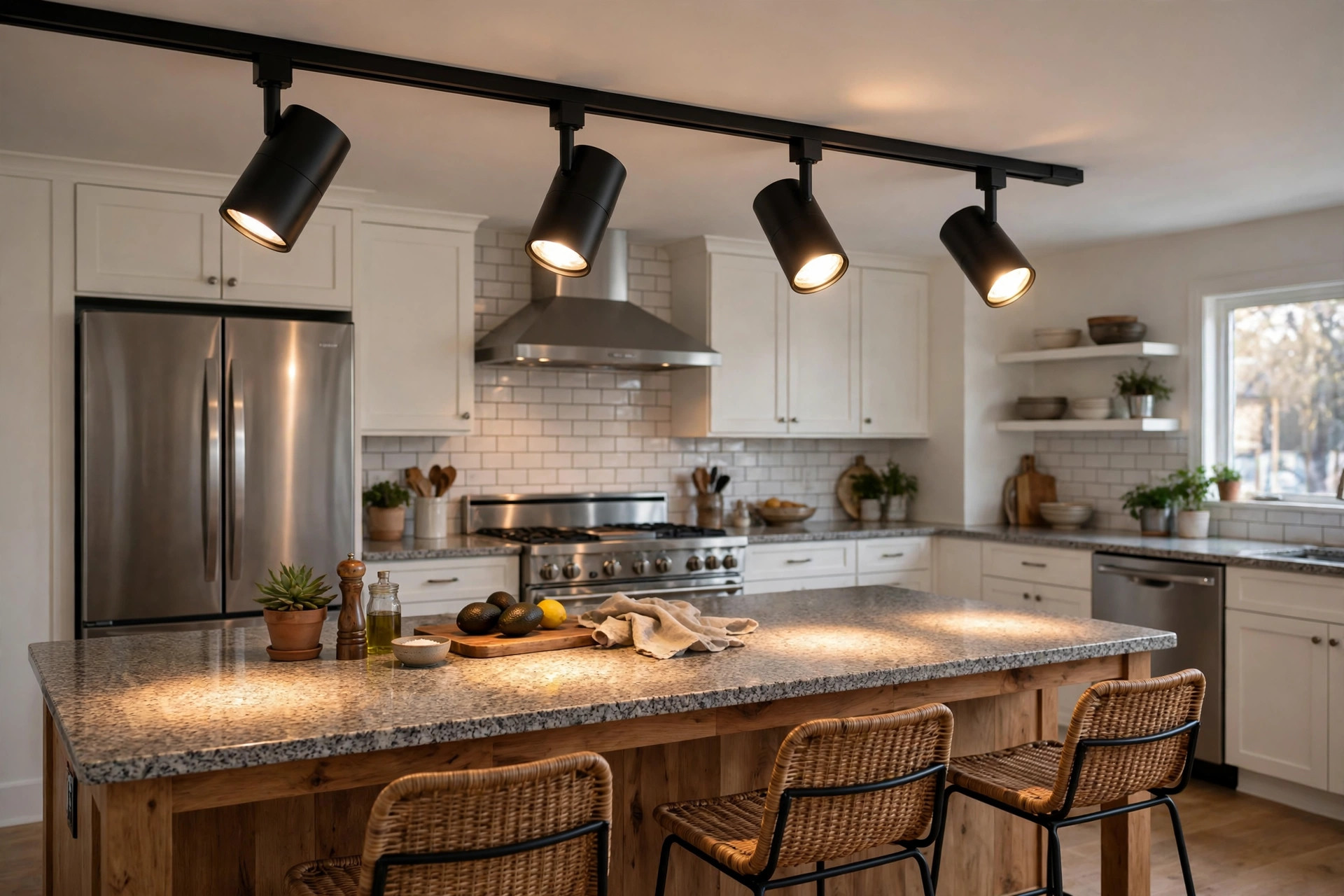

Many home cooks search for kitchen track lighting where to buy usa retailers they can trust. Track lighting gives a kitchen strong, focused light. Each head on the rail can point in a different direction. You can aim light at the stove, the sink, and the counter. You can also aim it at a pantry wall or a dining corner. This guide explains where to buy track lighting in the United States. It also explains how to choose a system, what it costs, how to install it, and how to keep it safe.
Why Track Lighting Works Well in Kitchens
Kitchens need more than one kind of light. The room has work zones. People chop food, read recipes, wash dishes, and eat. A single ceiling light cannot serve every zone. Track lighting solves this problem. One rail holds several heads. Each head shines where you aim it.
Track lighting also suits older homes. Many American kitchens built in the 1960s, 1970s, and 1980s have one weak ceiling fixture. Adding recessed lights means cutting many holes in the ceiling. Track lighting needs only one power point. An electrician connects the rail at that point. The rest is simple. This makes it a low-cost upgrade for renters and owners alike.
The look has changed too. Old track lights looked heavy and dated. New designs look slim and clean. Matte black rails, brass heads, and white low-profile tracks fit modern kitchens. The kitchen track lighting buying guide usa shoppers use today shows many styles that blend into the room.
Where to Buy Kitchen Track Lighting in the USA: Kitchen Track Lighting Where to Buy Usa
The United States has many good sources for track lighting. You can shop in person or online. Each type of store has strengths.
Big Home Improvement Stores
Large home improvement chains carry a wide range of track kits. The Home Depot stocks basic two-light and three-light track kits. Prices start low. You can see the fixtures in the aisle and take a kit home the same day. Staff can explain track types, such as H, J, and L systems. This is a good place for first-time buyers who want to touch the product before they buy.
Lowe’s offers a similar range. The store carries kits from major lighting brands. It also sells replacement heads, extra rail sections, and LED bulbs. If you already have a rail and need one more head, this is an easy fix. Many shoppers compare prices between these two large chains before they buy.
Specialty Lighting Stores Online
For a wider choice of styles, online lighting stores help. Lumens sells modern and designer track systems. The site carries low-voltage and line-voltage options. It also sells pendant adapters that hang from a track. These turn a track into a source for pendant lights over an island.
Lamps Plus is another strong source. The company sells many track kits in bronze, chrome, black, and white finishes. Its product pages list track type, bulb type, and rail length. This detail helps buyers match new heads to an old rail. If your home has an older track from a prior owner, this store can help you find parts that fit.
When you shop online, check the return policy. Track heads look different in a photo than in a real kitchen. A good return window lets you test the look at home.
Bulb and Component Makers
Sometimes you need only bulbs, not a whole kit. Philips makes LED bulbs in common track sizes. GU10 and MR16 bulbs fit many track heads. Philips also sells smart bulbs that work in track fixtures. These let you dim or change color from a phone. Replacing old halogen bulbs with LED bulbs cuts heat and power use.
Energy and Efficiency Information
Before you buy, it helps to learn about light quality and energy use. ENERGY STAR lists certified light fixtures and bulbs. A certified fixture meets set levels for efficiency and life span. Buying certified products lowers your power bill.
The U.S. Department of Energy publishes plain guides on home lighting. These guides explain lumens, color temperature, and the savings from LED bulbs. A short read can help you pick bulbs with the right brightness and color for food preparation.
Home Guides and Reviews
The Spruce publishes buying guides for home lighting. Its writers test fixtures and compare features. Reading a guide before you shop can save time. You will learn which track types are common and which features matter most in a kitchen.
How to Choose the Right Track System
A track lighting system has three parts. The rail carries power. The heads hold the bulbs. The power feed connects the rail to the house wiring. Parts from one track type do not fit another type. So your first choice is the track standard.
The Three Common Track Types
Most American track systems use one of three standards. They are called H, J, and L. H type is the most common. J type is used by some older brands. L type is less common but still sold. Check the label on your existing rail before you buy new heads. The label is often inside the track channel. If you are starting fresh, pick H type. It has the widest choice of heads.
Heads and Bulbs
Track heads come in many shapes. Gimbal heads rotate and tilt. They are the most flexible for kitchens. Pinhole heads give a narrow beam for art or a backsplash. Pendant adapters let you hang a shade from the track. This works well over a kitchen island.
Bulb choice matters too. LED bulbs last many years and stay cool. Halogen bulbs give warm light but run hot. Most new track kits use LED. If you buy an old-style head, make sure it can take an LED bulb. Check the maximum wattage on the head label. Never exceed it.
For related kitchen lighting ideas, see the kitchen island pendants buying guide usa page. It covers pendant options that pair well with track rails.
Types of Kitchen Track Lighting
Line Voltage Systems
Line voltage track runs on standard 120-volt house current. It is the simplest system. The rail connects straight to the ceiling box. No transformer is needed. Kits are common and low in cost. Most kitchens use line voltage track. It accepts many bulb types.
Low Voltage Systems
Low voltage track runs at 12 or 24 volts. A transformer steps the power down. The rails are thinner and the heads are smaller. Low voltage gives a clean, modern look. It works well in small kitchens where bulky fixtures would crowd the ceiling. The transformer adds cost and needs a place to hide.
Fixed LED Track vs Replaceable Bulbs
Some new track kits have LED chips built into the heads. These are called integrated LED fixtures. They last for years with no bulb changes. The drawback is clear. When the chip fails, you replace the whole head. Track heads with replaceable GU10 or MR16 bulbs cost less to maintain. You can also change bulb color or brightness later. For most kitchens, replaceable bulbs give more freedom.
If you want layered light, combine track heads with strips under the cabinets. The under cabinet strips buying guide usa page explains how strips fill in shadows under wall cabinets.
Cost and Price Guide
Track lighting costs less than most buyers expect. A basic two-head kit from a large store can cost between 40 and 80 dollars. A four-head kit with a four-foot rail often costs between 80 and 150 dollars. Designer systems from specialty stores cost more. A full set with six heads can run 300 to 600 dollars.
Bulbs add to the cost. LED bulbs for track heads cost 5 to 15 dollars each. A five-head system needs five bulbs. Buy all bulbs at once. This keeps the color and brightness the same across heads.
Installation is the next cost. If your ceiling already has a fixture box where you want the track, an electrician may charge 150 to 300 dollars to mount and wire it. If new wiring is needed, the cost rises. Get two or three quotes. Ask each electrician to confirm the circuit can carry the load.
Long term, LED track lighting saves money. An LED head uses a fraction of the power of an old halogen head. The government notes that LED bulbs use at least 75 percent less energy than old-style bulbs. Over five years, the savings can cover the cost of the fixture.
Installation Tips
Start with a plan. Mark the rail position on the ceiling. A straight rail above the main counter works in many kitchens. An L-shaped rail can light two walls. A short rail over the island works like a pendant bar. Keep the rail at least 18 inches from walls so heads can tilt without hitting the wall.
Turn off power at the breaker before you start. Test the wires with a non-contact tester. Mount the rail to a ceiling joist when you can. Long rails may need toggle bolts. Follow the kit instructions step by step.
Aim the heads last. Stand at the counter and ask a helper to tilt each head. Aim one head at the stove. Aim one at the sink. Aim one at the main prep counter. Small changes in angle make a big difference. Live with the setting for a few days. Then adjust again if needed.
Dimmer switches add comfort. Many LED track heads work with LED-rated dimmers. Check the bulb box for a dimmer list. An old dimmer made for incandescent bulbs may cause flicker.
Care and Upkeep
Track lighting needs little care. Dust the rail and heads every few months. A soft cloth is enough. Do not use water on the rail. Water can reach the power contacts and cause a short.
Check the heads once a year. Tighten any that have loosened. Look for signs of heat damage on old halogen heads. Yellowed plastic or brown marks mean the bulb is too hot. Switch to LED at once.
Replace bulbs in sets when the color matters. LED bulbs age slowly. A new bulb next to an old one may look brighter or bluer. Buying a full set keeps the light even.
Clean the kitchen grease film off the heads. Cooking adds a thin film to all kitchen surfaces. Wipe heads with a dry cloth. If the film is thick, use a cloth dampened with a mild cleaner. Dry the head fully before you turn the power back on.
Safety
Track lighting is safe when installed to code. Always use the correct bulb wattage. The head label states the maximum. LED bulbs make this easy because they draw little power.
Keep the rail away from water spray. Do not mount track directly above a sink splash zone if the fixture is not rated for damp locations. Most kitchen track kits are rated for dry locations only.
Let a licensed electrician do any new wiring. Track rails carry live power along their full length. A loose connection can arc. If you smell burning or see flicker, turn off the breaker and call an electrician.
Check the track type before you add heads. Forcing a J-type head into an H-type rail can bend the contacts. Bent contacts cause poor connections and heat. Match the standard every time.
Frequently Asked Questions
How many track heads does a kitchen need?
A small kitchen often needs three to four heads. A medium kitchen needs four to six. Start with one head per work zone. Add more if corners stay dark. You can add heads to the rail later without new wiring.
Can I install track lighting myself?
You can if a fixture box already exists at the spot. The work is like hanging a ceiling light. Turn off the breaker. Follow the kit guide. If new wiring or a new circuit is needed, hire a licensed electrician. Local codes may require a permit for new wiring.
Do LED track lights get hot?
LED heads stay much cooler than halogen heads. They still produce some heat at the back of the head. Keep the area around each head clear. Do not wrap heads in insulation. Good air flow keeps LED chips alive longer.
What color temperature is best for kitchens?
Most cooks like 3000K to 4000K. This range is warm white to neutral white. It shows food colors well. Below 2700K looks too yellow for prep work. Above 5000K looks harsh and blue. Buy all heads in the same color temperature for a clean look.
Can track lighting replace recessed lights?
In many kitchens, yes. Track gives more aim control than fixed recessed lights. It costs less to install. It suits ceilings where cutting many holes is not wanted. Recessed lights still win for a clean, fixture-free look. Some homes use both.
Where is the best place to buy kitchen track lighting for sale usa shoppers on a budget?
Large home improvement stores offer the lowest prices on basic kits. Online specialty stores offer better design choice at higher prices. For shoppers asking about kitchen track lighting for sale usa deals, compare both. Watch for holiday sales when lighting often drops in price.
A Short Final Word
Kitchen track lighting is one of the most practical upgrades a home can get. It puts light exactly where the work happens. It installs with little mess. It costs less than a full recessed-light project. The key step is buying the right system. Match the track type. Pick LED heads. Plan the rail layout before you drill. For a full step-by-step on parts and fit, read the kitchen track lighting buying guide usa page next. Then shop with confidence and enjoy a brighter kitchen.
References
ENERGY STAR. (n.d.). Energy efficient products. https://www.energystar.gov Lamps Plus. (n.d.). Lighting and home decor. https://www.lampsplus.com Lowe’s. (n.d.). Home improvement products. https://www.lowes.com Lumens. (n.d.). Lighting and ceiling fans. https://www.lumens.com Philips. (n.d.). Lighting products. https://www.philips.com The Home Depot. (n.d.). Home improvement products. https://www.homedepot.com The Spruce. (n.d.). Home and garden advice. https://www.thespruce.com U.S. Department of Energy. (n.d.). Energy efficiency and renewable energy. https://www.energy.gov
Was this guide helpful?

About Emily Rodriguez
The My Garden US editorial team writes practical, in-depth home and garden guides for American homeowners — tested advice, no fluff.
You May Also Like

Patio String Lights Texas Homes USA: A Practical Buying and Care Guide
July 6, 2026 0 views
Patio String Lights American Homes Guide
February 10, 2026 0 views
Reading Floor Lamps for Sale USA: A Plain Guide for Buyers
August 22, 2026 0 views