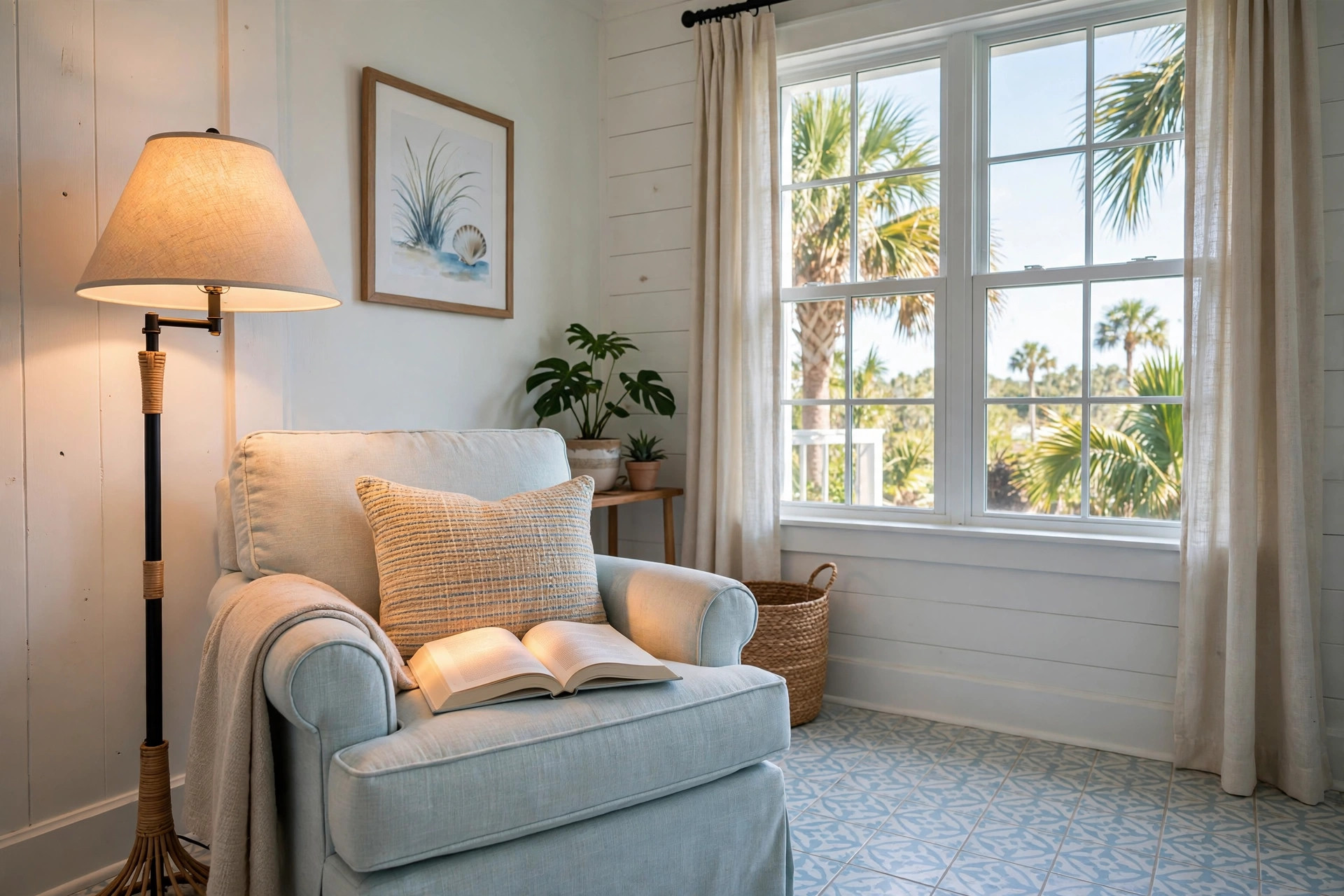
Many readers in the Sunshine State look for reading floor lamps florida homes usa shoppers can trust. Florida homes are bright by day. The sun streams through large windows. But night comes, and the room turns dark. A good floor lamp for reading makes the evening hours pleasant. It gives light right where the book or paper sits. This guide will walk you through what matters, what to buy, and how to care for your lamp.
Why Good Reading Light Matters in Florida Homes
Florida homes have a special mix of light. Big windows let in strong sun for much of the day. Many homes in Florida have open floor plans. Living rooms, dining areas, and kitchens often share one big space. Overhead lights in such rooms can feel too harsh. They can also feel too dim at the same time.
A floor lamp for reading solves this problem. It puts light close to the reader. The rest of the room can stay soft and calm. This is kind to the eyes. It also keeps the mood of the room warm.
Florida has another fact to keep in mind. Many parts of the state have high humidity. Salt air near the coast can wear on metal parts. A lamp made for Florida homes should hold up well in warm, moist air. Simple, solid builds last longer. Cheap metal joints can rust. Good finishes resist the damp.
The state also sees storms. Power flickers happen during hurricane season. Many Florida families keep battery lamps or candles ready. A plug-in floor lamp will not run in a blackout. But on normal days, it is the best tool for a reading nook.
Older adults make up a large share of Florida readers. Eyes change with age. More light helps. Glare hurts more. A reading lamp that can be aimed and dimmed helps an older reader more than a fixed bright bulb. Think of this lamp as a tool for comfort, not just decor.
What to Look for in Reading Floor Lamps: Reading Floor Lamps Florida Homes Usa
Not all floor lamps work well for reading. A pretty lamp can cast weak light. A strong lamp can glare. Here is what to check before you buy.
Light Color and Warmth
Bulbs are rated in kelvins. Low numbers mean warm light. High numbers mean cool light. For reading, warm to neutral white works best. A bulb near 2700K gives a soft yellow glow. A bulb near 3000K gives a clean white. Both are easy on the eyes.
Cool light above 4000K can look harsh in a home. It may work in an office. In a Florida living room at night, warm light feels better. Many readers pick warm light floor lamps for the living room because the tone matches the rest of the home.
Brightness
Brightness is rated in lumens. A reading lamp should give about 450 to 800 lumens on the page. Too little light strains the eyes. Too much light causes glare. A lamp with a dimmer switch is the safest choice. You can turn it up or down as you like.
Shade Shape and Material
The shade shapes the light. A narrow shade throws a focused pool of light on the page. A wide shade spreads light across the room. For reading, a shade that points down works best. Fabric shades give soft, even light. Metal shades give a crisp beam. Paper shades look pretty but can yellow in Florida heat and humidity over time.
Height and Reach
The lamp head should sit near shoulder height when you sit in the chair. The light should fall on the page from behind or from the side. Light from the front can reflect off the page and glare. An adjustable arm or gooseneck neck lets you aim the light just right. This is the key feature of a reading floor lamp with adjustable arm setup.
Types of Reading Floor Lamps
Several styles work well for reading. Each has its own strengths. The right one depends on your room and your habits.
Pharmacy Lamps
Pharmacy lamps have a small shade on a swing arm. The arm can move side to side. The shade points light straight down at the page. These lamps are slim. They fit in tight corners. They are a classic pick for a floor lamp for a reading nook.
Gooseneck Lamps
Gooseneck lamps have a bendable neck. You can bend the neck to aim the light. They are simple and cheap. Many come with a heavy base so they do not tip. They suit renters and dorm rooms. They also suit anyone who moves the lamp from room to room.
Arc Lamps
Arc lamps have a long curved arm. The arm reaches over a sofa or chair. The light hangs from above. This style lights a whole seating area. But the light may sit too high for close reading. Arc lamps look grand. They need space. They work best in large Florida family rooms with high ceilings.
Torchiere Lamps With Reading Lights
Torchiere lamps point light up at the ceiling. Some models add a small reading light on a side arm. This gives both soft room light and direct reading light. It is a good two-in-one choice. Check that the reading arm can be aimed.
Swing-Arm Wall vs. Floor Models
Wall-mounted swing-arm lamps save floor space. But many renters cannot drill into walls. Floor lamps need no tools. You place them, plug them in, and read. For most Florida homes, a floor model is the simple choice.
Retailers such as Home Depot and Lowe’s carry wide ranges of these styles. Lighting shops like Lamps Plus and Lumens offer more design choices. For advice on styles, The Spruce has plain guides for buyers.
Cost and Price in the USA
Reading floor lamps come at many prices. A simple gooseneck lamp can cost 25 to 40 dollars. A pharmacy lamp in brass can cost 60 to 120 dollars. Designer arc lamps can cost 200 to 500 dollars or more.
Price often tracks with build quality. Cheap lamps may wobble. Their switches may fail early. A mid-range lamp from a known brand tends to last longer. Brands like Philips make reliable bulbs and lamps. The lamp itself may come from a furniture brand.
Bulb cost matters too. LED bulbs cost more at first. They last far longer than old bulbs. They use less power. A 10-watt LED can give as much light as a 60-watt old bulb. Over years, LEDs save real money. ENERGY STAR lists efficient bulbs and lamps. The U.S. Department of Energy also shares tips on lighting costs.
Here is a rough price guide:
– Basic gooseneck lamp: 25 to 50 dollars – Pharmacy or swing-arm lamp: 60 to 150 dollars – Torchiere with reading light: 80 to 180 dollars – Arc floor lamp: 150 to 500 dollars
These are USA retail prices. Sales and store brands can shift them lower. Shipping may add cost for online orders.
Care and Upkeep
A floor lamp needs little care. But a few habits will keep it working for years.
Dust the shade often. Dust dims the light. A dry cloth works for most shades. Fabric shades can be brushed gently. Glass shades can be washed with mild soap and water. Let them dry fully before you put them back.
Check the cord once a year. Look for cracks or fraying. A damaged cord is a fire risk. Replace it or have it fixed. Do not run cords under rugs. Rugs trap heat. Keep cords away from high-traffic paths where they can be tripped on.
In Florida, check metal parts for rust. Coastal air speeds up rust. Wipe the base and pole with a dry cloth now and then. If you see small rust spots, clean them with fine steel wool and touch up with paint.
Tighten the joints. Swing arms and goosenecks loosen with use. Most have small screws or nuts. Tighten them by hand or with a small tool. Do not force them. Forced joints can snap.
Replace bulbs as needed. LEDs last a long time. But they do fade slowly. If the page looks dim, try a new bulb. Keep a spare bulb in a drawer so you are never left in the dark.
Safety Tips
Floor lamps are safe when used well. But they can cause harm when misused. Keep these points in mind.
Place the lamp on a flat, steady surface. Tile floors are common in Florida homes. Tile can be slick. A heavy base helps the lamp stand firm. Keep the lamp away from doorways where it can be bumped.
Keep the shade away from curtains and paper. Shades can get warm. LED bulbs run cooler than old bulbs. Still, keep a few inches of space around the shade.
Do not overload outlets. One lamp per outlet is fine. Avoid long chains of extension cords. If you must use one, pick a heavy-duty cord rated for the load.
Turn the lamp off when you leave the room for a long time. This saves power. It also cuts risk. A timer plug can do this for you.
In storm season, unplug lamps during lightning storms. A power surge can harm the lamp. A surge protector adds a layer of safety.
Frequently Asked Questions
What is the best bulb color for reading at night?
Warm white near 2700K to 3000K is best for most readers. It feels soft. It does not fight sleep. Cool white above 4000K can feel harsh in a bedroom or living room.
How bright should a reading floor lamp be?
Aim for 450 to 800 lumens on the page. A dimmer switch is ideal. It lets you set the level that suits your eyes. Older readers often need more light than younger ones.
Are floor lamps safe on Florida tile floors?
Yes, if the base is heavy and the floor is level. Place the lamp against a wall or in a corner. This cuts the chance of a bump. Avoid spots where people walk.
Can I use a smart bulb in a reading floor lamp?
Yes. Many floor lamps take standard bulbs. A smart bulb lets you dim and change color from your phone. Check the lamp’s max wattage first. Match the bulb to it.
Do reading lamps help with eye strain?
Good light helps a lot. Poor light forces the eyes to work harder. A lamp that puts even light on the page cuts strain. Take breaks too. Look across the room every twenty minutes.
Should I pick a lamp with a built-in LED or a replaceable bulb?
Built-in LEDs can last many years. But when they fail, the whole lamp may need replacing. Replaceable bulbs are simpler. You can swap a bulb in a minute. Most buyers pick replaceable bulbs for ease.
A Final Word
A reading floor lamp is a small buy with a large payoff. It turns a dark corner into a place you want to sit. In Florida homes, where rooms run large and bright by day, the right lamp fills the gap at night. Pick warm light. Pick enough brightness. Pick an arm you can aim. Keep the lamp clean and the cord sound. Then sit down with your book and enjoy the quiet hours.
If you want to compare more lighting ideas for the rest of the home, our guide to kitchen island pendants covers another popular USA lighting choice. For the best reading lamp for small living rooms, look for slim pharmacy styles that tuck into corners without crowding the space.
References
ENERGY STAR. (n.d.). Energy efficient products. https://www.energystar.gov Lamps Plus. (n.d.). Lighting and home decor. https://www.lampsplus.com Lowe’s. (n.d.). Home improvement products. https://www.lowes.com Lumens. (n.d.). Lighting and ceiling fans. https://www.lumens.com Philips. (n.d.). Lighting products. https://www.philips.com The Home Depot. (n.d.). Home improvement products. https://www.homedepot.com The Spruce. (n.d.). Home and garden advice. https://www.thespruce.com U.S. Department of Energy. (n.d.). Energy efficiency and renewable energy. https://www.energy.gov
Was this guide helpful?

About Lisa Anderson
The My Garden US editorial team writes practical, in-depth home and garden guides for American homeowners — tested advice, no fluff.