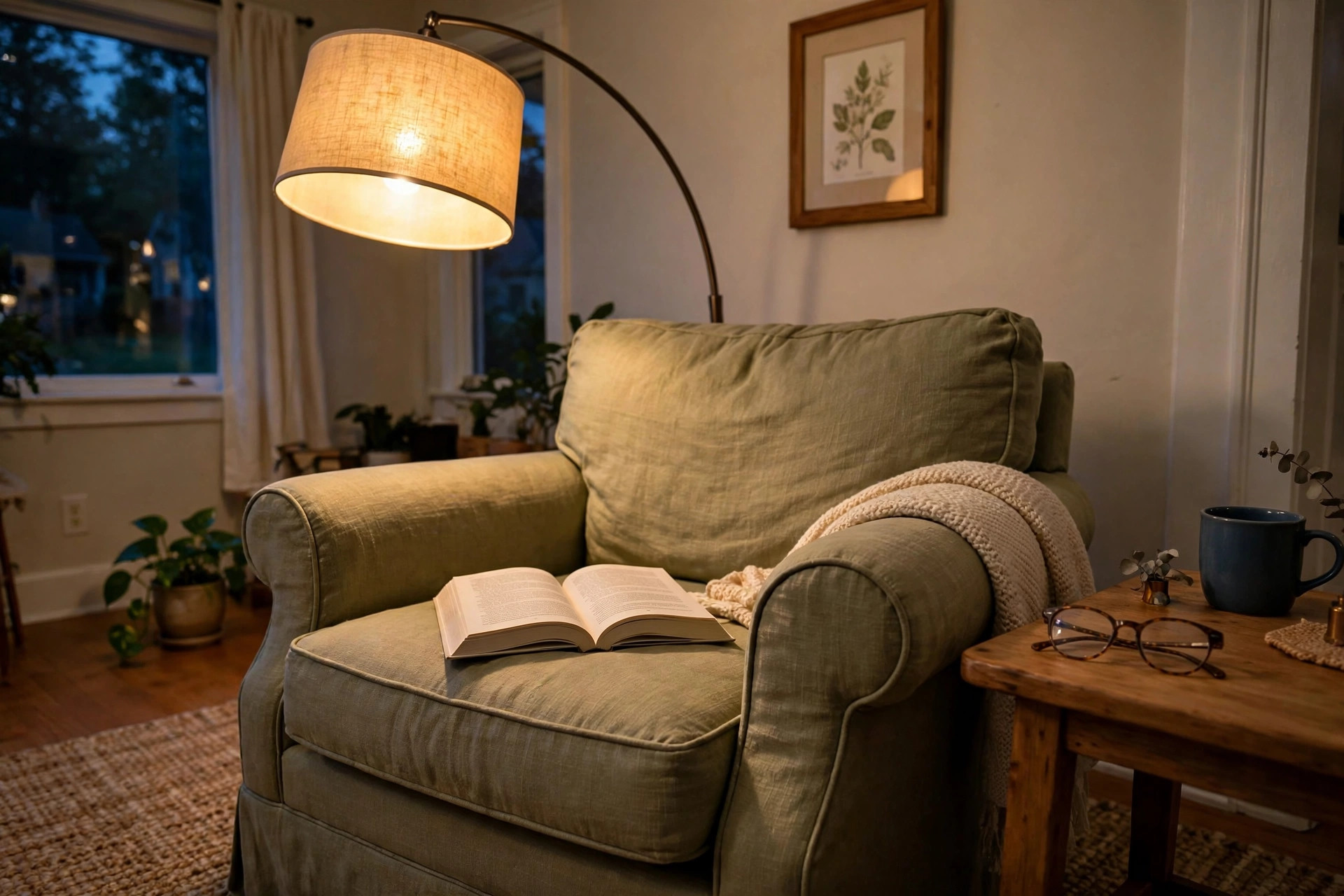

This reading floor lamps american homes guide begins with a simple fact. Many Americans read at home in poor light. They squint at the page. They hold the book too close. They feel tired after only twenty minutes. The fix is often simple. A good reading floor lamp can change the whole corner of a room. It can make an old chair feel like a library seat. It can make a small apartment feel calm at night.
Floor lamps have been common in American homes for over a century. In the 1980s and 1990s they often stood beside the couch in the family room. The styles have changed since then. The goal has not. A reading lamp should put bright, soft light exactly where the reader needs it. It should not shine into the eyes. It should not leave the rest of the room in hard shadow. This guide explains how to choose one. It covers the main types, what to look for, what they cost, and how to keep them safe.
Why a Good Reading Lamp Matters
Reading is hard on the eyes when the light is wrong. Overhead ceiling lights throw shadows across the page. They light the top of the head more than the book. Table lamps can help, but they need a table nearby. A floor lamp stands on its own. It can be placed exactly where the reader sits. It can be moved when the furniture is moved. That is why so many reading corners in American homes depend on one.
Good light also protects comfort. Reading in dim light causes eye strain. The strain brings headaches and sore shoulders. A reader leans forward to get closer to weak light. A floor lamp that throws clear light onto the lap lets the reader sit straight.
There is a mood reason too. A warm pool of lamplight makes a corner feel inviting. At night the daytime reading chair goes dark. A floor lamp gives it a second life after sunset.
How to Choose the Right Floor Lamp: Reading Floor Lamps American Homes Guide
Each step is explained below.
Height and Reach
Most reading floor lamps stand between 55 and 72 inches tall. That range works well beside a chair or a couch. The light source should sit a little above the reader’s shoulder when the reader is seated. That is usually 40 to 48 inches from the floor. If the lamp head sits too low, the light hits the armrest. If it sits too high, the light spreads across the ceiling and the page goes dim.
Reach matters just as much as height. Some lamps throw light straight down from a fixed head. Others bend or swing. An adjustable pharmacy floor lamp for bedroom corners or tight spaces lets the reader pull the light over the shoulder. A swing arm can move a full two feet from the pole. For a deep couch, a lamp with some reach is far better than a fixed one.
Brightness and Bulbs
Reading needs more light than mood lighting. A single overhead bulb of 800 lumens lights a whole room. A reading lamp should give 400 to 800 lumens in a focused beam. Lumens measure the amount of light. Watts measure the power used. Old packages listed watts. New packages list lumens. Shoppers can compare efficient lighting options and ENERGY STAR guidance to see how little power a modern lamp needs.
Color temperature matters too. It is measured in kelvin. Warm white light sits near 2700K. It feels like lamplight from decades past. Cool white light sits near 4000K. It feels like office light. Daylight sits near 5000K. Most readers prefer warm white between 2700K and 3000K for novels and magazines. It is easy on the eyes. For fine print, maps, or crafts, some readers prefer 3500K to 4000K. Many modern bulbs let the user switch between settings with a tap.
LED bulbs are now the standard choice. They use far less power than old incandescent bulbs. They stay cool to the touch. They last for years. Philips and other bulb makers now sell LED bulbs in every common shape. A reader can keep the same lamp for decades and only change the bulb. The U.S. Department of Energy offers plain lighting advice for homes on why LED bulbs save money.
Shade Shape and Direction
The shade decides where the light goes. A drum shade sends light up and down in a soft wash. It suits general reading on a couch. A bell or empire shade pushes light downward. It suits a chair where the reader holds a book in the lap. A torchiere shade pushes light up toward the ceiling. It gives soft room light but weak reading light. A focused task shade, like the metal head on a pharmacy lamp, points a beam at the page. For serious reading, downward and focused shades win.
The shade material changes the glow. Linen shades soften the light and warm the color. Metal shades throw a sharp beam. If the bulb is visible from a seated position, the eyes will tire. A good shade hides the bulb from the reader’s line of sight.
Style and Size of the Room
A reading lamp should fit the room, not fight it. A heavy brass lamp looks fine in a traditional den. It may look out of place in a small modern studio. A slim pole lamp takes up almost no floor space. It suits tight corners. An arc floor lamp for living room reading curves over the chair. It suits large rooms with high ceilings. Shoppers can browse affordable reading lamps at IKEA for small spaces or look at designer floor lamps at Lumens for larger rooms.
Color and finish matter in daylight. A black metal lamp looks sharp. A brushed nickel lamp looks soft. Wood poles suit farmhouse rooms. The lamp will be seen every day, on and off.
Types of Reading Floor Lamps
American stores sell several common types. Each type has a clear job. The four types below cover almost every need.
Arc Lamps
An arc lamp has a long curved arm that rises from a heavy base and bends over the seating area. The head hangs above the chair. It throws light straight down onto the lap. Arc lamps suit sectionals and deep chairs. They need floor space. The base can be two feet wide. They are among the most loved floor lamp options for a cozy reading nook in open living rooms. Some arcs have a dimmer in the cord. The dimmer lets the reader lower the light for television time.
Pharmacy and Task Lamps
A pharmacy lamp has a slim pole, a small metal shade, and often a swing arm. It was named for old drugstore counters. Today it is a favorite for readers. The head moves. The shade focuses the beam. Many models have a full-range dimmer. A pharmacy lamp fits beside an armchair without taking over the corner. It is the best choice when floor space is tight and the reading is serious.
Torchiere Lamps
A torchiere throws all its light upward. The light bounces off the ceiling and fills the room with a soft wash. Torchieres are poor reading lamps on their own. Some modern torchieres add a small reading light on the side of the pole. That two-in-one design can work.
Tripod Lamps
A tripod lamp stands on three legs. It looks like a camera stand. The shade sits at the top of the legs. Tripod lamps bring a mid-century or studio look. They give soft downward light through a drum shade. Shoppers can compare floor lamp styles at Lamps Plus for more design ideas. They suit bedrooms and quiet corners. They are less stable than single-pole lamps if a child or pet bumps them. The legs spread wide, so they need more floor space than they appear to need.
Cost and Price
Reading floor lamps come at every price. A simple pole lamp with a fabric shade can cost 30 to 60 dollars at a discount store. A pharmacy lamp with a good dimmer often costs 70 to 150 dollars. A large arc lamp often costs 150 to 400 dollars. Designer lamps can cost more than 1,000 dollars. Shoppers can compare models and prices at Home Depot and at Lowe’s to get a sense of the market.
Price is not the same as value. A 40-dollar lamp that wobbles and has a thin shade may be replaced in two years. A 120-dollar lamp with a heavy base, a solid switch, and a good socket may last twenty years. Lamp ratings published by Consumer Reports can help buyers see which brands hold up. A few points matter more than the price tag.
– Weight of the base. Heavier bases tip less. – Quality of the switch. Foot switches and full-range dimmers feel better and last longer. – Socket size. A standard medium socket takes common LED bulbs. – Cord length. A cord of eight feet or more reaches the wall without an extension cord.
Used lamps can be a fine deal. Thrift stores often sell solid brass and steel floor lamps for a few dollars. Check the wiring before use. Old cords crack. A lamp repair shop can rewire an old lamp for a modest fee.
Care and Upkeep
A floor lamp needs little care. Dust is the main enemy. Dust on a fabric shade dims the light and dulls the color. A soft brush or a vacuum with a brush head cleans a shade in a minute. The job can be done once a month. Glass and metal shades can be wiped with a damp cloth. The lamp should be unplugged first.
Bulbs need attention too. When a bulb flickers, replace it. Flicker strains the eyes. Match the old bulb in lumens and color temperature. Never exceed the socket’s wattage rating.
The pole and joints should be checked once a year. Screws loosen with use. A wobbling lamp is a falling lamp. The base should be tightened. Swing arms should move smoothly, not flop. If the arm will not stay in place, the tension screw needs a small turn. The instruction sheet that comes with the lamp shows where the screws sit.
Safety Tips
Floor lamps are safe when they are used with care. Most problems come from cords and heat. A few simple habits prevent them.
Keep cords out of walking paths. A cord across a hallway is a trip hazard. The cord should run along the wall to the outlet. Cord covers can hide the cord and hold it flat. The plug should fit the outlet snugly. A loose plug can spark.
Keep the shade away from curtains and bedding. Even LED bulbs give off some heat. Fabric shades can get warm. The lamp should stand a foot or more from drapes. It should never be covered with a cloth while it is on.
Use a stable base on a level floor. A lamp that rocks should be moved or shimmed. Homes with small children or large dogs need extra care. A heavy base resists a bump. A tip-over lamp can break a bulb and startle a child. Some families anchor tall lamps to the wall with a small bracket.
Do not overload outlets. A floor lamp draws little power on its own. Trouble starts when one outlet feeds a lamp, a space heater, and a charger strip at once. Each outlet and each circuit has a limit. When in doubt, an electrician can check the load.
Frequently Asked Questions
How tall should a reading floor lamp be?
Most reading floor lamps stand 55 to 72 inches tall. The light source should sit a little above the shoulder of a seated reader. That puts the bulb 40 to 48 inches from the floor in most chairs. A lamp that is too short throws light on the armrest. A lamp that is too tall spreads light on the ceiling. Measure the chair before buying.
What kind of bulb is best for reading?
A warm white LED bulb between 2700K and 3000K suits most readers. It gives 400 to 800 lumens in a focused shade. For fine print, a cooler bulb near 4000K can help. LED bulbs stay cool and last for years. They are the standard choice in American homes today.
Are arc floor lamps good for reading?
Yes, when the room has space. An arc lamp curves over the chair and throws light straight down on the lap. The base must sit on open floor, often two feet from the chair. In a tight corner, a pharmacy lamp or a swing-arm lamp is a better fit.
Can a floor lamp damage the eyes?
A lamp does not damage healthy eyes. Poor light causes strain, not harm. The strain fades with rest. To keep strain low, hide the bulb from direct view, avoid glare on the page, and match the brightness to the task. Very bright bare bulbs aimed at the eyes should be avoided.
Where should a reading floor lamp be placed?
Place it beside or slightly behind the reading chair, on the side of the reader’s dominant hand. The light should fall over the shoulder onto the page. It should not shine into the eyes.
Final Word
A reading floor lamp is a small purchase with a large effect. It decides whether a corner of the home invites a book or gathers dust. The best lamp is not the dearest one. It is the one that fits the chair, fits the room, and puts steady light on the page. Readers who are still unsure can start with the reading floor lamps buying guide and then look at bedroom table lamp options for smaller spaces. With the right lamp in place, the evening hours open up. The chair waits. The book waits. The light is ready.
References
Consumer Reports. (n.d.). Product reviews and ratings. https://www.consumerreports.org ENERGY STAR. (n.d.). Energy efficient products. https://www.energystar.gov IKEA. (n.d.). Home furnishings. https://www.ikea.com Lamps Plus. (n.d.). Lighting and home decor. https://www.lampsplus.com Lowe’s. (n.d.). Home improvement products. https://www.lowes.com Lumens. (n.d.). Lighting and ceiling fans. https://www.lumens.com Philips. (n.d.). Lighting products. https://www.philips.com The Home Depot. (n.d.). Home improvement products. https://www.homedepot.com The Spruce. (n.d.). Home and garden advice. https://www.thespruce.com U.S. Department of Energy. (n.d.). Energy efficiency and renewable energy. https://www.energy.gov
Was this guide helpful?

About Sarah Mitchell
The My Garden US editorial team writes practical, in-depth home and garden guides for American homeowners — tested advice, no fluff.
You May Also Like

Sensor Porch Lights California Homes USA: A Practical Buying Guide
May 7, 2026 0 views
Under Cabinet Strips Reviews Buying Guide USA
February 4, 2026 0 views
Dining Room Chandeliers Texas Homes USA: A Plain Guide
August 3, 2026 0 views