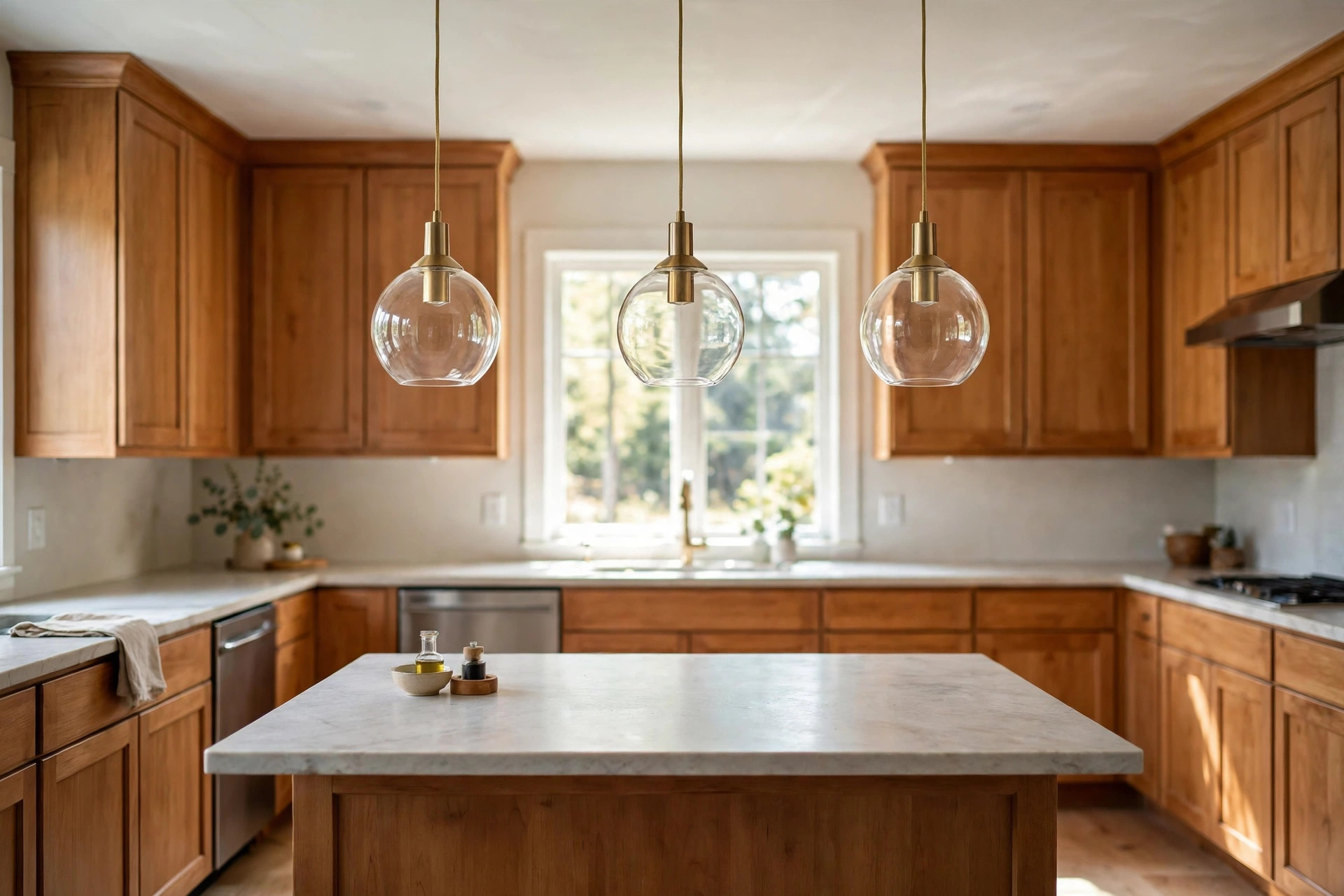

When shoppers look for kitchen island pendants for sale usa, they often want the same thing: a light that looks good, gives enough light for work, and fits the budget. A pendant light hangs from the ceiling on a cord or rod. It throws light down on the island below. Many American kitchens use two or three of them in a row. This setup is popular because it is simple and it works well.
This guide will help you pick the right set. It covers the types you will find for sale, the prices you can expect, how to measure for size, and how to keep the lights in good shape. It also points you to places where you can read more. By the end, you should feel sure about what to buy and why.
Why Island Pendants Matter
The kitchen island is often the busiest spot in the house. People chop food there. Children do homework there. Guests gather around it with drinks. Good light makes all of this easier and safer. A dim kitchen makes knife work risky. A harsh light makes the room feel cold. Pendant lights sit in the middle ground. They give clear task light where it is needed most.
They also shape the look of the room. The lights draw the eye the moment a person walks in. A row of clear glass shades gives a light, open feel. Dark metal shades give a more classic or farmhouse look. In this way, the lights act like jewelry for the kitchen. Small changes in shape or finish can change the whole mood.
Many buyers search for kitchen island pendants for sale usa when they remodel or build a new home. Contractors in the United States hang these lights in nearly every new kitchen with an island. If you plan to sell your home one day, fresh pendant lights can make the kitchen look new for a modest cost. Real estate agents often point out good lighting as a selling point.
What to Look for When You Buy: Kitchen Island Pendants for Sale Usa
Size and Number
Size matters more than most shoppers think. A pendant that is too small looks lost over a big island. One that is too big crowds the space and blocks sight lines. As a rule of thumb, the total width of your pendants should be about two thirds of the island length. For an eight-foot island, three pendants of about ten to twelve inches wide work well. For a shorter island of five or six feet, two medium pendants may be enough.
Height is just as important. The bottom of the shade should hang about thirty to thirty-six inches above the island top. This puts the light where the work happens. It also keeps the shades out of eye level for most adults. If the ceiling is very high, longer rods can bring the lights down to the right height. Most lights sold in stores come with cords or rods that can be cut shorter during install.
Style and Finish
Styles run from old farmhouse to clean modern. Glass shades let light spread in all directions. They make the kitchen feel open. Metal shades push the light down in a focused cone. That is good for task work but can leave the sides darker. Fabric shades give a soft glow. They suit dining spots more than work spots.
Finishes should match the rest of the room. Brushed nickel and chrome fit modern kitchens. Matte black fits farmhouse and industrial styles. Brass and gold tones have come back in style in recent years. They add warmth. A helpful buying guide for kitchen island pendants can walk you through style choices in more depth if you want more ideas.
Bulbs and Light Quality
Check what bulb the pendant takes before you buy. Many modern pendants use LED bulbs or have built-in LED parts. LEDs use less power and last for years. Older designs use standard bulbs. These are cheap to replace but use more power.
Look at the color of the light too. It is measured in kelvin. A warm light of about 2700 kelvin feels like an old incandescent bulb. A neutral light of about 3000 to 3500 kelvin is a common choice for kitchens. It shows food colors well. Very cool light above 4000 kelvin can feel like an office. Most buyers pick something in the middle range. Dimmable lights are worth the extra cost. They let you turn the lights low for dinner and high for cooking.
Types of Pendant Lights on the Market
Single bulb pendants are the most common kind. One shade, one bulb, hung alone or in a row. They suit most islands. Multi-light pendants hold two or three bulbs in one long fixture. They give even light with fewer ceiling hookups. This helps when the ceiling only has one or two wire boxes.
Mini pendants are small shades, often six to eight inches wide. They look best in groups of three or four. Large pendants, often called statement pendants, can be eighteen inches wide or more. One or two of these can fill a wide island. Drum pendants have a wide, round shade that spreads light softly. Globe pendants are round glass balls that fit modern homes.
Some shoppers like to mix lighting types in one kitchen. For example, pendants over the island pair well with a chandelier over the table. If you are planning both, a buying guide for dining room chandeliers may help you match the two styles. Others add track lights for extra spots of light. You can find kitchen track lighting deals near me if you want to compare that option side by side.
Where to Shop and What They Cost
Stores across the United States sell kitchen island pendants for sale usa in every price band. Big home improvement stores like Home Depot and Lowe’s carry wide ranges in their lighting aisles and on their websites. Specialty lighting stores such as Lamps Plus and Lumens focus on design and offer more choices in higher styles.
Online marketplaces also sell them. Prices change often, so compare before you buy. Clearance sections and holiday sales can cut prices by a third or more. Some buyers save money by buying open-box or floor models at local stores.
Cost runs in clear tiers. Basic mini pendants start near thirty dollars each. Mid-range glass or metal pendants run from eighty to two hundred dollars each. Designer pieces from well-known brands can run three hundred to six hundred dollars each or more. A set of three mid-range pendants often lands between three hundred and six hundred dollars total.
Do not forget the install cost. If a wire box is already in the ceiling, a handy homeowner can hang a pendant with basic tools. If new wiring is needed, an electrician may charge one hundred fifty to three hundred dollars per light. That cost can double the project budget. Plan for it.
Care and Upkeep
Pendant lights need little care, but a few habits keep them bright. Dust the shades once a month. Dust cuts light output more than most people expect. Glass shades can be wiped with a damp cloth and mild soap. Metal shades need only a dry or slightly damp cloth. Harsh cleaners can strip the finish.
Check the bulbs once or twice a year. LEDs last a long time, but they do burn out. When a bulb dies, replace it with the same type and brightness the maker suggests. Using a stronger bulb than the rating allows can overheat the socket. Keep the fixture ratings in mind.
If a cord or rod shows wear, fix it soon. Frayed cords are a fire risk. Most makers sell spare parts. For built-in LED fixtures, the light source may not be replaceable. In that case, the whole fixture must be swapped when the light dies. Ask about this before you buy. It matters for long-term cost.
Safety Notes
Safety comes first with any ceiling light. Turn off the power at the breaker before you touch any wiring. Test the wires with a voltage tester. Do not trust the wall switch alone.
Only buy lights that carry a safety mark from a recognized test lab. Marks like UL or ETL show that the light passed basic safety tests. Avoid cheap imports with no safety mark. The Consumer Product Safety Commission posts recalls of unsafe lighting products, so it is worth a quick check before you buy.
Keep pendants away from water sources. Lights over an island with a sink should be rated for damp areas if steam rises near them. Most standard pendants are rated for dry areas only. Read the label. Hang lights high enough that tall users will not hit their heads. Thirty to thirty-six inches above the counter is the common rule.
The U.S. Department of Energy offers plain advice on home lighting choices and safety. The ENERGY STAR program marks lights that meet set efficiency standards. A review site like The Spruce also covers pendant safety tips in its lighting guides. Bulb makers like Philips publish guides on safe bulb use and proper ratings.
Frequently Asked Questions
How many pendants do I need over my island?
It depends on island length. For islands up to six feet long, two pendants work well. For islands of seven to nine feet, three pendants are common. For very long islands over ten feet, four small pendants give even light. Space them evenly, about twenty-four to thirty inches apart.
How high should pendants hang above the island?
Most guides say thirty to thirty-six inches from the island top to the bottom of the shade. If the ceiling is over ten feet high, add about three inches of height for each extra foot of ceiling. This keeps the light at a useful level.
Can I install pendant lights myself?
If a wire box already exists in the ceiling, many homeowners do the job with basic tools and care. Turn off the breaker first. Follow the maker instructions step by step. If there is no wire box, or if you must run new wire through the ceiling, hire a licensed electrician. It is safer and often required by local rules.
Are LED pendants better than ones with replaceable bulbs?
LEDs win on power use and life span. A good LED can last ten years or more. The trade-off is that built-in LEDs cannot be swapped when they die. You replace the whole fixture. Pendants with standard sockets let you change bulbs cheaply and try new bulb types. Both are fine. Pick based on how long you plan to keep the lights.
What is the best light color for a kitchen island?
Most buyers pick 3000 to 3500 kelvin. This range shows food in true colors and feels bright but not cold. Warmer light at 2700 kelvin feels cozy but can make whites look yellow. Cooler light above 4000 kelvin looks sharp but can feel harsh at night. Dimmable bulbs let you adjust the mood.
Do pendant lights go out of style fast?
Styles change, but simple shapes last. Clear glass and plain metal pendants have sold well for decades. Bold colors and unusual shapes date faster. If you want a look that holds up, pick a simple design in a finish that matches your kitchen hardware.
A Short Final Word
Buying kitchen island pendants for sale usa does not need to be hard. Measure your island first. Pick a size that fits the space. Choose a style that matches the room. Check the bulb type and the safety mark. Compare prices across a few stores before you pay. A little care at the start gives you lights that work well and look good for years.
References
ENERGY STAR. (n.d.). Energy efficient products. https://www.energystar.gov Lamps Plus. (n.d.). Lighting and home decor. https://www.lampsplus.com Lowe’s. (n.d.). Home improvement products. https://www.lowes.com Lumens. (n.d.). Lighting and ceiling fans. https://www.lumens.com Philips. (n.d.). Lighting products. https://www.philips.com The Home Depot. (n.d.). Home improvement products. https://www.homedepot.com The Spruce. (n.d.). Home and garden advice. https://www.thespruce.com U.S. Consumer Product Safety Commission. (n.d.). Product safety information. https://www.cpsc.gov U.S. Department of Energy. (n.d.). Energy efficiency and renewable energy. https://www.energy.gov
Was this guide helpful?

About Robert Taylor
The My Garden US editorial team writes practical, in-depth home and garden guides for American homeowners — tested advice, no fluff.
You May Also Like
Kitchen Track Lighting: How to Find the Best USA Online Deals
July 9, 2026 0 views
Reading Floor Lamps: A Guide for American Homes
October 2, 2026 0 views
Outdoor Wall Lanterns Texas Homes USA: A Practical Buying Guide
June 5, 2026 0 views