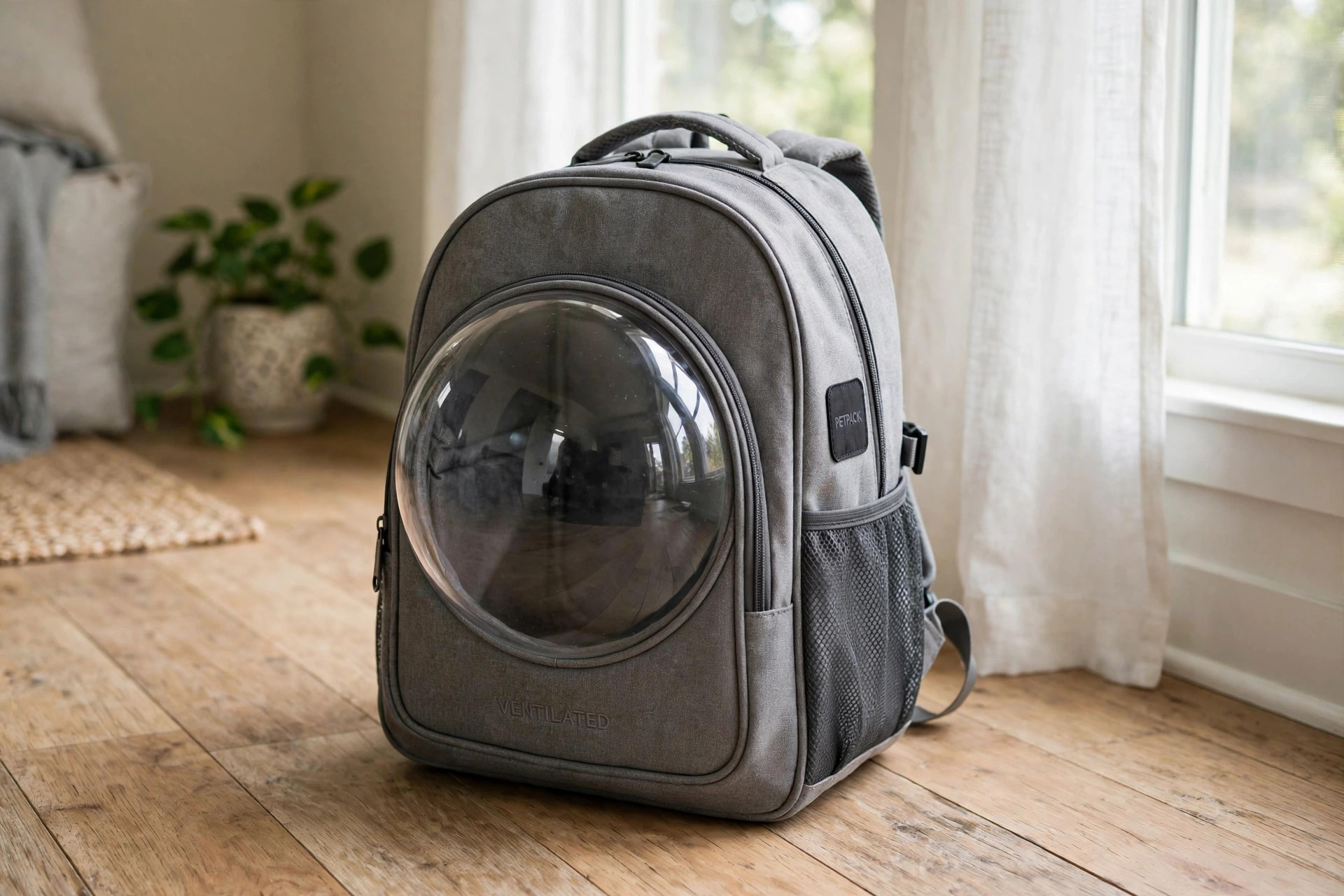

Many cat owners want to take their pet along on walks, trips to the vet, or short errands. A best cat carrier backpack with bubble window makes this easy. It sits on the back like a school bag. It has a clear round window in the front. The cat can look out through it. The owner can move about with both hands free.
These carriers have grown popular in recent years. They suit small cats. They suit short trips. They are not meant for long travel days. This guide explains what they are, why people use them, what to look for, and how to keep them clean and safe.
Why a Cat Carrier Backpack Matters
Cats feel stress in new places. Loud sounds, strange smells, and strange dogs can frighten them. A good carrier gives the cat a closed, safe space. The cat can hide. The cat can also peek out when it feels brave.
The bubble window helps with this. It is a hard, clear dome set in the front of the pack. Some packs also have mesh sides. The cat can watch the world pass by. Many cats seem calmer when they can see out. They do not feel trapped in the dark.
A backpack is easier than a hand-held box. It spreads the weight on the shoulders. It leaves the hands free for doors, keys, and leashes. Many owners add a crate pad for anxious pets inside the pack for extra comfort. A well-made backpack often costs less than a hard-shell carrier, and many pet retailers now list several models side by side so owners can compare.
Backpacks also work for city life. On a bus or a train, the pack sits close to the body. The cat stays near the owner. That closeness lowers stress for both.
What a Bubble Window Actually Does
The bubble is made of clear plastic. It bulges outward. This gives the cat more head room. The cat can press its face near the dome and look left, right, and forward. Some windows are tinted. Some are fully clear. Some have a cover that can slide shut when the cat wants darkness.
The window must be strong. It should not crack if the pack tips over. It should lock into the pack frame with no wide gaps. A cat can push against a weak window and escape.
What to Look for When You Choose: Best Cat Carrier Backpack with Bubble Window
Buying a carrier is like buying a shoe. The fit must be right. Use the checklist below.
Size and Weight Limits
Read the size chart before you buy. Most packs suit cats up to 14 or 15 pounds. A large cat needs a roomier pack. The cat should be able to stand, turn, and lie down.
Measure your cat from nose to tail. Compare that length to the inside length of the pack. If your cat is a Maine Coon or another large breed, a standard pack may be too small. Pet supply sites such as Petco list several roomy models, but always test the fit at home first.
Ventilation
Air flow matters most. Look for mesh panels on the sides, front, or top. The pack should have at least three vent areas. The bubble window itself does not let air in. Mesh does the work.
On warm days, vents keep the cat cool. A pack with only one vent hole can grow hot inside. Never use a pack with poor air flow in summer.
Straps and Back Support
The straps should be wide and padded. Narrow straps dig into the shoulders. A chest strap and a waist belt spread the load. A padded back panel keeps the frame from pressing into the spine.
Try the pack on at home with some weight in it. Walk around for ten minutes. Your shoulders should not ache.
Doors and Openings
A good pack has more than one opening. A top opening lets you lower the cat in from above. A front opening lets the cat walk in by itself. Zippers should be strong and smooth. Two-way zippers let you open just a crack for air.
Look for locking zippers. Some cats learn to nose a zipper open. A small clip or lock keeps them shut.
The Bubble Window Itself
Check the dome with your own eyes if you can. It should be clear, not cloudy. It should be free of sharp edges inside. Some domes can be swapped for a mesh panel. That option is useful on hot days or when the cat wants more air.
Some packs have the window on the side instead of the front. Front windows are best. The cat faces the direction of travel.
Types and Options
There is no single standard design. The market offers several styles.
The Classic Dome Pack
This is the most common type. It has one large bubble in the front and mesh on the sides. It is light. It is simple. It suits cats under 12 pounds.
The Cabin With Mesh Sides
Some packs have no bubble at all in front. Instead they use large mesh panels. A smaller bubble may sit on the side. These packs breathe better. They suit warm weather. They also suit shy cats that want less open view.
The Rolling Hybrid
A few models add wheels and a pull handle. The pack can roll like small luggage or wear on the back. These cost more. They weigh more too. They suit people who walk through airports.
The Airline Style Pack
Some packs are made to fit under an airplane seat. They have a flat top and a soft frame. They still include a bubble window. Check with your airline before you fly. Rules change often.
Advice from groups like the ASPCA travel resources reminds owners to test any new carrier at home for several days before a trip. Guidance on keeping pets safe and calm is also covered in PetMD guides on cat travel, which discuss how carriers reduce escape risk.
Cost and Price
Prices range wide. A basic model costs about 25 to 35 dollars. A mid-range pack costs 40 to 60 dollars. Premium packs with better frames, padding, and vents cost 70 to 110 dollars or more.
Higher price often buys better zippers, thicker padding, and stronger mesh. It does not always buy a bigger size. Read the size chart first. Price is no guide to fit.
Watch for extra costs. Replacement bubble domes cost money. Some brands sell them. Some do not. A washable fleece pad is often sold as an add-on. It is worth buying.
Sales happen often. Major retailers mark these packs down during holiday weekends. Price trackers on major pet retailers such as Chewy and PetSmart help buyers spot real deals.
Care and Upkeep
A carrier gets dirty fast. Fur, litter dust, and the odd accident build up. Clean the pack often.
Remove the pad and wash it in warm water with mild soap. Let it air dry. Wipe the inside walls with a damp cloth. Use pet-safe wipes for quick cleaning between trips. Avoid strong bleach. The smell can upset the cat.
The bubble dome scratches over time. Wipe it with a soft cloth and warm water only. Rough sponges leave marks. A cloudy dome still works, but a clear one helps the cat see out.
Check zippers every month. Pull them along the full track. If a zipper sticks, rub a dry bar of soap along the teeth. Check the straps too. Look for frayed edges. Replace worn straps or retire the pack.
Store the pack open when not in use. Leave it out in the living room. Put a soft blanket inside. Let the cat sleep in it. A cat that knows the pack will enter it without fear on travel day.
If you want extra comfort for longer rides, pair the pack with a soft calming pad for anxious pets — many owners use a thin pad inside the backpack to give the cat a familiar scent.
Safety
Safety is the top duty of any carrier. Keep these rules in mind.
First, secure the cat before you leave the house. Zip every opening. Lock the zippers. Place the pack on your back before you open any outside door.
Second, never leave the cat in the pack in a hot car. Cars heat fast. Even a few minutes can be fatal. Take the cat with you or leave the cat home.
Third, use a harness inside the pack on busy streets. Clip a short leash from the harness to the inside loop of the pack. If a zipper fails, the cat cannot run into traffic.
Fourth, watch the weather. Do not use the pack in heavy rain unless it has a rain cover. Do not use it in heat above 85 degrees for long walks. Cats overheat faster than people think.
Fifth, check the pack before each trip. Look at the bubble mount. Look at the straps. Look at the mesh for holes. A cat can slip through a small tear.
Product safety rules for pet carriers are part of general pet product guidance. The CPSC pet product information covers safety standards that apply to many pet goods sold in the United States. Review sites such as Consumer Reports pet products also test and rate carriers.
FAQ
How long can a cat stay in a backpack carrier?
Keep trips short. One to two hours is a good limit for most cats. Offer water on longer outings. Let the cat out in a safe room as soon as you arrive.
Will my cat like the bubble window?
Many cats like it. Some do not. Test at home first. Put the cat in the pack in your living room. Watch for signs of fear, such as flat ears or loud crying. If the cat seems calm, try a short walk. If not, give it more time.
Are these packs safe for kittens?
Yes, if the kitten is old enough to be away from its mother and the pack fits. Very small kittens can slip through wide mesh. Choose a pack with fine mesh for kittens under 8 weeks.
Can I take a bubble backpack on a plane?
Some models fit under the seat. Many do not. Airlines set their own rules for size and type. Call the airline before you book. Bring a backup plan.
How do I stop the dome from fogging up?
Fog comes from the cat’s breath in cool air. Wipe the dome with an anti-fog cloth made for glasses. Leave a mesh panel open a crack for air flow. This helps a lot.
What is the weight limit I should follow?
Most packs list a limit of 14 to 18 pounds. Stay under it. An overweight pack strains the straps and the zippers. It also tires your back. Weigh your cat on a home scale before you buy.
More background on cat care and travel safety is available through The Spruce Pets and the AKC pet care resources, which both publish plain guides for owners.
A Short Final Word
The best cat carrier backpack with bubble window is the one that fits your cat, vents well, and holds up trip after trip. The bubble window is a nice feature, but it is not the whole story. Straps, zippers, mesh, and size matter just as much.
Take time to test the pack at home. Let the cat learn that the pack is a safe place. Keep trips short at first. Clean the pack often. With care, a good backpack can make walks, vet visits, and short trips easier for both you and your cat.
For longer outdoor stays, some owners combine the backpack with other gear, such as a dog tie out cable for camping and yard setup used at rest stops, or a dog swimming pool for backyard summer fun for cooling off at home. Each trip is its own plan. Pack for the day you have.
References
American Kennel Club. (n.d.). Dog care and training resources. https://www.akc.org ASPCA. (n.d.). Pet care and animal welfare resources. https://www.aspca.org Chewy. (n.d.). Pet supplies. https://www.chewy.com Consumer Reports. (n.d.). Product reviews and ratings. https://www.consumerreports.org Petco. (n.d.). Pet supplies and services. https://www.petco.com PetMD. (n.d.). Pet health information. https://www.petmd.com PetSmart. (n.d.). Pet supplies and services. https://www.petsmart.com The Spruce Pets. (n.d.). Pet care guides and product reviews. https://www.thesprucepets.com U.S. Consumer Product Safety Commission. (n.d.). Product safety information. https://www.cpsc.gov
Was this guide helpful?

About Lisa Anderson
The My Garden US editorial team writes practical, in-depth home and garden guides for American homeowners — tested advice, no fluff.
You May Also Like

Outdoor Dog Kennel with Welded Wire Panels: A Complete Buyer’s Guide
April 2, 2026 0 views
Dog Treadmill for Indoor Exercise Rainy Days
March 30, 2026 0 views
Cat Harness and Leash Set for Outdoor Walks: A Complete Guide
September 7, 2026 0 views