Florida is known for warm weather, but winter nights can still turn cold. Even in the Sunshine State, the temperature on a December night can drop into the forties or lower. A lanai, a patio, or a backyard deck that felt fine in October can feel cold and unused by January. This is why many homeowners decide to buy infrared outdoor heaters online in Florida rather than wait for cold air to return. Online shopping gives you a wide range of models, clear price comparisons, and home delivery. This guide explains how infrared heaters work, what to look for, what they cost, and how to stay safe.
Why It Matters: Florida Winters Are Milder, But Not Warm
Many people think Florida never gets cold. The truth is that most parts of the state see at least a few chilly months. North and central Florida can see frost in winter. South Florida gets cool fronts that bring night temperatures down to the fifties or even the forties. These cool nights last from December through February, and sometimes into March.
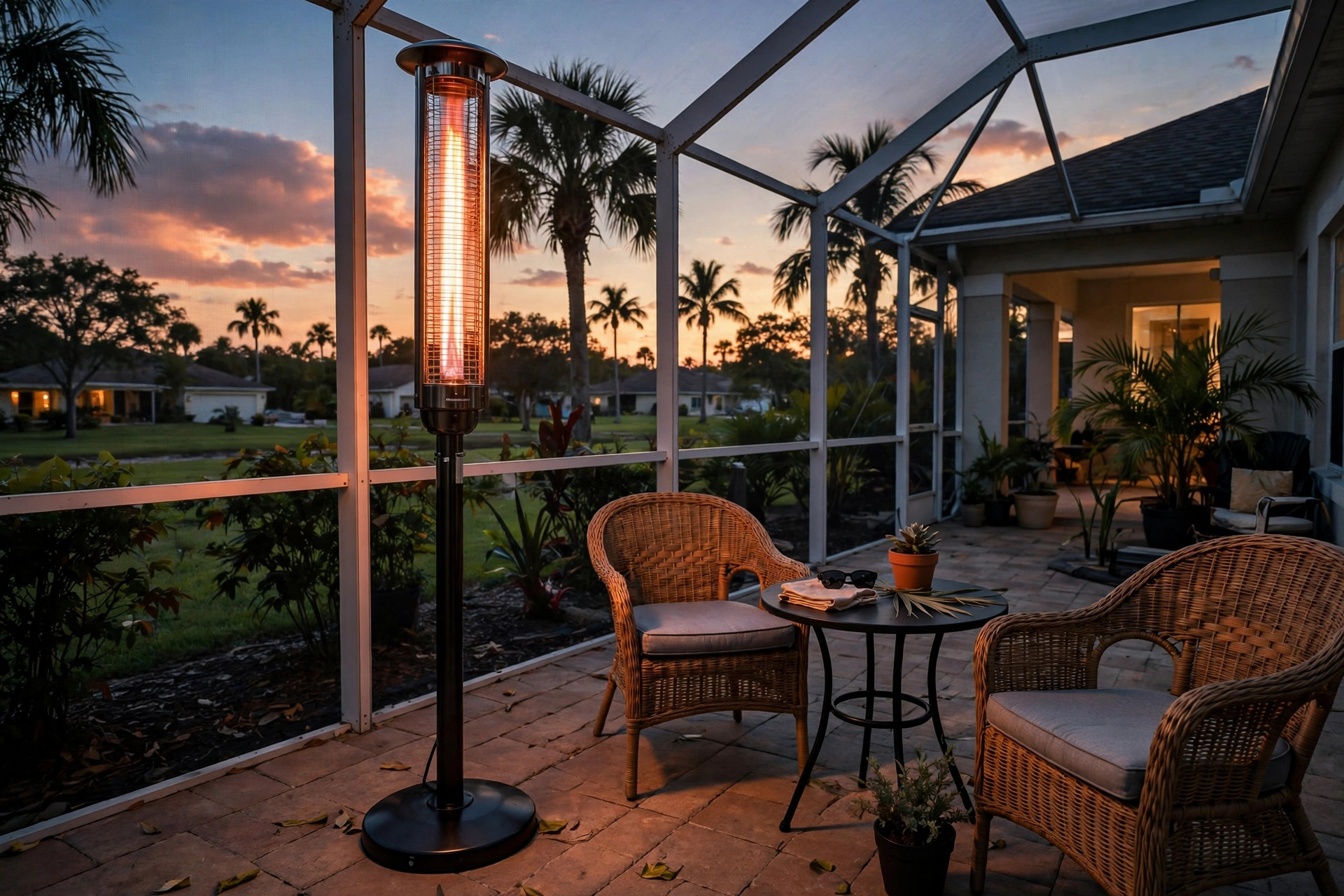
An outdoor heater lets you keep using your outdoor space during these months. Families in Florida often gather on the patio, by the pool, or under the lanai screen in the evening. A good infrared heater keeps everyone comfortable. It also helps with outdoor dining and holiday gatherings. A patio heater can turn a cold night into a pleasant evening outside.
There is also a practical reason to buy infrared outdoor heaters online in Florida early. When a cold front is on its way, stores sell out fast. Shopping online gives you access to more stock. You can order before the rush and have the heater ready when you need it. A heater bought in November can make a real difference in January.
How Infrared Heaters Work: Buy Infrared Outdoor Heaters Online in Florida
Infrared heaters do not warm the air the way a furnace does. They use infrared radiation, a form of light energy that warms people and objects directly. The sun works in a similar way. When sunlight hits your skin, you feel warm even if the air is cool. An infrared heater does the same thing on a small scale.
This matters for outdoor use in Florida. Wind moves air around, so heaters that warm the air lose much of their heat outdoors. An infrared heater does not depend on warm air. It sends heat straight to chairs, tables, and people. This is why infrared patio heaters are popular in open lanais, pool decks, and outdoor dining areas. They work well even when there is a breeze.
What to Look For: How to Choose the Right Heater
Shopping for infrared heaters online means you cannot touch the product before you buy. Good research fills that gap. Read product pages with care. Look for clear facts about size, power, and safety. The advice from trusted guides like This Old House can help you compare models and understand what the numbers mean.
Electric, Propane, or Natural Gas
Infrared outdoor heaters come in three main fuel types.
Electric infrared heaters are the most common choice for Florida homes. They plug into a standard outlet or a higher-voltage circuit. They are quiet, clean, and easy to use. You just mount or place the unit and turn it on. Many Florida shoppers choose electric models because they do not need a gas line. Browse the Home Depot site to see how many electric models are made for patios and lanais.
Propane infrared heaters run on propane tanks. They give strong heat and can be moved around the yard. They are a good pick if you have no outdoor outlet near the patio. The cost of propane adds up over time, so think about how often you will use the heater.
Natural gas infrared heaters connect to a home gas line. They cost less to run than propane. They must stay in one place, so they are best for a patio that will not change. Installation often needs a plumber or a gas fitter.
Heating Area and Power
Check how much space the heater can warm. Product pages list this in square feet. A small tabletop heater may warm 100 square feet. A large freestanding unit may warm 200 to 400 square feet. Measure your patio or lanai first. A heater that is too small will leave people cold at the edges.
For electric models, look at the wattage. Common sizes are 1,500 watts, 3,000 watts, and 6,000 watts. Higher wattage means more heat and a higher electric bill. Most home outlets in the United States are rated for 1,500 watts on a standard circuit. Larger units may need a 240-volt line and a licensed electrician. The energy experts at the U.S. Department of Energy offer clear guidance on safe electric loads in the home.
Mounting Style
Infrared heaters come in several mounting styles.
Freestanding heaters stand on the ground. Some look like tall lamps with a wide head. They are easy to move and need no installation. They take up floor space, which matters on a small lanai.
Wall-mounted heaters attach to a wall or a post. They save floor space. They need to be placed high enough that no one can touch the hot surface.
Hanging or ceiling-mounted heaters hang from a patio roof or a lanai ceiling. They warm a wide area below them. They are a smart pick for covered patios in Florida.
Tabletop heaters are small and sit on a table. They warm only the people near the table. They are best for small dining sets.
Safety Features
Safety matters more than any other feature. Look for a heater that shuts off if it tips over. This is called a tip-over switch. For gas models, look for an oxygen depletion sensor. This sensor shuts off the gas if the air gets low on oxygen. Look for a sturdy base that will not blow over in wind.
Check that the heater is listed by a testing lab such as UL or ETL. A listed product has been tested for safety. Avoid any heater with no safety listing. Consumer Reports publishes advice on safe outdoor heating products.
Types of Infrared Outdoor Heaters
The main types differ in fuel and shape, but each has a place in a Florida home.
Quartz electric heaters use a quartz tube that glows when hot. They heat up fast and give a warm light. They are common in wall-mounted and hanging models.
Carbon fiber electric heaters use carbon fiber elements. They give soft, even heat. They cost a bit more than quartz models. Many buyers like them for covered patios.
Ceramic infrared heaters use ceramic plates. They are often found in larger units. They give steady heat over a wide area.
Propane mushroom heaters have a tall pole and a wide round head. The head spreads heat in a circle. You see these at restaurants. They work well for open decks but use a lot of propane.
Box or tower propane heaters are newer. They are slim and take up less space. They are a good fit for small patios.
If you are shopping with a fireplace maker in mind, companies such as Napoleon and Heatilator make outdoor heating products and publish useful buying guides on their homepages.
Cost and Price
Prices for infrared outdoor heaters vary a lot. A small electric tabletop model may cost 60 to 150 dollars. A mid-size electric wall-mounted heater may cost 150 to 400 dollars. Large freestanding electric or propane units may cost 400 to 1,200 dollars or more.
Running costs matter too. Electric heaters add to the power bill. A 1,500-watt heater used for four hours a night may cost around 60 to 90 cents per night, based on average Florida electric rates. A 6,000-watt unit costs much more to run. Propane heaters cost more per hour of heat. A standard 20-pound propane tank may last 8 to 10 hours on high in a large heater. Check local propane prices to work out the true cost.
There may be extra costs as well. A 240-volt electric heater may need new wiring. A natural gas heater may need a gas line run to the patio. Get quotes from local contractors before you buy. Compare listings on retailer sites like Lowe’s and Wayfair to see the full price range for models like the ones you want.
Care and Upkeep
Infrared heaters need little care, but a few habits will keep them working well for years.
Keep the heater clean. Dust and salt air can build up on the reflector and the heating element. Florida’s coastal air is full of salt. Wipe the unit with a soft dry cloth every few weeks during the season of use. Do not use water on electric parts.
Store the heater in the off season. If you use a portable heater only in winter, move it to a garage or a shed in spring. Cover it to keep dust off. For wall-mounted units, turn off the breaker or the gas valve when the season ends.
Check cords and hoses before each season. Look for cracks, frayed wires, or loose fittings. Replace damaged parts before you use the heater. For propane models, check the hose and the regulator for leaks. Use soapy water on the connections. Bubbles mean there is a leak. Fix it before you light the heater. Home repair guides from Family Handyman walk through these basic checks step by step.
Keep the area around the heater clear. Do not stack boxes, pool toys, or patio cushions near a hot unit. Give the heater the clearance the manual calls for, often three feet or more on all sides.
Safety: The Rules That Matter Most
Outdoor heaters are safe when used with care. Most accidents come from simple mistakes. Follow these rules every time.
First, never use an outdoor heater indoors. Gas heaters make carbon monoxide, a gas you cannot see or smell. It can kill. Electric heaters can start fires in closed rooms. Use outdoor heaters only in open or well-vented spaces. The U.S. Environmental Protection Agency publishes clear facts on carbon monoxide risks in the home.
Second, keep children and pets away from hot surfaces. The head of an infrared heater gets very hot. Place freestanding units where no one will bump into them. Mount wall units high enough to be out of reach.
Third, keep flammable items far from the heater. This includes paper, fabric, dry leaves, and cleaning chemicals. Clean leaves off the patio before you run the heater. Dry leaves catch fire fast.
Fourth, turn the heater off when you leave. Do not leave a heater running while no one is outside. Make it a habit to switch it off when you go in for the night.
Fifth, follow the manual. Every model has its own rules for clearance, fuel, and wiring. The manual is the final word. Keep it in a safe place.
For general outdoor living safety tips, The Spruce has a large library of guides written for homeowners.
FAQ
Do infrared heaters work well in Florida’s humidity?
Yes. Infrared heaters warm people and objects, not the air. Humidity does not block infrared heat the way wind blocks warm air. Salt air near the coast can wear down metal parts over time, so pick a model rated for outdoor or coastal use and wipe it down often.
Should I buy electric or propane if I buy infrared outdoor heaters online in Florida?
Most Florida homeowners pick electric. Electric heaters are easy to install, need no fuel tank, and work well on covered lanais. Propane is a good pick if you have no outlet near the patio or want to move the heater around the yard. Think about running costs before you decide.
How big a heater do I need for a standard lanai?
Measure the space. A lanai of 200 square feet needs a heater rated for at least 200 square feet. Many shoppers buy two smaller units and place them at opposite ends. This gives more even heat than one large unit in the center.
Can I install a wall-mounted infrared heater myself?
Small plug-in models are easy to mount with basic tools. Follow the manual and mount the unit at the height it calls for. Larger 240-volt models need a licensed electrician. Natural gas models need a gas fitter. When in doubt, hire a professional.
When is the best time to buy infrared outdoor heaters online in Florida?
Late summer and early fall are best. Stock is high and prices are often lower. If you wait until a cold front is in the forecast, popular models sell out. Order early so the heater is in place before the first cold night.
Do I need a permit to install an outdoor heater?
It depends on the type. Plug-in electric heaters and portable propane heaters usually need no permit. Hard-wired electric units and natural gas lines often do. Check with your city or county building office before you start.
A Short Final Word
A cold night in Florida should not keep you indoors. The right infrared heater brings the patio back to life in winter. Take time to compare types, sizes, and prices. Read the safety rules and follow them. When you buy infrared outdoor heaters online in Florida, you get choice, clear prices, and delivery to your door. Order before the cold arrives, set the heater up with care, and enjoy your outdoor space all year long.
For related reading, see our guides on best fireplace grates for southern states, premium fireplace screens with doors buying guide, and top rated chimney inspection services for homeowners.
References
Consumer Reports. (n.d.). Product reviews and ratings. https://www.consumerreports.org Family Handyman. (n.d.). DIY home repair and maintenance. https://www.familyhandyman.com Heatilator. (n.d.). Fireplaces and fireplace products. https://www.heatilator.com Lowe’s. (n.d.). Home improvement products. https://www.lowes.com Napoleon. (n.d.). Fireplaces, grills, and heating products. https://www.napoleon.com The Home Depot. (n.d.). Home improvement products. https://www.homedepot.com The Spruce. (n.d.). Home and garden advice. https://www.thespruce.com This Old House. (n.d.). Home renovation guidance. https://www.thisoldhouse.com U.S. Department of Energy. (n.d.). Energy efficiency and renewable energy. https://www.energy.gov U.S. Environmental Protection Agency. (n.d.). Protecting human health and the environment. https://www.epa.gov Wayfair. (n.d.). Furniture and home goods. https://www.wayfair.com
Was this guide helpful?

About Jennifer Lee
The My Garden US editorial team writes practical, in-depth home and garden guides for American homeowners — tested advice, no fluff.