
Introduction
This best electric fireplaces for living rooms buying guide was written for one simple reason. More American homes are adding electric fireplaces, and the choices are now wide. Sizes, styles, heat output, and flame effects differ from model to model. A good choice brings warmth and comfort for years. A poor choice wastes money and heats almost nothing. The following pages walk through what matters, step by step, so a buyer can shop with calm and clear judgment.
Why an Electric Fireplace Matters in a Living Room: Best Electric Fireplaces for Living Rooms Buying Guide
A living room is the heart of the house. Families gather there in the evening. Friends sit there on cold nights. A fire brings a room to life in a way no lamp can match. For many decades, this comfort came only from wood or gas. Both had costs. Wood needs a chimney, hard work, and steady fuel. Gas needs a gas line and a trained installer.
An electric fireplace changes the math. It needs only a standard wall outlet. It can be placed against almost any wall. It can be mounted like a picture. It can sit inside an old brick fireplace that is no longer used. It can stand in a wooden cabinet that looks like fine furniture. This freedom is the main reason electric fireplaces have grown so fast in popularity.
There is also the question of use. Many buyers want the look of fire more than the heat. Electric models serve this wish well. The flame can run with or without heat. On a mild spring evening, the room stays cool while the fire glows. On a cold January night, the heater runs and warms the room. This split use is a feature that wood and gas cannot match.
How to Choose: The Points That Count
Choosing among the best electric fireplaces for living rooms takes care. The list below covers the points that matter most. Read each one before comparing models.
Measure the Space
Measure the wall where the unit will stand. Note the width, the height, and how far the unit can reach into the room. Wall-mounted units save floor space but need a wall that can hold their weight. Freestanding units need a clear floor area. A small living room calls for a compact unit. A large great room can hold a wide linear model. Always measure twice. A common error is buying a unit that dwarfs the wall or one that looks lost beside a large sofa.
Check the Heat Output
Electric fireplaces list heat in BTUs. Most living room models give between 4,000 and 5,200 BTUs, which warms about 400 to 1,000 square feet depending on the model and the room. A drafty room with high ceilings needs more power. A small, well sealed room needs less. Do not buy for looks alone. A unit that cannot heat the room will disappoint in winter. For large living rooms, some buyers add a second heat source, such as the units described in our guide to affordable infrared outdoor heaters buying guide, which can supplement heat on the coldest nights.
Flame Realism
The flame is the heart of the purchase. Modern units use LED lights and mirrors to paint moving flames on a back screen. Some add ember beds of glowing logs or crystals. High end models use water vapor or holographic film for a deeper look. No electric flame fools the eye up close the way real fire does. But from across a living room, the best ones look warm and real. Buyers should watch video demos when they can, and read buyer notes about realism before choosing.
Style and Finish
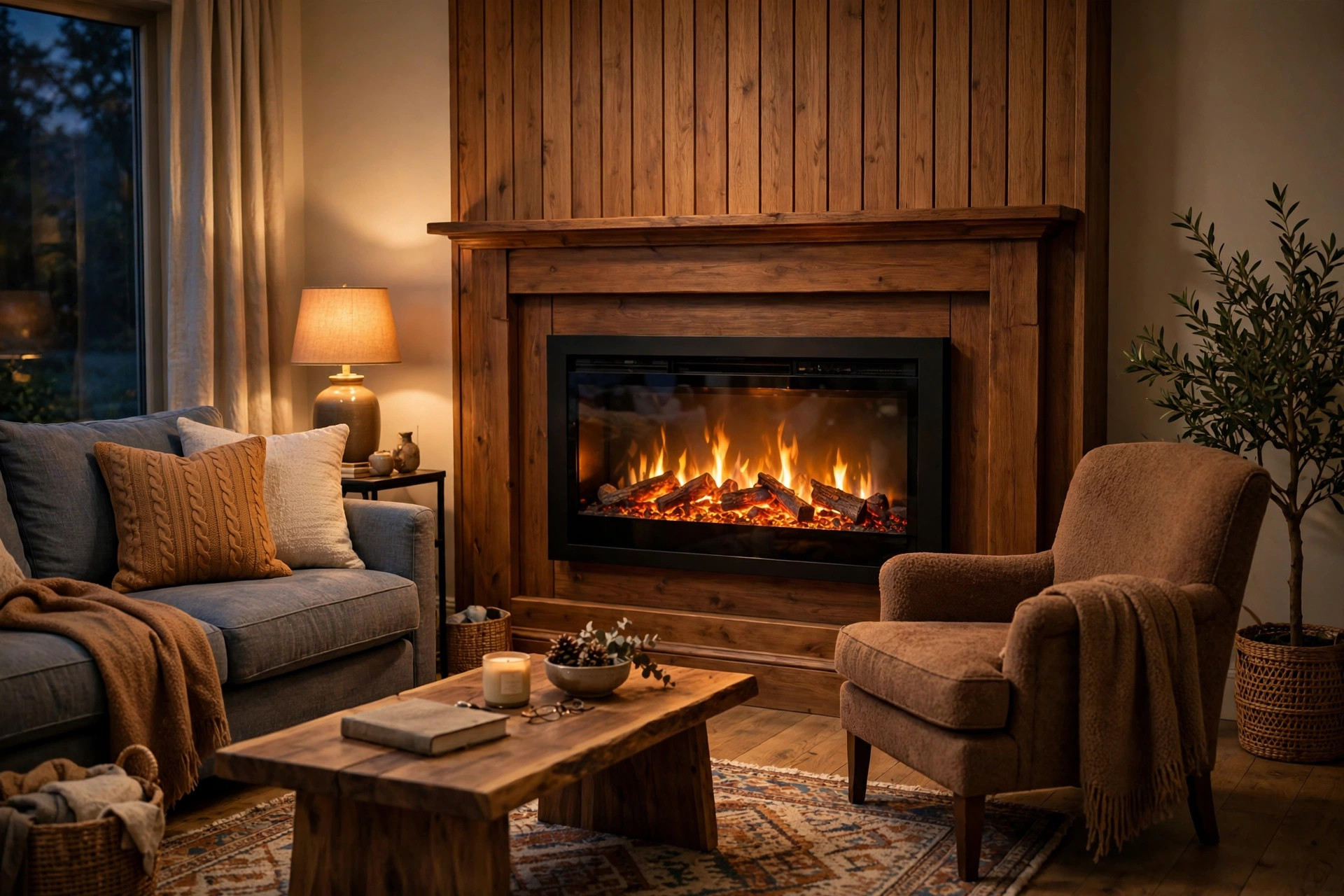
The unit must fit the room. Black glass suits a modern living room. A wooden mantel suits a classic room. White finishes suit bright coastal rooms. Stone-look surrounds suit rustic rooms. Many buyers pair their unit with a mantel cabinet for a furniture look. If that path appeals, our article on top rated electric fireplace mantels for american homes walks through mantel choices in detail.
Safety Features
Look for a unit with a tip-over switch if it stands on the floor. Look for cool-touch glass, which matters in homes with small children. Look for overheat protection and a timer that shuts the unit off after a set number of hours. A remote control is not a luxury; it lets the user shut the unit down from across the room without walking across a dark living room.
Installation Needs
Most units plug into a standard 120-volt outlet. Some large built-in units need a dedicated circuit or a 240-volt line. Check the manual before buying. Recessed units need a framed cavity in the wall, which is real carpentry work. Wall-mounted units hang on brackets, much like a heavy television. Freestanding units need nothing at all. When in doubt, hire an electrician for the outlet work.
Types of Electric Fireplaces for Living Rooms
Wall-Mounted Units
These hang flat on the wall, only a few inches deep. They suit modern rooms and small spaces. They are light enough for one strong person to hang, but the bracket must hit wall studs. The look is clean. The heat rises up the wall, so art hung above should be heat safe or set well away.
Recessed and Built-In Units
These sit flush inside the wall. The result looks like a true custom fireplace. The work is harder. It needs a framed opening, electrical work, and finish carpentry. Many homeowners install them during a remodel, when the wall is already open. The clean lines reward the effort.
Freestanding Units with Mantels
These look like classic wood furniture with a fire inside. They need no wall work. They plug in and run. They bring storage space on top of the mantel for books, lamps, and photos. They are the best pick for renters, since they move with the owner. Quality varies widely, so buyers should check the furniture build as well as the firebox.
Electric Stoves and Inserts
Electric stoves stand on legs and look like old wood stoves. Inserts slide into an existing fireplace opening to give new life to an old chimney. Both bring old-time charm to living rooms. Our page on freestanding electric stoves reviews and buying guide covers the stove style in more depth.
Cost and Price
Prices run wide. A simple small wall unit can cost around one hundred dollars. A mid-range freestanding unit with a wooden mantel often costs three hundred to eight hundred dollars. A large linear built-in with strong flame effects can cost one thousand to two thousand dollars or more. Custom units cost still more.
What drives the price? First, size. Wide units cost more than small ones. Second, flame realism. Water vapor and holographic flames add cost. Third, build. Solid wood cabinets cost more than pressboard. Fourth, brand and warranty length. A longer warranty is worth real money, because the heater and lights are the parts that fail first.
Running costs are modest. A 1,500-watt heater costs roughly twenty cents per hour to run at average United States electricity rates, though local rates differ. The flame alone, with no heat, costs only pennies per hour. Running the fire all evening in winter adds a few dollars to a monthly power bill. It costs far less than heating a whole house with a central furnace just to warm one room. Maintenance articles from Family Handyman note that zone heating with a small electric unit can trim central heating use, and their home heating guides give useful background on the practice.
Care and Upkeep
Electric fireplaces ask little. Dust the glass and the vents each month. Clean the glass with a soft cloth and a mild cleaner, never a harsh one. Check the air intake and outlet for dust, since blocked vents make the heater run hot and shut down. Vacuum the vents gently with a brush tool.
The LED lights last many years. When they fade, most brands sell replacement light parts or a new firebox. Keep the manual in a safe place so the part numbers are at hand. Do not pour water on the unit. Do not place candles, plants that need watering, or damp items on top of the unit. Keep paper, curtains, and cloth furniture at least three feet from the heat outlet. Storage and safety guides from This Old House give the same clearance rule for all home heaters, and it is worth heeding.
Safety
Electric fireplaces are among the safest hearth options. There is no open flame, no smoke, and no carbon monoxide. Still, rules apply. Plug the unit straight into a wall outlet, never into a power strip or an extension cord. Heavy heaters can melt cheap cords. The United States Environmental Protection Agency site at EPA carries clean-burning guidance for wood and pellet stoves; electric units avoid those smoke rules entirely, but the same care about placement and clearances applies to every heater.
Homes with children need extra care. Choose cool-touch glass. Use a child gate around a freestanding unit. Keep the remote out of reach so small hands cannot turn the heater on. Homes with pets need the same care; a cat that sleeps on top of a unit can block vents. For families with small children, pair the fireplace with proper barriers, as described in our guide to high efficiency childproof fireplace screens for american homes.
Never leave a heater running all night while the house sleeps. Use the timer. Never run it in a damp bathroom. Check the cord once a year for cracks or heat marks. If the unit smells hot or trips a breaker, stop using it and call the maker or an electrician.
Frequently Asked Questions
Do electric fireplaces really heat a living room?
Yes, within limits. A standard 1,500-watt unit warms a medium living room of four hundred to five hundred square feet well. Larger rooms or very cold days may need a second source of heat. The flame-only mode gives the look with no heat at all.
How much does it cost to run one each month?
Running the heater for four hours each evening at average United States rates costs roughly twenty-five to thirty dollars a month. Running only the flame costs almost nothing. Exact costs follow local power rates.
Can an electric fireplace be a main heat source?
No, not for a whole house. Electric fireplaces are zone heaters. They warm one room well. They are not a substitute for a furnace or a central heat pump in deep winter.
Are they safe to use around children and pets?
Yes, with care. Choose cool-touch glass, keep the cord out of reach, use the timer, and keep a barrier around floor units. Never leave a running heater where a child or pet is alone with it.
Will an electric fireplace raise the home value?
A built-in unit that looks like a real fireplace may add mild value, since buyers like fireplaces. A freestanding plug-in unit is personal property and moves with the owner, so it adds no value to the house itself.
Can one be mounted under a television?
Yes, many buyers do this. Keep enough space between the unit and the screen so heat does not harm the electronics. Check both manuals for clearance rules before mounting.
A Short Final Word
The best electric fireplaces for living rooms are the ones that fit the room, the budget, and the way the family lives. Measure first. Decide how much heat is needed. Choose the style that suits the room. Buy the safety features the home needs. Then enjoy the fire. For more shopping background, buyer reviews at Lowe’s and Home Depot show how real owners rate heat and flame quality, The Spruce keeps current roundups of popular models, and makers like Napoleon and Heatilator publish spec sheets that let buyers compare heat output model by model.
References
Family Handyman. (n.d.). DIY home repair and maintenance. https://www.familyhandyman.com Heatilator. (n.d.). Fireplaces and fireplace products. https://www.heatilator.com Lowe’s. (n.d.). Home improvement products. https://www.lowes.com Napoleon. (n.d.). Fireplaces, grills, and heating products. https://www.napoleon.com The Home Depot. (n.d.). Home improvement products. https://www.homedepot.com The Spruce. (n.d.). Home and garden advice. https://www.thespruce.com This Old House. (n.d.). Home renovation guidance. https://www.thisoldhouse.com U.S. Environmental Protection Agency. (n.d.). Protecting human health and the environment. https://www.epa.gov
Was this guide helpful?

About Sarah Mitchell
The My Garden US editorial team writes practical, in-depth home and garden guides for American homeowners — tested advice, no fluff.
You May Also Like

Top Rated Chimney Inspection Services for Homeowners
January 31, 2026 0 views
The Best Fireplace Grates for Southern States: A Buyer’s Guide
August 21, 2026 0 views
EPA Certified Fireplace Remote Controls With Free Shipping: A Plain Guide to Buying and Using Them
April 29, 2026 0 views