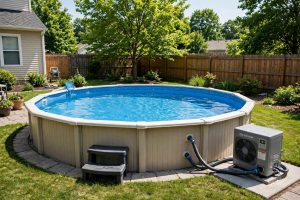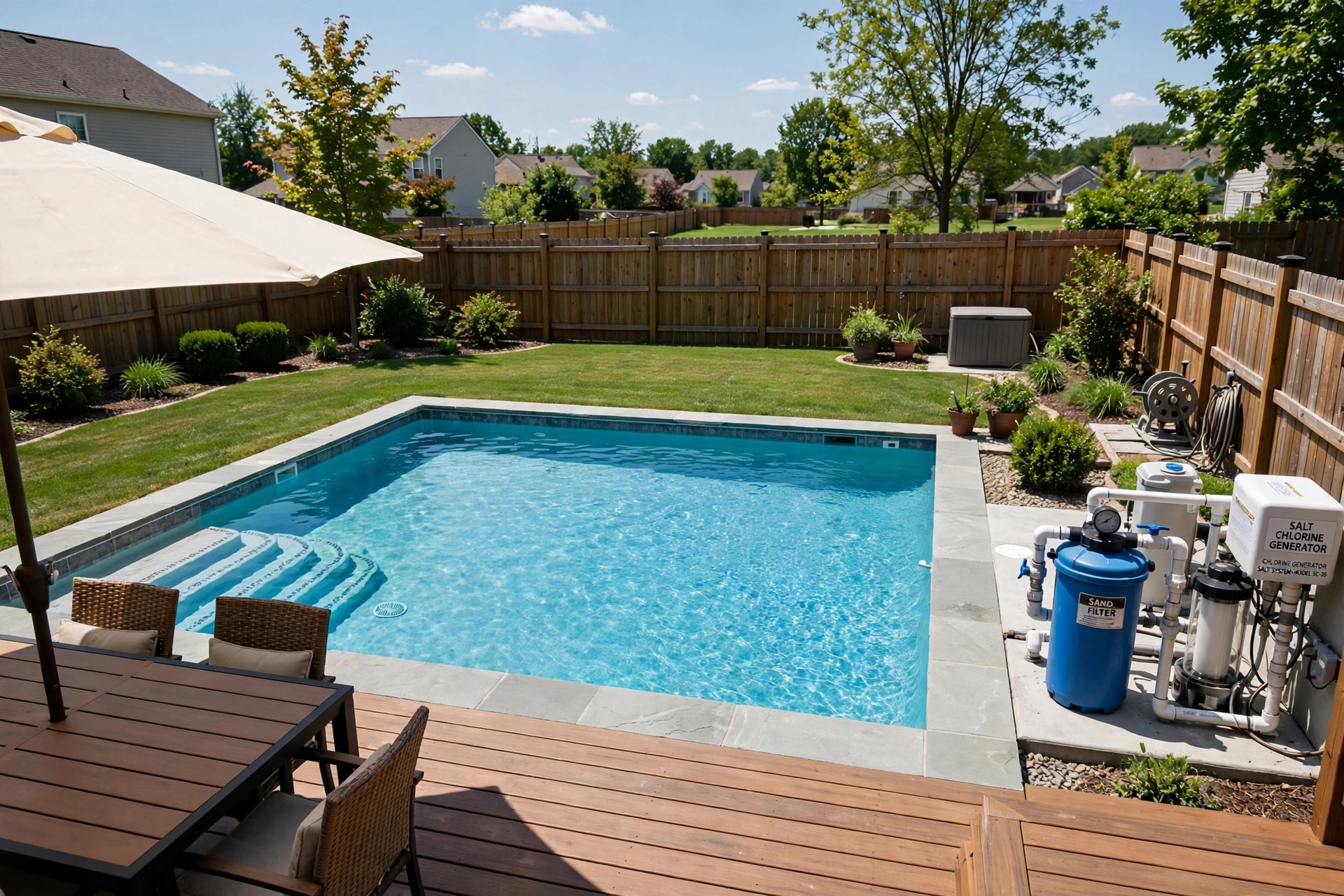

The salt water pool cost per month is the number every pool owner wants to know. The pool looks calm and clear on a Sunday morning. The monthly bills tell another story. They arrive in small pieces. A power bill a little higher than before. A bag of salt from the store. A test kit refill. A repair now and then. None of these is large on its own. Together they form the true monthly cost of owning a salt water pool. This guide adds them up. It shows where the money goes. It shows how to keep each cost low. Read it before you buy a pool. Read it again each season to keep your budget on track.
Why the Monthly Cost Matters
A salt water pool is not a one-time purchase. It is a long promise. The pool needs water, power, salt, and care every week it is open. Homeowners who plan for this spend less in the long run. Homeowners who do not plan often face surprise bills. A worn salt cell can cost hundreds of dollars. A green pool can cost a weekend of work and a cart full of chemicals.
Knowing the monthly cost helps in three ways. First, you can set a fair pool budget. Second, you can compare a salt water pool with a standard chlorine pool. Third, you can spot waste. A pump that runs too long. A cell that runs too hard. A leak that drains water and money. The monthly number is your tool for all of this.
The Parts of the Monthly Cost: Salt Water Pool Cost Per Month
Every dollar you spend on a salt water pool falls into one of six groups. Learn each group. Then you will know where to cut.
Power. The pump is the largest monthly cost. It runs many hours each day. It pushes water through the filter and the salt cell. A single-speed pump on a large pool can add forty to eighty dollars a month in summer. A variable-speed pump costs far less to run.
Salt. A salt water pool does not run on salt alone. The water holds a steady level of salt, around 3,000 to 3,500 parts per million. You add salt when rain, splash-out, and backwashing lower it. Most owners buy two to four bags of pool salt per season. Spread over the swim season, this is a small monthly cost.
The salt cell. The cell makes chlorine from the salt. It is the heart of the system. It also wears out. A cell lasts about three to five years. A new one costs several hundred dollars. Smart owners divide that cost over its life. That adds ten to twenty dollars to the monthly figure.
Other chemicals. Salt water pools still need care. You will test and adjust pH often. You will add stabilizer to protect the chlorine from the sun. You may add algaecide from time to time. These small purchases add five to fifteen dollars a month.
Water. Topping off the pool adds to the water bill. Splash-out, sun, and backwashing all remove water. In hot months, this can mean hundreds of gallons each week. The cost is small in most towns. It grows in places where water is dear.
Service and repairs. Some owners clean the pool themselves. Others pay a pool service. A weekly service visit costs one hundred to two hundred dollars a month or more. Repairs come less often. A pump seal, a filter part, or a new cell all add to the yearly total.
What to Look for Before You Buy
The monthly cost starts with the choices you make on day one. Three choices matter most.
Pool size. A bigger pool holds more water. It needs a bigger pump. It needs more salt to reach the right level. It loses more heat at night. If cost matters, keep the pool size modest. A small pool can cut the monthly bill by a third or more.
Pump type. The pump is the engine of the monthly cost. A variable-speed pump can run slow for most of the day and fast only when needed. It uses far less power than an old single-speed pump. Many owners recover the higher price of a variable-speed pump within two seasons. If you are weighing a salt water pool conversion cost guide, put the pump at the top of your list.
Cell size. Salt cells come in sizes rated for gallons. A cell rated for a larger pool works less hard on a smaller pool. It lasts longer. It runs at a lower setting. Buy a cell rated at least one size above your pool volume. The extra cost up front pays back in longer cell life and lower monthly wear.
Types and Options That Change the Bill
Not all salt water pools cost the same each month. The type of pool shapes the number.
Inground pools. These are the most common salt water pools. A typical inground pool of 15,000 to 20,000 gallons costs about one hundred to two hundred dollars a month to run in summer. Power is the largest share. Owners who run the pool all year in warm states pay this for more months.
Above ground pools. A smaller above ground pool costs less. Thirty to eighty dollars a month is common. The pump is smaller. The cell is smaller. Less water means less of everything. This is a good path for families watching the budget.
Do-it-yourself care. Owners who test water twice a week, brush the walls, and clean the skimmer spend less. They catch problems early. They buy chemicals only when needed. A careful owner can keep the monthly cost near the low end of every range in this guide.
Professional service. A pool service brings skill and saves time. It also adds a fixed monthly charge. For busy families, this is money well spent. Ask what the service covers. Some plans include chemicals. Some do not. Add the plan cost to your monthly number.
Salt water or standard chlorine. Many buyers ask about salt water vs chlorine pool pros and cons before they decide. Salt water pools cost more to install. Their monthly chemical cost is often lower. Chlorine pools need regular chlorine buys. Salt pools need cell care. Over five years, the monthly costs often come out close. The feel of the water is the tiebreaker for many families.
Cost and Price: The Monthly Breakdown
Here is a plain monthly budget for a typical inground salt water pool in summer. Numbers change by town and power rate. Treat these as a fair middle range.
| Cost item | Monthly range | |—|—| | Pump power | $40 to $80 | | Salt | $3 to $8 | | Cell wear (set aside) | $10 to $20 | | Other chemicals | $5 to $15 | | Water top-off | $5 to $15 | | Basic repairs fund | $10 to $25 | | Total, do-it-yourself | $73 to $163 |
Add a weekly service and the total rises to about $200 to $350 a month. Run the pool year-round in a warm state and these months repeat twelve times. Close the pool for winter in a cold state and you pay only for the months the pool is open, plus a small closing and opening cost each year.
Two facts help keep the bill low. First, power is the big lever. Cut pump hours to what the pool truly needs. Most pools stay clear with eight to twelve hours of filtering a day. A variable-speed pump at a low setting can do this work for a fraction of the power. Second, the salt cell is the big surprise. Many owners forget to budget for its replacement. Set aside fifteen dollars a month from day one. When the cell wears out, the money is there.
Follow a steady salt water pool maintenance schedule guide and you will buy fewer emergency chemicals. Panic buys are the most costly kind. A green pool can drink a hundred dollars of shock and algaecide in one weekend. A clear pool asks for little.
Care and Upkeep Through the Month
Monthly cost and monthly care move together. Good habits keep both low.
Test the water two times each week. Check free chlorine, pH, and salt level. Salt water pools tend to push pH up. Add acid in small doses to keep pH in range. High pH makes chlorine weak. Weak chlorine invites algae. Algae invites cost.
Empty the skimmer baskets twice a week. A full basket starves the pump. The pump works harder and uses more power. Clean the pump basket each week as well. Brush the pool walls once a week. Brushing stops algae before it takes hold. It is free and it works.
Check the salt cell every month. Look at the plates inside. If white scale covers them, clean the cell with a mild acid bath as the maker directs. A scaled cell makes less chlorine. The system then runs longer to catch up. Longer runs mean higher power bills. Guides from Leslie’s and Swim University explain cell care in plain steps.
Watch the water level. Keep it at the middle of the skimmer opening. Low water makes the pump suck air. Air harms the pump and the cell. High water drowns the skimmer. Both waste money.
Safety Notes for Salt Water Pool Owners
Salt water pools feel gentle. They still need respect.
Keep salt at the maker’s level. Too much salt can harm the cell and corrode metal parts. Too little salt makes the cell work too hard. Test the level each month with a good test strip or a digital meter. Reviews and buying advice at The Spruce can help you pick a meter you will actually use.
Give the equipment room to breathe. Pumps and salt systems need air flow. Keep leaves and clutter away from the equipment pad. Check wires and plugs for wear each season. Water and power are a poor mix. If a cord or breaker looks wrong, call a pro.
Protect swimmers. A clear pool is a safe pool. Cloudy water hides the deep end. Keep the gate latched. Keep rescue gear within reach. The U.S. Consumer Product Safety Commission posts pool safety steps every family should know. Store pool chemicals in a cool, dry place. Keep them locked away from children and pets.
Watch for corrosion. Salt water is harder on metal than many owners expect. Ladders, rails, and light fixtures need a rinse now and then. Stainless steel parts hold up best. If you see rust or pitting, treat it early. Small rust becomes a big repair bill.
Frequently Asked Questions
How much does a salt water pool cost per month on average? Most inground salt water pools cost about $75 to $165 a month in summer when the owner does the care. A weekly pool service adds $125 to $200 or more. Above ground pools often cost $30 to $80 a month. Your power rate and pool size move the number up or down.
Is a salt water pool cheaper to run each month than a chlorine pool? Often yes, by a small amount. Salt water pools buy less chlorine. They add cell wear and more pH care instead. Over a full year, the monthly cost of each type is close. The salt pool usually wins on water feel. The chlorine pool usually wins on simpler equipment. Pool cost guides from The Home Depot compare both systems side by side.
What is the most costly part of the monthly bill? Power for the pump. It is larger than salt, chemicals, and water put together in most homes. A variable-speed pump is the best single upgrade for a high bill. Cut run time to the lowest level that keeps the water clear.
How often will I need to replace the salt cell? Most cells last three to five years. Heavy use, high settings, and scale shorten that life. Set aside $10 to $20 each month for the next cell. When the “check cell” light comes on, you will be ready. Cell makers such as Bullfrog Spas and Hot Spring publish life ratings for their systems.
Does a salt water pool raise my water bill a lot? A little. Topping off the pool adds $5 to $15 a month in most towns. Backwashing and splash-out are the main causes of loss. A pool cover cuts water loss from the sun and cuts heat loss at night. It pays for itself in one season for many owners. Cover options are listed at Pool Warehouse.
Can I lower the monthly cost in winter? Yes. In cold states, close the pool properly and the monthly cost drops near zero. You pay once for closing and once for opening. In warm states, cut pump hours in the cool months. The pool needs less filtering when the water is cold and no one swims. Keep the chemistry balanced even in winter to avoid a costly spring cleanup.
A Short Final Word
The salt water pool cost per month is not a mystery. It is six small costs added together. Power leads. Salt follows at a distance. Cell wear hides in the background until the cell fails. Chemicals, water, and repairs fill out the rest. Plan for each one. Test often. Brush weekly. Clean the cell. Size the pump and cell with care. Do these plain things and your monthly number will stay near the low end of every range. The pool will stay clear. The budget will stay calm. That is the whole secret.
References
Bullfrog Spas. (n.d.). Hot tubs and spas. https://www.bullfrogspas.com Hot Spring Spas. (n.d.). Hot tubs and spas. https://www.hotspring.com Leslie’s Pool Supplies. (n.d.). Pool supplies and equipment. https://www.lesliespool.com Pool Warehouse. (n.d.). Pool equipment and supplies. https://www.poolwarehouse.com Swim University. (n.d.). Pool and hot tub care guides. https://www.swimuniversity.com The Home Depot. (n.d.). Home improvement products. https://www.homedepot.com The Spruce. (n.d.). Home and garden advice. https://www.thespruce.com U.S. Consumer Product Safety Commission. (n.d.). Product safety information. https://www.cpsc.gov
Was this guide helpful?

About Robert Taylor
The My Garden US editorial team writes practical, in-depth home and garden guides for American homeowners — tested advice, no fluff.
You May Also Like
Best Pool Steps for Above Ground Pools: A Plain Buyer’s Guide
June 27, 2026 0 views
The Best Pool Deck Paint for Concrete: A Homeowner’s Guide
March 8, 2026 0 views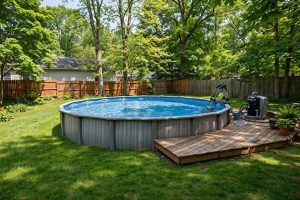
How to Choose the Best Above Ground Pool for Families
September 5, 2026 0 views