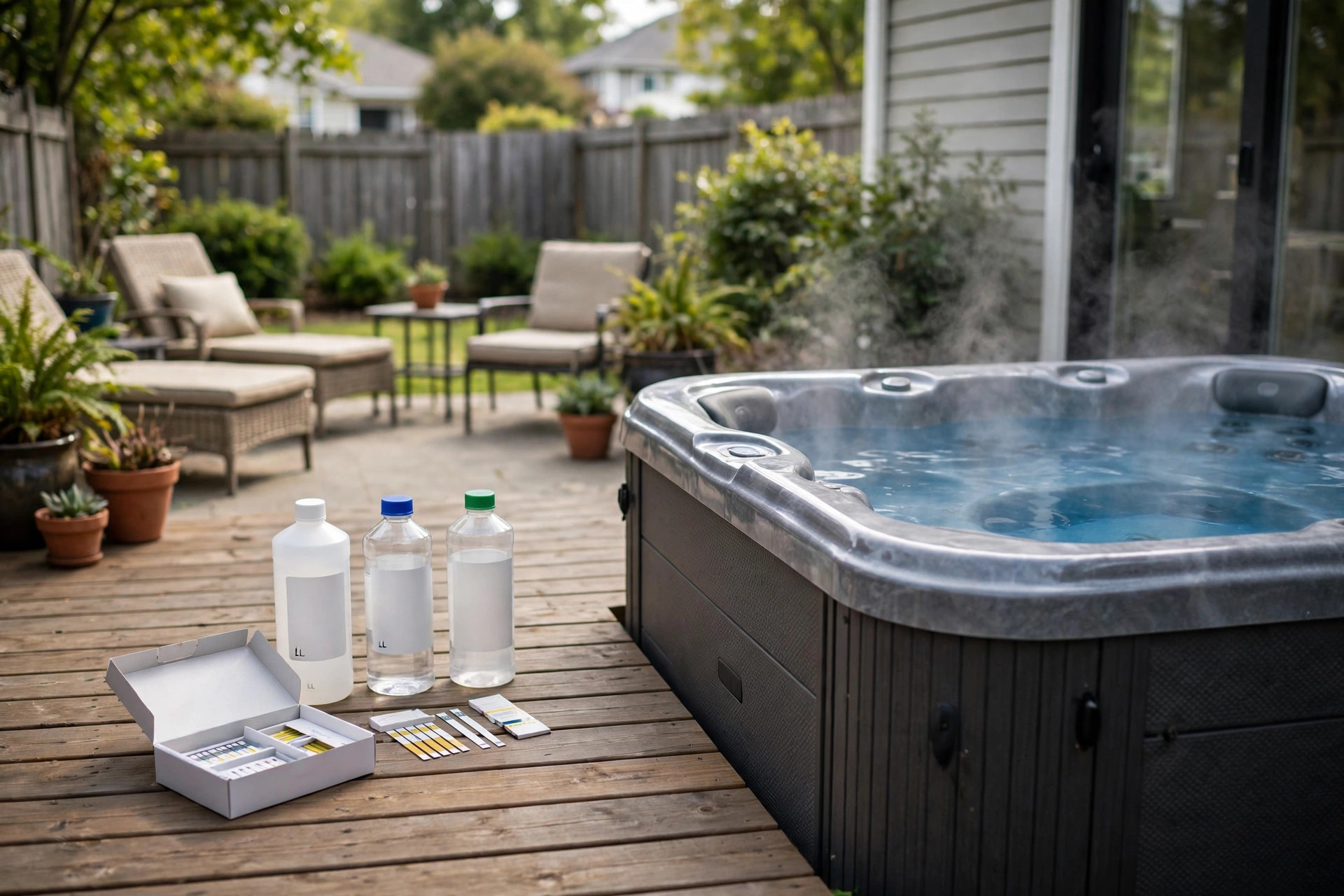
A hot tub should leave you relaxed, not red and itchy. Yet many people with delicate skin climb out of a spa with dry patches, a tight feeling, or small red bumps. The problem is rarely the hot water itself. It is the water chemistry. When sanitizers, pH levels, and alkalinity drift out of balance, even healthy skin can react. For people with eczema, allergies, or simply reactive skin, the wrong products make the trouble worse.
Why Hot Tub Water Bothers Sensitive Skin
Warm water opens the pores. That is one reason a soak feels so good, and one reason chemicals reach the skin more easily. In a pool the water is large in volume and often cooler. In a hot tub the water is small in volume, hot, and shared by several people. The sanitizer has to work harder, and the heat speeds up every chemical reaction.
Chlorine is the most common culprit. It is a strong sanitizer, and at the right level it is safe for most people. But when the dose is high, or when the water is out of balance, chlorine can strip natural oils from the skin. The result is dryness, itching, and sometimes a rash that looks like tiny red spots. Many users on general home guides note that this pattern is one of the most common spa complaints, and pool and spa supply sites carry whole product lines aimed at fixing it.
Skin that is already sensitive reacts first. If you have eczema, contact dermatitis, or a history of rashes from soaps and lotions, your skin barrier is thinner and less able to recover. Heat makes the blood vessels widen, which can make redness and itching feel worse even when the chemical level is only slightly off. That is why two people can sit in the same tub and only one of them walks away scratching.
Signs Your Chemicals Are Too Harsh: Hot Tub Chemicals for Sensitive Skin
Before you buy anything new, check whether the water is the problem. The signs are easy to spot once you know them.
– Itching starts during or right after the soak, not hours later. – Skin feels tight or looks dry and flaky once it dries. – Red blotches appear on the chest, arms, or legs and fade within an hour. – Eyes sting or water, which often means combined chlorine or poor balance. – A strong chemical smell rises from the water. Clean, well-balanced water should have only a faint scent.
One or two of these signs point to a chemistry problem rather than a medical one. If the symptoms last for days, spread, or come with swelling, see a doctor instead of guessing at products.
What to Look for in Hot Tub Chemicals for Sensitive Skin
Not every bottle labeled gentle truly is. Reading the label with care saves money and skin.
Start with the sanitizer type. Standard chlorine works, but many sensitive users do better with bromine, mineral systems, or a reduced-chemical setup backed by ozone or ultraviolet light. More on each option below.
Check for added fragrance. Spa products sometimes contain scents meant to make the water smell pleasant. Fragrance is a known trigger for contact dermatitis. Choose unscented products whenever you can.
Look at the active ingredient list, not the brand name. Two products that look different on the shelf may contain the same active ingredient. What matters is what goes into the water, not what goes on the label.
Pay attention to pH and alkalinity products too. The sanitizer gets most of the blame, but water with low pH feels acidic on the skin, and water with high pH feels slippery and can cause its own irritation. Balanced water protects the skin as much as the right sanitizer does.
Finally, avoid mixing systems. Running chlorine and bromine together, or adding a mineral stick on top of a salt system without adjusting doses, can create levels that irritate everyone. Pick one approach and follow it.
Gentler Options Worth Considering
There is no single perfect product for every person. Skin differs, and so does water. The options below are the ones most often recommended for sensitive users. Each reduces irritation in a different way.
Bromine Instead of Chlorine
Bromine is the closest cousin to chlorine and the easiest switch. It sanitizes well in hot water and stays stable at high temperatures, which is why many spa makers build their care routines around it. Most users find it milder on skin and eyes, and it produces less of the sharp smell that bothers sensitive noses. Independent product reviews often rate bromine systems well for comfort. The trade-off is cost: bromine tablets usually cost more than chlorine, and the water can take on a slight tint at high levels. Still, for many sensitive soakers, bromine is the first and simplest change to try.
Mineral Sanitizers
Mineral sticks and cartridges release small amounts of silver and copper into the water. These minerals slow the growth of bacteria, which lets you run the main sanitizer at a lower level. A lower chlorine or bromine level means less irritation for the skin. Mineral systems do not replace the sanitizer entirely. You still need a small residual of chlorine or bromine to keep the water safe. But cutting the dose in half or more makes a real difference for sensitive users. Cartridges are easy to use and last for months, which suits people who want a simple routine.
Ozone and Ultraviolet Systems
Ozone generators and UV units are add-on devices, not chemicals. They destroy bacteria and break down waste as water passes through them. With one of these running, the chemical sanitizer has far less work to do, so you can keep levels low. Many owners of new spas choose a best hot tub for cold climates model that comes with ozone or UV already installed, and most hot tub brands publish water care guides that cover these add-ons. Retrofits exist for older tubs as well. The equipment costs more up front, but the day-to-day chemical bill drops, and sensitive skin benefits from the lower chemical load.
Salt Water Systems
Salt systems turn a small amount of dissolved salt into chlorine through electrolysis. The water feels softer and silkier, and most people find it gentler than water dosed by hand with chlorine granules. The total chlorine level is still chlorine, so this is not a chemical-free option, but the level stays steady instead of spiking after each manual dose. Steady, low levels are kinder to skin. Salt cells need cleaning and eventual replacement, so factor that into the cost. If you are comparing tubs, note that a best inflatable hot tub for couples may or may not accept a salt system, so check the maker before you buy.
Enzyme Treatments and Non-Chlorine Shock
Enzymes break down body oils, lotions, and other organic waste that cloud the water and feed bacteria. They are not sanitizers, but by removing waste they reduce how much sanitizer the water needs. Non-chlorine shock, usually based on potassium monopersulfate, burns off waste without adding chlorine. Used weekly, it keeps the water clear while letting the main sanitizer stay at a gentle level. Both products are unscented options in most brands and are easy to add to an existing routine.
How to Keep Water Balanced for Gentle Soaking
The gentlest chemical in the world will still irritate skin if the water balance is wrong. Balance is the unglamorous half of the job, and it matters just as much as product choice.
Test Often
Test strips are cheap and fast. Many owners test before every soak, and that habit catches problems early. For more exact numbers, liquid test kits and digital readers work well. Pool and spa supply sites and major home improvement stores all carry these tools, and independent guides on general home sites explain how to read the results. Aim for pH between 7.2 and 7.8, total alkalinity between 80 and 120 parts per million, and sanitizer within the range printed on your product.
Shower Before You Soak
Lotions, sunscreen, deodorant, and hair products wash off in hot water and react with sanitizer to form irritating byproducts. A quick rinse in the shower cuts this load sharply. It is the cheapest skin-friendly step you can take, and it costs nothing. Ask guests to rinse too. Most people are happy to do it once they understand why.
Change the Water on Schedule
Even perfect chemistry cannot last forever. Dissolved solids build up, and the water gets harder to balance. Most makers suggest draining and refilling every three to four months for a regularly used tub. Fresh water needs fewer chemicals to stay clean, which is good news for sensitive skin. If the water starts needing constant correction, it is telling you it is time for a change.
Cost and Price
Gentle does not have to mean expensive, but some options do cost more. A basic bromine routine runs a little above a basic chlorine routine. Mineral cartridges add a moderate yearly cost but last for months at a time. Large home improvement retailers and online home retailers list spa chemicals online, which makes price comparison easy. Ozone and UV units are the priciest add-ons, often several hundred dollars installed, though they pay back in lower chemical use. Salt systems sit in the middle, with a cell to replace every few years. Enzyme products and non-chlorine shock are small weekly costs, similar to other specialty spa chemicals.
A best hot tub chemicals starter kit gives a fair baseline for comparison.
Care and Upkeep
A simple weekly routine keeps gentle water gentle.
– Test the water two or three times a week, and always before a long soak. – Adjust pH and alkalinity first, then check the sanitizer level. – Add non-chlorine shock after heavy use or once a week. – Rinse filters every two to four weeks and deep clean them every few months. – Wipe the waterline to remove the scum line where oils collect. – Keep the cover clean and slightly open after adding chemicals so gases can escape.
Store all chemicals in a cool, dry place, locked away from children and pets. The EPA guidance on safe chemical storage is a good reference, and federal CPSC safety standards cover spa product labeling that helps you handle these products with care. Never mix different chemicals in the same container, and add chemicals to water rather than water to chemicals.
Safety
Hot tub chemicals are safe when used as directed and risky when they are not. Keep every product in its original container with the label intact. Wear gloves when handling concentrated sanitizer, and do not breathe the dust from granules. If a product splashes on skin or in eyes, rinse with plenty of water and read the label for further steps.
Water safety matters too. Keep the sanitizer at the level the maker suggests. Too little invites bacteria, and too much invites irritation. Children, pregnant women, and people with heart conditions should check with a doctor about hot tub use, and sessions are best kept to fifteen or twenty minutes in very hot water. A locking cover is a wise buy for any household with children or pets.
Frequently Asked Questions
Can I run a hot tub with no chemicals at all? No. Warm, still water grows bacteria quickly. Even the gentlest setups need some sanitizer. The goal is the lowest level that keeps the water safe, supported by tools like ozone, UV, or minerals that do part of the work.
Is bromine really better than chlorine for sensitive skin? For many people, yes. Bromine works well in hot water, smells less sharp, and tends to cause less eye and skin irritation at normal levels. It is not irritation-free, and balance still matters, but it is the most common first switch sensitive users make.
Do salt water hot tubs irritate skin less? Most users say the water feels softer and less harsh. The system still makes chlorine, but it feeds it in slowly and steadily, which avoids the spikes that come from hand dosing.
How do I know if my rash is from the chemicals or something else? Chemical irritation usually starts during or soon after soaking and fades within hours once you rinse off. Rashes that last for days, spread, blister, or come with fever point to infection or another cause. When in doubt, see a doctor and stay out of the tub until it clears.
Can I switch my existing tub to a gentler system? In most cases, yes. Moving from chlorine to bromine is simple. Adding a mineral cartridge is simple too. Ozone, UV, and salt systems may need a professional to install, and some older tubs need small plumbing changes. Check with the maker or a local spa shop before buying equipment.
Are natural or enzyme products enough on their own? No. Enzymes and so-called natural clarifiers help the water, but they do not kill bacteria. They work best as helpers that let you use less of the main sanitizer, not as replacements for it.
A Final Word
Sensitive skin does not mean giving up the hot tub. It means choosing products with care, keeping the water in balance, and rinsing off before you climb in. Start with the simplest change, such as switching to bromine or adding a mineral cartridge, and give it a few weeks. Test often, change the water on schedule, and store everything safely. With a steady routine, the water can be as gentle as the soak is relaxing.
References
Bullfrog Spas. (n.d.). Hot tubs and spas. https://www.bullfrogspas.com Consumer Reports. (n.d.). Product reviews and ratings. https://www.consumerreports.org Hot Spring Spas. (n.d.). Hot tubs and spas. https://www.hotspring.com Lowe’s. (n.d.). Home improvement products. https://www.lowes.com Pool Warehouse. (n.d.). Pool equipment and supplies. https://www.poolwarehouse.com The Home Depot. (n.d.). Home improvement products. https://www.homedepot.com The Spruce. (n.d.). Home and garden advice. https://www.thespruce.com U.S. Consumer Product Safety Commission. (n.d.). Product safety information. https://www.cpsc.gov U.S. Environmental Protection Agency. (n.d.). Protecting human health and the environment. https://www.epa.gov Wayfair. (n.d.). Furniture and home goods. https://www.wayfair.com
Was this guide helpful?

About Emily Rodriguez
The My Garden US editorial team writes practical, in-depth home and garden guides for American homeowners — tested advice, no fluff.