
When you are shopping for the best hot tub for large families, the first question is simple: how many people need to fit? A tub that holds two or three adults will feel crowded when four children want to join. This guide walks you through seating, size, cost, and care in plain terms so you can pick a spa that serves the whole house.
Why a Big Hot Tub Matters for a Large Family
A hot tub is a place to gather. In a large family, the kitchen table and the living room get busy. A spa in the yard gives everyone one more spot to sit down together. Teenagers talk more freely in warm water. Small children love the bubbles. Grandparents can ease sore joints without climbing stairs into a pool.
Size also sets the tone. A six-person tub lets three people stretch out and leaves room for a fourth. An eight-person tub holds two full families at once, which is useful on holidays. The best hot tub for large families is not always the biggest one on the lot. It is the one that fits your household with room to spare, without costing more than your budget allows.
A well-chosen tub can serve a family for ten to twenty years. That is a long time. Picking the right size and shape at the start saves you from regret later.
What to Look For: Best Hot Tub for Large Families
Seating Capacity
Manufacturers list how many people a tub holds. These numbers are generous. A tub rated for six adults fits four adults and two children in comfort. Look for a model with one or two extra seats beyond your normal count. Deep seats help adults. A built-in cool-down seat at the rim helps small children sit with their heads well above the water.
Water Volume and Dimensions
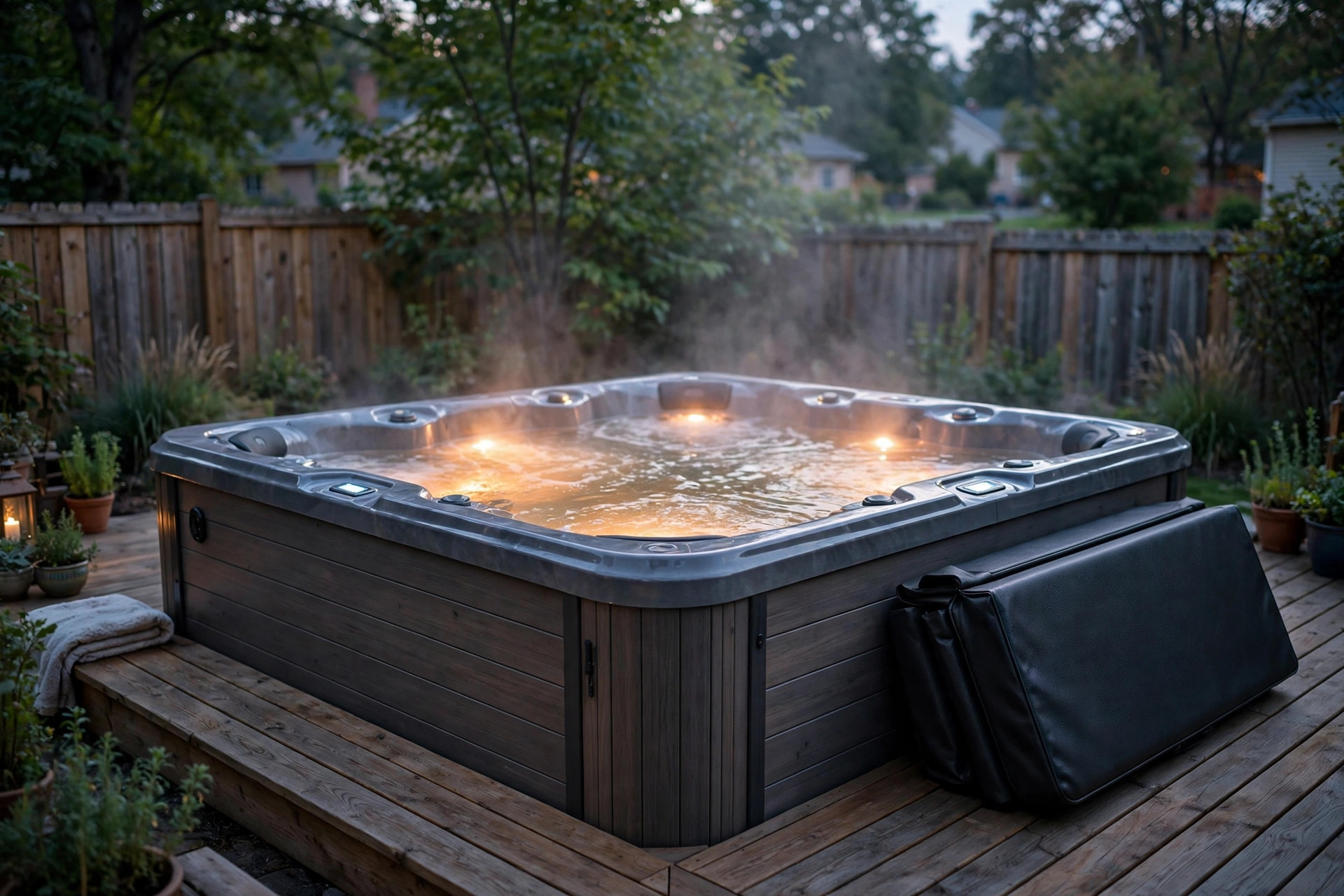
A family-size spa usually holds 350 to 500 gallons of water. That means a heavier tub. Plan for 400 to 450 pounds empty, plus water and people. The shell is commonly seven to eight feet across. Measure your deck or patio twice. Leave room on one side for the cover to lift open, and leave two feet of clearance on at least one side for service access.
Jets and Comfort
Jets are the small nozzles that push streams of water against the body. Large family tubs carry 30 to 70 jets. More jets do not always mean a better soak. What matters is variety. Look for large jets for the back and shoulders, small rotating jets for the feet, and a few adjustable jets so each seat feels different. Sit in the tub dry at the store if you can. It sounds odd, but five minutes in the shell tells you more than any brochure.
Heating and Insulation
A bigger tub takes longer to heat and costs more to run each month. Full-foam insulation and a thick locking cover hold heat in. Check the pump and heater size. A pump of five to six horsepower handles a large tub well. Ask about the monthly energy cost in your climate. A poorly insulated tub can cost twice as much to run as a well-insulated one. Families in colder states should read our notes on the best hot tub for cold climates before they decide. Look for a tub with a base pan that seals the bottom. Wind that gets under the shell steals heat fast. A sealed base keeps the warm air around the pump and plumbing, which cuts heater run time in winter.
Cover quality matters as much as foam. A good cover is four to six inches thick in the center and tapers to three or four inches at the edge so rain runs off. The vinyl skin should feel thick and be stitched tight. A weak cover sags in the middle, holds water, and lets heat escape. Replacing a cover costs $300 to $600, so start with a good one.
Types and Options
Portable Above-Ground Spas
These are the most common family tubs. They arrive in one piece and sit on a solid pad. Installation takes a day. Most seat five to eight people. They plug into a 220-volt line, which needs a licensed electrician. Portable spas are the best pick for most large families because they cost less than in-ground models and can move with you if you sell the house.
Inflatable Hot Tubs
Inflatable tubs are soft-sided and cost far less. They seat four to six people and take about an hour to set up. They heat slower and lose heat faster, so they suit mild climates and short soaks. If your budget is tight, start here to see how much your family really uses a spa. Our page on the best inflatable hot tub for couples explains what these models can and cannot do, and much of it applies to families too.
Swim Spas
A swim spa is longer than a hot tub, often twelve to nineteen feet. One end has a current to swim against, and the other end has spa seats. They suit families who want exercise and soaking in one shell. The cost is much higher, and they need a large pad and heavy wiring. For most families, a standard large spa is the better buy.
Cost and Price
A quality large family hot tub costs between $8,000 and $18,000 in most markets. Basic models with fewer jets sit near the low end. Premium models with full insulation, strong pumps, and salt systems sit near the high end. Prices are higher in 2026 than they were five years ago, because materials and shipping cost more.
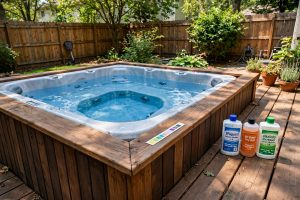
Monthly running costs run from $30 to $80 for power, depending on your climate, insulation, and how often the tub is used. Water care adds $20 to $40 a month for filters and chemicals. A hot tub chemicals starter kit makes the first few months simple, because everything you need is in one box.
Delivery often costs extra. A crane may be needed if the tub cannot roll through a gate. Concrete pads cost $500 to $2,000. Electrical work costs $500 to $1,500. Add these to your budget before you fall in love with a model. A $10,000 tub can become a $12,500 project once delivery and wiring are done.
Financing is common. Many dealers offer plans with monthly payments. Read the terms. A low payment over seven years costs much more in interest than a short loan. If you can pay cash, do so. Either way, keep your receipts. A clear paper trail helps if you sell the tub or claim a warranty repair years later. Good records also help you track the true cost of owning the spa, which makes the next purchase easier to plan.
Care and Upkeep
A large tub holds a lot of water, but you do not change it often. Most families drain and refill every three to four months. In between, you keep the water clean with a simple routine.
Test the water two or three times a week with test strips. Keep the sanitizer level steady. Bromine suits many families because it works well in warm water and smells milder than chlorine. Shock the water weekly, or after heavy use by a crowd of children. Clean the filters once a month with a garden hose. Replace them once a year.
Wipe the shell above the water line to stop scum from building up. Keep the cover clean and locked. A heavy cover that seals well cuts heating costs and keeps children and animals out when the tub is not in use. Good water care protects the pump and heater, which are the most expensive parts to replace.
Once a year, do a deeper clean. Turn off the power. Drain the tub fully. Scrub the shell with a soft cloth and a spa-safe cleaner. Clean the jet faces with a soft brush. Flush the lines with a pipe cleaner product before you refill. This yearly service takes a few hours and keeps the system running clean. Many dealers sell a hot tub chemicals starter kit that includes line flush, so you can do the job in one pass.
Safety
Hot tub safety matters most in a house with children. The water in a spa runs hotter than a bath, usually 100 to 104 degrees. Children under five should not use a hot tub at all. Older children should soak for short times, about ten to fifteen minutes, with an adult watching.
Set the heater to 100 degrees when children use the tub. Make sure children sit on the cool-down seat or a high bench so their heads stay well above water. Teach everyone that hair, loose clothing, and toys stay away from the drain covers. Modern drains are safer than old ones, but the rule still stands.
Keep a locking cover on the tub whenever it is not in use. Store chemicals in a locked box, out of reach of children. Do not let anyone use the tub alone. The federal safety agency offers clear guidance on spa safety at cpsc.gov, and their tips are worth reading before your first soak.
FAQ
How many people should the best hot tub for large families hold?
Plan for six to eight seats. A family of five does well with a six-person tub, because it leaves room to stretch. A family of seven or more should look at seven- or eight-person models. Remember that rated seats assume adults sitting close together.
What size pad does a large family hot tub need?
Allow a pad at least one foot wider than the tub on every side. For an eight-foot tub, pour a ten-foot pad. The pad must be level and strong enough to hold three to four thousand pounds when the tub is full.
How much does it cost each month to run?
Most families pay $50 to $120 a month in total, counting power, chemicals, and filters. Good insulation and a tight cover keep you near the low end. Leaving the cover open or running the heat at maximum all winter pushes you to the high end.
Can children use the hot tub?
Children aged five and older can use it in short soaks with an adult present. Keep the temperature at or below 100 degrees for children, and limit soaks to ten to fifteen minutes. Children under five should stay out of the spa.
Salt water or chlorine for a family tub?
Both work. Salt systems feel gentler on skin and need less daily attention, but the equipment costs more up front. Chlorine or bromine costs less to start and works well if you keep up with testing. For busy families, a salt system often pays for itself in time saved.
How long does a large hot tub last?
A well-built tub lasts twelve to twenty years with steady care. The shell lasts longest. Pumps and heaters may need replacing once in that time. Cheap tubs with thin shells and weak insulation last far less, which is why buying quality up front usually costs less over time.
A Short Final Word
The best hot tub for large families is the one that fits your people, your yard, and your budget at the same time. Choose six to eight seats. Insist on good insulation and a strong cover. Budget for delivery, wiring, and water care, not just the tub. Keep the water clean and the cover locked. Do these things, and the spa will give your family a warm place to gather for many years.
For more background, see Leslie’s Pool Supplies, Pool Warehouse, and Swim University. For more background, see Hot Spring Spas, Bullfrog Spas, and The Spruce. See The Home Depot for more detail.
References
Bullfrog Spas. (n.d.). Hot tubs and spas. https://www.bullfrogspas.com Hot Spring Spas. (n.d.). Hot tubs and spas. https://www.hotspring.com Leslie’s Pool Supplies. (n.d.). Pool supplies and equipment. https://www.lesliespool.com Pool Warehouse. (n.d.). Pool equipment and supplies. https://www.poolwarehouse.com Swim University. (n.d.). Pool and hot tub care guides. https://www.swimuniversity.com The Home Depot. (n.d.). Home improvement products. https://www.homedepot.com The Spruce. (n.d.). Home and garden advice. https://www.thespruce.com U.S. Consumer Product Safety Commission. (n.d.). Product safety information. https://www.cpsc.gov
Was this guide helpful?

About Emily Rodriguez
The My Garden US editorial team writes practical, in-depth home and garden guides for American homeowners — tested advice, no fluff.
You May Also Like

How to Open Pool for Summer Season: A Complete Step-by-Step Guide
April 1, 2026 0 views
How to Clean Pool Filter Cartridge: A Simple Step-by-Step Guide
May 14, 2026 0 views
Best Pool for Kids Safety Features
January 28, 2026 0 views