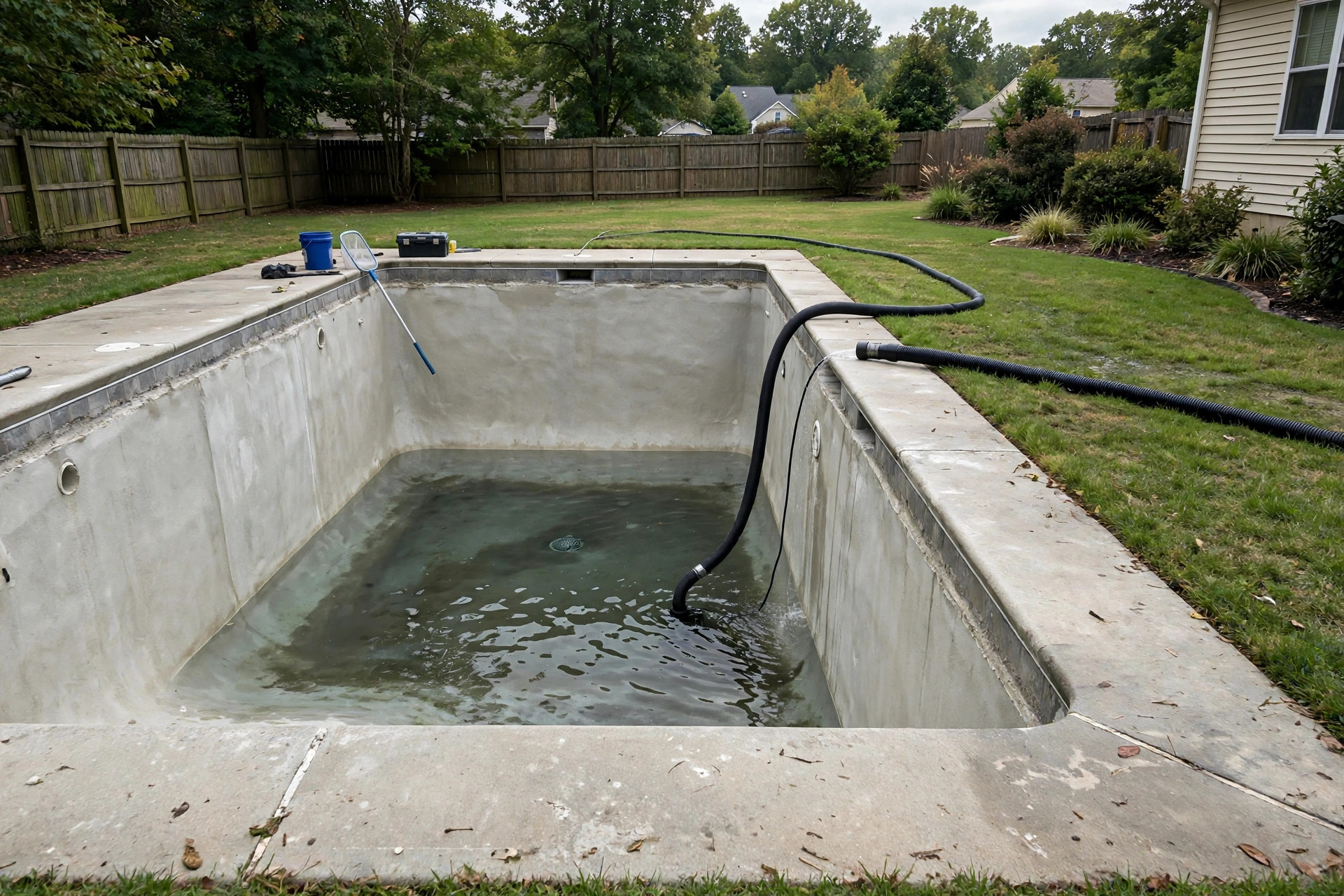

A pool owner learns how to drain pool for repairs sooner or later. Cracks in the plaster, a torn liner, a stain that will not lift, or a light that must be replaced all call for an empty or partly empty pool. In practice, it takes planning, the right tools, and care for the pool shell itself. Done wrong, draining can lift a pool out of the ground or ruin a liner. Done right, it is a straight task that sets the stage for clean, lasting repairs.
This guide walks through the whole job in plain terms. You will learn when draining is needed, what the law says about pool water, which pump to use, how to protect the pool while it is empty, and what each step costs. Read it through once before you start. The job goes faster when you know what comes next.
Why Draining Is Needed for Repairs
Most pools never need a full drain. Regular care keeps the water balanced and the surfaces sound. But some repairs cannot be done under water, or cannot be done well under water.
Plaster repair is the most common reason. Old plaster grows rough, stains, or develops small cracks. A full resurface needs a dry shell. Vinyl liners also need dry time. A liner replacement always needs the pool empty. Fiberglass pools sometimes need an empty shell for gel coat repair or for fixing a blister.
Tile work is another reason. Loose coping stones or a cracked waterline tile band are hard to reset while water laps at them. Some owners drain below the tile line only, which leaves most of the water in place and saves time on refill.
Equipment repairs sometimes need draining too. A main drain cover replacement, a skimmer throat repair, or a return fitting change may call for water below that fitting. In these cases a partial drain is often enough.
A full drain is also used for a fresh start. Water that has built up years of dissolved solids may fight every chemical you add. Draining and refilling can cost less than a season of heavy chemicals. Some owners do this once every five to seven years as part of long-term pool opening care.
The rule is simple. Drain only as far down as the repair needs. If the tile band is the work area, drain two feet below it. If the floor needs work, drain the whole pool. Every gallon you keep is a gallon you do not pay to replace.
What to Know Before You Start: How to Drain Pool for Repairs
Local Rules About Pool Water
Pool water is not rain water. It holds chlorine, salts, and other chemicals. Many cities and counties have rules about where it may go. The common rule is that pool water must go to the sanitary sewer, not to the street or storm drain. A storm drain often leads straight to a creek or lake. Pool chemicals harm fish and plants.
Some towns ask for a permit before a large drain. A few ask you to test the water or to let chlorine fade for several days first. The U.S. Consumer Product Safety Commission publishes pool safety rules, and your local water authority publishes drain rules. Call the water department or check its website before you start. A five-minute call can save a fine.
Plan where the hose will run. A garden hose or a pump discharge line can flood a neighbor’s yard if you are not watching. Run the line to a sewer cleanout, a laundry sink, or a drain the city approves. Keep the hose flat so it does not kink. A kinked hose can burn out a pump.
Know Your Pool Type
The kind of pool you own sets the risks.
Concrete and plaster pools are heavy and strong. They can sit empty for days or weeks while work goes on. The main risk is a high water table. If ground water presses up under the shell, an empty pool can lift or crack. In areas with high ground water, keep some water in the deep end, or ask a pool builder about your street’s water table.
Vinyl liner pools must not sit empty in the sun. A liner shrinks when it dries and loses its shape. It can also float if ground water gets behind it. Plan liner work so the pool is empty for the shortest time. Many pros drain in the morning and have the new liner set the same day.
Fiberglass pools share the liner’s risk. An empty fiberglass shell can lift in high ground water. Keep the time empty short and do the work in mild weather if you can.
Above ground pools are simpler. Most have no deep end and no ground water pressure. But never leave an above ground pool partly full for long. A half-full pool can buckle in wind. Drain it fully or keep it full.
Tools and Supplies You Will Need
Gather these before the water moves:
– A submersible pump rated for the job. A 1/4 to 1/2 horsepower pump moves water at a fair pace for most home pools. – A long garden hose or a discharge hose to carry water to the sewer drain. – A second hose for the last few inches, or a wet vacuum for the final puddles. – A pool brush to sweep debris toward the pump as the level falls. – A test kit or test strips to check chlorine before you drain. – Work gloves and rubber boots for the wet shell. – A tarp or cover to shade an empty liner or fiberglass shell.
If you own an inground pool, check your pool pump options for inground pools before buying. A pump that is too small will run for days. A pump that is too large may need a bigger hose to keep up.
How to Drain Pool for Repairs, Step by Step
Step 1: Turn Off the Equipment
Shut off the pool pump, heater, and any salt system at the breaker. A pump that runs dry will burn out in minutes. If you have a timer, switch it to off so it does not start on its own. Lock the breaker panel or tape a note on it so no one flips it back.
Step 2: Test and Treat the Water
Test the chlorine level. Many towns want chlorine below 0.1 parts per million before water goes to a sewer or yard. Sunlight breaks chlorine down fast. Some owners use a neutralizer from a pool supply store to speed the wait.
Step 3: Set the Pump in the Deep End
Place the submersible pump on the deep end floor. A pump on a small pad or brick stays out of the silt. Run the discharge hose to your approved drain point. Make sure the hose end cannot slip back into the pool. Plug the pump into a grounded outlet. Keep all plugs and cords dry and off the wet deck.
Step 4: Start Draining and Watch the Flow
Turn the pump on. Walk the hose line once to check for kinks and leaks. Watch where the water goes for the first half hour.
Step 5: Brush Debris Toward the Pump
As the water falls, leaves and silt gather on the steps and floor. Brush them toward the pump so they do not clog the intake.
Step 6: Handle the Last Inches
A submersible pump leaves one to two inches of water. For a full drain, remove this with a wet vacuum or a small utility pump.
Step 7: Protect the Empty Shell
Once the pool is empty, shade a vinyl or fiberglass shell with a tarp. Keep foot traffic light on a plaster shell until repairs start. Do not leave an empty pool through a heavy rain if your area has high ground water. If rain is coming and work is not done, refill partly and drain again later.
Many how-to guides at Swim University cover this stage in more depth, including how to keep an empty pool safe while you wait for a repair crew.
How Long It Takes to Drain a Pool
Time depends on pool size and pump power. A 20,000 gallon pool with a mid-size submersible pump drains in about 8 to 12 hours. A 10,000 gallon above ground pool may finish in 4 to 6 hours. A large 30,000 gallon pool can take a full day.
Do not rush with a trash pump unless you know the drain rules. Big pumps move water faster than a home sewer line can take. Slow and steady keeps the water where it belongs.
Cost of Draining a Pool
Draining costs less than most owners fear. The parts:
– Pump rental: A submersible pump rents for about $40 to $75 per day at most home improvement stores. Buying one costs $80 to $200 and pays for itself if you drain more than once. – Hoses: You may already own enough hose. A new 50 foot discharge hose costs $25 to $50. – Water to refill: City water for a 20,000 gallon refill often costs $60 to $150, based on local rates. Well owners pay only the power to run the well pump. – Chemicals to rebalance: Plan $50 to $100 for shock, stabilizer, and test supplies on refill. – Pro service: A pool company charges $200 to $500 to drain a pool for you, not counting repairs.
If the drain is part of a bigger project, like a salt water pool conversion done at the same time, ask the crew to handle the drain. Bundled work often costs less per task.
Care and Upkeep After Draining
Refill day matters as much as drain day. Fill with a clean hose, and keep the hose from touching the pool floor where it may stir silt. For liner pools, smooth wrinkles as the water rises. Fill to the middle of the skimmer opening.
Balance the water before anyone swims. Test pH, alkalinity, and chlorine. New fill water often needs stabilizer and a first shock. Run the pump a full day to mix the chemicals. Guides from The Spruce walk through first-fill chemistry in clear steps.
Safety Tips
– Never dive into or swim in a partly drained pool. Shallow water hides steps and slopes. – Keep children and pets away from the empty pool. – Use only grounded outlets for pumps. Water and power do not mix. – Wear boots with grip on a wet plaster floor. It is slick. – Do not drain onto a septic field. Pool water can harm the system. – Check the weather. An empty pool in a flood zone can lift. – If you smell gas near a heater while the pool is down, call the gas company at once.
Spa owners face some of the same steps on a smaller scale. The care guides at Hot Spring and Bullfrog Spas cover safe draining for hot tubs, which use the same pump and hose method.
Frequently Asked Questions
Can I drain my pool with the pool pump? You can, but most pros do not. The pool pump is built to move clean water through a filter, not to pump a pool dry. It will lose prime as the water drops and may run dry and burn out. A submersible pump is cheaper to replace and does the job better. Save the pool pump for refilling and filtering.
How far down should I drain for a liner repair? For a patch above the waterline, drain a foot below the patch. For a full liner replacement, drain the pool fully. Never leave a vinyl liner pool empty longer than needed. Sun and heat shrink the liner fast. Plan the work for one day if you can.
Will draining damage my pool? A sound pool handles a drain well. Risk comes from ground water pressure, long empty time in hot sun, and freezing weather. Concrete pools are the most forgiving. Vinyl and fiberglass need quick turnarounds. When in doubt, ask a local pool builder. They know the water table on your street.
Where should the water go? Most towns want pool water in the sanitary sewer, through a cleanout or indoor drain. Never send chlorinated water to a storm drain, creek, or lake without checking the rules. Let chlorine fade first if the town asks for it. Your water department can confirm the right drain point.
How often should a pool be fully drained? Most pools go five to seven years between full drains. Some go longer with good chemical care. Drain when repairs need it, or when dissolved solids stay high despite good care.
Can I drain my pool in winter? You can, but cold adds risk. An empty pool can freeze and crack in hard frost. If the repair can wait for spring, wait. If it cannot, finish the repair fast and refill before a deep freeze. Winter repair guides from Family Handyman and Bob Vila cover cold weather pool care in more detail.
A Final Word
Learning how to drain pool for repairs is a skill every pool owner should have. The steps are plain: check the rules, shut off the equipment, pump the water to a proper drain, protect the shell, and refill with care. Take your time at each step. A careful drain makes the repair easier and keeps the pool safe for years of swims to come.
References
Bob Vila. (n.d.). Home improvement advice. https://www.bobvila.com Bullfrog Spas. (n.d.). Hot tubs and spas. https://www.bullfrogspas.com Family Handyman. (n.d.). DIY home repair and maintenance. https://www.familyhandyman.com Hot Spring Spas. (n.d.). Hot tubs and spas. https://www.hotspring.com Leslie’s Pool Supplies. (n.d.). Pool supplies and equipment. https://www.lesliespool.com Swim University. (n.d.). Pool and hot tub care guides. https://www.swimuniversity.com The Home Depot. (n.d.). Home improvement products. https://www.homedepot.com The Spruce. (n.d.). Home and garden advice. https://www.thespruce.com U.S. Consumer Product Safety Commission. (n.d.). Product safety information. https://www.cpsc.gov
Was this guide helpful?

About Jennifer Lee
The My Garden US editorial team writes practical, in-depth home and garden guides for American homeowners — tested advice, no fluff.
You May Also Like

Best Hot Tub Cover Lifter Reviews: A Plain Guide for Spa Owners
February 16, 2026 0 views
The Best Hot Tub for Sore Muscles: How to Choose One
April 4, 2026 0 views
Best Pool Vacuum for Pebble Finish: How to Choose the Right One
January 13, 2026 0 views