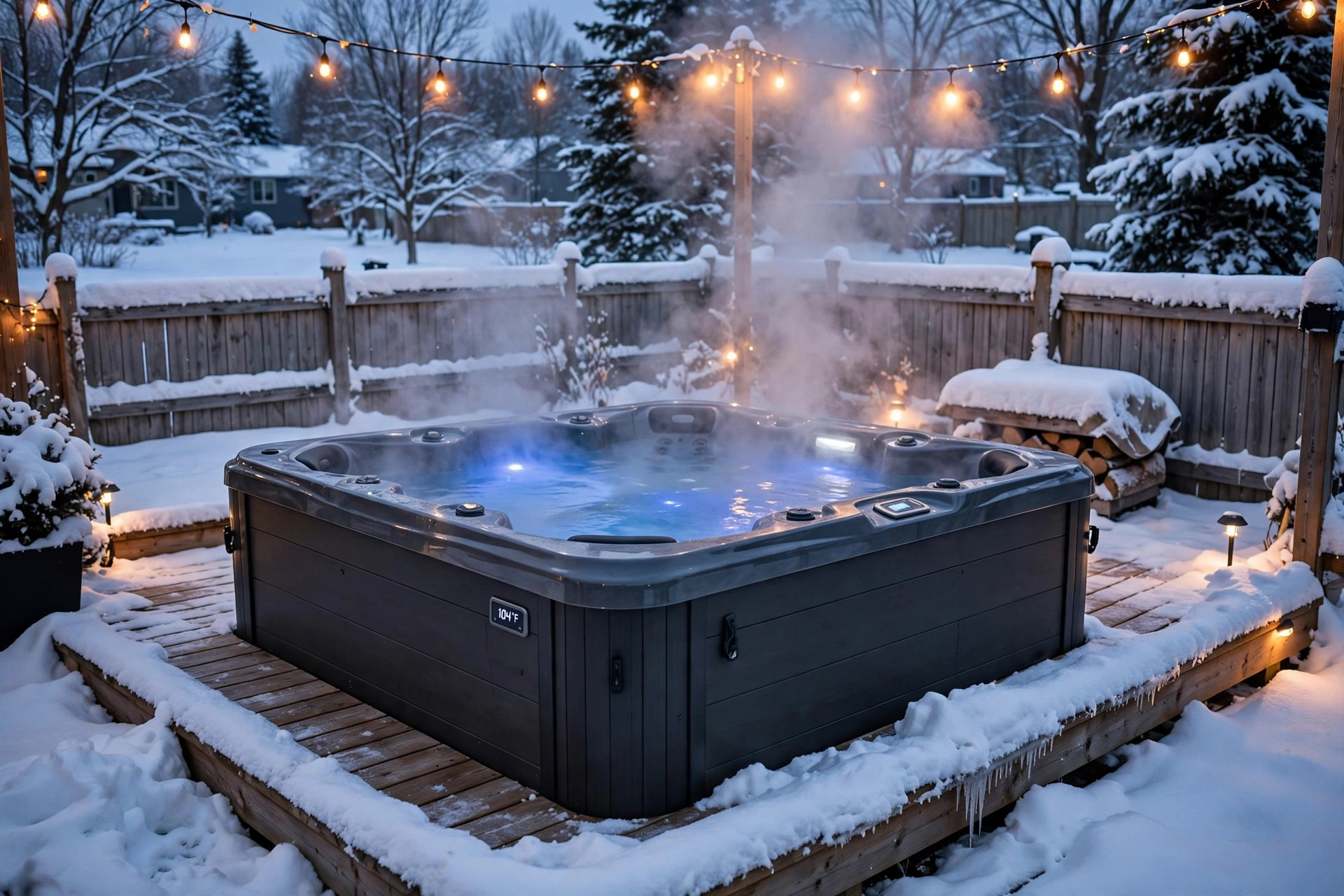

Finding the best hot tub for cold weather use is not the same as buying a hot tub for mild climates. A tub that works fine in Florida may fail in Minnesota. Cold air steals heat. Frozen pipes crack. Energy bills climb. So the wise buyer starts with winter in mind. This guide walks through what matters, what to check, and how much it costs. It ends with answers to common questions and a short list of references for further reading.
Why Winter Changes Everything
Water in a hot tub must stay near 100 to 104 degrees Fahrenheit. Outside air at 20 degrees pulls heat from the shell, the cover, and the pipes. A poorly insulated tub runs its heater almost nonstop. That wears out the heater. It also raises the power bill. In some homes, winter use can add fifty to one hundred dollars a month to the electric bill.
There is also the risk of a freeze. If the power fails during a cold snap, standing water in the pipes can freeze and burst the plumbing. Repairs cost hundreds of dollars. A tub built for cold weather use fights both problems. It holds heat in. It protects the works inside the cabinet. And it keeps running costs in a sane range.
Many buyers plan to soak in January and February, the coldest months. That is when the tub feels best. Steam rises into cold air. The contrast is part of the pleasure. But the tub must be built for it.
What to Look For in a Cold Weather Hot Tub: Best Hot Tub for Cold Weather Use
Full Foam Insulation
This is the single most important feature. Full foam means the space inside the cabinet is packed with expanding foam. The foam locks air in place and stops drafts. Tubs with full foam lose less heat. They also run quieter. Some makers use partial foam or a reflective barrier. These are lighter and cheaper, but they do not hold heat as well in real cold.
Check the cabinet walls too. A strong cabinet with a sealed base keeps cold air from rising up from the ground.
A Thick, Tight Cover
Most heat escapes through the top of the water. A thick cover is the best defense. Look for a cover at least five to six inches thick at the center, tapering to four inches at the edge. The taper sheds rain and snow. A full-length steam seal along the fold keeps warm air from leaking out at the hinge.
The cover must fit tight. Check the skirt. It should hang over the edge of the tub all the way around. Straps with locks hold it down in wind. Heavy snow adds weight, so brushing snow off after storms keeps the foam core from sagging. Guides on cover care from places like Swim University explain how to keep the vinyl and seal in shape through winter.
Strong Heater and Pump System
A five and a half kilowatt heater is the common standard for 220 volt tubs. It reheats the water after the cover comes off. In cold weather, the tub works harder after each soak. A 220 volt hookup is much better than a 110 volt plug in model for winter. Plug in models heat slowly and may lose ground in deep cold.
Pumps matter too. A tub with a dedicated circulation pump keeps water moving at low energy cost. Moving water does not freeze. Some tubs use the main jet pump for this job at low speed. Either way, ask how the tub circulates water when the jets are off.
Freeze Protection Controls
Good tubs have freeze protection built in. A sensor watches the air or cabinet temperature. If it drops too low, the tub turns on the pumps and heater on its own. This can save the plumbing during a cold night or a power cut. Read the owner manual. Know which sensor trips the system and at what temperature. The U.S. Consumer Product Safety Commission also publishes plain advice on spa safety that every new owner should read.
Types of Hot Tubs for Cold Climates
Portable Acrylic Tubs
These are the most common. A molded acrylic shell sits in a wooden or synthetic cabinet. Full foam models hold heat very well. They seat four to seven people. They cost the most up front, but they are the most reliable choice for real winter weather. Retailers such as The Home Depot carry several lines, and makers like Hot Spring and Bullfrog Spas focus on energy efficient shells.
Rotomolded Tubs
Rotomolded tubs are made from a single piece of tough plastic. They are lighter and cheaper. Many are 110 volt plug in models. They suit mild winters. In hard freeze zones, they struggle. Heat loss is higher and recovery is slow. If you live where January nights drop below zero, a rotomolded tub is a poor bet.
Wood Fired Tubs
Wood fired tubs use a stove to heat the water. They use no electricity for heat. But they need work. You must tend the fire for hours before a soak. Water care is manual. They lack freeze protection. They are a lifestyle choice, not the easy path.
Swim Spas
Swim spas are large. They need serious insulation and strong covers in winter. They cost more to heat than a small tub. If you want one for cold weather use, choose full foam and a thick locking cover, and expect higher power bills.
Size, Seating, and Jets
A four to six person tub is the sweet spot for most families. Loungers are nice but add water volume. If you are tall, seat depth matters more than seat count; see our guide to the best hot tub for tall people before you buy.
Jet count is less important than jet placement. Ten well placed jets beat fifty weak ones. Test the seats wet if you can. Sit in each seat with the jets on. In winter you will spend more time inside, so comfort counts.
Cost and Price in Cold Climates
A quality full foam tub for cold weather runs from about seven thousand to fifteen thousand dollars, plus delivery and electrical work. The electrical hookup often costs one to two thousand dollars for a 220 volt line and a disconnect box.
Running costs depend on climate, tub size, and power rates. In a cold state, plan on thirty to eighty dollars a month for power in winter. A cheap tub can run double that. Good hot tub insulation for winter pays for itself in a few seasons. A thermal blanket that floats on the water adds one more layer of heat retention for a small price.
Covers wear out. A replacement cover costs three hundred to six hundred dollars and lasts three to five years. Budget for it. Chemicals cost about twenty to forty dollars a month. Specialty stores like Leslie’s stock full winter chemical kits.
Do not forget the base. A tub needs a level pad. A concrete slab or a reinforced spa pad works. Set it near the house to shorten the walk in the cold, but keep it a safe distance from doors and windows so steam does not cause moisture problems. Our inground pool cost breakdown by size has more on planning backyard projects with room to spare.
Setup for Winter
Place the tub where it is sheltered from wind. A fence or a windbreak wall cuts heat loss. Keep a clear, safe path to the tub. Ice on deck boards is a real hazard. Use outdoor rugs or heated mats on the walkway.
A gazebo or pergola with a solid roof keeps snow off the cover. It also gives you a dry place to stand while you open the lid. Do not enclose the tub fully without ventilation. Steam and chemicals need air flow.
Keep a spare cover lifter or at least a soft brush near the tub. Snow left on the cover adds weight and soaks the seams when it melts. Brush it off after each storm.
Care and Upkeep Through Winter
Test the water two to three times a week. Cold air does not slow bacteria as much as people think. Keep sanitizer at the right level. Change the water every three to four months. In winter, plan the change for a mild day and work fast.
Clean the filter every month. A dirty filter makes the pumps work harder. Rinse the cartridge with a hose. Soak it in filter cleaner twice a year. Keep a spare cartridge so you can swap one in while the other dries.
Check the cover monthly. Look at the hinge seam for cracks. Lift the cover and smell the foam. A musty smell means the vapor barrier has failed and water is soaking in. A waterlogged cover is heavy and insulates poorly. Replace it before winter sets in.
Watch the water level. Low water can expose the heater to air and burn it out. Top off with a hose as needed. In very cold weather, use a floating thermal blanket to cut evaporation between soaks.
If you must leave the tub for a week or more in winter, do not just turn it off. Keep it running at a lower set point, or winterize it fully by draining and blowing out the lines. A half measure invites a freeze.
Safety in Cold Weather
Limit soaks to fifteen to twenty minutes. Hot water lowers blood pressure. Cold air on the head and hot water on the body can make some people dizzy. Get out slowly. Sit on the edge for a minute before standing.
Keep the water at or below 104 degrees. Pregnant women, small children, and people with heart trouble should check with a doctor first. Never soak alone if you have a health risk. Keep a phone within reach.
Alcohol and hot tubs are a bad mix. Alcohol lowers judgment and speeds dehydration. Save the drink for after the soak.
Secure the cover when the tub is not in use. A locked cover keeps children and pets out. It also keeps heat in.
Energy Saving Tips
Set the temperature two degrees lower when you soak less often. Every degree counts. Use the economy or sleep mode on the control panel during the work week, then raise the heat before the weekend.
Seal gaps in the cabinet. Mice and drafts both find small holes. A bead of foam around pipe entries stops cold air from reaching the works. Keep the cabinet doors closed and latched.
Compare energy guides before you buy. An energy efficient hot tub heater and a well sealed shell matter more than brand name. Articles and buyer guides at The Spruce compare features across price bands in plain language.
Common Mistakes to Avoid
Buying on price alone is the top mistake. A cheap tub in a cold climate becomes an expensive tub within two winters. Insulation is not visible, so buyers ignore it. Ask for the insulation spec in writing.
Skipping the 220 volt line is the second mistake. Plug in models look easy. In cold weather they recover slowly and run long hours. The power bill erases the savings.
Forgetting the cover is the third. The cover is half the insulation system. A thin or worn cover doubles heat loss. Treat it as part of the tub, not an accessory.
Draining the tub in winter without a full winterize is the fourth. Trapped water freezes. If you are not sure how to blow out the lines, pay a tech to do it. One service call is cheaper than cracked plumbing.
FAQ
Can I use a hot tub when it is below zero outside?
Yes, if the tub is built for it. Full foam insulation, a thick cover, and freeze protection let a good tub run in deep cold. Keep the water circulating and the cover on when not in use. Check the owner manual for the rated low temperature.
How much does it cost to run a hot tub in winter?
Most owners in cold states pay thirty to eighty dollars a month for power in winter. Size, insulation, power rates, and how often the cover comes off all matter. A poorly insulated tub can cost twice that.
Should I turn my hot tub off in winter to save money?
No. Turning it off lets the water freeze and crack the pipes. Keep it running at a lower set point if you soak less. Full winterizing is the only safe way to shut down, and it takes real work to do right.
What is the best hot tub cover for winter?
The best hot tub cover for winter is five to six inches thick at the center, with a full length steam seal, a tight skirt, and locking straps. A cover lifter makes daily use easier, and brushing snow off after storms extends its life.
Do I need a special base for a hot tub in a cold climate?
The tub needs a level, strong pad that will not shift when the ground freezes and thaws. A concrete slab is best. A reinforced composite spa pad also works. Set the pad where water drains away so ice does not form under the tub.
How often should I change the water in winter?
Every three to four months is the rule. Plan the change for a mild day. Drain, wipe the shell, refill, and bring the chemicals into balance the same day so the fresh water does not sit cold and untreated.
A Short Final Word
The best hot tub for cold weather use is not the one with the most jets or the lowest price. It is the one that holds its heat. Full foam insulation, a thick tight cover, a strong 220 volt heater, and freeze protection are the four pillars. Get those right and winter becomes the best season to own a tub. Steam in cold air, stars overhead, and warm water at your shoulders. That is what you are buying. Choose well, set it up right, and keep up with the small chores. The tub will pay you back every cold night.
For general pool and spa upkeep through the seasons, our guide to the best pool vacuum for sand bottom covers tools that keep shared water systems clean, and suppliers like Pool Warehouse stock parts for most major brands.
References
Bullfrog Spas. (n.d.). Hot tubs and spas. https://www.bullfrogspas.com Hot Spring Spas. (n.d.). Hot tubs and spas. https://www.hotspring.com Leslie’s Pool Supplies. (n.d.). Pool supplies and equipment. https://www.lesliespool.com Pool Warehouse. (n.d.). Pool equipment and supplies. https://www.poolwarehouse.com Swim University. (n.d.). Pool and hot tub care guides. https://www.swimuniversity.com The Home Depot. (n.d.). Home improvement products. https://www.homedepot.com The Spruce. (n.d.). Home and garden advice. https://www.thespruce.com U.S. Consumer Product Safety Commission. (n.d.). Product safety information. https://www.cpsc.gov
Was this guide helpful?

About Michael Thompson
The My Garden US editorial team writes practical, in-depth home and garden guides for American homeowners — tested advice, no fluff.
You May Also Like
Pool Resurfacing Options: Pros and Cons for Pool Owners
May 19, 2026 0 views
Best Above Ground Pool Ladder With Gate
June 27, 2026 0 views
Best Pool Floats for Pool Parties: A Practical Buying Guide
July 4, 2026 0 views