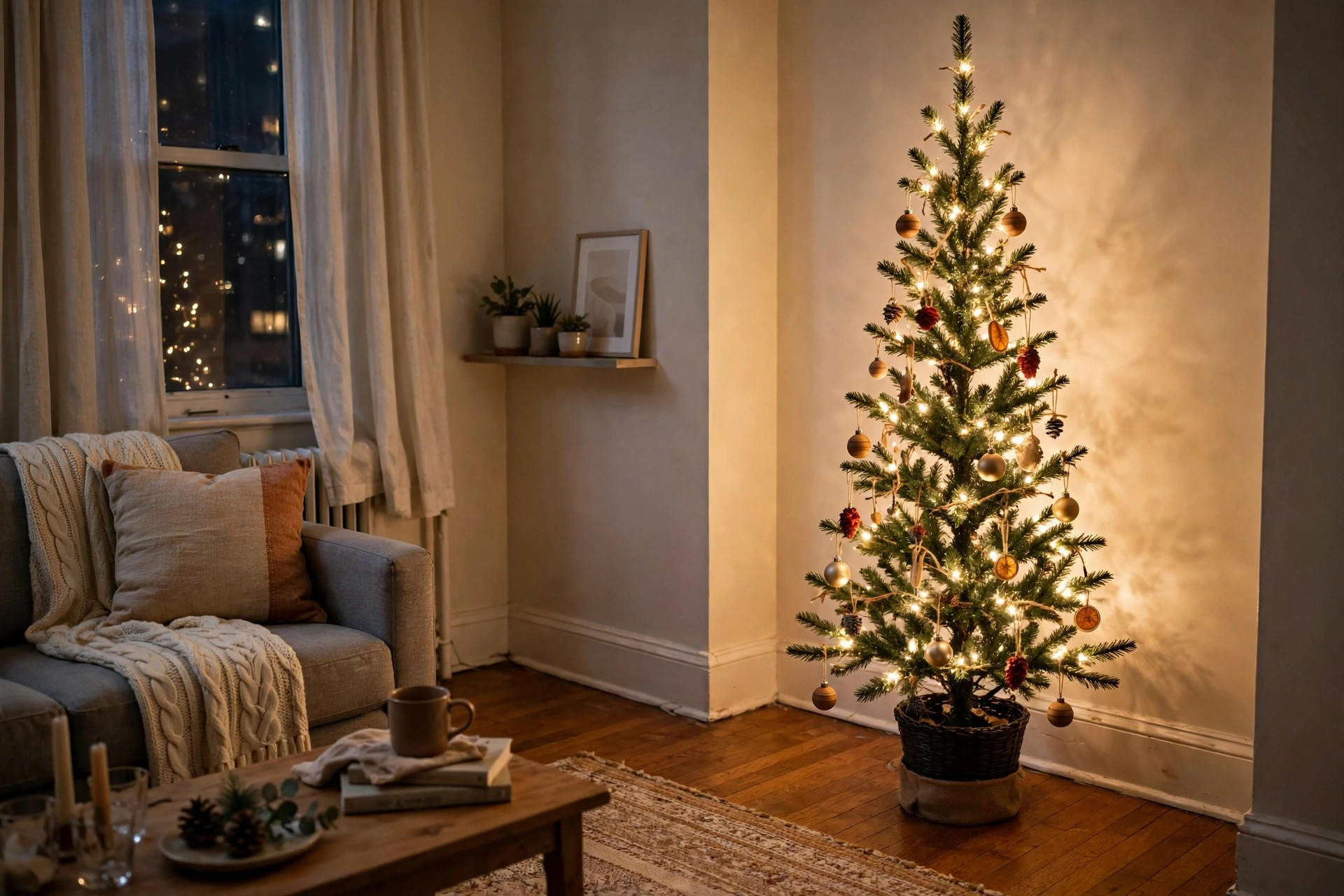
Living in a small apartment does not mean you must give up the joy of a Christmas tree. The best artificial christmas tree for small apartments gives you the look and feel of the season without taking over your whole living room. Today many makers build trees in small sizes. Slim trees, half trees, and tabletop trees all fit in tight spaces. This guide will help you pick the right one. It covers what to look for, the main types, cost, care, and safety. It also answers common questions from apartment dwellers.
Why It Matters
Space is the main reason to shop with care. A full-size tree can be seven feet tall and four feet wide. That size can fill half of a small living room. It can block a door or crowd the couch. A tree made for small spaces solves this problem. It still holds lights and ornaments. It still smells the season and spreads cheer. It just fits your floor plan.
An artificial tree also saves money over time. A real tree is bought every year. An artificial tree is bought once and used for many years. In a small apartment, storage space is also tight. Many small artificial trees break down into small parts. Some fold flat or fit in a box under a bed. This makes them a good match for apartment life.
A smaller tree is also easier to decorate. You need fewer ornaments and fewer lights. Setting up takes less time. Taking down takes less time. For busy people in small homes, this ease is a real gift.
What to Look For When You Choose: Best Artificial Christmas Tree for Small Apartments
Size and Shape
Measure your space before you shop. Write down the height of your ceiling. Leave six to twelve inches of room above the tree for a topper. Then measure the floor space where the tree will stand. A corner is often the best spot in a small room.
Height matters most. Trees from three to six feet work well in most apartments. A four-foot tree on a table can look like a much taller tree. Width matters too. A slim tree may be only two feet wide at its base. A pencil tree is even narrower. Check the listed base width before you buy.
Branch Quality
Good branches make a tree look real. Look for hinged branches that fold out from the trunk. They are easier to set up than branches you push into holes. The number of tips also matters. More tips mean a fuller look. A four-foot tree with 400 or more tips will look dense and rich.
Some trees mix PE and PVC branches. PE branches look more like real pine needles. PVC branches fill out the tree. A tree with both types often looks the most natural.
Lighting
Many small trees come pre-lit. This means the lights are built into the branches. Pre-lit trees save time. You do not need to wrap lights around the tree yourself. Check how many lights the tree has. A four-foot tree with 150 to 200 lights will glow nicely.
LED lights are the best choice. They use less power than old bulb lights. They stay cool to the touch. They last much longer. Some trees offer warm white, cool white, or color-changing modes. Warm white gives a classic holiday feel.
Check the power cord length too. In a small apartment the outlet may be far from the corner. A longer cord helps you avoid extension cords.
Ease of Setup
Look for trees that set up in three parts or fewer. Hinged branches fold down as you lift each part onto the pole. Then you shape the branches by hand. Fluffing the branches takes time, but it makes the tree look full.
Check the stand. A sturdy stand keeps the tree from tipping. In a small space, people and pets may bump the tree. A wide, heavy base adds safety.
Types and Options for Small Spaces
Slim Trees
Slim trees are the most popular pick for apartments. They are tall but narrow. A six-foot slim tree may be only 30 inches wide at the base. It fits in a corner or beside the couch. Slim trees still hold plenty of ornaments. They give a full holiday look without crowding the room. Many style guides at HGTV show how slim trees can anchor a small room design.
Pencil Trees
Pencil trees are even narrower than slim trees. They have a tall, thin shape like a pencil. A seven-foot pencil tree may be just two feet wide. They work well in very tight spots, such as beside a door or in a hallway corner. They look modern and neat.
Tabletop Trees
Tabletop trees sit on a table, shelf, or counter. They are usually two to four feet tall. They are a great pick for studio apartments. You can place one on your dining table or desk. They cost less than full trees. They are easy to store in a closet. Decorating a tabletop tree takes only a few minutes. For ideas on dressing small trees, craft guides at Michaels offer many simple projects.
Half Trees
Half trees have branches on only one side. The flat back goes against a wall. They give the look of a full tree from the front. They take up half the floor space of a full tree. They are a smart choice when your tree must stand flat against a wall.
Corner Trees
Some trees are made with a wedge shape that fits into a corner. They fill the corner space that is often wasted. They look full from the front and sides. If your apartment has a free corner, this shape can be ideal.
Pre-Decorated Trees
Some small trees come with ornaments and ribbons already in place. You take the tree out of the box and plug it in. This saves a lot of time. The style is set by the maker, so you have less control over the look. But for a busy renter, it can be the easiest path to a decorated home.
Cost and Price
Small artificial trees cost less than large ones. A basic two-foot tabletop tree may cost 20 to 40 dollars. A four-foot tree with good branches often costs 60 to 120 dollars. A pre-lit six-foot slim tree from a well-known brand may cost 150 to 300 dollars. High-end trees with realistic PE branches can cost 300 to 500 dollars or more.
Prices rise near the holidays. The best deals are often found in January, when stores clear out holiday stock. If you can wait, you can save half the price or more. Big retailers such as Home Depot, Lowe’s, Walmart, and Target all carry a wide range of small trees each season.
Think about cost per year. A 150-dollar tree used for ten years costs 15 dollars per year. That is less than the price of a real tree in most cities. Over time, the artificial tree wins on cost.
Do not forget the extras in your budget. You may need a tree skirt or a small collar for the base. Ornaments, a topper, and a storage bag add to the total. A storage bag made for trees protects your tree between seasons. If you have pets, shatterproof ornaments are worth the small extra cost.
Care and Upkeep
Artificial trees need little care. But a few simple steps will keep yours looking good for years.
Fluff the branches each year when you set up the tree. Start at the bottom and work up. Spread each branch tip in a different direction. This takes 20 to 30 minutes for a medium tree. It makes the biggest difference in how real the tree looks.
Dust the tree before you store it. A soft cloth or a light pass with a vacuum brush works well. If the tree has lights, check that all sections still glow before you pack it away. Fix or note any dark sections.
Store the tree in a cool, dry place. Heat and damp air can damage the branches and wires over time. Keep the tree in its original box or a storage bag. Do not stack heavy boxes on top of it. The branches can bend and hold the bent shape.
If your tree is pre-lit, do not wrap the cord tightly around the branches. Loose loops are better. Tight wraps can wear through wire insulation over many years.
Safety
Safety matters in any home, but small apartments need extra care. The tree stands close to furniture, curtains, and walkways. Keep these rules in mind.
Place the tree away from heat sources. Keep it at least three feet from radiators, space heaters, and fireplaces. Heat can damage artificial branches and raise fire risk.
Use only lights and cords in good shape. Throw away any string with cracked wires or broken sockets. Do not overload one outlet with too many plugs. LED lights draw little power, which helps.
Turn the tree lights off at night and when you leave home. A simple timer plug can do this for you. It also saves power.
Keep the tree steady. Make sure the stand is tight and level. If you have cats that climb, place the tree where it cannot fall onto anything fragile. The U.S. Consumer Product Safety Commission offers general holiday decoration safety tips that are worth a read each season.
Water is not needed for an artificial tree. Do not place drinks or vases where they can spill onto the lights or cord.
If anyone in the home has dust allergies, wipe the tree down before setup. Trees stored for a year can gather dust that stirs up when you fluff the branches.
Frequently Asked Questions
What size artificial tree is best for a small apartment?
For most small apartments, a tree between four and six feet tall works best. Pick a slim or pencil shape to save floor space. A four-foot tree on a sturdy table gives the look of a taller tree. Always measure your ceiling and floor space first. Leave room for a topper and for people to walk past.
Are pre-lit trees worth it for small spaces?
Yes, for most buyers. Pre-lit trees save the work of wrapping lights. This matters more in small spaces, where reaching around a tree is hard. Look for LED lights, which stay cool and use little power. Check reviews to make sure the lights are spread evenly. A dark patch on one side will show more on a small tree.
How do I store an artificial tree in a small apartment?
Take the tree apart into its sections. Fold the branches flat against the trunk. Slide each part into a storage bag. Many small trees fit in a bag that slides under a bed or stands in a closet corner. Some tabletop trees fit back in their original box on a closet shelf. A dry spot away from heat is best. For more small-space living ideas, Wayfair and The Spruce both publish apartment guides.
Can I put a tree in a studio apartment?
Yes. A tabletop tree on a desk or shelf is the simplest choice. A slim floor tree in a corner also works in many studios. A half tree against a wall gives a full look with little floor use. Keep the decor simple so the small space does not feel crowded. Fewer, larger ornaments often look better than many tiny ones.
How long do artificial Christmas trees last?
A good artificial tree lasts seven to ten years with normal care. Pre-lit trees may lose light sections sooner, often after five to seven years. Store the tree well and handle the branches gently to get the most years from it. When lights fail and cannot be fixed, some people add a fresh string of lights and keep using the tree.
Do artificial trees look real enough?
Modern trees look far better than the trees of years past. Mixed PE and PVC branches, molded tips, and varied branch colors all add realism. Fluffing the branches well is the key step. From a few feet away, a good small tree can fool most guests. Country living style guides at Country Living show how realistic small trees can look in real homes.
A Final Word
The best artificial christmas tree for small apartments is the one that fits your space, your budget, and your style. Measure first. Pick a slim, pencil, tabletop, or half tree shape. Look for hinged branches, plenty of tips, and LED lights. Plan for safe placement and simple storage. With the right small tree, even the tiniest apartment can hold the full warmth of the season.
References
Country Living. (n.d.). Country home and lifestyle. https://www.countryliving.com HGTV. (n.d.). Home and garden ideas. https://www.hgtv.com Lowe’s. (n.d.). Home improvement products. https://www.lowes.com Michaels. (n.d.). Arts and crafts supplies. https://www.michaels.com Target. (n.d.). Retail store. https://www.target.com The Home Depot. (n.d.). Home improvement products. https://www.homedepot.com The Spruce. (n.d.). Home and garden advice. https://www.thespruce.com U.S. Consumer Product Safety Commission. (n.d.). Product safety information. https://www.cpsc.gov Walmart. (n.d.). Everyday low prices. https://www.walmart.com Wayfair. (n.d.). Furniture and home goods. https://www.wayfair.com
Was this guide helpful?

About Jennifer Lee
The My Garden US editorial team writes practical, in-depth home and garden guides for American homeowners — tested advice, no fluff.