
An above ground pool brings summer joy to a backyard. But getting in and out can be hard. A thin ladder hurts bare feet. It can wobble under weight. It may feel unsafe for small children or older swimmers. Good pool steps solve these problems. The best pool steps for above ground pools are wide, steady, and easy to climb. This guide explains what to look for, what the options are, what they cost, and how to keep them in good shape.
Why Pool Steps Matter
Pool steps do more than help you climb in. They make the whole pool safer and more pleasant. A ladder has narrow rungs. Rungs press into feet and can be slippery when wet. Steps have wide treads. Wide treads spread weight and give firm footing.
Steps help children most. A child can sit on a wide step and ease into the water. Older adults like steps too. Two handrails give support on both sides. Guests with sore knees or bad backs can enter with ease.
Steps also help pets. Many dogs learn to climb wide steps in and out of the pool. A ladder is nearly impossible for a dog.
From a safety view, steps with a locking gate or a flip-up outer section keep small children from entering alone. Federal pool safety guidelines stress barriers and constant watch. Steps that can be blocked or removed add one more layer of care.
A sturdy set of steps can even raise the value of your pool setup. Buyers see a safe, finished look. They see a pool that was built with care.
How to Choose the Right Steps: Best Pool Steps for Above Ground
Start with the height of your pool wall. Most above ground pools are 48, 52, or 54 inches tall. Steps are made for a set range. A set built for a 48 inch wall will sit too low in a 54 inch pool. A set built too tall will lean and wobble. Measure your wall from the ground to the top rail. Write the number down before you shop.
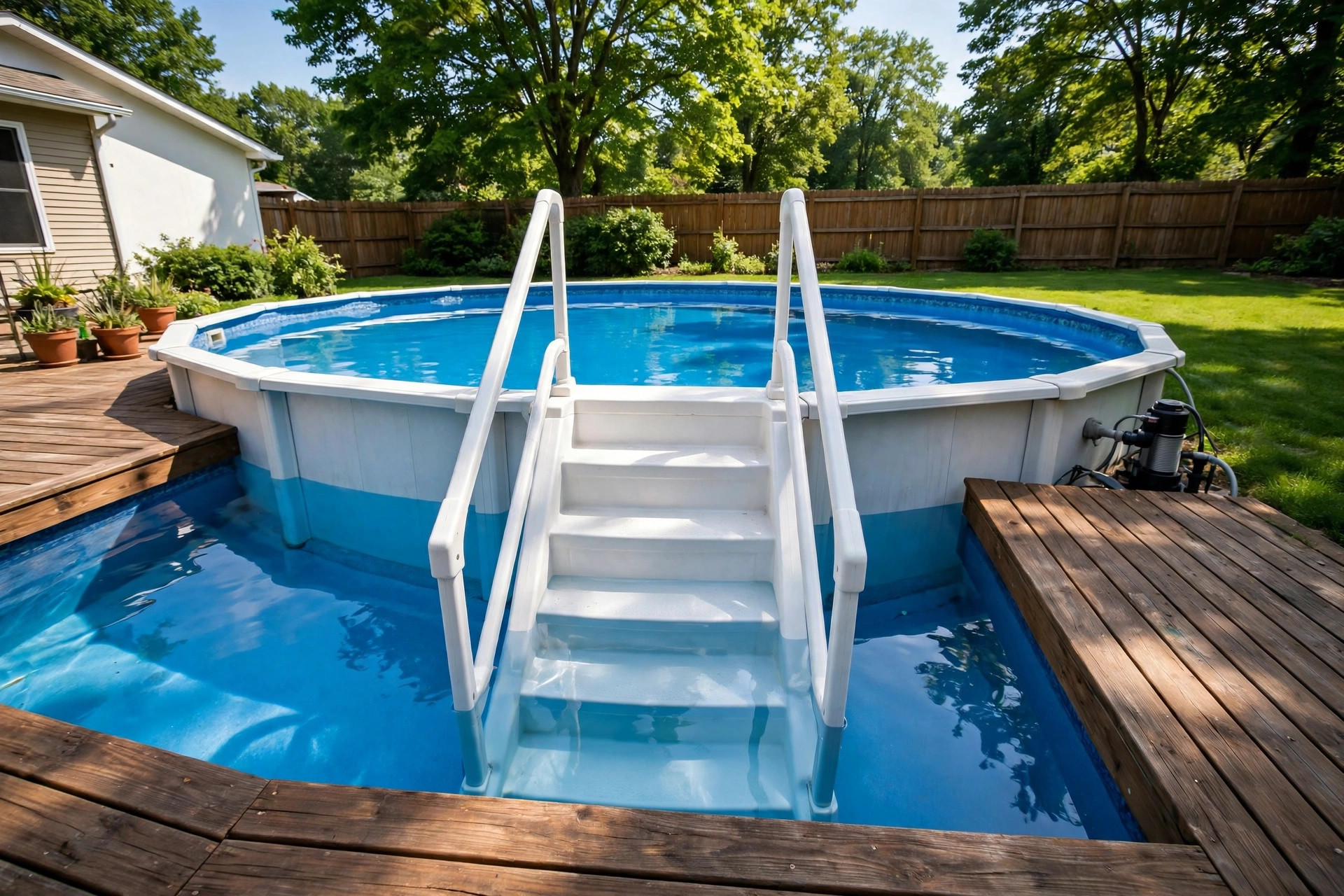
Next, think about how you enter the pool now. Do you have a deck? Deck-mount steps bolt to the deck edge and hang down into the water. No deck? Then you need a set that stands on the ground outside and drops into the pool on the inside. Many sets work both ways.
Match the Steps to Your Pool Wall Height
Check the product label for the height range. Look for words like “fits 48 to 54 inch pools.” If your pool is 52 inches, any set in that range will work. Do not guess. A bad fit is the top cause of wobble and noise.
Also check the width. Wide steps are more stable. They also take more room in the pool. A small round pool may feel crowded with a very wide set. Measure the space where the steps will sit.
Check Weight Capacity and Rail Design
Most resin steps hold 300 to 400 pounds. That is enough for one adult at a time. If more than one person will use the steps at once, look for a higher rating. Read the label, not just the ad.
Two handrails are better than one. Rails should be easy to grip when wet. Some rails are round and smooth. Others have a textured grip. Textured grips help wet hands hold on. Look at how the rails attach. Bolted rails last longer than snap-fit rails.
Tread depth matters too. Deep treads let your whole foot rest flat. Shallow treads force you to climb on your toes. That tires legs fast. If anyone in the family has balance trouble, deep treads are worth the extra cost. Also look at the tread surface. Raised pads or a rough texture stop slips. Smooth plastic gets slick with algae or sunscreen.
Common Types of Above Ground Pool Steps
In-pool drop-in steps. These sit inside the pool against the wall. The top of the steps rests on the pool rail. The bottom rests on the pool floor. They give a wide, stair-like entry. Many curve like a small staircase. They work well for families. They need ballast so they do not float.
Wedding cake steps. These are wide, rounded steps that look like stacked tiers. They take up more space. They feel the most like a real staircase. They are a favorite for older swimmers. They cost more than basic models.
Deck-mount steps. These bolt to a deck or platform at the pool edge. They are very steady because the deck holds them. If you already have a deck, this is often the best choice. You can find guides to deck gear at home and garden sites and pool equipment sellers.
Ladders with a step side. Some models are half ladder, half steps. The outside is a ladder. The inside is a set of steps. An above ground pool ladder with a gate adds a locking outer ladder. This keeps children out when the pool is closed.
In-pool ladder for above ground pool use is the old standby. It is cheap and simple. But steps beat ladders for comfort in almost every case. If your budget is tight, a ladder works. If you can spend more, steps are worth it.
Related long-tail buyers also search for above ground pool steps with handrails and above ground pool entry steps. These are just other names for the same products. The features to check are the same: height fit, weight rating, rail grip, and tread width.
What to Expect to Pay
Prices range from about 150 dollars to more than 600 dollars. Basic drop-in steps sit at the low end. They have simple treads and one rail. Mid-range sets cost 250 to 400 dollars. They add a second rail, wider treads, and better ballast design. Top models cost 400 to 600 dollars or more. These include wedding cake styles, deck-mount hardware, and heavy resin walls.
What drives the price up? Wider treads cost more. Extra rails cost more. Thicker resin costs more. Brand names cost more. A lockable gate or a flip-up barrier adds cost too.
Watch for hidden costs. Some sets need sand or gravel for ballast. Some need a pool supply store mat to sit under them. Delivery of a large box can add a fee. Check the full price before you order from big home improvement retailers.
A cheap set that breaks in two seasons costs more than a good set that lasts ten. Read reviews about cracks and sun damage. Resin that is UV treated lasts longer in strong sun.
Also think about the off-season. Some sets split into two parts. The outer part comes off and stores flat. This helps if your shed is small. Check the boxed size before you buy if storage space is tight. A set that stores well saves you a yearly headache.
Installation and Care
Most steps arrive in a box with parts and a manual. Set aside one to two hours for assembly. You will need a screwdriver and maybe a wrench. Do not force parts together. Forced parts crack later.
Ballast keeps the steps on the pool floor. Many sets have hollow chambers. Fill them with clean sand or water as the manual says. Sand is heavier and holds better. Water is easier to drain at season end. Never use dirt or gravel with sharp edges.
Place a mat under the steps. The mat guards your liner. Steps can shift a little as people climb. Over time, that rubbing can wear a hole in the liner. A mat spreads the load. Knowing pool liner replacement costs will show you why a ten dollar mat is a wise buy.
Clean the steps each week. Algae grows in the small gaps behind steps. Brush the treads with a pool brush. Wipe the rails with a soft cloth. Check bolts once a month and tighten what is loose. Pool care guides offer simple weekly checklists.
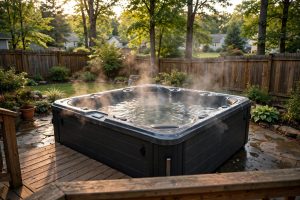
At season end, lift the steps out. Drain the ballast chambers. Let them dry in the sun for a day. Store them in a garage or shed if you can. Sun and ice wear resin down over time. Some owners leave steps in all winter in mild areas. In cold areas, removal is safer. If you close the pool for the winter, you might also look at the best hot tub for cold weather use from hot tub makers and spa brands to keep warm water fun going through the cold months.
Safety Rules for Pool Steps
Steps make entry easier, but they do not make a pool safe by itself. Follow these rules every swim season.
Block access when the pool is closed. Use the built-in gate or barrier. Lock it. Remove the outside ladder section if your model allows it. Fences and alarms add more protection.
Watch children at all times. No step design replaces a watching adult. Stay within arm’s reach of weak swimmers. Teach children to use the handrails and to face the steps when climbing out.
Keep weight limits in mind. Only one person should climb at a time on most sets. Jumping or diving from steps can cause injury. Make the rule clear to guests.
Check for wear. Look for cracks, loose rails, and missing tread pads. Replace worn parts before they fail. Sun-bleached resin gets brittle. A rail that snaps under a wet hand is a fall risk.
Keep the area dry and clear. The ground outside the steps gets wet and slick. A non-slip mat outside helps. Keep toys and hoses away from the entry point so no one trips.
Frequently Asked Questions
Are steps better than a ladder for an above ground pool?
For most families, yes. Steps have wide treads and handrails. They are kinder to feet and easier for children and older adults. Ladders cost less and take less space. If comfort and safety matter most, choose steps.
What size steps fit a 52 inch pool?
Look for steps rated for a range that includes 52 inches, such as 48 to 54 inches. Measure your wall to the top rail to be sure. Do not buy steps made only for 48 inch walls.
How do I keep pool steps from floating?
Fill the ballast chambers with clean sand or water as the manual directs. Sand holds better. Set the steps in place before you fill the pool fully if you can. Check that the steps sit flat on the floor with no rocking.
Can pool steps damage my pool liner?
They can if they shift and rub. Always put a mat under the steps. Keep the steps from rocking by filling ballast fully. Check the liner under the steps each season for thin spots.
Should steps stay in the pool all winter?
In mild climates, many owners leave them in. In areas with hard freezes, take them out. Ice can crack resin and push steps against the wall. Drain and dry them before storage.
How much do above ground pool steps cost?
Most sets cost between 150 and 600 dollars. Basic models are cheapest. Wide wedding cake and deck-mount models cost the most. Add a mat and ballast sand to your budget.
A Final Word
The best pool steps for above ground pools fit your wall height, hold your weight, and feel steady underfoot. Measure first. Choose two handrails and wide treads. Add a mat to guard your liner. Lock or block the steps when swimming is done. Do these simple things and your steps will serve your family for many summers.
References
Bullfrog Spas. (n.d.). Hot tubs and spas. https://www.bullfrogspas.com Hot Spring Spas. (n.d.). Hot tubs and spas. https://www.hotspring.com Leslie’s Pool Supplies. (n.d.). Pool supplies and equipment. https://www.lesliespool.com Pool Warehouse. (n.d.). Pool equipment and supplies. https://www.poolwarehouse.com Swim University. (n.d.). Pool and hot tub care guides. https://www.swimuniversity.com The Home Depot. (n.d.). Home improvement products. https://www.homedepot.com The Spruce. (n.d.). Home and garden advice. https://www.thespruce.com U.S. Consumer Product Safety Commission. (n.d.). Product safety information. https://www.cpsc.gov
Was this guide helpful?

About Sarah Mitchell
The My Garden US editorial team writes practical, in-depth home and garden guides for American homeowners — tested advice, no fluff.
You May Also Like
How to Add DE to Pool Filter: A Clear Step-by-Step Guide
February 16, 2026 0 views
How to Fix Pool Pump Losing Prime: A Step-by-Step Guide
May 3, 2026 0 views
Best Pool Thermometer Floating Reviews: A Plain Buyer’s Guide
February 8, 2026 0 views