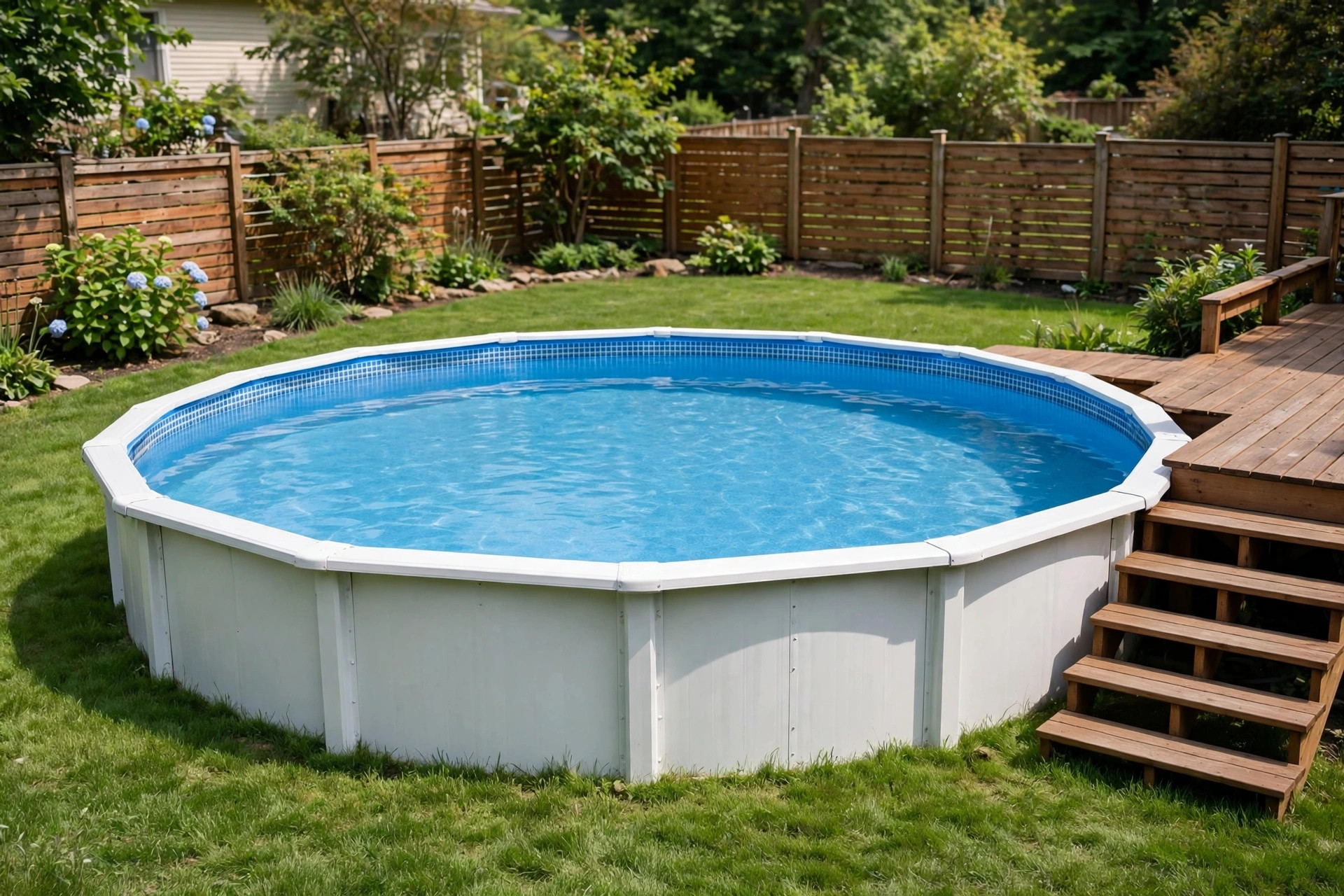

The above ground pool liner replacement cost is one of the first things a pool owner should learn. A liner is the vinyl skin that holds the water in an above ground pool. It covers the walls and the floor of the pool. Over time it wears out. It fades in the sun. It gets thin at the folds. It may leak. When that day comes, the owner must decide how to pay for a new liner. This guide explains the cost in plain terms. It covers the price of the liner, the price of the labor, the types to choose from, and the care that makes a new liner last.
Why Replacing the Liner Matters
A pool liner does more than hold water. It protects the steel or resin wall of the pool from rust and wear. It gives swimmers a smooth surface under their feet. When a liner fails, the water level drops. The wall may buckle. The ground under the pool may wash out. A small tear can turn into a big bill if it is ignored.
Most above ground pool liners last from six to ten years. Heavy sun use shortens the life. Poor water balance shortens it too. A liner that is past its time will wrinkle, lose its color, and crack along the seam. Replacing it on time saves the frame of the pool. It also keeps the water bill low, since a leaking pool must be refilled again and again.
Owners often put the job off because they fear the cost. But a clear plan takes the fear away. When you know the above ground pool liner replacement cost in advance, you can save the right amount and hire the right help.
What to Look For Before You Buy: Above Ground Pool Liner Replacement Cost
Measure the Pool
The first step is to measure the pool. Round pools are measured across the center from wall to wall. Oval pools are measured at the longest and widest points. The wall height is measured from the floor to the top rail. Write the numbers down. A liner that is too small will not reach the top. A liner that is too big will wrinkle and bunch.
Check the Liner Type
Above ground liners come in two main styles. Overlap liners fold over the top of the wall. Beaded liners snap into a track at the top. Unibead liners can be used either way. You must buy the same style as your pool. A guide to pool liner replacement cost estimates can help you compare the two styles and their prices.
Note the Wall and Floor Shape
Some pools have a flat bottom. Others have a deep center. Liners are cut for one shape or the other. If you are not sure, check the pool manual or ask the store that sold the pool. Getting this right saves a costly return.
Look at the Old Liner
When the old liner is pulled out, look at how it failed. If the sun side is brittle, the pool may need more shade or a better cover. If the floor is rough under the liner, the sand base may need fresh leveling. These notes help the new liner last longer.
Types of Above Ground Pool Liners
Overlap Liners
Overlap liners are the oldest style. The vinyl hangs over the wall and is held by coping strips. They are simple to install. They cost less than other styles. The extra vinyl at the top can be trimmed. They are a good pick for a tight budget.
Beaded Liners
Beaded liners have a thick edge that slides into a track under the top rail. They give a clean, even line around the pool. They are easier to replace later because the track stays in place. They cost more than overlap liners. Many newer pools use this style.
Unibead Liners
Unibead liners combine both styles. They can be hung like a beaded liner or folded like an overlap liner. This makes them handy if you are not sure which style your pool needs. They sit in the middle of the price range.
Gauge and Thickness
Liner thickness is measured in mil. Most above ground liners run from 20 to 30 mil. A thicker liner resists punctures and sun damage. It also costs more. For a pool that gets heavy use, the thicker liner is worth the extra money. Retailers such as Leslie’s and Pool Warehouse list the gauge of each liner so you can compare before you buy.
Patterns and Colors
Liners come in tile prints, stone prints, and solid blue. The pattern does not change the price much. Dark colors can make the water feel warmer. Light colors can make small tears easier to spot. Pick what you like. The home improvement giant Home Depot shows many patterns side by side for easy shopping.
Cost and Price: The Full Picture
The above ground pool liner replacement cost has two parts: the liner itself and the labor to put it in.
A liner alone costs about 150 to 600 dollars. A basic 20 mil overlap liner for a small round pool sits at the low end. A thick 30 mil beaded liner for a large oval pool sits at the high end. The pool size is the biggest factor. A 15 foot round pool needs far less vinyl than a 33 foot oval.
Labor costs about 400 to 1,200 dollars. A pro crew will drain the pool, pull the old liner, smooth the floor, hang the new liner, and refill the pool. In areas where labor is dear, the price runs higher. Getting two or three quotes is the best way to find a fair price.
All told, most home owners pay between 600 and 1,800 dollars for the full job. DIY owners can bring that down to the cost of the liner plus a few supplies. A swim university guide on pool care is a useful read for owners who plan to do the work themselves.
Extra costs can add up. A new foam cove for the base runs 50 to 150 dollars. A fresh sand base can add 100 to 300 dollars. A wall foam liner adds 100 to 200 dollars. If the pool frame has rust, new parts can add more. Ask the installer to list every extra charge in writing before the work starts.
If you are also warming the water, the price of a pool heater for above ground pools is a separate line in the budget. And when the pool is new to your yard, the above ground pool installation cost guide gives a wider view of all the setup costs.
When to Replace Rather Than Repair
Small tears can be patched with a vinyl kit. But patching has limits. If the liner has many leaks, a patch will not hold for long. If the vinyl is brittle across wide areas, a patch will tear out. As a rule, if the repair would cost half the price of a new liner, buy the new liner. The makers at Bullfrog Spas and Hot Spring note that fresh shells and liners always hold water better than patched ones.
Care and Upkeep for a New Liner
A new liner is an investment. Good care can add years to its life.
Keep the water balance right. Low pH eats vinyl. High chlorine bleaches it. Test the water twice a week in summer. Test strips from trusted brands reviewed on The Spruce make this a quick job. Keep pH between 7.2 and 7.8 and chlorine between 1 and 3 parts per million.
Do not let sharp tools touch the liner. Use a soft brush for the walls. Use a vacuum head made for vinyl pools. Keep pets’ claws out of the pool. One careless dive with a metal toy can cut the vinyl.
Control the sun. The sun is the hardest wear on a liner. A solar cover slows the fade. It also cuts heat loss at night. When the pool is closed for winter, drain to the right level and use a tight winter cover. The federal safety agency CPSC also stresses good covers for safety reasons.
Watch the water line. If the level drops more than a quarter inch a day with no rain, look for a leak. Check the folds and the seams first. Fix small holes early with a patch kit. A fast fix stops a small tear from growing into a full replacement.
Avoid sitting on the liner. Feet are fine. Heavy point loads are not. Do not place ladders or steps on bare vinyl. Use a pad under pool steps to spread the weight. This simple step stops many floor tears.
Safety Notes for Liner Work
Draining a pool is heavy work. Water weighs over eight pounds a gallon. A full pool holds thousands of gallons. Never drain the pool with people in it. Keep children and pets away from the work area.
Turn off the pump and the filter before the job starts. Unplug the heater. A dry pump can burn out in minutes. Cap the lines so debris does not fall in while you work.
Be careful with the wall. An above ground pool wall with no water in it is weak. Strong wind can push it in. Do the liner swap on a calm day. If the forecast calls for storms, wait. Refill the pool as soon as the new liner is set so the wall has support.
Chemicals need care. Shock and acid can harm eyes and skin. Store them in a dry, locked place away from children. Never mix chemicals together. Add them to the pool one at a time with the pump running.
Once the pool is full again, check the fence and the gate. A self-closing, self-latching gate is the best guard against accidents. Safety alarms are also worth the cost. They are small compared to the value of a safe pool.
Frequently Asked Questions
How long does a liner replacement take?
A pro crew can finish in half a day. Draining and refilling take the most time. The actual liner swap takes two to three hours. DIY owners should plan a full weekend. Refilling a large pool can take twelve hours or more on a garden hose.
Can I put a new liner over the old one?
This is not advised. Two liners trap water between them. The trapped water grows algae. It also hides leaks. Always remove the old liner and smooth the base before the new one goes in.
Does the season affect the cost?
Yes. Installers are busiest in spring and early summer. Prices and wait times run higher then. Late summer and fall often bring better rates. Warm weather is still needed, since vinyl stretches best above 70 degrees.
What size liner do I need?
Measure the pool exactly. For round pools, note the diameter and wall height. For oval pools, note the length, width, and wall height. Bring the liner style with you: overlap, beaded, or unibead. When in doubt, ask the seller to check your numbers before you order.
How do I know the liner is worn out?
Look for fading, brittleness, and wrinkles that will not smooth out. Feel for thin spots near the water line. Watch for leaks that keep coming back. If the liner is over eight years old and shows these signs, plan a replacement soon.
Is a thicker liner worth the money?
For most pools, yes. A 25 or 30 mil liner resists punctures and sun damage better than a 20 mil liner. The price gap is often under 100 dollars. Over eight to ten years, that is a small cost for a longer life.
A Final Word
The above ground pool liner replacement cost is easy to plan once the numbers are clear. Expect 600 to 1,800 dollars for a full pro job, or 150 to 600 dollars if you do the work yourself. Measure with care, pick the right style and thickness, and get quotes in writing. Then care for the new liner with steady water balance and gentle cleaning. A well kept liner gives many summers of clear water and safe swimming. That is money well spent.
References
Bullfrog Spas. (n.d.). Hot tubs and spas. https://www.bullfrogspas.com Hot Spring Spas. (n.d.). Hot tubs and spas. https://www.hotspring.com Leslie’s Pool Supplies. (n.d.). Pool supplies and equipment. https://www.lesliespool.com Pool Warehouse. (n.d.). Pool equipment and supplies. https://www.poolwarehouse.com Swim University. (n.d.). Pool and hot tub care guides. https://www.swimuniversity.com The Home Depot. (n.d.). Home improvement products. https://www.homedepot.com The Spruce. (n.d.). Home and garden advice. https://www.thespruce.com U.S. Consumer Product Safety Commission. (n.d.). Product safety information. https://www.cpsc.gov
Was this guide helpful?

About David Wilson
The My Garden US editorial team writes practical, in-depth home and garden guides for American homeowners — tested advice, no fluff.
You May Also Like
How to Maintain Hot Tub Water Chemistry the Simple, Safe Way
April 24, 2026 0 views
Best Pool Filter for Small Pools: How to Choose the Right One
April 15, 2026 0 views
Best Pool Light for Above Ground Pools: A Homeowner’s Guide
March 22, 2026 0 views