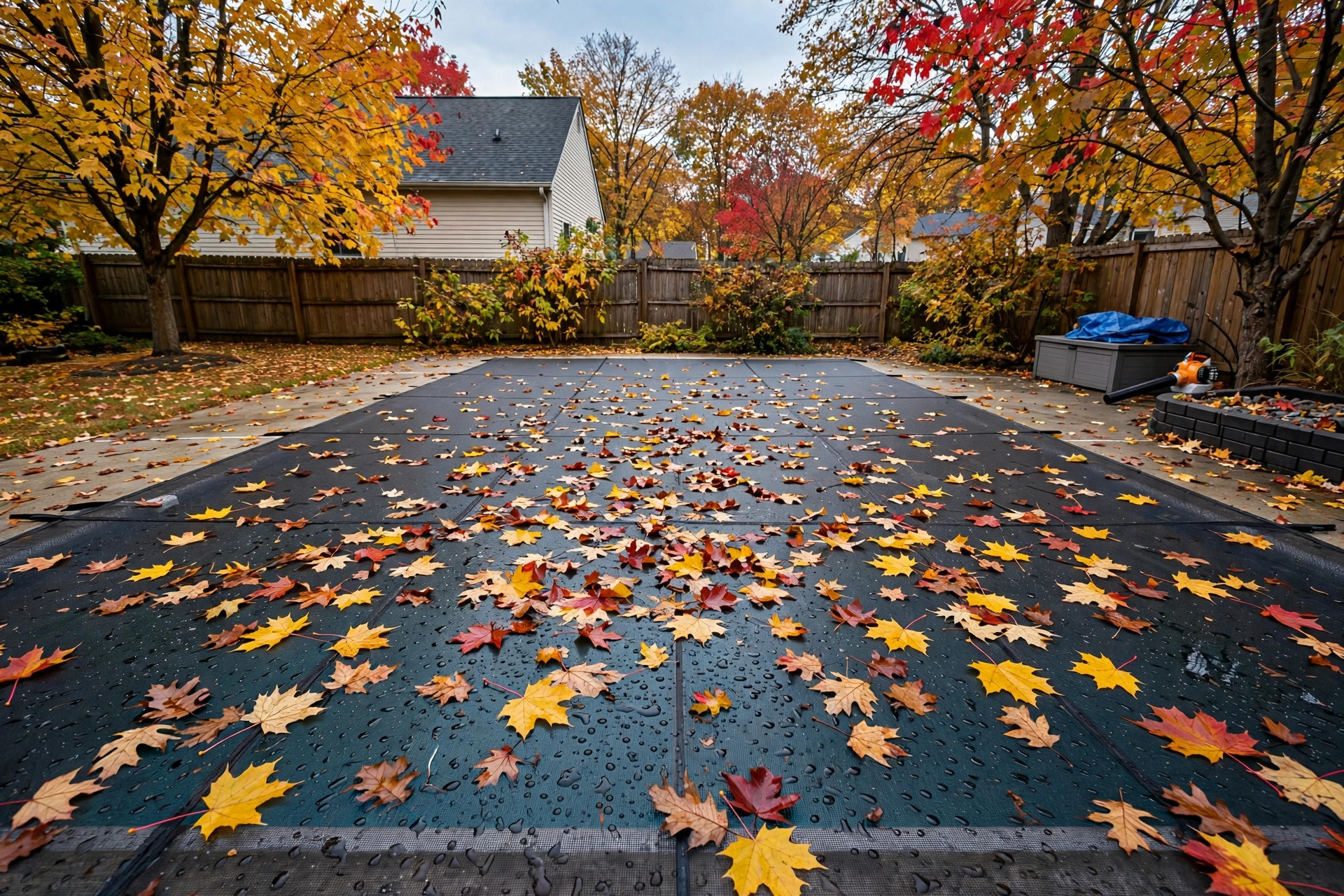

Autumn is a hard season for pool owners. The leaves fall every day, and they land right in the water. A good cover is the answer. This guide will help you find the best pool cover for leaves autumn season, so your pool stays clean from September to the first frost.
Why a Leaf Cover Matters in Autumn
When leaves sit in pool water, they stain the surface. They clog the skimmer. They feed algae. A single oak tree can drop thousands of leaves in a week. Without a cover, you will skim the pool twice a day and still lose the fight.
A leaf cover stops the problem at the source. Leaves land on the cover, not in the water. The rain passes through. You lift the cover, shake off the leaves, and the water below stays clear. It is a simple tool that saves hours of work each week.
What to Look for in a Pool Cover for Leaves: Best Pool Cover for Leaves Autumn
Mesh Size
The holes in the cover must be small enough to stop leaves but open enough to let rain drain through. Most leaf nets use a mesh of about 2 to 3 millimeters. Oak and maple leaves cannot pass through. Small seeds may pass, but they are easy to vacuum later.
Fit and Size
Measure your pool before you buy. An above ground pool cover should overlap the edge by at least 12 inches on every side. An inground pool cover should sit flat across the water with enough extra to anchor at the edges. A cover that is too small leaves gaps where leaves slip in.
Strength of the Material
Look for woven polyethylene or polypropylene. These fabrics hold up under wet leaves for weeks at a time. Cheap thin nets tear after one storm. A good leaf net can be used for three to five seasons if you store it dry in winter.
Edge and Anchor System
Above ground pools use a cable and winch that runs around the rail. Inground pools often use water tubes or anchor springs. Check that the fasteners fit your pool type before you order.
Types of Pool Covers That Catch Leaves
Leaf Nets
A leaf net is the best pool cover for leaves autumn use. It is light, cheap, and easy to put on. You lay it over the pool and pull it tight. Leaves collect on top. When the net fills up, you gather the corners and dump the leaves in the yard.
Leaf nets work best as a top layer. Many owners place a leaf net over a solid winter cover. Then they can clear the leaves without touching the winter cover at all. If you want to know more about heavy duty covers for the cold months, read our guide to the best pool cover for winter reviews.
Mesh Safety Covers
A mesh safety cover is a strong cover that anchors into the deck. It keeps leaves out and it keeps children and pets from falling in. The fine mesh blocks sunlight, which slows algae growth. These covers cost more, but they last 10 to 15 years.
The downside is weight. A mesh safety cover for a large pool can weigh 40 pounds or more. You need two people to put it on. It is a fine choice if you close the pool for the whole winter and want full protection.
Solid Winter Covers With a Leaf Net on Top
A solid winter cover blocks all light and water. By itself it can collect rain and sag. Add a leaf net on top and you get the best of both worlds. The leaves land on the net, and you clear them in minutes. The solid cover stays clean underneath.
This setup is common for inground pools in the Northeast and Midwest, where fall brings heavy leaf drop and snow follows soon after.
Automatic Covers
An automatic pool cover runs on tracks and rolls out at the push of a button. It keeps leaves out and cuts heat loss. The cost is high, often several thousand dollars installed. It is worth it for owners who swim into the fall and want daily protection.
Autumn Timing: When to Put the Cover On
Watch the Trees, Not the Calendar
The right time to cover your pool depends on your trees. Maples drop early, often in September. Oaks hold their leaves until November. Walk your yard each morning and look at the ground. When you see a fresh layer of leaves around the pool every day, it is time.
Many owners cover the pool while the water is still warm enough to swim. That is fine. A leaf net lets you lift one corner and slip in for a last swim. Put the net on as soon as the leaf drop starts, even if you still swim on warm weekends.
Early Cover Saves Water Quality
Leaves that rot in warm water break down fast. They turn the water green in days. An early cover keeps the water clear while the pool is still in use. Test strips show lower phosphate and lower demand for chlorine when the pool stays covered through October.
Once night temperatures fall below 50 degrees, most owners close the pool for good. Pull the leaf net off, clear the last leaves, and lay down the solid winter cover. The work goes fast because the net did the hard part for two months.
How to Choose the Right Cover for Your Pool
Start with your pool type. Above ground pools need round or oval covers with a cable system. Inground pools can use water tubes, anchors, or track systems.
Think about your trees. If one maple overhangs the pool, a simple leaf net is enough. If the pool sits under three oaks, you need a stronger cover with a fine mesh and solid anchors. Wind lifts loose covers and dumps the leaves back into the water.
Check your budget. A basic leaf net costs far less than a safety cover. Most pool owners in America find that a leaf net plus good skimming is all they need until the first hard freeze. For help with leftover debris, see our best pool vacuum for leaves reviews.
Cost and Price Guide
Prices in 2026 are steady. Here is what to expect:
– Leaf nets, above ground: $30 to $80, depending on size. – Leaf nets, inground: $60 to $150. – Solid winter covers, above ground: $40 to $120. – Solid winter covers, inground: $80 to $300. – Mesh safety covers, inground: $800 to $2,500 installed. – Automatic covers: $5,000 to $12,000 installed.
Buy one size larger than you think you need for above ground pools. A small overlap means gaps, and gaps mean leaves. A leaf net is the cheapest upgrade with the biggest payoff.
Care and Upkeep Through the Fall
Putting the Cover On
Wait until most of the leaves have fallen, or put the net on early and clear it often. Do not let wet leaves sit on the net for weeks. The weight can stretch the mesh. Clear the net every few days with a leaf blower or a garden rake held flat.
Cleaning the Cover
At the end of the season, hose the cover down. Let it dry in the sun for a full day. Fold it loosely and store it in a dry bin or bag. Never store a wet cover. Mold will eat the fabric over one winter in the shed.
Clearing Leaves From the Water
Even with a cover, some leaves get through. Skim the surface once a week. Empty the skimmer basket and the pump basket. When the cover comes off for good, you will find far less work waiting.
If you plan to close the pool for winter after the leaves fall, read our full guide on how to winterize inground pool properly so the cover work fits into the whole closing plan.
Safety Notes for Pool Covers
Pool covers are not safety devices unless they are rated as safety covers. A standard leaf net or winter cover will not hold the weight of a child or a pet. Never walk on a cover.
The U.S. Consumer Product Safety Commission warns that children can slip under loose covers and become trapped. Always keep the pool gate closed and the fence locked, even when the cover is on. If safety is your main concern, buy a cover that meets the ASTM F1346 safety standard. Mesh and solid safety covers from makers like Hot Spring and Bullfrog Spas dealers carry these ratings.
Watch for standing water on solid covers. Rain pools in the low spots and can draw small children. Pump the water off with a small cover pump after every storm.
Frequently Asked Questions
Can I use a leaf net instead of a winter cover?
Yes, in mild climates. If your winters rarely freeze, a leaf net keeps the pool clean all season. You can keep the pump running on a timer and enjoy a clear pool into December. In cold states, you still need a real winter cover under the net.
How often should I clear leaves off the cover?
Every two or three days during heavy leaf fall. A thick mat of wet leaves is heavy. It can stretch or tear the mesh and pull anchors loose. A leaf blower makes the job take five minutes.
Will a leaf cover stop algae?
Partly. A fine mesh cover blocks sunlight, which slows algae growth. It will not stop algae by itself. Keep your chlorine level normal and run the pump at least a few hours a day while the pool is open.
What size leaf net do I need for a 24 foot round pool?
Buy a net made for a 24 foot pool, which usually measures about 27 to 28 feet across to allow for overlap. The cable should run through the edge hem and tighten with a winch. Leslie’s and Pool Warehouse list exact cover sizes for common pool shapes.
Can I leave the leaf net on all winter?
You can, but do not rely on it alone in snow country. Snow and ice add weight the net was not made to hold. In the South and along the coasts, where ice is rare, many owners leave the net on all winter and clear leaves as they fall. Check the net after each storm and pull it tighter if it sags.
Can leaves damage a pool liner?
Yes. Leaves that sit on the bottom for weeks release tannins that stain vinyl liners brown or green. The stain can be scrubbed out, but it takes work. A cover stops most leaves before they reach the bottom.
Where can I buy a good leaf cover?
Big retailers like Home Depot stock leaf nets in common sizes each fall. Pool supply stores carry wider choices and better fabrics. Guides at Swim University and The Spruce review specific brands each year.
A Short Final Word
The best pool cover for leaves autumn is the one that fits your pool and your trees. For most owners, a simple leaf net does the job at a fair price. Put it on early, clear it often, and store it dry. When the last leaf falls, your water will be clear and your closing work will be light.
References
Bullfrog Spas. (n.d.). Hot tubs and spas. https://www.bullfrogspas.com Hot Spring Spas. (n.d.). Hot tubs and spas. https://www.hotspring.com Leslie’s Pool Supplies. (n.d.). Pool supplies and equipment. https://www.lesliespool.com Pool Warehouse. (n.d.). Pool equipment and supplies. https://www.poolwarehouse.com Swim University. (n.d.). Pool and hot tub care guides. https://www.swimuniversity.com The Home Depot. (n.d.). Home improvement products. https://www.homedepot.com The Spruce. (n.d.). Home and garden advice. https://www.thespruce.com U.S. Consumer Product Safety Commission. (n.d.). Product safety information. https://www.cpsc.gov
Was this guide helpful?

About Michael Thompson
The My Garden US editorial team writes practical, in-depth home and garden guides for American homeowners — tested advice, no fluff.
You May Also Like
Inground Pool Heater Installation Cost: What You Will Pay
March 14, 2026 0 views
How to Clean Pool Pump Basket
May 22, 2026 0 views
How to Test Pool Water Without Kit: Simple Ways to Read Your Pool
May 2, 2026 0 views