
Clay soil gives many lawn owners real trouble. It feels hard when dry and sticky when wet. Water sits on top instead of soaking in. Grass roots cannot push through it, so the lawn turns thin and patchy. The best soil amendment for clay lawns is good compost, worked into the top few inches of soil. It loosens the heavy clay, adds air space, and feeds the tiny life in the soil that keeps grass roots healthy. This guide explains what to use, how much to apply, and how to care for your lawn after treatment.
Why Clay Lawns Struggle
Clay is made of very small, flat mineral pieces. When wet, these pieces slide together and stick. When dry, they lock into a hard mass. There is little room for air or water between them. Grass roots need air and water to live. In clay they get too little of both.
Signs of clay trouble are easy to spot. Puddles stand after rain. The ground feels like brick in summer. Grass turns yellow in low spots. Bare patches spread each year. A screwdriver will not push into the ground by hand. These are all marks of heavy clay.
Many lawn owners try quick fixes. They add sand to loosen the soil. This can make things worse. Sand mixed with clay can pack into a substance like concrete. Only coarse material added in large amounts helps, and even then it is risky. The safer path is organic matter, added again and again over the years. A lawn care program that includes core aeration, as described in guides to the best time to aerate lawn in midwest yards, works well with soil amending because the open holes let materials move down into the root zone.
What to Look for in a Soil Amendment: Best Soil Amendment for Clay Lawns
A good amendment for clay does three things. It opens the soil so air and water can move. It feeds soil life, such as worms and microbes, which keep working on the soil long after you apply it. It holds some moisture so roots do not dry out too fast. Keep these three tests in mind when you shop.
Organic Matter Is First Choice
Organic matter is the safest and most proven amendment for clay. It includes compost, aged leaf mold, aged bark fines, and well-rotted manure. As it breaks down, it glues small clay pieces into larger crumbs. These crumbs leave air space between them. Water then drains down instead of sitting on the surface. Worms move in, and their tunnels open the soil further.
Quality matters. Good compost is dark, crumbly, and smells like forest soil. Avoid bags that smell sour or look slimy. Screened compost, with small pieces, mixes best into lawns. Aged leaf mold is excellent and often free if you collect fall leaves.
Coarse Materials Need Care
Some gardeners add coarse materials like perlite or expanded shale to clay. These open the soil at once and do not break down. They can help in garden beds where you can mix them deep. In lawns they are hard to mix in well. A light layer on top does little. If you want to try them, use a full inch worked into at least four inches of soil. Even then, organic matter should do most of the work.
Gypsum Has a Narrow Job
Gypsum, also called calcium sulfate, is often sold as a clay cure. It helps only in a special case. If a soil test shows high sodium, gypsum can push the sodium off the clay pieces so they clump better. Most American clay lawns are not high in sodium. In that case gypsum does almost nothing. It does not add food for soil life. It does not open soil the way compost does. Spend your money on compost first. If you do want to adjust soil chemistry, check a guide on lawn lime application rate per square foot to see how pH changes are best handled, since pH and mineral balance are separate jobs.
Types of Soil Amendments Compared
Here is a plain look at the common choices, with their strengths and weak points.
Compost
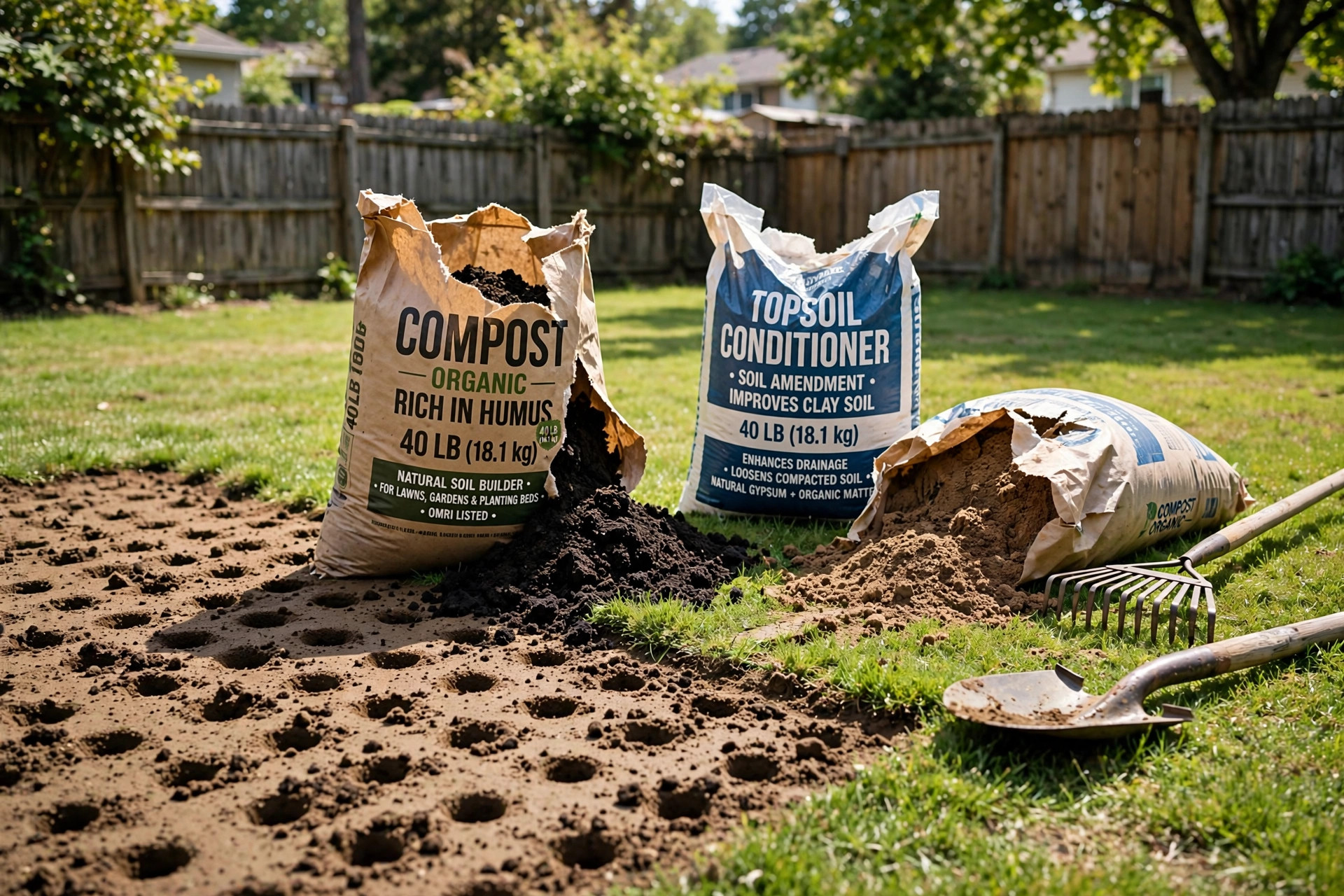
Compost is the best all-around pick. It loosens clay, feeds soil life, and holds nutrients where roots can use them. A quarter to half inch top-dressed on the lawn once or twice a year builds soil quality steadily. It is cheap in bulk from a local yard or soil yard. Bagged compost costs more but is easy for small yards. For an existing lawn, compost is the clear winner because it can be worked in from the top without tearing up the grass.
Leaf Mold
Leaf mold is leaves broken down over a year or two. It is light, holds water well, and improves clay structure. Many towns give it away or sell it cheap. If you have trees, make your own by piling leaves in a corner and waiting. Shredded leaves break down faster. Leaf mold is gentle and never burns grass.
Aged Pine Bark Fines
Fine bark, sometimes sold as soil conditioner, adds lasting structure to clay. The pieces are larger than compost, so they keep air channels open longer. Mix it with compost for best results. Use bark fines, not big bark chunks, which sit on the surface and rob nitrogen as they break down.
Coarse Sand
Coarse concrete sand is sometimes used in large amounts, but it is the riskiest choice. A thin layer mixed into clay packs hard. To work, sand must be at least half of the mix by volume, which means removing and replacing most of the topsoil. For most home lawns, this is too much work and too much money. Skip it unless you are rebuilding the whole lawn and can mix deeply with heavy tools.
Gypsum
As noted above, gypsum helps only sodium-heavy soils. If a soil test shows this problem, apply the rate on the bag and water it in. For normal clay, put the money toward compost instead. Gypsum will not harm the lawn, but it will not fix the structure either.
Biochar
Biochar is wood burned with little air until it turns into charcoal. It lasts in soil for many years and holds water and nutrients. It works best mixed into compost first, because fresh biochar can pull nutrients away from plants until it settles in. It costs more than compost, so many owners use it as a booster rather than the main amendment.
How to Apply Amendments to a Clay Lawn
You can amend an existing lawn without digging it up. Work in the fall, when cool-season grass grows strongly and rain helps settle the material. Follow these steps.
1. Mow the grass short, about two inches. Rake up clippings and leaves so the amendment can reach the soil. 2. Core aerate the lawn. Pull plugs across the whole yard, passing twice in the worst areas. Leave the soil plugs to dry on the surface. Equipment makers such as Toro and John Deere offer walk-behind aerators sized for home yards, and rental shops carry them too. 3. Spread a quarter to half inch of compost over the lawn with a shovel and a stiff rake or a wheelbarrow and a landscape rake. Half a cubic yard covers about 500 square feet at a quarter inch. 4. Brush or rake the compost so it falls into the aeration holes. Some will stay on the surface. That is fine. 5. Water the lawn well so the compost settles into the holes. 6. Overseed bare or thin spots if you like. A step-by-step guide to overseeding lawn in fall step by step pairs well with this timing, since the seed falls into the same open holes. 7. Repeat each fall. One treatment helps. Three or four years of treatment changes the soil deeply.
For a new lawn or a full rebuild, you can be more aggressive. Spread two to three inches of compost, then till or spade it into the top six to eight inches of soil before laying sod or seed. This gives new grass a much better start than planting straight into raw clay.
Cost and Price
Costs stay modest if you buy in bulk. A cubic yard of screened compost from a local supplier often costs 30 to 60 dollars, plus delivery. One cubic yard covers about 1,000 square feet at a third of an inch. Bagged compost from a garden center costs more, roughly 4 to 8 dollars per cubic foot, which makes sense only for small patches.
Leaf mold from a city compost site is often free or nearly free. Aged manure costs 30 to 50 dollars per cubic yard in farm country. Gypsum costs 10 to 20 dollars for a 40-pound bag that covers a few thousand square feet. Biochar is the priciest common option, often 20 to 40 dollars per cubic foot in small bags.
Aerator rental adds 60 to 100 dollars per day, or 15 to 30 dollars for a few hours at some shops. Many owners aerate once a year and amend the same day, which keeps the yearly cost near 100 dollars for a typical quarter-acre yard. Power equipment for ongoing lawn care, such as mowers and trimmers, is a separate budget; brands like Briggs and Stratton build the small engines found in much of that equipment.
Care and Upkeep After Amending
Amending is not a one-time job. Clay keeps pressing back, so plan a yearly routine.
Water deeply but rarely. One deep soak per week trains roots to grow down into the loosened soil. Light daily watering keeps roots shallow and weak. Morning watering is best, because the leaves dry by night and disease stays low.
Mow high. Set the blade to three or four inches for most cool-season grasses. Tall grass shades the soil, keeps it cooler, and grows deeper roots. Never cut more than one third of the blade at once.
Feed lightly. Compost adds some food, but grass still needs nitrogen. A slow-release lawn fertilizer in fall, timed with amending, works well. Soil tests every two or three years tell you what the lawn truly needs.
Leave the plugs. After aerating, the soil plugs look messy for a week. Let them dry, then break them with a mower pass. They are full of good soil and microbes.
Keep traffic low on wet soil. Walking and mowing on soaked clay packs it down again and undoes your work. Wait until the ground is firm before you mow after heavy rain.
Add organic matter every year. Top-dress with compost each fall, even a thin layer. Over time the topsoil grows deeper, darker, and looser. This steady habit is the real secret of how to fix clay soil in lawns for good.
Safety
Soil amendments are low risk, but a few cautions keep the work safe.
– Wear a dust mask when spreading dry compost, peat, or gypsum. Fine dust can irritate lungs. – Wear gloves. Manure-based products can carry bacteria. Wash hands after handling any soil product. – Read bag labels. Some bagged manures are fresh, not aged, and can burn grass. Use only aged or composted manure on lawns. – Keep amendments away from wells and storm drains while spreading, and sweep any spill off driveways so rain does not wash it into waterways. – Store bags dry and out of reach of children and pets.
Frequently Asked Questions
What is the fastest way to improve clay soil in a lawn? Core aerate and top-dress with a half inch of compost in the fall, then water it in. You will see better drainage within weeks. Deep change takes two to four years of yearly treatment.
Can I just add sand to clay soil? It is not wise. Small amounts of sand mixed into clay can pack into a hard, concrete-like layer. Organic matter is the safe choice for amending clay soil with compost instead of sand.
How much compost should I put on a clay lawn? A quarter to half inch per year is the standard rate. That is about one cubic yard per 1,000 square feet at a third of an inch. More is fine for bare rebuild areas, but thick layers can smother grass.
Does gypsum break up clay soil? Only in soils high in sodium, which a soil test can confirm. For most clay lawns, gypsum does little. Compost is the better spend for normal clay soil lawn care.
When is the best time to amend clay soil? Early fall is best for cool-season lawns. The grass is growing, rain is coming, and the soil is warm enough for microbes to work. Spring is a second choice. Avoid amending in the heat of summer.
Will amending help grass seed grow on clay? Yes. Loosened, compost-rich soil holds seed in place, keeps it moist, and lets young roots push down. Many owners amend and seed in the same fall weekend for the best results.
A Final Word
Clay soil is hard to work with, but it is not hopeless. It often holds plenty of minerals. It just needs air, drainage, and living matter mixed in. The best soil amendment for clay lawns is compost, applied after aeration, year after year. Skip the sand. Save the gypsum for the rare sodium problem. Keep mowing high, watering deep, and feeding light. With steady care, a heavy clay yard turns into dark, soft soil that grows thick, green grass.
References
Briggs & Stratton. (n.d.). Lawn and garden power equipment. https://www.briggsandstratton.com Deere. (n.d.). Lawn mowers and turf equipment. https://www.deere.com Toro. (n.d.). Lawn care equipment and turf maintenance. https://www.toro.com
Was this guide helpful?

About Lisa Anderson
The My Garden US editorial team writes practical, in-depth home and garden guides for American homeowners — tested advice, no fluff.
You May Also Like
Affordable Artificial Grass Installation Near Me: A Homeowner Guide
May 1, 2026 0 views
Best Rain Gauge for Garden Reviews: A Plain Guide to Picking a Reliable One
February 9, 2026 0 views
The Best Push Lawn Sweeper for Leaves: A Plain Guide
January 1, 2026 1 views