
Every spring the same fight begins. The lawn looks good. The flower bed looks good. Then grass runners creep over the edge. Weeds follow them. By July the bed is a mess. If you want to learn how to stop grass from growing in beds, you are not alone. The good news is that the fight is winnable. You need a barrier, a layer of mulch, and a little care. This guide walks through each step in plain words.
Why It Matters
Grass invades beds in two ways. It sends runners under the soil. It also drops seed on top of the mulch. Once it takes hold, it steals water and food from your flowers and shrubs. It also steals your time. Pulling grass by hand is slow work. A bed with a clean edge is easier to mow around too. The mower wheel rides the edge and trims the lawn in one pass. Many people who read about the best riding lawn mower for one acre lots learn that a clean bed edge saves mowing time as well. A tidy edge makes the whole yard look cared for, even when the flowers are not in bloom.
A bed that stays grass free also holds mulch longer. That saves money over the season. Small steps in spring prevent big jobs in summer.
How Grass Gets Into Beds: How to Stop Grass From Growing in Beds
To stop grass, you must know how it travels. Most lawn grass spreads by stems called runners. Some runners run under the soil surface. Others run along the top of the soil. Crabgrass and quackgrass are famous for this habit. When a runner crosses into the bed, it puts down roots and sends up shoots. Cut the shoot and the runner is still alive underground. That is why pulling shoots does not end the problem.
Grass seed is the second route. Wind carries it. The mower throws it. Birds carry it. When seed lands on bare mulch or soil, it sprouts. A thin layer of mulch does little to stop it. Seed needs light and contact with soil or damp mulch to grow. Thick mulch blocks the light. That is one reason depth matters so much.
Knowing these two routes gives you a plan. Block the runners with a barrier in the ground. Block the seed with deep mulch. Cut the shoots before they set seed. Do these three things and you will win.
What to Look For When Choosing a Barrier
Not every barrier works the same. Start by looking at the grass you have. Bermuda and zoysia grass run deep and fast. They need a deep barrier. Fescue and bluegrass spread less by runners. They need a lighter touch. Walk the bed edge in spring and look for runners pushing in. That tells you how deep to go.
Next, look at the soil. Clay soil holds a plastic edge well. Sandy soil shifts and needs a wider trench. Rocky soil fights every spade cut. In rocky ground, an above-ground edge of stone or timber may be simpler.
Also think about the look you want. A sharp steel edge gives a modern line. A brick edge gives a classic look. A natural cut edge, made with a spade each spring, costs nothing and looks clean. Lawn edging ideas for flower beds often mix materials, such as steel along the street and stone near the house.
Finally, think about the mower. The edge must be safe for mower wheels. A low, firm edge lets the mower ride over it and trim the strip beside it. A high stone wall forces you to trim with a string trimmer every week.
Types of Edging and Barriers
Metal Edging
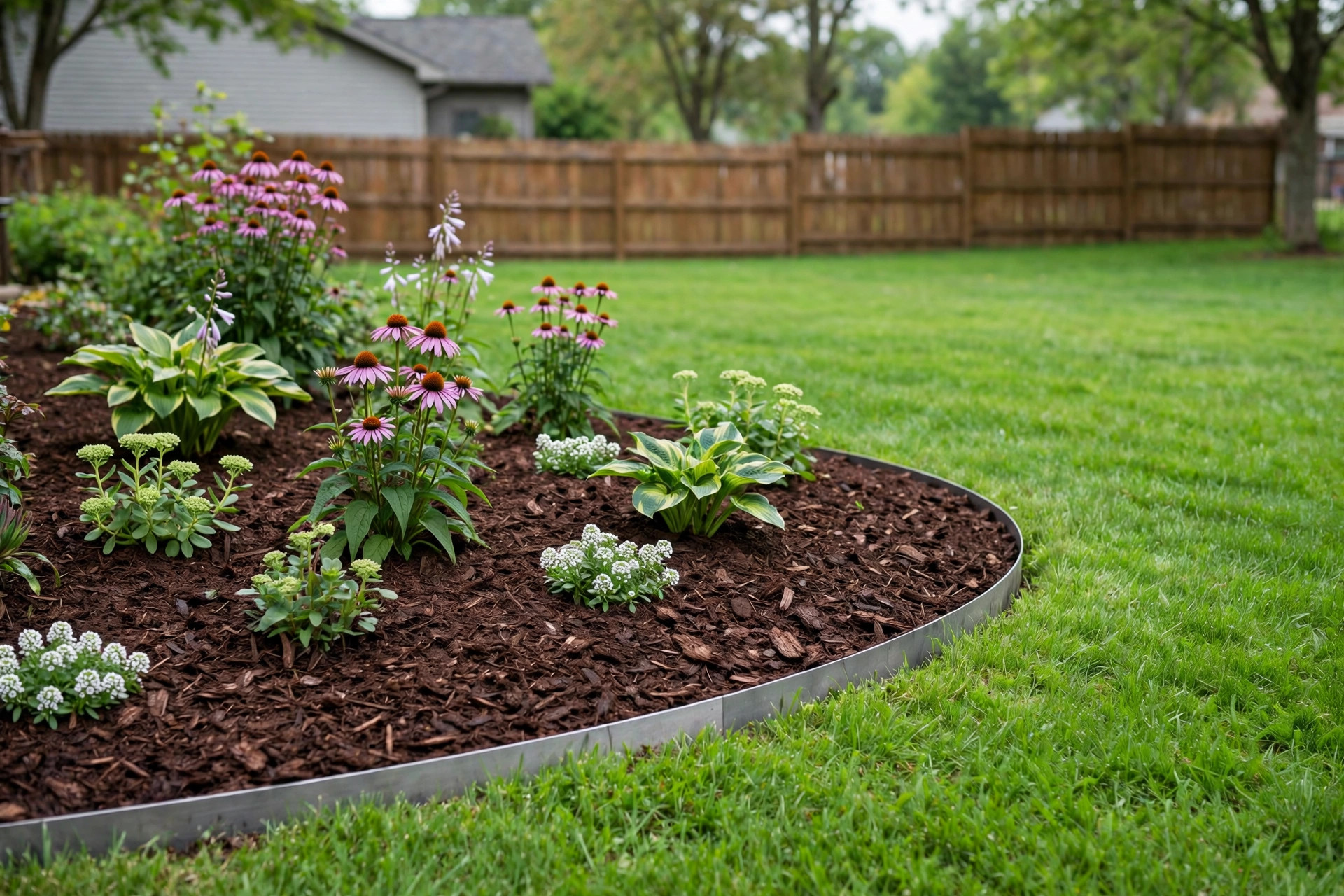
Steel and aluminum strips stand in a narrow trench around the bed. They go about four to six inches into the soil. They stand about one inch above the soil. Runners hit the strip and stop. Metal edging lasts many years. It costs more than plastic, but it looks neat and holds its line. Check the top edge is safe to touch. Some types have a folded lip that is safer for feet and pets.
Plastic Edging
Plastic edging is the most common choice in American yards. It comes in long rolls. It goes in a trench like metal edging. It costs less. It is easier to cut and join. Cheap plastic can pop out of the ground in winter when the soil freezes and thaws. In cold states, choose thick commercial grade plastic. Anchor it with long stakes every few feet.
Stone, Brick, and Concrete
Stone and brick make a wide, firm edge. Dig a shallow trench and set the stones on packed soil or a bed of sand. Runners must climb over the stones, and most cannot. The wide edge gives the mower a smooth path. This type of edge also looks finished from day one. The work is heavy. You move a lot of stone. But once set, it lasts for decades. Broken concrete pieces, called urbanite, work well for this and cost little.
Timber and Landscape Wood
Landscape timbers give a rustic look. Stack them one or two high and pin them with rebar. They hold soil in raised beds. They stop most runners. Wood rots over time, so expect to replace it every eight to twelve years. Do not use old railroad ties near food gardens. They may hold chemicals.
Trenched Cut Edge
The cheapest barrier is no barrier at all. Cut a sharp V-shaped trench around the bed each spring with a flat spade. The trench is about four inches deep. Runners that cross it dry out and die. The mower rides the outer edge. You must redo the cut each year. This method works best with slow-spreading grass. It also pairs well with deep mulch.
Landscape Fabric
Landscape fabric sits under the mulch. It lets water through but blocks weeds from below. It does not stop runners by itself. A runner can travel under the fabric and pop up through the planting holes. Still, fabric helps when you first build a bed on top of old lawn. Lay it over the cleared bed, cut holes for plants, and cover it with mulch. Use a heavy woven type, not thin plastic sheet. Plastic sheet traps water and harms plant roots.
How to Build It Step by Step
Start with a clean bed. Pull all the grass and weeds by hand or with a hoe. Dig out the roots, not just the tops. This first cleaning is the hardest part. Take your time. It sets up everything that follows.
Mark the edge with a garden hose. Lay the hose in a smooth curve and step back to look. Adjust until the line pleases you. A gentle curve looks natural. A straight line looks formal.
Cut the trench along the hose line. Use a flat spade and go four to six inches deep. Pull out the cut sod. Save it to patch thin spots in the lawn.
Set the barrier into the trench. For metal or plastic edging, unroll it and join the ends with the made-for parts. Stake it every four feet. For stone, lay a two-inch bed of coarse sand and set each stone level. Keep the top of the barrier about one inch above the lawn.
Fill behind the barrier with soil to make a firm bed. Then add mulch. Shredded bark, wood chips, or pine straw all work. Spread the mulch three to four inches deep. Keep it two inches away from the stems of plants so they do not rot. Water the bed well to settle the mulch.
Finally, edge the lawn side with the mower or a trimmer. A crisp line on day one sets the tone for the season.
Cost and Price
Costs run from almost nothing to several dollars per foot. A cut trench edge costs only your time. Plastic edging runs about one to three dollars per foot of material. Metal edging runs about four to eight dollars per foot. Stone or brick can run five to fifteen dollars per foot if you buy new stone. Using found stone or recycled brick cuts that cost in half or more.
Mulch is the other big cost. A cubic yard of bark mulch covers about one hundred square feet at three inches deep. Prices change by town, but a yard often costs between thirty and sixty dollars delivered. Bagged mulch costs more per yard but is easy to carry. If you have a truck, bulk mulch from a local yard is the best value.
Do not forget the mower side of the cost. A sharp mower blade cuts clean and throws less seed into beds. Many readers who compare the best riding lawn mower for one acre lots find that a well-kept edge also means less trimming work each week.
Care and Upkeep Through the Season
The barrier does most of the work, but it needs some help. Walk the beds once a month. Pull any small grass shoots while they are young. A shoot that is two inches tall comes out with a tug. A shoot that is a foot tall has roots that fight back.
Add a thin layer of mulch each spring. One inch of fresh mulch each year keeps the depth right. Do not let the mulch pile up year after year without thought. Too much mulch can suffocate plant roots. Every few years, check the depth and remove the old broken-down layer if it is too thick.
Re-cut trench edges each spring. The trench fills with soil and mulch over time. A quick pass with the spade restores it. Check metal and plastic edging after winter. Frost can push sections up. Push them back down and add a stake if needed.
Mow the right way. Aim the mower discharge away from the beds. Blowing clippings into the bed plants thousands of seeds where you do not want them. Keep the mower blade high enough that the lawn stays thick. A thick lawn leaves less room for weeds to seed from. Folks looking at self propelled mower deals for USA homeowners often pick models with easy height adjustment for just this reason.
Water the bed, not the lawn edge. Sprinklers that soak the bed edge wake up grass seed. A soaker hose in the bed gives plants water and keeps the edge drier.
Safety
This is safe work, but a few rules help. Wear gloves when you pull grass. Some grasses have sharp edges that cut skin. Wear eye protection when you use a string trimmer. It throws stones and sticks. Call your local utility line service before you dig a deep trench. In most states one free call marks buried lines. Keep the trench shallow near sidewalks and driveways where cables run.
When you buy mulch, ask what it is made from. Some cheap mulch is ground construction waste. It can hold nails or bits of glass. A trusted garden center sells clean bark mulch. Store extra mulch away from the house. Piles of mulch against wood siding can draw termites.
If you use a weed killer, read the label twice. Some products kill grass but spare flowers. Others kill everything green. Never spray on a windy day. Drift can burn the lawn you want to keep. Keep children and pets off treated ground until the label says it is safe.
FAQ
How deep should the barrier go?
Four to six inches deep works for most grasses. Bermuda grass may need six inches or more. The barrier should stand about one inch above the soil line to stop surface runners too.
Does landscape fabric stop grass runners?
Not by itself. Fabric blocks weeds that grow from seed under the mulch. Runners can travel under the fabric and come up through plant holes. Pair fabric with a good edge barrier for best results. This is the most common point of confusion in landscape fabric under mulch pros and cons debates.
What is the cheapest way to keep grass out of beds?
A cut trench edge and three inches of mulch. Both cost little. The trench takes an hour or two each spring. The mulch needs a yearly top up. This pair works well for fescue and bluegrass lawns.
Will mulch alone stop grass?
Deep mulch slows grass a lot, but it rarely stops it alone. Runners travel under thin mulch with ease. Three to four inches of mulch plus an edge barrier is the pair that works. Mulch around flower beds keeps grass out best when the edge is firm.
How do I kill grass that is already in the bed?
Pull it by hand after rain when the soil is soft. Get the roots. For bad patches, lay cardboard over the grass, wet it, and cover it with four inches of mulch. The grass dies in a few weeks without chemicals. Then plant through the mulch.
Should I use weed killer along the edge?
It can help, but it is not needed if the barrier is good. A grass-killer spray on the shoots inside the bed works when pulling is too slow. Read the label and keep the spray off your flowers. Many gardeners skip chemicals and do fine with mulch and hand pulling.
A Short Final Word
A clean bed is not magic. It is a barrier, deep mulch, and a monthly walk. Build the edge well in spring and the summer stays easy. Start with one bed. Learn what works in your soil. Then move to the next. For bigger yards, tools matter too, and some homeowners pair good edges with a robot lawn mower for half acre yards to keep the whole lawn neat with less work. Your flowers will thank you. Your weekends will too.
References
Briggs & Stratton. (n.d.). Outdoor power equipment. https://www.briggsandstratton.com Consumer Reports. (n.d.). Product reviews and ratings. https://www.consumerreports.org Deere & Company. (n.d.). Lawn care and agricultural equipment. https://www.deere.com Toro. (n.d.). Lawn mowers and yard care. https://www.toro.com
Was this guide helpful?

About Robert Taylor
The My Garden US editorial team writes practical, in-depth home and garden guides for American homeowners — tested advice, no fluff.
You May Also Like

Sod vs Seed Cost Comparison Guide: Which Way Saves You More?
September 28, 2026 0 views
Best Robotic Mower for Slopes Reviews: What to Know Before You Buy
July 20, 2026 0 views
Sprinkler System Design Layout Guide for Homeowners
May 31, 2026 0 views