Every year, thousands of Americans look for a small business they can run from a truck and a trailer. For many of them, lawn care franchise opportunities in USA offer a way in. A franchise lets you borrow a known name, a set of work methods, and a support team, while you build your own local customer list. The lawn and landscape industry in America is worth tens of billions of dollars a year, and much of that work is done by small local crews. This guide explains what these franchise offers look like, what they cost, what to watch for, and what questions to ask before you sign anything.
Why It Matters
A franchise is not a job. It is a license to run a local copy of someone else’s business system. In lawn care, that system usually includes brand signs, truck wraps, a booking method, training in mowing and plant care, and marketing help. You pay a fee to join. You pay a share of your sales each month. In return, you do not have to invent the business from nothing.
Lawn care franchise opportunities in USA matter because the demand is steady and spread out. Almost every town has homes, office parks, churches, and schools that need grass cut, weeds treated, and shrubs trimmed. Work repeats through the growing season. A customer who hires you in April may still be paying you in October. That repeat work is the main reason people look at this field.
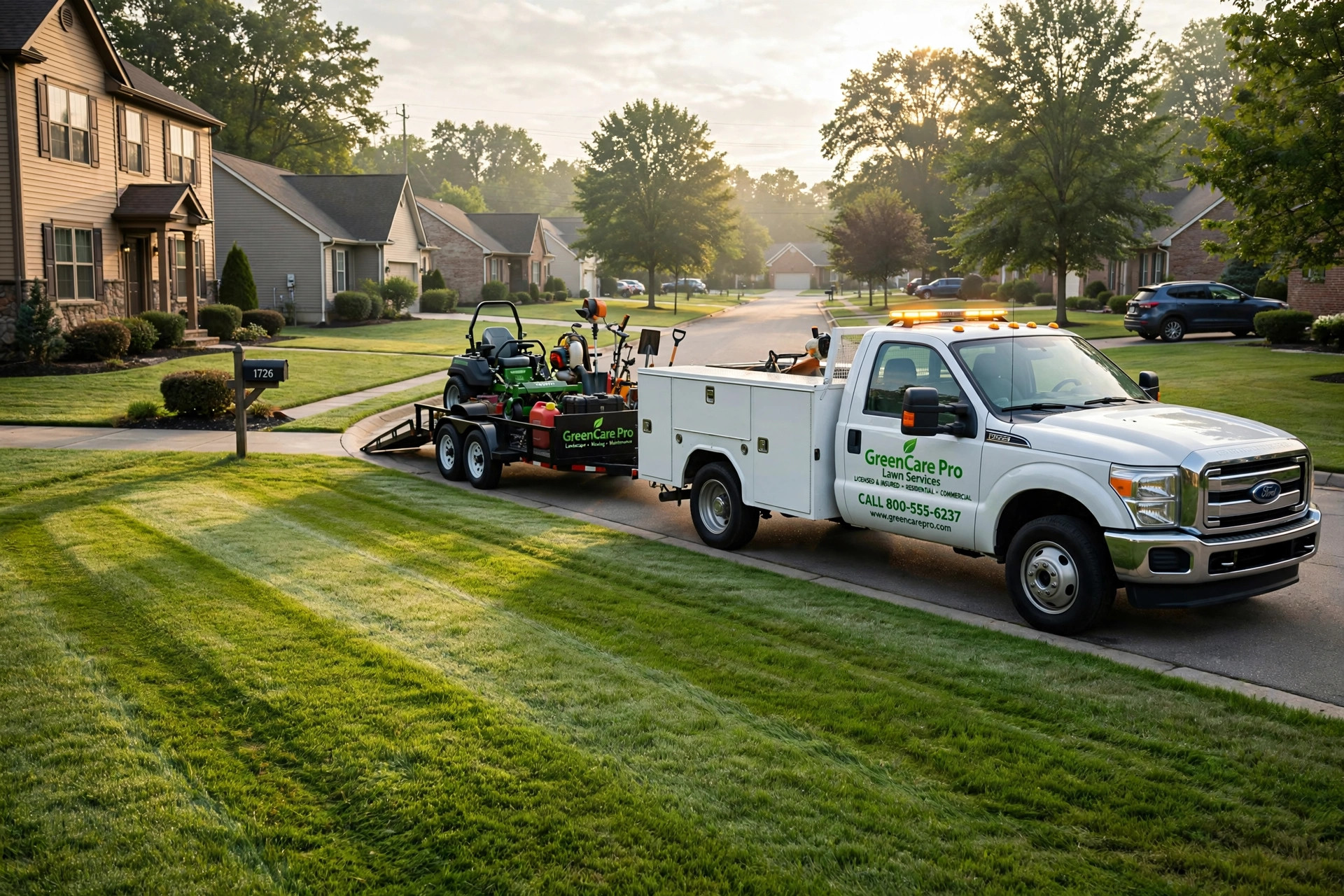
There is another reason. Lawn care needs little office space. Most owners start from home with a trailer, a mower, a trimmer, and a blower. The business grows crew by crew and route by route. For a first-time owner who wants honest outdoor work, that shape is attractive.
Still, a franchise is a contract, not a promise of profit. Some territories are crowded. Some brand names are unknown in your town. Some owners find the monthly fees eat the margin. So it pays to study the offer the way you would study a used truck: slowly, with the hood up.
Who Should Think About It
The best fit is a person who likes to work outside, likes to manage people, and can sell a service face to face. You do not need a degree. You do need a driver’s license, a clean record in many states, and the patience to build routes one street at a time. If you have run crews before, all the better.
What to Look For Before You Sign: Lawn Care Franchise Opportunities in Usa
Read the Franchise Disclosure Document
Every legal franchise in the United States must give you a Franchise Disclosure Document. It is long. Read all of it. It lists fees, rules, territory limits, and how many owners opened and closed in recent years. It also lists the contact names of current owners. Call them. Ask how long it took them to get busy. Ask what the brand did for them in the first year. Ask what they wish they had known.
Study the Territory
A territory is the ground you own the right to work. Ask if it is exclusive. Ask how many homes sit inside it. Ask whether another owner of the same brand can sell into your ground. Some brands protect the lines strictly. Others let territories overlap. Overlap can shrink your income fast.
Check the Training and Support
Good brands train you in two things: the craft and the office. The craft covers mowing height, weed control, aeration, and safe chemical handling. The office covers quoting, scheduling, billing, and hiring. Ask how many days of training you get. Ask if someone from the home office visits your town in year one. Weak support is a warning sign.
Ask About the Fee Structure
Typical franchise charges include an upfront franchise fee, a monthly royalty that is a share of gross sales, and a marketing fund payment. Royalties in this field often run in the single digits to low teens as a share of sales. Add them up on paper against a realistic first-year income. If the math barely works on paper, it will work worse in real life.
Types of Lawn Care Franchise Models
Lawn care franchise opportunities in USA come in several shapes. Each fits a different owner and a different budget.
Mowing and Maintenance Franchises
These brands focus on cutting grass, trimming edges, blowing leaves, and keeping yards tidy. The work is simple to learn and repeats every week. Start-up costs tend to be lower than other models. The trade-off is price pressure: many towns have cheap independent mowers, so the brand name and reliable scheduling must carry the sale.
Treatment and Application Franchises
These brands sell lawn health: fertilizer programs, weed control, grub control, and overseeding. Crews drive smaller trucks and carry spray equipment instead of big mowers. Margins per visit can be higher than plain mowing. But many states require a pesticide applicator license. Ask the brand how it helps you get licensed, because rules differ by state.
Full-Service Landscaping Franchises
Some brands add planting, mulch, sod, and small landscape jobs on top of care. These jobs bring larger tickets but need more skill and more equipment. This model fits an owner who already knows plants and wants bigger projects mixed into the weekly route work.
Multi-Brand and Conversion Options
A few owners join a brand after running their own independent company for years. The brand lets them convert: they keep their trucks and crews and add the brand name, software, and marketing. Conversion can be smart if the brand’s reputation is strong in your area. It is a bad deal if the brand is unknown locally and you give up fees for little gain.
When you compare models, think about equipment too. Knowing where to buy lawn mower blades near me is the kind of small practical knowledge every owner needs, and good brands teach it in training.
Costs and Prices
The Upfront Investment
Total start-up costs for lawn care franchise opportunities in USA vary widely. Smaller mowing brands may ask for total investments under fifty thousand dollars. Larger treatment brands with trucks, spray rigs, and more staff can run past one hundred and fifty thousand dollars. The disclosure document must give a range. Treat the top of the range as the real number. Owners often spend more than the low estimate.
The upfront franchise fee alone often falls between ten thousand and forty thousand dollars. On top of that come vehicles, trailers, mowers, trimmers, blowers, insurance, uniforms, initial marketing, and working cash to cover the first slow months.
The Monthly Bite
Royalties and marketing fees come out of every sale. Suppose the royalty is eight percent and the marketing fund takes two percent. On ten thousand dollars of monthly sales, that is one thousand dollars to the brand before you pay crews, fuel, or yourself. Over a full season, that share is large. Make sure the brand’s value is worth it: strong leads, good software, and training that actually improves your close rate.
What the Work Sells For
Prices differ by region and service. A basic weekly mow for a suburban lot might run forty to eighty dollars a visit. Fertilizer programs are often sold as a season package of five to seven applications. Aeration and overseeding sell best in fall. Owners who learn the seasonal calendar earn more. For example, a guide to affordable lawn sprinkler installation cost estimate helps an owner price water-system add-ons for dry regions.
How Owners Get Paid Back
Payback takes time. Few owners take a full salary in year one. Many pay themselves little while the route list grows. A common pattern: year one builds routes, year two steadies the crew, year three pays the owner properly. Ask current owners how long their payback took. Their answers are worth more than any brochure.
Running the Business Well
Build Routes, Not Just Jobs
Profit in lawn care lives in the route. A crew that mows twelve homes on one street in a day earns far more than a crew that drives across town between jobs. When you quote, favor homes near your current stops. Good scheduling software, which most brands provide, helps pack the map.
Hire for Attitude, Train for Skill
Crew work is hard and turnover is common. Owners who keep people pay fairly, teach clearly, and inspect work daily. A crew that trims neatly and blows the driveway clean gets repeat customers. A sloppy crew loses them. Your name rides on every yard.
Sell the Season, Not the Visit
The strongest owners sell annual programs. A customer on a program pays through the season and renews next spring. Programs smooth out cash flow and make the business easier to value if you ever sell it. Many brands give you the brochure and the script. Use them.
Watch the Numbers Weekly
Track revenue per crew per day, fuel cost, and customer loss. Small leaks sink this business. One truck idling too long, one crew driving too far, or a slow response to quotes can cost more than the monthly royalty. Owners who read a simple weekly report stay ahead.
Some owners add extra services to raise the ticket. Services like hydroseeding cost per square foot let a franchise handle new lawns and thin lawns that mowing alone cannot fix. Each added service needs training and equipment, so add them one at a time.
Safety
Lawn care has real hazards: spinning blades, flying stones, hot engines, and chemical products. A franchise owner is responsible for crew safety, and the brand’s training should cover it.
Require eye and hearing protection on every job. Keep guards on mowers and trimmers. Never let a crew member ride a mower on a steep slope sideways; mow up and down or use a walk-behind. Lock chemicals in the truck box, label every container, and keep safety sheets where the crew can read them.
Heat is a quiet killer in this trade. Crews work in summer sun all day. Provide water, shade breaks, and early starts in heat waves. A sick worker is a human tragedy first and a business problem second.
Equipment makers publish safety guides worth reading. Toro offers guidance on mower operation and safe handling at Toro, and John Deere covers safe machine use at John Deere. Engine makers such as Briggs and Stratton also publish safe fuel and engine care notes at Briggs and Stratton. Build these habits into your training from day one.
Frequently Asked Questions
How much money do I need to start a lawn care franchise?
It depends on the brand. Small mowing franchises may need twenty-five thousand to seventy-five thousand dollars all in. Treatment franchises with spray equipment and licensed staff often need one hundred thousand dollars or more. Always budget above the brand’s low estimate. Ask current owners what they actually spent.
Do I need experience in lawn care to buy one?
Most brands say no. They train you. But owners with outdoor work experience or crew management experience get moving faster. If you have never cut grass for pay, spend a summer working for a local crew before you sign. You will learn more in three months than in any sales meeting.
Are territories really exclusive?
Some are, some are not. Read the disclosure document and ask owners in nearby towns. An exclusive territory gives you sole right to sell the brand’s services in a defined area. A weak territory lets other owners or company stores take work inside your lines. This point alone can decide whether the franchise is worth the fee.
How long until the business pays for itself?
Honest answer: two to four years for many owners. Some do it faster in fast-growing suburbs. Some take longer in crowded markets. The brand’s sales claims are estimates, not promises. Talk to owners who started three to five years ago and ask for their timeline.
Can I run it part time?
A few brands offer part-time or semi-absentee models, but lawn care is a service business. Customers call when the grass is long. In the growing season, slow answers lose jobs. Most successful owners work full time in the business, at least for the first two years.
What happens if I want to sell or leave?
The franchise agreement controls this. Most brands let you sell the business to an approved buyer and take a transfer fee. Some give the brand the right to buy it back or approve the price. Read the exit terms before you enter. A business you cannot sell is worth far less.
A Final Word
Lawn care franchise opportunities in USA can be a fair path into business ownership for the right person. The work is honest, the demand repeats, and a good brand shortens the learning curve. But the franchise fee buys a system, not a result. The result comes from your routes, your crews, and your care of customers.
Take your time. Read the disclosure document. Call the owners. Walk the territory. Run the numbers with a pencil, not with hope. If the offer is sound and the town has room, a lawn care franchise can grow into a business that feeds a family for years. If the numbers do not work, walk away. There will be another truck, another town, and another spring.
References
Toro. (n.d.). Lawn mowers and outdoor power equipment. https://www.toro.com Deere, J. (n.d.). Lawn care equipment and machinery. https://www.deere.com Briggs & Stratton. (n.d.). Small engines and outdoor power. https://www.briggsandstratton.com
Was this guide helpful?

About Lisa Anderson
The My Garden US editorial team writes practical, in-depth home and garden guides for American homeowners — tested advice, no fluff.