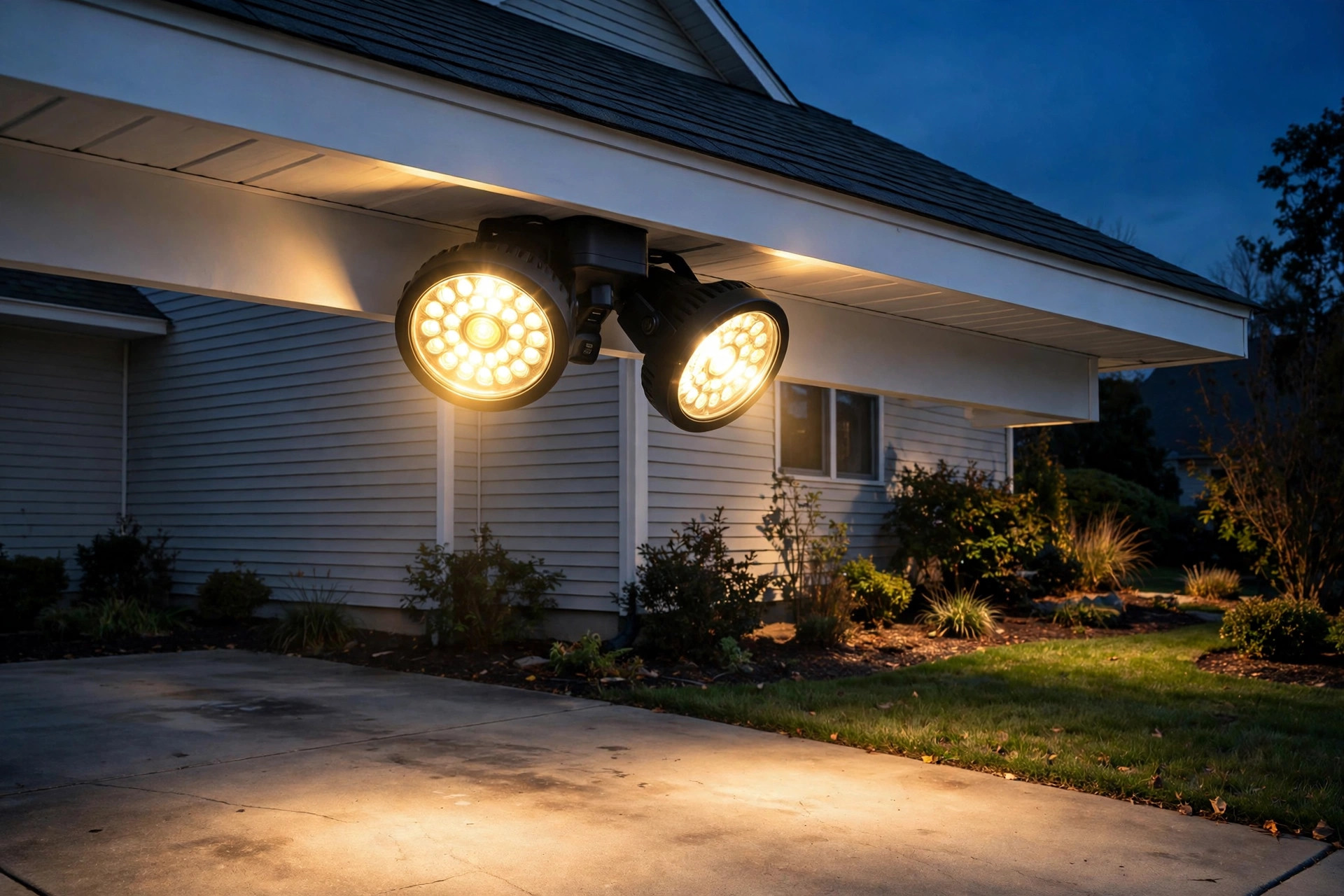

A motion flood light is one of the simplest upgrades a home can get. It lights a dark drive. It warns off a stranger. It helps a visitor find the front door. Many shoppers ask about motion flood lights where to buy usa stores and sites that carry them. This guide answers that question in plain terms. It lists the main places to shop. It shows what to look for before you buy. It gives prices. It covers safety and care.
Why Motion Flood Lights Matter
Most break-ins happen at night. Dark yards give cover. A bright light that switches on with motion takes that cover away. Studies and police reports agree that light is a simple form of defense. It costs far less than an alarm system.
A motion flood light also helps in daily life. It lights the path when you carry groceries in after dark. It shows ice on the steps in winter. It lets a guest see the house number. It helps a driver park on a dark drive. The light saves trips to the wall switch. The sensor does the work.
Energy use is small. Most new models use LED bulbs. A LED head can give 1,000 to 3,000 lumens and draw under 30 watts. Older halogen heads drew 150 watts or more for the same light. LED units run cool. They last years. That is why most buyers now pick LED models.
Where to Buy Motion Flood Lights in the USA: Motion Flood Lights Where to Buy Usa
The good news is that these lights sell almost everywhere home goods sell. Here are the main options.
Home Improvement Stores
Large home centers are the first stop for most buyers. Stores such as Home Depot and Lowes keep a wide range on the shelf. You can see the units in person. You can compare the size of the heads. You can read the boxes. Staff in the lighting aisle can answer basic questions. Both stores also sell online with ship to home or pickup in store.
Lighting Specialty Retailers
For a deeper range, try a lighting store. Lamps Plus and Lumens carry many brands and styles. Their sites let you filter by sensor type, finish, and lumen output. This helps when you want a unit that matches the look of your home. Prices run a little higher, but the choice is wider.
General Online Sellers
Online marketplaces carry nearly every model on the market. The upside is price and choice. The risk is quality. Some no-name units have weak sensors or poor weather seals. Read the reviews. Check the return policy. Buy from a seller with a clear name and a track record.
Direct From the Maker
Major makers sell direct from their own sites. Philips sells lighting through its online store. Buying direct can give access to the full line, including models that stores do not stock. Maker sites also post manuals and warranty forms, which helps if you need service later.
Electrical Supply Houses
Contractors buy from local electrical supply houses. Many of these shops also sell to walk-in customers. The prices can beat retail. The staff know the trade. If you plan to hire an electrician, ask where they buy. You may get the same unit at a better price.
What to Look for Before You Buy
Not all motion flood lights are equal. The box may look the same, but the parts differ. Use this checklist.
Brightness
Brightness is measured in lumens. For a porch or small patio, 700 to 1,500 lumens is enough. For a drive or a large yard, look for 2,000 to 3,000 lumens. More is not always better. Too much light can blind a guest or annoy a neighbor.
Sensor Range and Angle
The sensor is the heart of the unit. Check the detection range, often 30 to 70 feet. Check the field of view, often 180 or 270 degrees. A wide field suits a corner mount. A narrow field suits a straight walkway. Good sensors ignore small animals but catch a person. Cheap sensors may trigger on wind-blown branches.
Power Source
Most units are hardwired to house current. This is the most reliable choice. It never needs a battery change. Solar models exist and cost less to install, but they give less light and need sun each day. Battery models suit spots where wiring is hard. Pick the power source that fits the spot.
Weather Rating
Outdoor lights face rain, snow, and heat. Look for a weatherproof rating on the box. Sealed heads keep out water and bugs. Metal housings last longer than thin plastic ones. In coastal areas, pick a finish rated for salt air.
Adjustable Heads and Timer
Good units let you aim each head. You can point one head at the drive and one at the walk. The timer sets how long the light stays on after motion stops. Thirty seconds to five minutes is the common range. Some units add a dusk-to-dawn mode at low light and jump to full bright on motion.
Color Temperature
Light color is measured in Kelvin. Warm white, around 2700K, feels like an old porch bulb. Cool white, around 5000K, looks like daylight and shows detail better. For security, cool white is often preferred. For looks, warm white blends with house lights.
The Energy Star program lists certified lighting products that meet set standards for efficiency. Checking its site can help you find models that waste less power. The Department of Energy also posts guides on outdoor lighting and energy use.
Types and Options
Motion flood lights come in a few main types. Each suits a different need.
Single Head Units
One head with one sensor. This suits a small porch or a side door. It is the cheapest type. It installs in minutes on an existing box.
Dual Head Units
Two heads on one base. This is the most common type. Each head aims on its own. It covers a wide area such as a two-car drive. Prices are modest.
Triple Head Units
Three heads for large yards and commercial spots. They throw a lot of light. They suit barns, shops, and long drives.
Camera Flood Lights
Some units add a camera to the light. The camera records when motion trips the sensor. This adds cost and needs Wi-Fi. It suits buyers who want both light and video in one unit.
Smart Flood Lights
Smart units link to a phone app. You can set zones, get alerts, and change the timer from the couch. They need a strong Wi-Fi signal at the mount spot. They cost more than plain units.
Solar Flood Lights
Solar units carry a small panel and a battery. They need no wiring. They suit sheds, fences, and far corners of a yard. Light output is lower than hardwired units. The panel needs direct sun to charge well.
For general advice on outdoor fixtures, The Spruce keeps buying guides that compare common models side by side.
Cost and Price
Prices vary by type and brand. Here is what to expect in 2026.
A basic single-head LED unit costs 20 to 40 dollars. It gives modest light and a short sensor range. It suits a small porch.
A good dual-head LED unit costs 40 to 90 dollars. This is the sweet spot for most homes. It gives strong light and a solid sensor.
A premium or smart unit costs 90 to 200 dollars. Camera models sit at the top of this range. You pay for the lens, the app, and the extra parts.
Hiring an electrician adds cost. A simple swap on an existing box may run 100 to 150 dollars for labor. A new run of wire to a fresh spot may run 200 to 400 dollars. Many home centers post labor price guides that help you plan.
Watch for sales. Spring and fall bring deals on outdoor goods. Bulk packs of two or three units often cost less per unit than single packs.
Care and Upkeep
A motion flood light needs little care. A few small habits keep it working for years.
Clean the sensor lens twice a year. Dust and spider webs cut the range. A soft cloth and mild soap are enough. Do not scratch the lens.
Check the aim each spring. Winter storms can shift the heads. Aim the light down at the ground, not into a neighbor’s window.
Trim plants near the sensor. A bush that grows into the field of view will trip the light all night. Cut it back or move the aim.
Tighten the mount screws once a year. Wind and heat can loosen them. A loose unit sags and points at the wrong spot.
If the light stays on all night, the sensor may face a heat source or a moving branch. Re-aim it. If it never comes on, check the breaker and the bulb first. Most faults are simple.
LED heads cannot be rebulbed in many models. When the LED fails, the whole head is replaced. Pick a brand with a clear warranty, often five years or more, so a failure does not cost you twice.
Safety
Flood lights are safe when installed right. A few rules matter.
Cut power at the breaker before you touch any wiring. Test with a voltage tester. Do not trust the wall switch alone.
Use a box rated for outdoor use. Seal all gaps with silicone. Water in the box can cause a short.
Mount the unit at least eight feet high. This keeps it out of reach and gives a wide throw of light. It also keeps the glare out of eyes.
Do not aim the light at the street. Bright light can blind drivers. Aim it at your own ground. Check local codes. Some towns limit brightness or hours for outdoor lights.
If you are not sure about wiring, hire a licensed electrician. The cost is small next to the risk of a bad job.
Frequently Asked Questions
How long do LED motion flood lights last?
Most LED heads are rated for 25,000 to 50,000 hours of use. Since the light only runs when motion trips it, that can mean ten years or more of real service. The sensor may fail first. A good warranty covers the whole unit.
Can I replace my old halogen flood light with LED?
Yes. Most LED units fit the same mount boxes. You gain lower power use and longer life. You may need to adjust the aim since LED heads throw light in a different pattern. The job takes under an hour for a simple swap.
Will a motion flood light scare off burglars?
No single device stops all crime. But light removes the cover that thieves like. Police and insurers often list good lighting as a basic step. Pair the light with solid locks and trimmed shrubs for the best effect.
Do motion sensors work in cold weather?
Good sensors work from well below freezing to high summer heat. Cheap sensors can get sluggish in deep cold. If you live in a cold state, pick a unit rated for low temperatures. The box will state the range.
What is the best height to mount a motion flood light?
Eight to twelve feet is the common range. Lower mounts give a tight bright pool. Higher mounts cover more ground but with less punch. Match the height to the area you want lit.
Are solar motion flood lights worth it?
They suit spots with no wiring and good sun. They will not match a hardwired unit for brightness or winter run time. For a main drive or a front door, hardwired is the better pick.
A Final Word
The question of motion flood lights where to buy in the USA has a simple answer. Start with a home center such as Home Depot or Lowes to see the units in person. Check a lighting specialist such as Lamps Plus or Lumens for a wider range. Look at the maker’s site, such as Philips, for the full line. Use guides from The Spruce, Energy Star, and the Department of Energy to compare models with care.
Pick a brightness that fits the spot. Check the sensor range. Choose a weatherproof build. Mount it high and aim it down. Then enjoy the peace of a yard that lights itself when it should.
Readers who want more detail can see our motion flood lights buying guide for a step-by-step choice process. Those ready to shop can browse motion flood lights for sale in the USA. For a related sensor light, see our sensor porch lights buying guide.
References
ENERGY STAR. (n.d.). Energy efficient products. https://www.energystar.gov Lamps Plus. (n.d.). Lighting and home decor. https://www.lampsplus.com Lowe’s. (n.d.). Home improvement products. https://www.lowes.com Lumens. (n.d.). Lighting and ceiling fans. https://www.lumens.com Philips. (n.d.). Lighting products. https://www.philips.com The Home Depot. (n.d.). Home improvement products. https://www.homedepot.com The Spruce. (n.d.). Home and garden advice. https://www.thespruce.com U.S. Department of Energy. (n.d.). Energy efficiency and renewable energy. https://www.energy.gov
Was this guide helpful?

About Jennifer Lee
The My Garden US editorial team writes practical, in-depth home and garden guides for American homeowners — tested advice, no fluff.
You May Also Like

Kitchen Track Lighting Florida Homes USA: A Plain Guide
September 19, 2026 0 views
Deck Cap Lights Buying Guide USA: How to Choose the Best Lights for Your Deck Posts
May 18, 2026 0 views
Sensor Porch Lights: Where to Buy in the USA
February 20, 2026 0 views