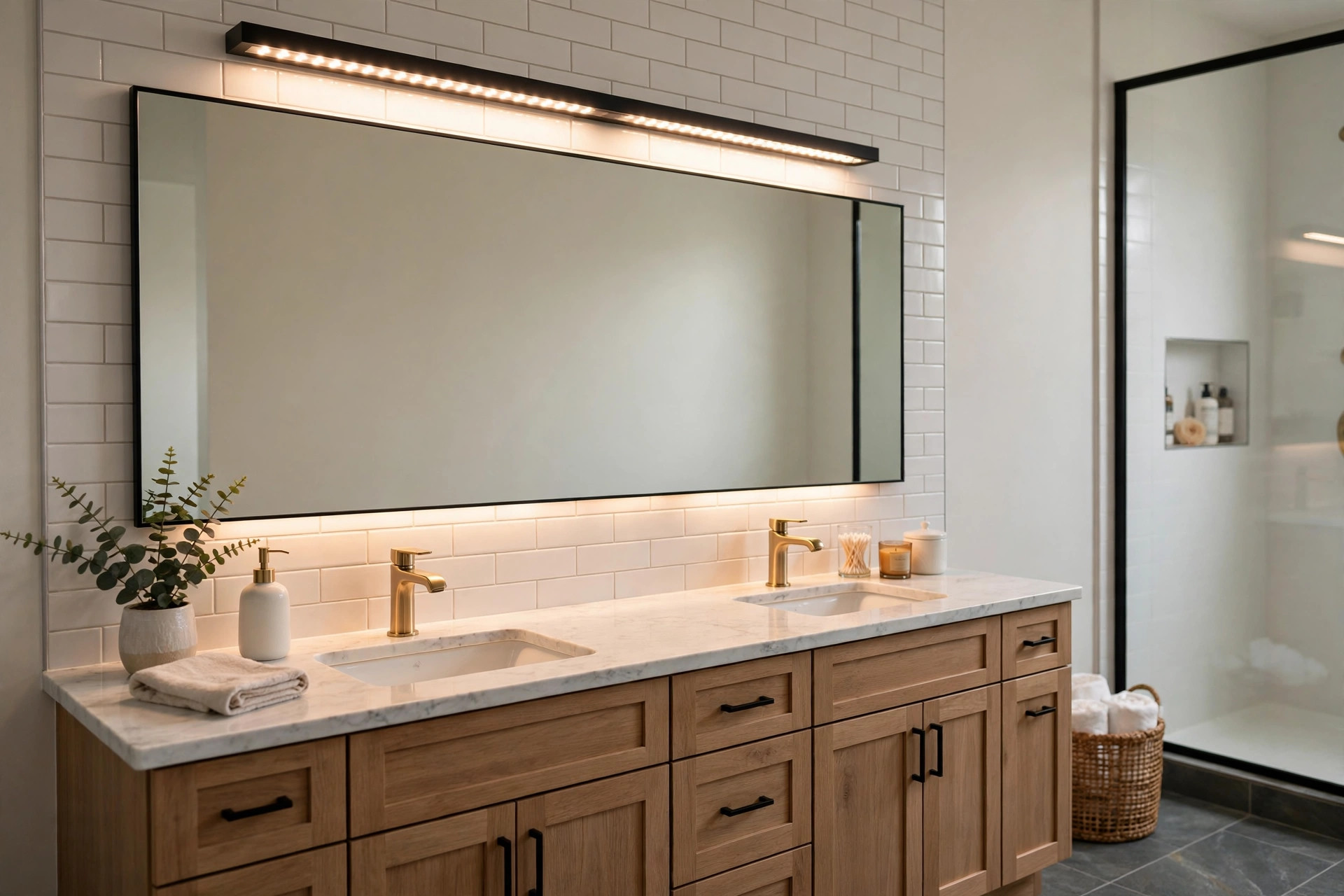

Good light changes the way a bathroom feels. It changes the way a face looks in the mirror. Many homeowners who search for vanity light bars florida homes usa want the same thing: clear, bright light that is kind to the eyes and flattering to the face. This guide explains what a vanity light bar is, why Florida homes often need one, how to choose the right one, and what it costs. It also covers safety, care, and common questions.
Why Vanity Light Bars Matter
A vanity light bar is a row of lights that sits above or beside a bathroom mirror. It spreads light across the face in an even way. Ceiling lights alone cast shadows. They throw dark lines under the chin and the nose. A bar near the mirror fills in those shadows. The face looks clearer and more natural.
In Florida, bathrooms see heavy daily use. Warm air holds moisture. Many people get ready in front of the same mirror every morning. Shaving, makeup, and contact lenses all need good light. A poor bulb makes colors look wrong. Makeup applied under a dim yellow bulb can look far too strong in daylight. A vanity light bar with a clear white glow solves this problem.
Light also sets the mood of the room. A bathroom with a bright, even glow feels clean and open. An old single bulb above the door leaves corners dark. The Spruce offers many guides on how lighting shapes the feel of a room, and the same idea applies here.
Another reason matters in Florida homes. Salt air and humidity can wear out cheap fixtures faster than they would in drier states. A light bar with a sealed finish and rust-resistant parts lasts longer. Buying once and buying well saves money over time. Shoppers who read a vanity light bars buying guide usa often learn that finish quality matters as much as brightness.
What to Look for When You Choose: Vanity Light Bars Florida Homes Usa
Choosing a bar is not hard, but a few details deserve care. The right bar fits the mirror, gives the right color of light, and handles damp air. The wrong bar is too small, too harsh, or fails early. The sections below walk through the key points.
Brightness and Color of Light
Brightness is measured in lumens. For a bathroom mirror, most experts suggest between 1,600 and 4,000 lumens of total light at the vanity. A single small bar can serve a narrow mirror. A wide double-sink mirror needs a longer bar or two bars side by side. Philips publishes clear explanations of lumens and light color for home buyers who want to understand these terms.
Color of light matters just as much as brightness. It is measured in kelvins. Lower numbers give warm light. Higher numbers give cool white light. For a bathroom mirror, many people prefer a range of 2,700 to 3,500 kelvins. This range looks like soft daylight. It shows skin tones in a true way. Very cool light above 4,000 kelvins can feel cold and harsh in a small room. Warm light below 2,700 kelvins can make the room feel dim and yellow.
Also check the color rendering index, or CRI. This number shows how true colors look under the light. A CRI of 90 or higher is best for a mirror. It makes skin, makeup, and clothing colors look natural. The U.S. Department of Energy explains lighting facts in plain language on its Energy Saver pages.
Size and Fit
Measure the mirror before you shop. A good rule is to choose a bar that is about two-thirds to three-quarters the width of the mirror. A 36-inch mirror pairs well with a 24 to 27-inch bar. A bar that is too short leaves the edges of the face in shadow.
Mounting height matters too. Most bars sit 75 to 80 inches from the floor. This places the light just above eye level for most adults. In homes with high ceilings, keep the same height above the floor. Do not mount the bar up near the ceiling. Light placed too high brings back the shadows you were trying to remove.
Think about the number of sinks. A double vanity often needs one long bar or two shorter bars. Two bars give more even light across both mirrors. One long bar can work if it spans most of the mirror width. Lamps Plus carries a wide range of sizes, which makes it easy to compare widths side by side.
Style and Finish
Vanity bars come in many styles. Some have exposed bulbs. Some have frosted glass shades. Some use long tubes of LED light. The style should suit the room. A beach-style Florida home may suit brushed nickel or white finishes. A modern home may suit chrome or matte black.
Finish quality matters in a damp state. Look for finishes that resist rust and corrosion. Powder-coated metal and stainless steel hold up well. Cheap plated finishes can peel when moisture gets under the surface. Lowe’s product listings often note finish details, which helps when you compare models.
Types and Options
Most vanity light bars fall into a few clear groups. Knowing the groups makes shopping easier.
First, there are LED bars. These are the most common choice today. LEDs use little power and last many years. They give off little heat. Most new bars sold now are LED models. An LED bar often runs for 25,000 hours or more. That can mean ten years or more of daily use. Look for models with the ENERGY STAR label, which marks products that meet strict efficiency rules.
Second, there are bars that use replaceable bulbs. These accept standard globe bulbs or small candelabra bulbs. The advantage is simple. When a bulb burns out, you swap it for a new one. The fixture itself can last for decades. The disadvantage is higher energy use if you choose old-style bulbs. Many owners now use LED bulbs in these fixtures. This gives the best of both worlds.
Third, there are hardwired bars and plug-in bars. Hardwired bars connect straight to the house wiring. They turn on with a wall switch. This is the clean, normal setup for most bathrooms. Plug-in bars connect to an outlet with a cord. They suit renters and quick upgrades. They are less common in main bathrooms.
Fourth, there are smart bars and dimmable bars. A dimmable bar lets you lower the light for a soft evening glow. This is a welcome feature in a master bath. Smart bars connect to a phone app or a voice system. You can set schedules and change brightness from your bed. These features add cost. They are worth it for owners who enjoy the control.
Some buyers pair a bar with wall sconces on each side of the mirror. Sconces give cross light that further cuts shadows. If you like this look, read an indoor wall sconces buying guide usa before you buy. Houzz shows many real bathroom photos where bars and sconces are used together.
Cost and Price
Prices for vanity light bars cover a wide range. A basic two-light LED bar can cost as little as 30 to 60 dollars. A mid-range bar with a good finish and high CRI often costs 80 to 200 dollars. High-end designer bars can cost 300 dollars or more. The figures in this guide are in U.S. dollars and reflect typical retail prices.
What drives the price? Three things: materials, light quality, and brand. A solid brass or stainless steel bar costs more than a thin stamped-metal bar. A bar with a CRI above 90 and a long rated life costs more than a basic model. A known brand with a strong warranty often costs more than a no-name import.
Installation cost is separate. If a junction box and wall switch are already in place, swapping an old bar for a new one is a simple job. Many owners do it themselves in under an hour. If new wiring is needed, an electrician may charge 150 to 400 dollars for the visit. Florida homes with concrete block walls can make wiring work slower. Get a written quote before work begins.
Energy cost is small. An LED bar that uses 20 watts, run for two hours a day, uses about 15 kilowatt-hours per year. At typical Florida rates, that is only a few dollars per year. Consumer Reports tests lighting products and tracks real energy use, which helps buyers see past the claims on the box.
Shoppers on a budget should compare the vanity light bars for sale usa pages of major retailers. The Home Depot and Lumens both let you filter by price, size, and finish. This makes it easy to see what each dollar buys.
Care and Upkeep
A vanity light bar needs little care, but a few habits keep it bright. Dust the shades and bulbs once a month. Dust blocks light and makes the bar work harder. Use a soft dry cloth. Do not spray cleaner straight onto the fixture. Spray the cloth first, then wipe.
In Florida bathrooms, watch for signs of moisture damage. Look at the screws and the metal parts near the wall. Many homeowners run the bath fan during every shower. This one habit does more than anything else to protect fixtures.
LED bars do not have bulbs to change. When the LEDs reach the end of their life, the whole bar is replaced. This is normal after many years. Bars with replaceable bulbs need a new bulb now and then. Keep a spare bulb in the house so you are not left in the dark.
Check the wall switch and dimmer once a year. If the light flickers, the dimmer may not suit LED loads. Older dimmers were made for old bulbs. An LED-rated dimmer fixes most flicker problems. This is a cheap part and a quick swap.
Safety
Bathrooms mix water and electricity. Safety rules exist for good reason. Follow them every time.
First, turn off the power at the breaker before you touch any wiring. Do not trust the wall switch alone. Test the wires with a non-contact voltage tester before you start. If you are unsure, hire an electrician.
Second, use fixtures rated for damp locations. Bathrooms count as damp locations in building codes. A fixture rated for dry locations only does not belong in a bathroom. The rating is printed on the box and on the fixture label.
Third, keep the fixture away from direct water spray. A bar above the mirror is fine. A bar inside the shower area is not, unless it carries a wet-location rating. Most vanity bars do not.
Fourth, follow the wattage limits. If the fixture says 60 watts maximum per socket, do not use a hotter bulb. Overheating can damage the fixture and the wiring.
Fifth, make sure the fixture is firmly mounted. A heavy glass shade must sit on a strong box. If the old box feels loose in the wall, replace it or add support before you hang the new bar. This Old House style guidance from electrical pros stresses that the box must carry the full weight of the fixture.
Frequently Asked Questions
How bright should a vanity light bar be?
For one sink, aim for 1,600 to 2,500 lumens at the mirror. For a double vanity, aim for 3,000 to 4,000 lumens total. More is not always better. Very bright light in a small white bathroom can glare.
Are LED vanity bars better than bulb-style bars?
For most buyers, yes. LEDs use less power and last far longer. They stay cool to the touch. Bulb-style bars have one edge: you can change the bulb and keep the fixture for decades. Many buyers now use LED bulbs inside bulb-style fixtures. This is a fair middle path.
What color temperature is best for a bathroom mirror?
Most people like 2,700 to 3,500 kelvins. This range looks like soft daylight. It shows skin in a true way. Makeup applied under this light tends to look right outdoors. Avoid very cool light above 4,000 kelvins for the main mirror light. It can feel harsh in a small room.
Can I install a vanity light bar myself?
If a wired box and switch are already in place, many owners handle the swap. The job takes basic tools and care. Turn off the breaker first. If new wiring is needed, or if the old box is loose, hire a licensed electrician. Florida building codes require permits for new circuits in most cases.
How do I stop my new LED bar from flickering?
Flicker is almost always a dimmer problem. Old dimmers were built for old bulbs. Replace the dimmer with one rated for LED loads. Make sure the bar itself is marked dimmable. Not every LED bar dims. Check the box before you buy if dimming matters to you.
Do vanity light bars work in humid Florida bathrooms?
Yes, when you choose the right one. Pick a fixture rated for damp locations. Choose rust-resistant finishes like stainless steel or powder-coated metal. Run the bath fan during showers. Wipe the fixture now and then. With these steps, a good bar lasts many years in Florida air.
A Final Word
A vanity light bar is a small project with a large payoff. The right bar makes mornings easier and the room brighter. Measure the mirror, choose a true color of light, and pick a finish that stands up to Florida air. Buy from a seller with a clear return policy. Install it with care, or hire a pro. The result is light you will enjoy every single day.
References
Consumer Reports. (n.d.). Product reviews and ratings. https://www.consumerreports.org ENERGY STAR. (n.d.). Energy efficient products. https://www.energystar.gov Houzz. (n.d.). Home design and remodeling. https://www.houzz.com Lamps Plus. (n.d.). Lighting and home decor. https://www.lampsplus.com Lowe’s. (n.d.). Home improvement products. https://www.lowes.com Lumens. (n.d.). Lighting and ceiling fans. https://www.lumens.com Philips. (n.d.). Lighting products. https://www.philips.com The Home Depot. (n.d.). Home improvement products. https://www.homedepot.com The Spruce. (n.d.). Home and garden advice. https://www.thespruce.com This Old House. (n.d.). Home renovation guidance. https://www.thisoldhouse.com U.S. Department of Energy. (n.d.). Energy efficiency and renewable energy. https://www.energy.gov
Was this guide helpful?

About Lisa Anderson
The My Garden US editorial team writes practical, in-depth home and garden guides for American homeowners — tested advice, no fluff.
You May Also Like

Reading Floor Lamps Where to Buy USA: A Complete Home Guide
September 4, 2026 0 views
Indoor Wall Sconces for Texas Homes: A Plain Buyer Guide
August 31, 2026 0 views
WiFi Smart Bulbs: Where to Buy in the USA — A Plain Shopper’s Guide
June 1, 2026 0 views