
Introduction
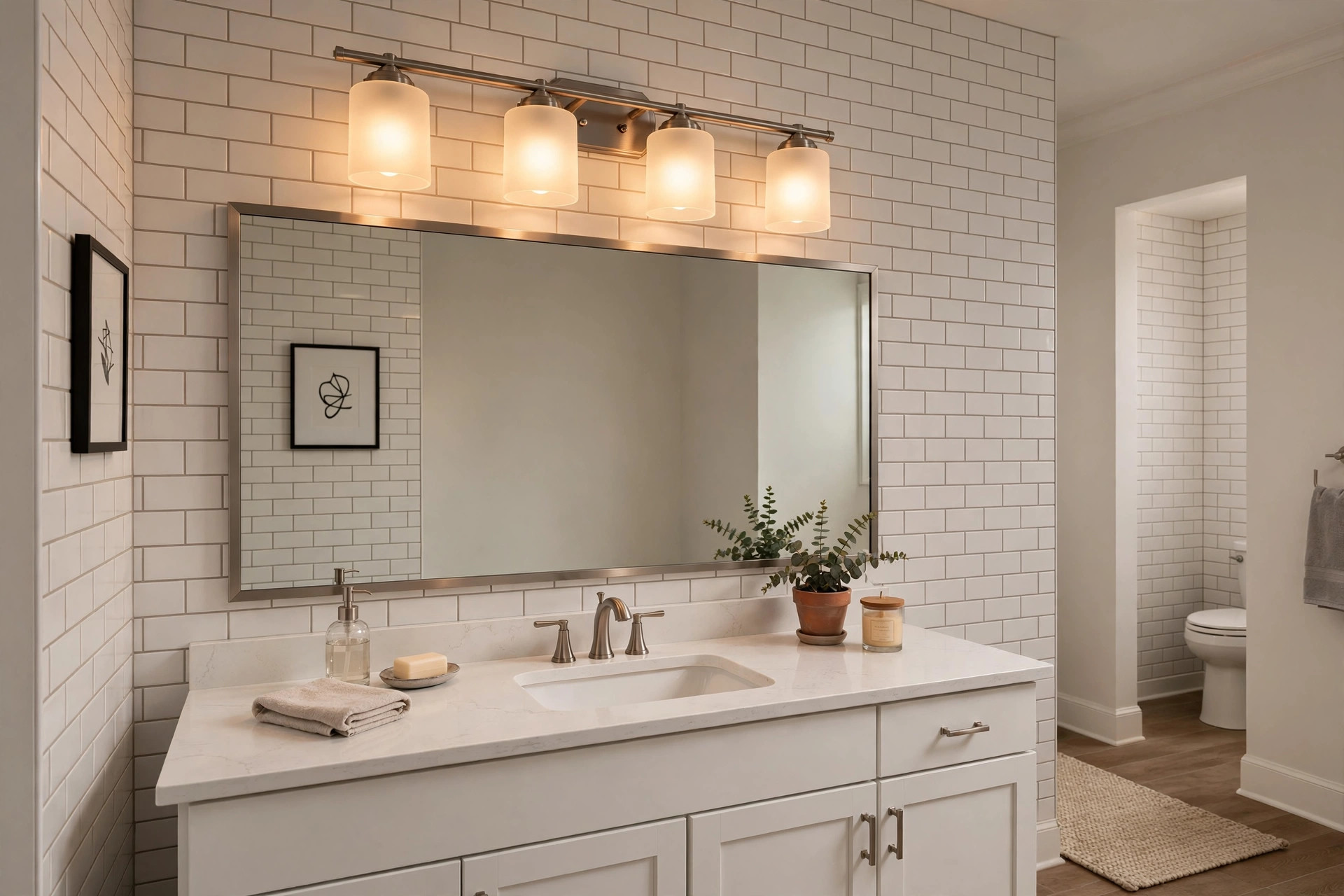
If you are shopping for vanity light bars for sale USA, you face a very large market. Home stores, lighting shops, and many online sellers all carry these fixtures. A vanity light bar is a row of lights mounted over or beside a bathroom mirror. It gives the even, close-range light that people need for shaving, for putting on makeup, and for washing their hands.
Many buyers choose too fast. They pick a bar that looks nice in the store, and then find it throws harsh shadows on the face. Or they buy a bar that is too dim, or too short for the mirror. This guide takes a slower path. It explains why vanity light bars matter, what to look for, what types are sold, what they cost in the United States, how to keep them in good order, and what to know about safety. The goal is plain. Help you buy with confidence and keep the fixture for many years.
Why Good Vanity Lighting Matters: Vanity Light Bars for Sale Usa
The bathroom mirror is one of the hardest working spots in a home. People use it every morning and every night. Bad light at the mirror leads to real daily problems. Shadows across the chin make shaving slow and risky. Uneven light makes makeup look right at home and wrong in daylight. Dim light makes small print on medicine bottles hard to read.
A good vanity light bar solves these problems at the source. A bar places several lamps in a line. The lamps work together to wash the face with light from the front. That front light fills the hollows under the eyes and the chin. The result is a face that reads clearly in the mirror.
Lighting guides on The Spruce point to the same idea. Bathrooms need layered light. Overhead lights light the room. The vanity bar lights the face. Without that second layer, the mirror area stays weak. If you want more general ideas for planning a room, our wall sconce buying guide covers similar ground for other rooms of the house.
There is also the matter of mood. A bathroom with a warm, well-placed light bar feels clean and calm. Guests notice. Home appraisers notice too. A dated or broken vanity fixture pulls a whole bathroom down. A fresh one lifts it up for a modest cost.
What to Look for When You Choose
Shopping for vanity light bars for sale USA becomes much easier when you know the main points of choice. The list below covers the ones that matter most.
Brightness and Light Color
Brightness is measured in lumens. For a small bath, 1,600 to 2,400 lumens across the bar is a common target. For a large bath, 2,400 to 4,000 lumens works better. More is not always better. Too much light bounces off a white tile wall and hurts the eyes. A dimmer switch is the smart answer. It lets you set the level you need.
Light color is measured in Kelvin. Warm white light falls near 2,700K. It feels soft and flattering. Neutral white falls near 3,500K. It reads closer to daylight. Cool white falls near 5,000K. It can look harsh on skin, though it suits some modern baths. Most buyers choose 2,700K to 3,000K for a bathroom mirror.
The ENERGY STAR program certifies efficient bulbs and fixtures. Choosing a certified bar or certified bulbs keeps power use low. The U.S. Department of Energy also publishes plain guidance on efficient lighting for homes. If you plan to add light in other rooms, our guide to under cabinet light strips explains the same efficiency ideas for the kitchen.
Size and Number of Lamps
Measure the mirror first. A bar should span most of the mirror width. A 24 inch mirror pairs well with an 18 to 24 inch bar. A 36 inch mirror pairs well with a 24 to 30 inch bar. For double sinks, buyers often mount one bar over each mirror instead of one long bar across both. Two bars give each person their own even light.
The number of lamps on a bar runs from two to six or more. More lamps spread light more evenly. Fewer lamps with larger shades can look calmer and more simple. A two-lamp bar suits a powder room. A four-lamp bar suits a family bath.
Mount height matters too. Place the bar 75 to 80 inches from the floor to the center of the lamp. That puts the light near eye level. If you mount lamps beside the mirror instead of above it, place them at eye height, about 66 inches from the floor. Side placement gives the most even face light of all.
Finish and Style
Finishes set the mood of the whole bath. Chrome and polished nickel suit bright modern baths. Brushed nickel and satin brass suit warm classic baths. Matte black suits bold modern baths. Oil-rubbed bronze suits rustic baths.
Buy the bar finish to match the faucet and the mirror frame. A mixed set of metals can look planned, but it is hard to do well. One finish across the fixtures is the safe choice.
Shade shape shapes the light. Opal glass shades spread light softly in all directions. Clear glass shades show the bulb and give a sharper look. Fabric shades are rare in baths because of the damp air. Metal shades direct light up or down and work best as accents.
For style ideas, Houzz shows thousands of real bathroom photos with vanity bars in place. HGTV also runs bath design features that help buyers picture a finish in a finished room.
Types of Vanity Light Bars
The market for vanity light bars for sale USA breaks into a few clear types.
Traditional bar lights use screw-in bulbs in glass shades. The bar is a metal plate or rail. Each bulb sits in its own shade. These are the most common type. They are easy to service because you can change the bulbs one by one.
Integrated LED bars have the light built in. There are no bulbs to change. The bar is often slim and modern in look. They last many years and use little power. The trade-off is simple. When the built-in light fails, you replace the whole bar.
Globed bars use round white globes on a metal bar. They read as soft and classic. They work well in small baths and guest baths.
Hollywood-style bars use rows of bare round bulbs around the mirror. They belong to dressing rooms and glam styles. They give very even light but use more power.
Adjustable bars let you aim each lamp head. They suit baths where the mirror sees many users of different heights.
Product testers at Consumer Reports rate lighting products on real performance. Their results can help you compare brands before you buy. For a deeper look at how to judge any fixture, see our vanity light bar buying guide.
Cost and Prices in the USA
Prices for vanity light bars for sale USA cover a wide range. Basic two-lamp bars start near twenty dollars at large home stores. Mid-range three and four lamp bars run from forty to one hundred and fifty dollars. These are the bars most buyers choose. They use common finishes and standard bulbs.
Designer bars from lighting specialists run from one hundred and fifty to five hundred dollars and more. Names like those sold through Lumens sit in this range. They offer unusual finishes, hand-blown shades, and finer metal work.
Integrated LED bars cost more up front than basic bars. A quality LED bar often runs from eighty to three hundred dollars. The higher price buys long life and low power use. Over ten years, the power savings can cover the extra cost.
Large retailers such as The Home Depot stock bars at every price point. That makes them a good place to compare sizes and finishes in person before you buy.
Plan for the full cost of the job. The bar is one part. Bulbs, a dimmer switch, and any electrician time add to the total. A simple swap of an old bar for a new one can cost under one hundred dollars if you do it yourself. A job that needs new wiring can cost several hundred dollars.
Installation Notes
Many vanity bars are made for do-it-yourself replacement. If the old bar used the same type of wiring and the new bar is similar in weight, the swap is a plain job. Repair guides at This Old House walk through the steps in plain language. Step-by-step fixes on Family Handyman cover the same ground.
A few rules keep the job safe. Turn off the breaker before you touch any wire. Never rely on the wall switch alone. Use a voltage tester to confirm the wires are dead. Support the bar while you wire it so it does not hang by the wires.
Call an electrician when the job goes beyond a swap. New circuits, new switch legs, and moves of the fixture box belong to licensed workers in most states. Bathrooms have strict rules because of the mix of water and power. A professional knows the local code.
Care and Upkeep
A vanity light bar needs little care. Dust the shades every month or two. Fingerprints on glass shades cut the light output. Warm water with a drop of dish soap cleans most shades. Dry the glass fully so no spots remain.
Metal parts need a soft cloth. Chrome and nickel clean with a damp cloth. Dry them right away. Avoid harsh cleaners on brass and bronze finishes. They can strip the coating.
Change bulbs before they burn out in sets when you can. Old bulbs run dimmer than new ones. A bar with one old bulb and one new bulb throws uneven light. Keep a spare bulb or two in the house.
Check the mounting screws once a year. Bathrooms shake a little with use. Doors slam. Loose bars wobble. Tighten the screws gently. Do not over-tighten. Glass shades crack under too much force.
Safety
Bathrooms and electricity demand respect. Buy only bars that carry a recognized safety mark such as UL or ETL. The mark tells you the fixture passed independent testing.
Check the damp rating. Bars mounted above a sink need at least a damp location rating. Bars inside a shower zone need a wet location rating. Most vanity bars are rated for damp locations. Read the box before you buy.
Keep fabric and paper away from hot bulbs. Old incandescent bulbs run very hot. LED bulbs run much cooler. If you keep incandescent bulbs, use the wattage printed on the fixture. Never use a stronger bulb than the fixture allows.
Water and power must never meet. Wipe up splashes near the bar. Fix leaks fast. If a bar shows signs of water damage, rust inside the shades, or scorched wires, stop using it and call an electrician.
Frequently Asked Questions
How many lights should a vanity bar have? Two lights suit a powder room or a small mirror. Three to four lights suit a standard bath mirror. Five to six lights suit wide mirrors and double sinks. More lamps mean more even light across the face.
Should the vanity bar match the faucet finish? Matching is the safe choice. A brushed nickel bar with a brushed nickel faucet reads as a planned set. Mixed metals can work in skilled hands, but most buyers get better results with one finish.
Can I mount a vanity bar with the shades pointing up? Many bars allow shades up or shades down. Shades down aim light at the face, which is best at a mirror. Shades up bounce light off the ceiling, which softens the room. Check the instructions. Some bars are built for one direction only.
Are LED vanity bars worth the higher price? Often yes. A quality LED bar uses far less power than an incandescent bar and lasts years longer. The savings on power and on replacement bulbs add up. The trade-off is that you replace the whole bar when the built-in light fails.
What color light is best for a bathroom mirror? Warm white near 2,700K to 3,000K flatters most skin tones. Neutral white near 3,500K reads closer to true daylight and suits makeup work. Avoid cool white near 5,000K at the mirror unless the whole bath uses a cool modern palette.
Can I install a vanity light bar myself? A straight swap of an old bar for a new one is a common do-it-yourself job. Turn off the breaker, test the wires, and follow the instructions. Hire a licensed electrician for new wiring, new circuits, or any move of the fixture box.
A Final Word
Shopping for vanity light bars for sale USA does not need to be hard. Measure the mirror. Pick a size that covers most of it. Choose warm or neutral light. Match the finish to the faucet. Buy a safety-rated bar. Keep the shades clean. These plain steps carry most buyers to a good result.
A vanity light bar is a small purchase with a daily payoff. You stand at that mirror every morning. The right light makes the start of the day a little easier. Take your time, compare a few models, and choose the one that suits your bath and your budget.
References
Consumer Reports. (n.d.). Product reviews and ratings. https://www.consumerreports.org ENERGY STAR. (n.d.). Energy efficient products. https://www.energystar.gov Family Handyman. (n.d.). DIY home repair and maintenance. https://www.familyhandyman.com HGTV. (n.d.). Home and garden ideas. https://www.hgtv.com Houzz. (n.d.). Home design and remodeling. https://www.houzz.com Lumens. (n.d.). Lighting and ceiling fans. https://www.lumens.com The Home Depot. (n.d.). Home improvement products. https://www.homedepot.com The Spruce. (n.d.). Home and garden advice. https://www.thespruce.com This Old House. (n.d.). Home renovation guidance. https://www.thisoldhouse.com U.S. Department of Energy. (n.d.). Energy efficiency and renewable energy. https://www.energy.gov
Was this guide helpful?

About Sarah Mitchell
The My Garden US editorial team writes practical, in-depth home and garden guides for American homeowners — tested advice, no fluff.
You May Also Like

Patio String Lights for Florida Homes: A Practical Guide
April 23, 2026 0 views
Outdoor Wall Lanterns Buying Guide USA: How to Choose the Right Fixture for Your Home
January 11, 2026 0 views
Motion Flood Lights for Florida Homes USA: A Plain Guide
May 28, 2026 0 views